Skip to content
Portafilter Co

Makers & Brewers · Coffee Makers

Keurig alternatives

A Keurig sells one thing: a single cup, one button, about a minute, nothing to measure. These five brewers replace different parts of that — and none of them take K-Cups, which is the first thing you need to know.

By Stephen V.Updated How we pick
#ad

We earn a commission when you buy through our Amazon links, at no extra cost to you. It never changes a verdict, and we say so when the cheaper product is the better buy. How this works.

Read this first: none of the brewers on this page use K-Cups. If what you want is a different machine that takes the pods you already own, this is the wrong page — every pick here is pod-free, and the whole point of them is that you buy coffee instead of portions. With that said, the best Keurig alternative for most people is the De'Longhi TrueBrew, which keeps the part of the Keurig that people actually like — press one button, get one fresh cup, measure nothing — and replaces the pod with whole beans it grinds itself. If the budget is the constraint, the AeroPress Original makes a better cup than any machine here for a fraction of the money, in exchange for about ninety seconds of your attention.

Start with what the Keurig actually sells, because an alternative has to replace something specific and it is not "coffee." It sells a sealed, pre-portioned pod, a single button, a cup in roughly a minute, and the complete absence of grinding, measuring, dialing, or grounds to throw away. That is a genuinely strong proposition — it is why these machines are on so many counters, and it is why the people who switch away from them are usually not complaining about the coffee at all. They are complaining about the running cost of buying coffee by the portion, or about the waste, or about the limits of what a sealed pod can taste like. Which of those three it is for you decides your answer.

Route one: keep the one-button workflow, drop the pod. This is the straightest swap and the one most people want. A single-serve bean-to-cup brewer grinds whole beans and brews one cup to order, which is the Keurig workflow with the portion control moved from a factory to a hopper. It costs the most up front and the least per cup by a wide margin, and the coffee is not comparable — a pod has been ground and sealed for months, and freshly ground coffee is the single biggest improvement available to anyone at any price. The TrueBrew is the pick, and best coffee makers with a grinder is the wider field.

Route two: you were using it for a household, one cup at a time. A lot of Keurigs are bought to solve a scheduling problem rather than a coffee problem — three people leaving at three different times, each wanting one cup. If that is the real job, a programmable drip machine with a small-batch setting does it for much less money, because it can brew one or two cups properly and then a full carafe at the weekend. The Ninja below is the pick there, and best drip coffee makers ranks the category properly.

Route three: you want the best cup, and a minute is fine. If you are willing to boil a kettle and spend a minute or two, the manual brewers at the bottom of this page beat every machine on this page on cup quality, and they cost less than a month of pods. The catch is honest and worth stating plainly: they need hot water you control and they strongly prefer coffee ground fresh, so the real cost of this route is a kettle and a grinder, not the brewer. See best gooseneck kettles and best grinders for drip and pour over before you decide this is the cheap option.

One thing that is true of every pick here. You will be buying coffee by the bag and storing it, which is a small habit change with an outsized effect on the result. A bag of whole beans kept sealed and away from light will taste better in week two than any pod does on day one, and it will taste noticeably worse in week six — how to store coffee beans is five minutes well spent if you are leaving pods behind.

The short answer

Quick picks

#ProductBest forScorePrice
01
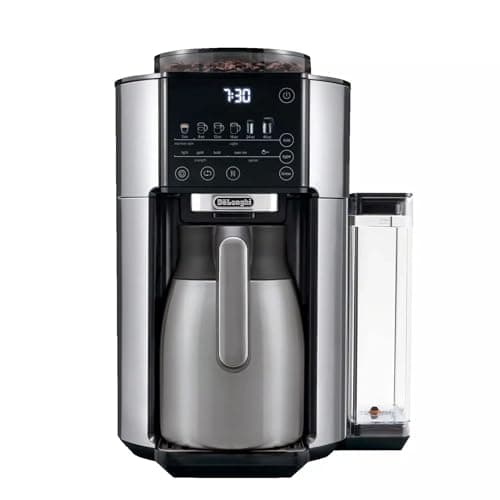
De'Longhi De'Longhi TrueBrew CAM51035M
De'Longhi TrueBrew CAM51035M

The closest thing to a pod machine that does not use pods, and our overall pick. The listing specifies a built-in grinder, brew sizes from 8 oz to 24 oz, hot or iced settings and an included 40 oz carafe — which means it does the single-cup, press-one-button job on a weekday and still fills a carafe at the weekend. That is exactly the shape of the problem a Keurig was solving, with the portion coming from beans you bought by the bag. It is the most expensive machine here by a long way, and it is the one that makes the switch feel like an upgrade rather than a chore.

Best overall — one button, one fresh cup, no pods
8.4
$469.99Amazon
02
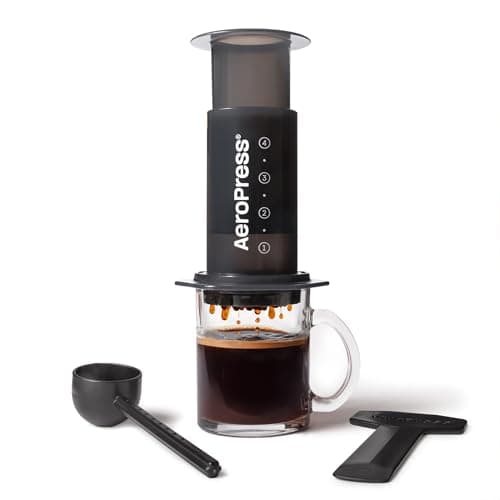
AeroPress AeroPress Original Coffee Press
AeroPress Original Coffee Press

The best cup on this page, and it costs less than a month of pods. Immersion brewing through a paper filter gives you a clean, full-bodied cup in roughly one to three minutes, and cleanup is the single genuinely delightful thing about it: the spent puck ejects into the bin in about ten seconds and the brewer rinses clear. It is also almost indestructible and needs no electricity, which makes it the obvious answer for an office, a desk drawer or a trip. What it is not is one-button — you boil water, you add coffee, you press. If that sounds like a ritual rather than a chore, buy this and stop reading.

Best cup per dollar, and the best brewer for a desk or an office
8.3
$29.96Amazon
03
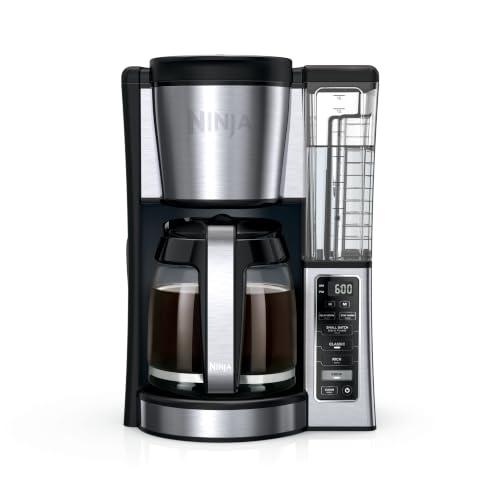
Ninja Ninja 12-Cup Programmable Coffee Maker
Ninja 12-Cup Programmable Coffee Maker

The pick if the Keurig was really solving a household scheduling problem. A 12-cup glass carafe with Classic and Rich brew settings, a small-batch setting for one or two cups and a delay-brew timer, which together cover both halves of the job a pod machine was doing: one cup for whoever is up first, a carafe when everyone is home. It is a plain drip machine and it does not pretend otherwise — no grinder, no temperature readout — but it costs a fraction of the single-serve machines and the per-cup cost of ground coffee against pods is the entire reason most people are on this page.

Best for a household — a small batch on weekdays, a carafe at the weekend
8.1
$69.99Amazon
04
Hario Hario V60 Plastic Coffee Dripper (Size 02, Clear)
Hario V60 Plastic Coffee Dripper (Size 02, Clear)

The budget pick, and the cheapest good cup of coffee available anywhere. A size 02 cone brews one to four cups through a single large hole with spiral ridges that keep the paper off the wall, and the plastic version needs no preheating, which makes it faster in practice than the ceramic one. It costs less than a box of pods. The honest caveat is that a V60 is the most technique-sensitive brewer here — pour rate and grind both show up in the cup — so it rewards a kettle you can control and punishes inattention. Get it right and nothing on this page tastes cleaner.

Budget pick — the cheapest way out of pods, and the cleanest cup
7.9
$11.94Amazon
05
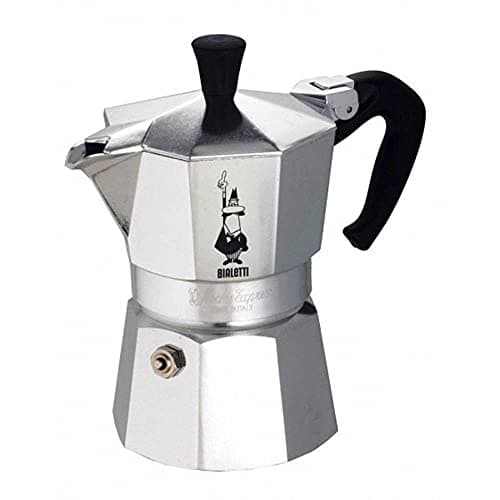
Bialetti Bialetti Moka Express (1-Cup)
Bialetti Moka Express (1-Cup)

The pick if what you actually wanted from the pod machine was something strong and small. A one-cup Moka Express makes a single concentrated, espresso-style serving on any stovetop with no electricity, no filters and no consumables at all — you buy it once and it outlives the kitchen. Note what a moka "cup" means before you order: it is a roughly two-ounce demitasse, not a mug, so the 1-cup pot makes one small, strong serving and nothing more. It is also the only pick here that does not need a paper filter, which makes it the cheapest to run of anything on this page.

Best for one strong, espresso-style serving with no electricity
7.6
$31.99Amazon

#ad · Live prices from the Amazon Product API, as of November 20, 2026. Where we have no verified live price, we show none — a gap beats a number that has rotted.

In detail

The picks, in full

01
De'Longhi De'Longhi TrueBrew CAM51035M

Best overall — one button, one fresh cup, no pods

De'Longhi TrueBrew CAM51035M

Built-in grinder8 oz to 24 oz brew sizesHot or iced coffee settings40 oz carafe included
8.4/10

The closest thing to a pod machine that does not use pods, and our overall pick. The listing specifies a built-in grinder, brew sizes from 8 oz to 24 oz, hot or iced settings and an included 40 oz carafe — which means it does the single-cup, press-one-button job on a weekday and still fills a carafe at the weekend. That is exactly the shape of the problem a Keurig was solving, with the portion coming from beans you bought by the bag. It is the most expensive machine here by a long way, and it is the one that makes the switch feel like an upgrade rather than a chore.

Replaces the pod workflow
9.5
Cup quality
8.5
Cost per cup
9
Cleanup
7.5
Value
7.5

Pros

  • Brews a single mug properly rather than a short, weak carafe batch
  • 8 oz to 24 oz range covers an espresso-sized cup through a large travel mug
  • Dedicated iced setting brews stronger to survive the dilution rather than just chilling
  • Grinds to order, which is the biggest single quality gain over any sealed pod
  • Carafe included, so it covers a weekend with guests too

Cons

  • Costs many times what a pod machine costs up front
  • Fewer grind adjustment points than a dedicated grind-and-brew machine
  • Not SCA certified
  • Sold in several variants at very different prices — confirm the model code before buying
  • Single-serve brewing runs the grinder several times a day, so chute cleaning comes round faster

Don't buy this if…

…you brew a full carafe most mornings. You would be paying a premium for single-serve flexibility you will not use — the Ninja below, or a grind-and-brew, does carafes better for less.

It also appears on best coffee makers with a grinder, where it is ranked against the carafe-first machines, and on best coffee makers for one person for the single-cup case specifically.

$469.99View on Amazon

Price as of November 20, 2026. Prices change — Amazon's at checkout is the one that counts.

#ad · we may earn a commission from this link to De'Longhi TrueBrew CAM51035M

02
AeroPress AeroPress Original Coffee Press

Best cup per dollar, and the best brewer for a desk or an office

AeroPress Original Coffee Press

Immersion brewing with a paper filterRoughly 1 to 3 minutes total brewAbout 10 seconds of cleanupLightweight, no electricity
8.3/10

The best cup on this page, and it costs less than a month of pods. Immersion brewing through a paper filter gives you a clean, full-bodied cup in roughly one to three minutes, and cleanup is the single genuinely delightful thing about it: the spent puck ejects into the bin in about ten seconds and the brewer rinses clear. It is also almost indestructible and needs no electricity, which makes it the obvious answer for an office, a desk drawer or a trip. What it is not is one-button — you boil water, you add coffee, you press. If that sounds like a ritual rather than a chore, buy this and stop reading.

Replaces the pod workflow
4.5
Cup quality
9
Cost per cup
9.5
Cleanup
9
Value
9.5

Pros

  • Cup quality well beyond anything else at this price, machine or otherwise
  • Cleanup is genuinely ten seconds — the puck ejects and the brewer rinses clear
  • No electricity, nothing to descale, nothing to break
  • Extremely forgiving of grind: it makes good coffee even with supermarket pre-ground
  • Cheap enough to own alongside whatever else you buy

Cons

  • Nothing about it is automatic — you boil, dose and press, every cup
  • One cup at a time, so it is a poor fit for a household leaving together
  • Needs paper filters as a consumable (reusable metal filters exist but change the cup)
  • Plastic body, which matters to some buyers on principle

Don't buy this if…

…the one-button workflow is the thing you are trying to keep. This replaces a Keurig's coffee, not its convenience — the TrueBrew above is the pick if pressing a button is non-negotiable.

We rank the whole family — Original, Clear, Go and XL — on best AeroPress models, and AeroPress grind size explains why it is so forgiving about the grinder.

$29.96View on Amazon

$39.9525% off

Price as of November 20, 2026. Prices change — Amazon's at checkout is the one that counts.

#ad · we may earn a commission from this link to AeroPress Original Coffee Press

03
Ninja Ninja 12-Cup Programmable Coffee Maker

Best for a household — a small batch on weekdays, a carafe at the weekend

Ninja 12-Cup Programmable Coffee Maker

12-cup glass carafeClassic and Rich brew settingsSmall-batch setting for 1-2 cupsDelay-brew timer
8.1/10

The pick if the Keurig was really solving a household scheduling problem. A 12-cup glass carafe with Classic and Rich brew settings, a small-batch setting for one or two cups and a delay-brew timer, which together cover both halves of the job a pod machine was doing: one cup for whoever is up first, a carafe when everyone is home. It is a plain drip machine and it does not pretend otherwise — no grinder, no temperature readout — but it costs a fraction of the single-serve machines and the per-cup cost of ground coffee against pods is the entire reason most people are on this page.

Replaces the pod workflow
8
Cup quality
6.5
Cost per cup
9
Cleanup
8
Value
9

Pros

  • Small-batch setting brews one or two cups properly rather than weakly
  • Delay-brew means coffee is ready before you are, which no pod machine does
  • Carafe capacity for a household, at a fraction of a single-serve machine's price
  • Simple enough that nothing about it needs learning
  • Cheapest route here to a fully automatic morning

Cons

  • No grinder, so the cup depends entirely on what you put in the basket
  • Glass carafe on a hotplate keeps cooking the coffee — decant it or drink it promptly
  • Brew temperature is not controllable or displayed
  • Cup quality is good drip, not specialty — the manual brewers here beat it clearly

Don't buy this if…

…you only ever make one cup. You would be heating and cleaning a carafe machine for a single mug — the AeroPress above or the TrueBrew is the better shape of answer.

It is also a pick on best coffee makers under $100 and sits inside the wider field on best drip coffee makers.

$69.99View on Amazon

$89.9922% off

Price as of November 20, 2026. Prices change — Amazon's at checkout is the one that counts.

#ad · we may earn a commission from this link to Ninja 12-Cup Programmable Coffee Maker

04
Hario Hario V60 Plastic Coffee Dripper (Size 02, Clear)

Budget pick — the cheapest way out of pods, and the cleanest cup

Hario V60 Plastic Coffee Dripper (Size 02, Clear)

Size 02 cone, 1-4 cupsSingle large hole, spiral ridgesPlastic — no preheating neededNeeds a kettle and V60 papers
7.9/10

The budget pick, and the cheapest good cup of coffee available anywhere. A size 02 cone brews one to four cups through a single large hole with spiral ridges that keep the paper off the wall, and the plastic version needs no preheating, which makes it faster in practice than the ceramic one. It costs less than a box of pods. The honest caveat is that a V60 is the most technique-sensitive brewer here — pour rate and grind both show up in the cup — so it rewards a kettle you can control and punishes inattention. Get it right and nothing on this page tastes cleaner.

Replaces the pod workflow
3.5
Cup quality
9
Cost per cup
9.5
Cleanup
8
Value
9.5

Pros

  • Costs less than a single box of pods
  • Cleanest, most aromatic cup of anything here
  • Plastic cone needs no preheating, so it is quicker in use than ceramic
  • Weighs nothing and survives being packed, so it travels
  • Nothing to break, descale or service, ever

Cons

  • The most technique-sensitive brewer on this page — pour rate genuinely matters
  • Really wants a gooseneck kettle and a burr grinder to shine, which is the real cost
  • One brew at a time, with no automation of any kind
  • Paper filters are an ongoing consumable

Don't buy this if…

…you want to press a button and walk away, or you will not buy a kettle you can pour accurately with. A V60 with a standard kettle and pre-ground coffee is worse than the Ninja above.

Full review: Hario V60 review. See best pour over coffee makers for the alternatives to the cone itself, and best gooseneck kettles for the part that actually decides the result.

$11.94View on Amazon

$13.5012% off

Price as of November 20, 2026. Prices change — Amazon's at checkout is the one that counts.

#ad · we may earn a commission from this link to Hario V60 Plastic Coffee Dripper (Size 02, Clear)

05
Bialetti Bialetti Moka Express (1-Cup)

Best for one strong, espresso-style serving with no electricity

Bialetti Moka Express (1-Cup)

A single ~2 oz moka servingStovetop, no electricityNo paper filters or consumablesAluminum, repairable with gaskets
7.6/10

The pick if what you actually wanted from the pod machine was something strong and small. A one-cup Moka Express makes a single concentrated, espresso-style serving on any stovetop with no electricity, no filters and no consumables at all — you buy it once and it outlives the kitchen. Note what a moka "cup" means before you order: it is a roughly two-ounce demitasse, not a mug, so the 1-cup pot makes one small, strong serving and nothing more. It is also the only pick here that does not need a paper filter, which makes it the cheapest to run of anything on this page.

Replaces the pod workflow
4
Cup quality
8
Cost per cup
9.5
Cleanup
7.5
Value
9

Pros

  • Strong, concentrated coffee that a drip machine cannot produce
  • No electricity, no filters, no consumables — the cheapest brewer here to run
  • Essentially permanent: gaskets and filter plates are cheap and replaceable
  • Tiny on the counter and fine to travel with

Cons

  • A moka "cup" is about two ounces, so a 1-cup pot is one small serving, not a mug
  • Must be brewed at its rated size — both chambers are fixed volumes
  • Needs attention at the stove; it is not a walk-away brewer
  • Aluminum body is not dishwasher-safe and takes a short learning curve

Don't buy this if…

…you drink a large mug of coffee. Size up the pot or buy something else entirely — our moka sizing page explains exactly how the cup counts translate.

Full review: Bialetti Moka Express review. Read moka pot sizes before you choose a size — the cup counts are not mugs — and how to use a moka pot covers the technique.

$31.99View on Amazon

Price as of November 20, 2026. Prices change — Amazon's at checkout is the one that counts.

#ad · we may earn a commission from this link to Bialetti Moka Express (1-Cup)

Decide which part of the pod you are replacing. The portion, the button, or the coffee. If it is the portion — you resent buying coffee by the unit — then almost anything here fixes it, and the cheapest pick fixes it best. If it is the button, only the TrueBrew and the Ninja genuinely replace it, and the manual brewers will frustrate you no matter how good the coffee is. If it is the coffee, buy the AeroPress or the V60 and a grinder, and you will be startled by the difference. People who try to solve all three at once end up back on pods.

The grinder is the real upgrade, whichever brewer you pick. A pod is coffee that was ground in a factory and sealed; the gap between that and coffee ground minutes before brewing is larger than the gap between any two brewers on this page. If your budget has to split, split it toward the grinder. Our best conical burr grinders page covers the bracket that suits every brewer here, and best grinders for drip and pour over narrows it to the coarse end that drip and V60 actually need.

Be realistic about cleanup, because it is the thing that kills new habits. A pod machine has effectively none, and that is a real advantage nobody admits. The AeroPress is the only pick here that competes on that axis — the puck ejects and the brewer rinses in about ten seconds. A V60 means a wet paper and a rinse. A carafe machine means a carafe. A moka pot means disassembling and drying three parts. None of it is hard, but if the reason you bought a pod machine was that you hate washing up at 7am, weight this heavily.

Ratio does more than hardware. Most people switching off pods make their first few cups too weak, because a pod is a fixed dose and a scoop is not. The standard starting point is roughly 1:16 coffee to water by weight — about 60g of coffee per liter — and it is worth a scale and one morning of attention. Coffee to water ratiohas the numbers for each brewer, and it is the single fastest fix for "this tastes watery compared to my Keurig."

Where to go next. Best coffee makers for one person is the closest page to this one if you live alone, best coffee makers under $100 is the bracket most people switching off pods actually shop in, and best cold brew makers is worth a look if iced coffee was a big part of what you used the pod machine for.

How we picked

We did not lab-test this gear

Everyone in this category says they tested twenty machines. We have not pulled shots on every product here, and we say so. What we did instead: compiled the published specifications, cross-checked the manufacturer manuals, computed the running cost (wattage to energy, grams-per-shot to cost-per-cup), weighed aggregated owner reports, and scored each product against a published rubric. The scores are judgments from documented research — not measurements we took, because we do not have a test lab and we will not pretend we do. Where hands-on time would tell you more than a spec sheet, we flag it. Where a number came from someone else's work, we name them in Sources.
Questions

Frequently asked

Is there a Keurig alternative that still uses K-Cups?
Not on this page — every pick here is pod-free by design, and that is the point of them. If keeping K-Cups is a firm requirement, you are shopping for another pod brewer rather than an alternative, and we do not rank those. The nearest middle ground is a refillable pod for the machine you already own, which lets you use your own coffee in the same hardware; it is not a product we test or recommend one of, but it exists and it is cheap to try before you replace anything.
What is the closest thing to a Keurig that does not use pods?
A single-serve bean-to-cup brewer, which is why the De'Longhi TrueBrew leads this page: it grinds whole beans and brews one cup to order at sizes from 8 oz to 24 oz, hot or over ice. That is the pod workflow with the portioning moved from a factory to a hopper. See best coffee makers with a grinder for the rest of that category.
What is the cheapest way to replace a Keurig?
A Hario V60 plastic dripper and a bag of coffee, which together cost less than a couple of boxes of pods. The honest version of that answer is that the cheap brewer wants a kettle you can pour accurately with and coffee ground reasonably fresh, so budget for those too. If you would rather spend slightly more and work less, the AeroPress Original is far more forgiving and almost as cheap.
Will a pod-free coffee maker actually save money?
That depends entirely on what you pay for pods versus what you pay for coffee by the bag, so run your own numbers rather than trusting a figure from a review — a pod is sold as a portion and a bag is sold by weight, and the ratio between them varies enormously by brand. What is reliably true is that the per-cup cost of ground or whole-bean coffee is lower than the per-cup cost of pods, and that it is the reason most people on this page are on it. The up-front hardware cost is the variable that decides how long the switch takes to pay back.
What is the best Keurig alternative for an office?
The AeroPress Original, for reasons that have nothing to do with the coffee: it needs no plumbing, no outlet and no descaling, it cleans in ten seconds without a sink full of parts, and it survives being stored in a drawer. If the office needs to serve several people at once, the Ninja 12-cup with its delay-brew timer is the better shape of answer. See best coffee makers for one person for the single-serve case in more depth.
Why does my new coffee maker taste weaker than my Keurig did?
Almost always dose, not hardware. A pod is a fixed, fairly generous portion for a small cup; a scoop into a basket usually is not. Weigh your coffee once — about 60g per liter of water, or roughly a 1:16 ratio — and the difference usually disappears in one brew. Coffee to water ratio has the figures per brewer.

Keep reading

Same gear, other pages

We cover this gear elsewhere too

Receipts

Sources

We do not run a testing lab, and we do not pretend to. Where a measured number came from someone else's work, we name them and link them. Where we could not verify something, we say so on the page rather than quietly leaving it out. Read our full method.