Skip to content
Portafilter Co

Machines · Espresso Machines

Nespresso alternatives

A Nespresso sells a sealed portion, one button and a cup in under a minute. These six machines replace different parts of that deal, and the right one depends entirely on which part you actually care about.

By Stephen V.Updated How we pick
#ad

We earn a commission when you buy through our Amazon links, at no extra cost to you. It never changes a verdict, and we say so when the cheaper product is the better buy. How this works.

First, the fork in the road.If what you want is cheaper capsules for the Nespresso machine on your counter, this is the wrong page — we rank machines, not capsules, and we have no view on which third-party pods are worth buying. If you want a different machine, read on: the best Nespresso alternative for most people is the Breville Bambino, which is one of the smallest serious espresso machines you can buy and makes genuinely better coffee, and the price of that upgrade is that you have to grind and tamp. If pressing one button is non-negotiable, the De'Longhi Magnifica Start does the whole job automatically from whole beans. And if you specifically want to keep using the Nespresso Original capsules you already own, exactly one pick here does that: the Wacaco Minipresso NS2, at the bottom of the list.

Now the useful part, which is being precise about what a Nespresso actually sells you, because an alternative has to replace something specific. It sells a sealed, pre-portioned capsule; a single button; a small, strong coffee in well under a minute; and the total absence of grinding, dosing, tamping, texturing or cleaning up grounds. That is a genuinely strong product, and it is why there are so many of these machines on so many counters. The people who move away from them are rarely complaining that the coffee is bad. They are complaining about one of four things: the cost of buying coffee by the portion, the waste, the ceiling on how good a sealed capsule ground months ago can taste, or the fact that they have started caring about espresso and the machine cannot follow them there.

Route one: keep the one-button workflow, drop the capsule. A super-automatic grinds whole beans, doses, tamps, brews and froths at a single press. It is the Nespresso workflow with the portioning moved from a factory to a hopper, and it is the only route here that asks nothing of your technique. It costs the most up front and the least per cup, and the espresso is good rather than great, because the dose, tamp and extraction are all fixed by the machine. The Magnifica Start is the pick, and best super-automatic espresso machines is the wider field.

Route two: you have started caring about the coffee.This is the commonest reason people land on this page, and it points at a small pump machine with a real portafilter. You grind, you dose, you tamp, you pull a shot — about two minutes of attention — and in exchange you get espresso that a capsule cannot reach, with crema you can see forming, and a machine you can keep improving at. The honest cost is not just the machine: a pump machine is only as good as the grinder feeding it, so budget for one. The Bambino, Dedica and Stilosa are the picks here, in descending order of money, and best espresso grinders under $300 is where to spend the rest of the budget.

Route three: you want out of the capsule economics entirely, cheaply.The least expensive route off capsules is not an espresso machine at all. A stovetop moka pot makes a small, thick, intense coffee with no electricity, no filters and nothing to run out of, for less than a month or two of capsules on most people's habits. It is not espresso — there is no crema and the pressure is a fraction of a pump machine's — but if what you drink is a strong little cup, possibly with milk, it gets you startlingly close for very little. Moka pot vs espresso machine is the honest comparison, and best moka pots ranks the category.

Route four: you like the capsules and dislike the machine.This is a real and underserved case — the countertop machine died, or you want espresso in a hotel room, or you simply do not want a plugged-in appliance. The Minipresso NS2 is a hand-powered piston that takes Nespresso Original capsules: drop one in, add hot water, press. It keeps the one thing you already own stocks of and throws away the electricity. Best portable espresso makers covers that family properly.

One honest note on money, because the internet is full of bad math. Whether leaving capsules saves you anything depends entirely on what you pay per capsule against what you pay per bag, and that ratio varies enormously by brand and by how much coffee you drink — so run your own numbers rather than trusting a figure in a review, including ours. What is reliably true is that coffee bought by weight costs less per cup than coffee bought by the portion, and that the up-front cost of the hardware is what decides how long the switch takes to pay back. The Bambino plus a grinder is a real expense. The moka pot is not.

The short answer

Quick picks

#ProductBest forScorePrice
01
Breville Breville Bambino (BES450)
Breville Bambino (BES450)

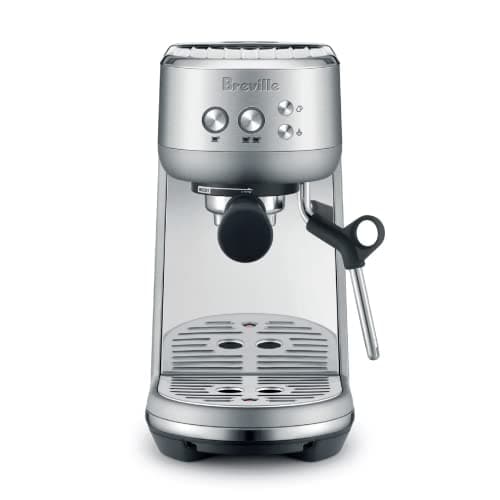
Our overall pick, because it replaces the part of the Nespresso deal that most people on this page actually want replaced: the ceiling on the coffee. The ThermoJet heat-up is near-instant, so the machine is ready before you have finished grinding, and digital temperature control plus pre-infusion make the shots repeatable rather than lucky. It ships with real single-wall baskets, which means it grows with your technique instead of masking it, and at roughly 7.7 inches wide it takes up about as much counter as the capsule machine it is replacing. The deal is explicit: there is no grinder, so budget for one; the steam wand is manual, so you texture milk yourself; and the single boiler means a short purge between pulling and steaming.

Best overall - the biggest jump in cup quality for the counter space
8.6
$299.95Amazon
02
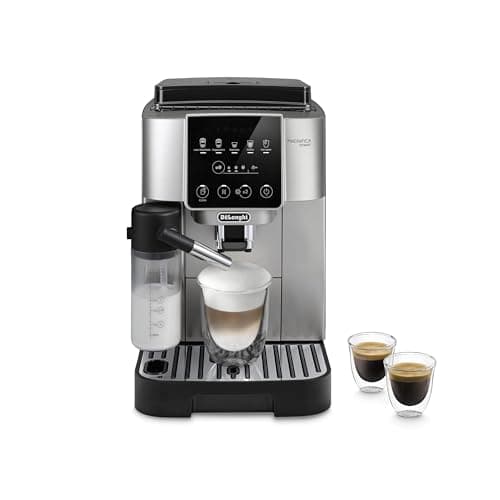
De'Longhi De'Longhi Magnifica Start
De'Longhi Magnifica Start

The closest thing here to the Nespresso workflow, and the pick if one button is non-negotiable. It grinds, doses, brews and froths automatically, so a drink is a single press and roughly a minute and a half with no dialing in and no separate grinder to buy. The built-in burr grinder means one appliance on the counter instead of two, and the removable parts are dishwasher-safe, so daily cleanup is about a minute. What you trade is control and ultimate quality: the dose, tamp and extraction are fixed, the built-in grinder is the only grinder you get, and the frother is a simple automatic wand rather than the milk carafe on pricier Magnificas. Buy it for genuine simplicity, not for the best shot per dollar.

Best for keeping one-button convenience without capsules
8.2
$499.95Amazon
03
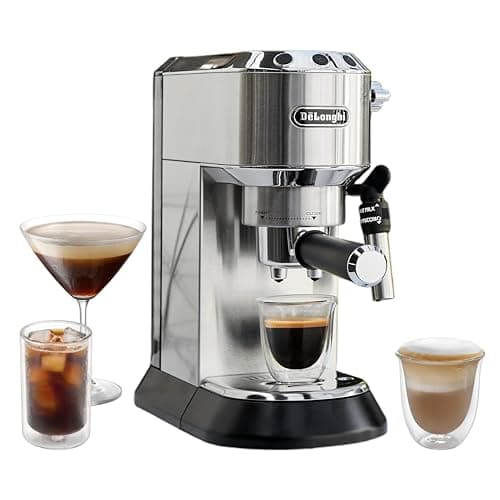
De'Longhi De'Longhi Dedica Deluxe (EC685)
De'Longhi Dedica Deluxe (EC685)

The pick for the counter a Nespresso was chosen for in the first place. At just under six inches wide it is one of the slimmest real espresso machines you can buy, it heats up quickly, and it costs less than the Bambino while still making good espresso through a proper 51mm portafilter. The honest limits are the ones that come with the size and price: it ships with pressurized baskets that mask grind quality rather than revealing it, the 51mm format narrows your accessory and upgrade options against the 54mm and 58mm standards, and the build is plastic-heavy with a weaker steam wand than the Bambino's.

Best for a very narrow counter
8.2
$348.00Amazon
04
De'Longhi De'Longhi Stilosa (EC260)
De'Longhi Stilosa (EC260)

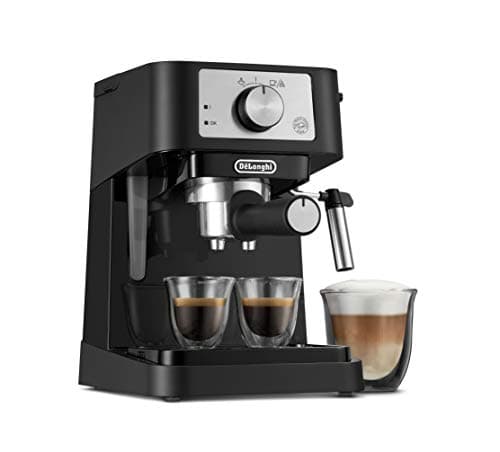
The cheapest way here into a real portafilter, and the safest low-budget bet because De'Longhi has been building entry machines for decades. A simple 15-bar pump in a compact, stainless-accented body pulls a respectable shot once you pair it with a real grinder, and it accepts ESE pods as well as ground coffee if you want a soft landing off capsules. The steam side is its weak point - the manual panarello wand froths milk crudely rather than texturing it - and the build leans plasticky. For the money, though, nothing here is more trustworthy.

Cheapest real pump machine, and the safest budget bet
7.9
$149.95Amazon
05
Bialetti Bialetti Moka Express (6-Cup)
Bialetti Moka Express (6-Cup)

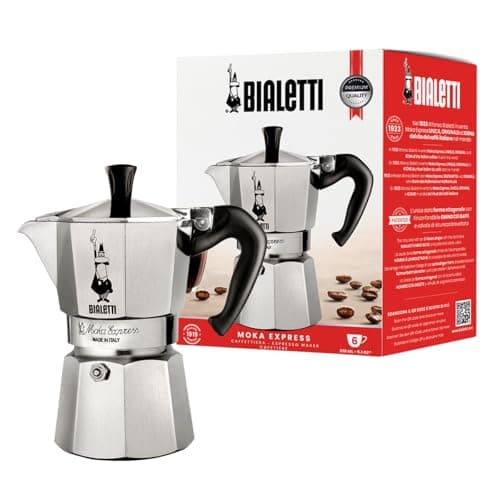
The cheapest honest way out of capsules, and the pick if what you actually drink is a small strong coffee rather than espresso specifically. Bialetti's octagonal aluminum design is nearly ninety years old because it works: steam pressure pushes hot water up through a bed of medium-fine coffee and you get a rich, concentrated cup with no electricity, no filters and nothing to run out of. The six-cup size suits most households, replacement gaskets cost almost nothing, and the whole thing is repairable indefinitely. Be clear about what it is not: there is no crema, the pressure is a fraction of a pump machine's, the aluminum body will not work on an induction cooktop, and it is hand-wash only.

Cheapest route off capsules, if a strong small cup is what you drink
7.8
$48.22Amazon
06
Wacaco Wacaco Minipresso NS2
Wacaco Minipresso NS2

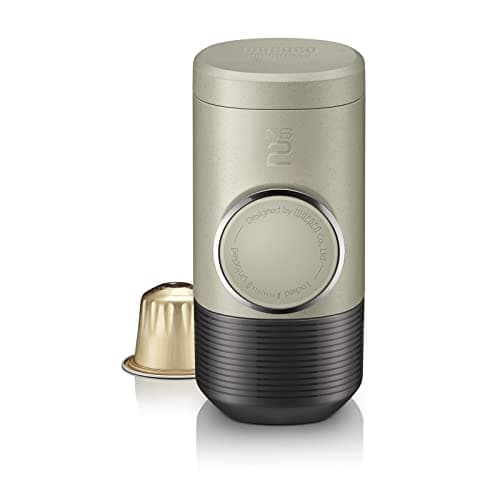
The only pick here that keeps the capsules you already own, which makes it the answer to a question the rest of this page cannot address. The NS2 takes Nespresso Original capsules: drop one in, add hot water, and press the hand piston a few times for an 18-bar extraction and a quick single with crema. There is no grinding, no dosing, no tamping, no electricity and almost no cleanup - it weighs about 290 g with an 80 ml tank, so it lives in a bag. The costs are equally clear: you stay inside the capsule economics you may be trying to leave, a sealed capsule fixes the grind and dose so there is nothing to adjust, and it is one short drink at a time with your own arm doing the work.

Best if you want to keep using Nespresso Original capsules
7.7
$43.92Amazon

#ad · Live prices from the Amazon Product API, as of November 20, 2026. Where we have no verified live price, we show none — a gap beats a number that has rotted.

In detail

The picks, in full

01
Breville Breville Bambino (BES450)

Best overall - the biggest jump in cup quality for the counter space

Breville Bambino (BES450)

ThermoJet: ~3-second heat-up54mm portafilter, 15-bar pumpManual steam wand with auto-purgeSmall footprint, about 7.7 in wide
8.6/10

Our overall pick, because it replaces the part of the Nespresso deal that most people on this page actually want replaced: the ceiling on the coffee. The ThermoJet heat-up is near-instant, so the machine is ready before you have finished grinding, and digital temperature control plus pre-infusion make the shots repeatable rather than lucky. It ships with real single-wall baskets, which means it grows with your technique instead of masking it, and at roughly 7.7 inches wide it takes up about as much counter as the capsule machine it is replacing. The deal is explicit: there is no grinder, so budget for one; the steam wand is manual, so you texture milk yourself; and the single boiler means a short purge between pulling and steaming.

Replaces the capsule workflow
6.5
Cup quality
9
Cost per cup
9
Counter space
9.5
Value
9

Pros

  • Near-instant heat-up - ready before you finish grinding
  • Digital temperature control and pre-infusion for consistent, repeatable shots
  • Ships with real single-wall baskets, so it grows into proper espresso
  • Surprisingly strong steam wand for the footprint
  • One of the smallest serious machines you can buy - fits almost any counter

Cons

  • No built-in grinder, so budget for a real burr grinder on top
  • Manual steam wand - you texture the milk yourself
  • Single boiler means a brief purge between shot and steam
  • Small water tank and drip tray fill quickly with daily use
  • Mostly plastic body - it does not feel like a metal prosumer machine

Don't buy this if…

…the single-button workflow is the thing you are trying to keep. This replaces a capsule machine's coffee, not its convenience - the Magnifica Start below is the pick if pressing one button is the whole point.

Our full Breville Bambino review covers the baskets and the steam wand in detail, and Breville Bambino alternatives is worth a look if you like the shape of this answer but want milk automation or a grinder in the box.

$299.95View on Amazon

Price as of November 20, 2026. Prices change — Amazon's at checkout is the one that counts.

#ad · we may earn a commission from this link to Breville Bambino (BES450)

02
De'Longhi De'Longhi Magnifica Start

Best for keeping one-button convenience without capsules

De'Longhi Magnifica Start

Bean-to-cup super-automaticBuilt-in burr grinderAutomatic wand-style milk frotherRemovable, dishwasher-safe parts
8.2/10

The closest thing here to the Nespresso workflow, and the pick if one button is non-negotiable. It grinds, doses, brews and froths automatically, so a drink is a single press and roughly a minute and a half with no dialing in and no separate grinder to buy. The built-in burr grinder means one appliance on the counter instead of two, and the removable parts are dishwasher-safe, so daily cleanup is about a minute. What you trade is control and ultimate quality: the dose, tamp and extraction are fixed, the built-in grinder is the only grinder you get, and the frother is a simple automatic wand rather than the milk carafe on pricier Magnificas. Buy it for genuine simplicity, not for the best shot per dollar.

Replaces the capsule workflow
9.5
Cup quality
7.5
Cost per cup
9
Counter space
7
Value
8

Pros

  • Grinds, doses, tamps, brews and froths automatically - genuinely no skill required
  • Built-in grinder means one appliance instead of a machine plus a separate grinder
  • Freshly ground beans instead of a capsule sealed months ago
  • Removable, dishwasher-safe parts keep daily cleanup to about a minute
  • Simplest route off capsules for anyone who liked the Nespresso routine

Cons

  • The most expensive pick on this page by a wide margin
  • Fixed dose, tamp and extraction, so there is almost nothing to improve
  • Espresso is good rather than great compared with a pump machine plus a real grinder
  • Wand-style frother rather than the automatic milk carafe on pricier Magnificas
  • More internal parts than a pump machine, so more to keep clean and eventually service

Don't buy this if…

…you have started finding espresso interesting. A super-automatic deliberately removes every variable you would want to play with - the Bambino above is the machine that rewards attention.

Our De'Longhi Magnifica Start review covers what it strips back from the Evo, and semi-automatic vs super-automatic is the decision underneath this whole page.

$499.95View on Amazon

$799.9538% off

Price as of November 20, 2026. Prices change — Amazon's at checkout is the one that counts.

#ad · we may earn a commission from this link to De'Longhi Magnifica Start

03
De'Longhi De'Longhi Dedica Deluxe (EC685)

Best for a very narrow counter

De'Longhi Dedica Deluxe (EC685)

About 6 inches wide51mm portafilterThermoblock, under a minute to brew temperatureManual steam wand
8.2/10

The pick for the counter a Nespresso was chosen for in the first place. At just under six inches wide it is one of the slimmest real espresso machines you can buy, it heats up quickly, and it costs less than the Bambino while still making good espresso through a proper 51mm portafilter. The honest limits are the ones that come with the size and price: it ships with pressurized baskets that mask grind quality rather than revealing it, the 51mm format narrows your accessory and upgrade options against the 54mm and 58mm standards, and the build is plastic-heavy with a weaker steam wand than the Bambino's.

Replaces the capsule workflow
6.5
Cup quality
7.5
Cost per cup
9
Counter space
10
Value
8

Pros

  • Remarkably slim - fits where nothing else will
  • Quick heat-up and simple three-button operation
  • Cheaper than the Bambino while still making good espresso
  • A real portafilter, so the coffee is yours to choose and improve

Cons

  • Ships with pressurized baskets that mask grind quality
  • 51mm basket limits accessory and upgrade options
  • Plastic-heavy build and a weaker steam wand
  • No grinder, like every pump machine here

Don't buy this if…

…you want to progress to non-pressurized baskets and latte art - the Bambino's steam power and 54mm ecosystem grow with you further.

The full De'Longhi Dedica Deluxe review covers the 51mm format, and 51mm portafilter accessories is the parts list if you buy one and want to get past the pressurized basket.

$348.00View on Amazon

Price as of November 20, 2026. Prices change — Amazon's at checkout is the one that counts.

#ad · we may earn a commission from this link to De'Longhi Dedica Deluxe (EC685)

04
De'Longhi De'Longhi Stilosa (EC260)

Cheapest real pump machine, and the safest budget bet

De'Longhi Stilosa (EC260)

15-bar pump, stainless steel boilerPressurized single and double baskets, plus ESE podsPanarello-style manual steam wand33.8 oz removable tank, compact
7.9/10

The cheapest way here into a real portafilter, and the safest low-budget bet because De'Longhi has been building entry machines for decades. A simple 15-bar pump in a compact, stainless-accented body pulls a respectable shot once you pair it with a real grinder, and it accepts ESE pods as well as ground coffee if you want a soft landing off capsules. The steam side is its weak point - the manual panarello wand froths milk crudely rather than texturing it - and the build leans plasticky. For the money, though, nothing here is more trustworthy.

Replaces the capsule workflow
6
Cup quality
6.5
Cost per cup
9
Counter space
9
Value
9

Pros

  • From an established maker with a long entry-level track record
  • Simple, manual operation that is easy to understand and live with
  • Takes ESE pods as well as ground coffee, which softens the switch
  • Pulls a genuinely decent shot once paired with a real burr grinder
  • Costs a fraction of the automatic picks here

Cons

  • Ships with pressurized (dual-wall) baskets only, which cap ultimate quality
  • Panarello wand froths milk crudely rather than texturing it
  • Plasticky in places next to metal-bodied machines
  • No grinder, and a cheap grinder will waste this machine

Don't buy this if…

…you already know you want latte art and non-pressurized baskets. Spend a little more on the Bambino above, which has the steam power and the basket ecosystem to grow into.

Our De'Longhi Stilosa review is the longer verdict, and best espresso machines under $200 is the bracket it leads.

$149.95View on Amazon

Price as of November 20, 2026. Prices change — Amazon's at checkout is the one that counts.

#ad · we may earn a commission from this link to De'Longhi Stilosa (EC260)

05
Bialetti Bialetti Moka Express (6-Cup)

Cheapest route off capsules, if a strong small cup is what you drink

Bialetti Moka Express (6-Cup)

Aluminum, 6 espresso cupsRoughly 1-2 bar steam pressureSafety valveNot induction compatible
7.8/10

The cheapest honest way out of capsules, and the pick if what you actually drink is a small strong coffee rather than espresso specifically. Bialetti's octagonal aluminum design is nearly ninety years old because it works: steam pressure pushes hot water up through a bed of medium-fine coffee and you get a rich, concentrated cup with no electricity, no filters and nothing to run out of. The six-cup size suits most households, replacement gaskets cost almost nothing, and the whole thing is repairable indefinitely. Be clear about what it is not: there is no crema, the pressure is a fraction of a pump machine's, the aluminum body will not work on an induction cooktop, and it is hand-wash only.

Replaces the capsule workflow
4
Cup quality
6.5
Cost per cup
9.5
Counter space
9.5
Value
9.5

Pros

  • The classic, time-proven design that makes a rich, strong cup
  • Costs a fraction of every other pick here
  • No electricity, no capsules, no paper filters - nothing to run out of
  • Simple and repairable, with cheap replacement gaskets everywhere
  • Six-cup size fits most kitchens and daily routines

Cons

  • No crema and only mild pressure - it is not true espresso
  • Aluminum body does not work on induction cooktops
  • Hand-wash only; the dishwasher dulls and pits aluminum
  • Nothing about it is automatic: you heat it, watch it and clean three parts
  • Needs a medium-fine grind, so a grinder still matters

Don't buy this if…

…you want crema, milk drinks with real microfoam, or anything approaching a one-button morning. This is the cheap route, and the price is your attention.

Our Bialetti Moka Express review covers the sizing and the gasket routine, moka pot sizesexplains why a moka "cup" is a two-ounce demitasse, and moka pot grind size is the one thing people get wrong first.

$48.22View on Amazon

$59.9920% off

Price as of November 20, 2026. Prices change — Amazon's at checkout is the one that counts.

#ad · we may earn a commission from this link to Bialetti Moka Express (6-Cup)

06
Wacaco Wacaco Minipresso NS2

Best if you want to keep using Nespresso Original capsules

Wacaco Minipresso NS2

Hand piston, 18 barTakes Nespresso Original capsules80 ml tank, about 290 gNo grinder, no battery, no outlet
7.7/10

The only pick here that keeps the capsules you already own, which makes it the answer to a question the rest of this page cannot address. The NS2 takes Nespresso Original capsules: drop one in, add hot water, and press the hand piston a few times for an 18-bar extraction and a quick single with crema. There is no grinding, no dosing, no tamping, no electricity and almost no cleanup - it weighs about 290 g with an 80 ml tank, so it lives in a bag. The costs are equally clear: you stay inside the capsule economics you may be trying to leave, a sealed capsule fixes the grind and dose so there is nothing to adjust, and it is one short drink at a time with your own arm doing the work.

Replaces the capsule workflow
8.5
Cup quality
6
Cost per cup
5.5
Counter space
10
Value
8.5

Pros

  • Uses the Nespresso Original capsules you already have - no new coffee supply to figure out
  • No grinder, no power and no plumbing: hot water and an arm is the whole requirement
  • Almost nothing to clean, which is a real draw for hotels, offices and travel
  • Cheapest pick on this page, by a wide margin
  • Produces a genuine pressurized shot with crema, not a steeped approximation

Cons

  • Keeps you inside capsule economics, which is why many people are on this page
  • A sealed capsule fixes grind and dose, so there is nothing to adjust or improve
  • One short drink at a time, and you are the pump
  • Tied to the Nespresso Original format specifically, not Vertuo
  • You still need hot water from somewhere

Don't buy this if…

…the point of leaving was the per-cup cost or the waste. This is a different machine for the same capsules - the Bambino or the moka pot above are the picks that actually change what you buy.

It is also a pick on best portable espresso makers, ranked against the ground-coffee portables, and our Wacaco Nanopresso review covers the ground-coffee sibling if you would rather grind than buy capsules.

$43.92View on Amazon

$54.9020% off

Price as of November 20, 2026. Prices change — Amazon's at checkout is the one that counts.

#ad · we may earn a commission from this link to Wacaco Minipresso NS2

What you will actually notice in week one

The grinder matters more than the machine.Every pump machine on this page is only as good as what you feed it, and the single biggest quality jump available to anyone leaving capsules is coffee ground minutes rather than months before brewing. A capsule is ground, dosed and sealed in a factory; that is why it is so consistent, and also why it has a ceiling. If your total budget forces a choice, buy the cheaper machine and the better grinder — best espresso grinders under $300 and do you need a grinder for espresso both make this argument with the numbers.

Pressurized baskets are the thing nobody explains. Two of the picks here ship with pressurized (dual-wall) baskets, which hold back the water artificially so you get crema-looking foam even from a mediocre grind. They are a kindness for a first week and a ceiling thereafter, because they hide exactly the variable you want to learn to control. If you buy the Dedica or the Stilosa and later find the coffee flat, a non-pressurized basket and a decent grinder is the upgrade path, not a new machine. Pressurized vs unpressurized baskets is the full explanation.

Milk is a separate skill, and it is the real shock. A capsule machine with a milk function hands you a finished drink. On the Bambino, Dedica or Stilosa you texture the milk yourself with a steam wand, and the first few attempts are usually bubbly rather than glossy. It takes a jug, a thermometer or a feel for the temperature, and about a week. If you do not want that at all, the Magnifica Start is the pick, or read how to steam milk and best milk frothers before you decide which machine to buy.

Counter space, honestly compared

Capsule machines are small, and that is part of why they get bought. Two picks here beat or match them: the Dedica at just under six inches wide, and the Minipresso, which lives in a drawer. The Bambino at roughly 7.7 inches is close. A super-automatic is not — it needs a bean hopper, a brew unit and a grounds drawer, so it is a bigger object than the machine it replaces, and that surprises people more than the price does. Best espresso machines for small kitchens ranks the whole field on footprint if that is your binding constraint.

What about the capsules you still have?

Two reasonable answers. The Minipresso NS2 will use up Nespresso Original capsules without a countertop machine at all, which is the tidiest way to finish a drawer full of them. The other is simply to keep both for a while: the machines on this page do not care, and running the old machine down while you learn a new one is a cheaper transition than it looks. What we will not do is tell you which third-party capsules are good — we rank hardware and coffee, not pods, and a page that pretended otherwise would be guessing.

Where to go next

Nespresso vs espresso machine is the category-level argument if you have not decided to switch at all yet. Best espresso machines for beginners ranks the first-machine field on how forgiving each one is, and best espresso setup under $500 splits a fixed budget between machine and grinder, which is the decision most people on this page get wrong. If it turns out drip rather than espresso is what you actually drink, Keurig alternatives is the same exercise for pod coffee makers.
How we picked

We did not lab-test this gear

Everyone in this category says they tested twenty machines. We have not pulled shots on every product here, and we say so. What we did instead: compiled the published specifications, cross-checked the manufacturer manuals, computed the running cost (wattage to energy, grams-per-shot to cost-per-cup), weighed aggregated owner reports, and scored each product against a published rubric. The scores are judgments from documented research — not measurements we took, because we do not have a test lab and we will not pretend we do. Where hands-on time would tell you more than a spec sheet, we flag it. Where a number came from someone else's work, we name them in Sources.

Questions

Frequently asked

Is there a Nespresso alternative that still uses Nespresso capsules?
One pick here does: the Wacaco Minipresso NS2, a hand-powered piston that takes Nespresso Original capsules and needs no electricity at all. Every other pick on this page uses ground coffee or whole beans. We do not rank third-party capsules themselves, so if what you want is a cheaper pod for the machine you already own, this is not the page for that — it is a real question, just not one we have anything trustworthy to say about.
What is the closest machine to a Nespresso that does not use pods?
A super-automatic, which is why the De'Longhi Magnifica Start is the pick for that job: it grinds, doses, brews and froths at one press, so the routine is the same and only the portioning moves from a factory to a hopper. It is the most expensive pick here and the espresso is good rather than great, because every variable is fixed by the machine. Best super-automatic espresso machines covers the rest of that category.
Will a Nespresso alternative make better coffee?
Almost certainly, with one condition: you grind the coffee fresh. A capsule is a very well-engineered compromise - ground, dosed and sealed months before you drink it - and the thing that beats it is not a better machine so much as coffee that was whole beans this morning. A pump machine plus a real burr grinder will outrun a capsule clearly. A pump machine plus supermarket pre-ground will not, and that is the single commonest disappointment among people who switch.
What is the cheapest way to replace a Nespresso machine?
A Bialetti Moka Express and a bag of coffee, which together cost less than most people spend on capsules in a couple of months. The honest version of that answer is that it is not espresso - no crema, a fraction of the pressure - and that it wants a medium-fine grind, so a grinder is part of the real cost. If you want an actual pressurized shot for the least money, the De'Longhi Stilosa is the cheapest machine here with a real portafilter.
Do I need to buy a grinder too?
For the three pump machines here, yes - treat it as part of the purchase, not an accessory. The grinder is what decides whether you can land inside the narrow window where espresso tastes good at all, and a cheap blade grinder will waste a good machine. The super-automatic has a grinder built in, and the moka pot is forgiving enough that a modest grinder is fine. Best espresso grinders under $300 is the bracket most people buying these machines shop in.
Is a portable espresso maker a serious alternative?
For travel, an office or a second machine, yes. As your only machine, it depends on how many drinks you make: these are hand-powered, one short drink at a time, and you are the pump. The Minipresso NS2 above is the capsule version; the ground-coffee models in best portable espresso makers make better coffee and ask more of you.

Keep reading

Same gear, other pages

We cover this gear elsewhere too

Receipts

Sources

We do not run a testing lab, and we do not pretend to. Where a measured number came from someone else's work, we name them and link them. Where we could not verify something, we say so on the page rather than quietly leaving it out. Read our full method.