Skip to content
Portafilter Co

Grinders · Coffee Grinders

Best espresso grinders under $300

Three hundred dollars is the point where a flat-burr single-dose grinder becomes buyable, which changes the question from how much to spend to what shape of grinder you want. Six picks, ranked on the two specs that decide espresso: how finely you can adjust, and how much coffee the grinder keeps.

By Stephen V.Updated How we pick
#ad

We earn a commission when you buy through our Amazon links, at no extra cost to you. It never changes a verdict, and we say so when the cheaper product is the better buy. How this works.

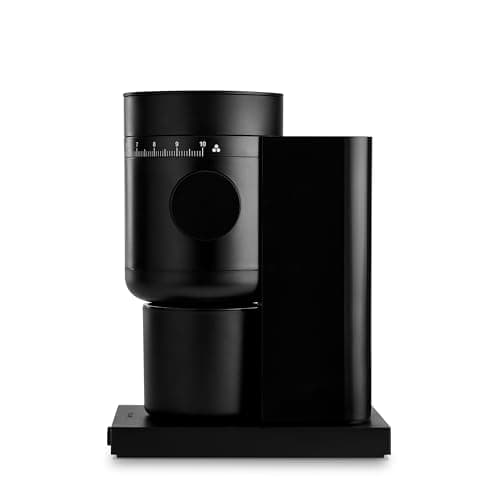
Under $300 is a more interesting bracket than it looks, because it is the first one where you get a real choice of grinder shape rather than just a better version of the same thing. Our pick is the DF54, the cheapest genuine flat-burr single-doser we can recommend; the Fellow Opus 2 is the best stepless single-dose workflow for two hundred dollars; the Eureka Mignon Notte is the one to buy if you want to flip a switch and grind straight into the portafilter without weighing anything; the 1Zpresso K-Ultra is the answer if you would rather own no motor at all; and the Timemore Chestnut C3 ESP is the cheapest grinder on this page that can genuinely dial in a shot.

Before the picks, the criteria — because the spec people shop on in this bracket is almost never the spec that decides whether they can pull a good shot.

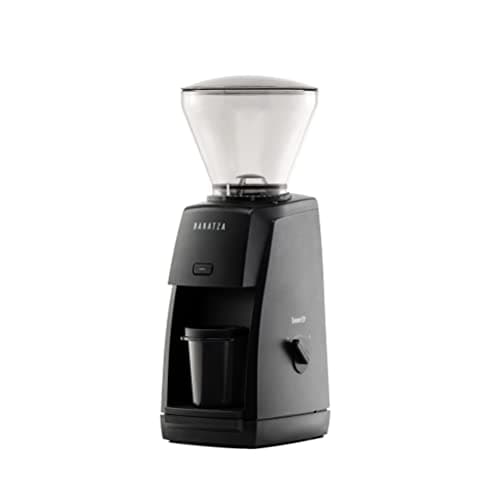
Criterion one: adjustment resolution in the espresso range. Espresso lives in a very narrow band of grind size. One step too fine and the machine chokes; one step too coarse and the shot gushes and tastes thin. What matters is therefore not how many settings a grinder advertises but how finely spaced they are where you will actually be working. A stepless collar has no spacing at all — you creep the burrs by a hair — and that is why the DF54, the Opus 2 and the Notte all sit high on this page. A stepped grinder can be excellent too, as long as the steps land inside the espresso window: the Baratza Encore ESP is the standing example, because Baratza re-geared the original Encore specifically so its 40 steps reach into the espresso range the standard Encore missed. Espresso grind size explains the window itself, and how to dial in espresso covers the routine that resolution is for.

Criterion two: retention, which is really about whether your next change lands. Every grinder keeps some coffee inside itself. The number matters less than the consequence: if a grinder holds two grams, then the first shot after you change the setting is partly ground at the oldsetting, so you are dialing in against a lagged signal and the change you just made shows up a shot late. Single-dose grinders attack this directly — the DF54 publishes sub-0.1g retention with an ionizer, and a hands-on reviewer measured 0.1–0.2g on the Opus 2 — while a hopper-fed grinder like the Notte asks you to purge a little between doses. A hand grinder has the lowest retention of all, for the simple reason that you can tip it upside down. Single dosing explained is the longer version of this argument.

Criterion three: burr geometry, which is third on purpose. Flat burrs tend to produce a narrower particle distribution, which shows up most clearly in light-roast espresso as more separation and clarity; conical burrs are more forgiving, quieter and cheaper to build, which is why almost everything under $200 is conical. Both make good espresso. The reason geometry is interesting in this bracket specifically is that $300 is where the flat option arrives at all: the DF54 brings 54mm flat burrs in at the price of a mid-tier conical, which simply was not possible a few years ago. We rank the two families separately in best flat burr grinders and best conical burr grinders if you want to go deeper before choosing.

Criterion four: the workflow you will actually repeat every morning. This is the one buyers underweight and then live with. A single-doser means weighing beans into the grinder for every shot; that is about fifteen seconds and a scale, and in exchange you get freshness, no stale hopper and almost no waste when you switch beans. A hopper-fed on-demand grinder means filling it once a week and flipping a switch; it is faster every morning and slightly worse every time you change coffee. A hand grinder means roughly a minute of cranking per shot. None of these is wrong, but they are genuinely different hobbies, and the grinder you resent at 7am is the wrong grinder at any price.

What $300 does not buy.It does not buy 64mm or 83mm burrs, a motor that grinds 18 grams in four seconds, or the build quality of a commercial grinder — those start higher, and we cover them in best high-end espresso grinders. What it does buy is a grinder whose resolution and retention are no longer the limiting factor in your cup, which is the point at which further spending starts buying speed, silence and metal rather than better espresso. If your budget is tighter, the honest answer is that the step down is small: best grinders under $200 and best grinders under $100 cover the brackets below, and the Timemore at the bottom of this page is proof that a hundred dollars already clears the bar.

The short answer

Quick picks

#ProductBest forScorePrice
01
DF DF54 Single Dose Coffee Grinder
DF54 Single Dose Coffee Grinder

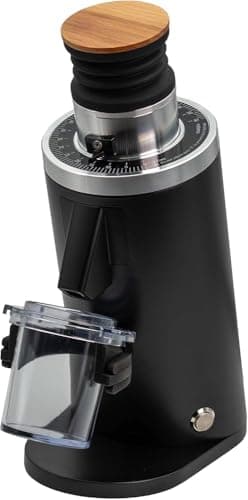
The reason this bracket is worth writing about. The DF54 puts 54mm stainless flat burrs behind a stepless micrometric collar in a single-dose body, and its published retention is under 0.1g with an ionizer doing the anti-static work - no bellows required. That combination, at this price, is new: it means a grind change lands on the very next shot, and that you can creep the burrs by a hair instead of hopping between fixed steps. It shares its OEM lineage with the larger DF64, so the mechanism is proven rather than experimental. What you give up is burr size against the 64mm platform, and polish: the build is functional rather than premium, and the same hardware is sold under several relabeled brand names, so buy from a seller with clear warranty support.

Best overall under $300 - the cheapest flat-burr single-doser worth owning
8.6
$260.00Amazon
02
Fellow Fellow Opus 2 Conical Burr Grinder
Fellow Opus 2 Conical Burr Grinder

The best stepless single-dose workflow at two hundred dollars, as long as you buy it for espresso and not as an all-rounder. The 48mm conical burrs sit behind a stepless dial with 48 marked positions, a hands-on reviewer ground 18g in nine seconds at 0.1-0.2g retention, and the included 30g dosing cup fits both 54mm and 58mm portafilters - which almost nothing else at this price bothers to do. The weaknesses are specific rather than vague: it was measured at 84-85 dB, so it is loud; the grind chamber and impeller are plastic; owner reports on retention conflict with that measured figure, with some describing 1-2.5g needing taps and a bellows; and filter coffee is adequate rather than good.

Best stepless single-dose grinder at the $200 mark
8.3
$159.95Amazon
03
Eureka Eureka Mignon Notte
Eureka Mignon Notte

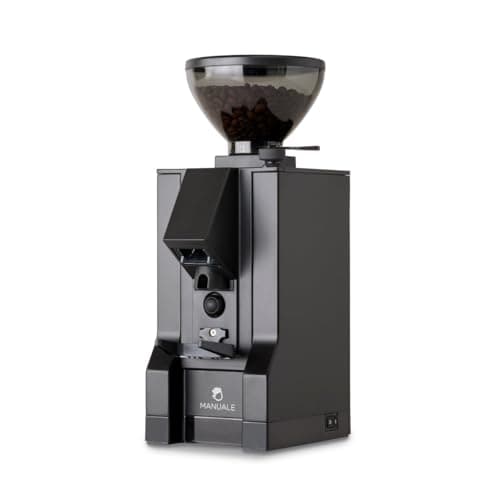
The pick if you want cafe-shaped mornings rather than a weighing ritual. The Notte runs 50mm flat steel burrs behind a stepless collar, so you nudge the grind by a hair rather than by a fixed step, and it is hopper-fed and grind-on-demand: you flip it on and it grinds straight into the portafilter. It is also notably quiet for an electric grinder, which matters more than people expect at six in the morning, and the compact Italian build feels like the most finished object on this page. It sits at the very top of this budget, it keeps some coffee inside between doses that you purge, and its stepless collar has no numbered scale - so once you find a setting you like, tracking it is your job.

Best grind-on-demand, and the quietest grinder here
8.0
$299.00Amazon
04
1Zpresso 1Zpresso K-Ultra Manual Coffee Grinder
1Zpresso K-Ultra Manual Coffee Grinder

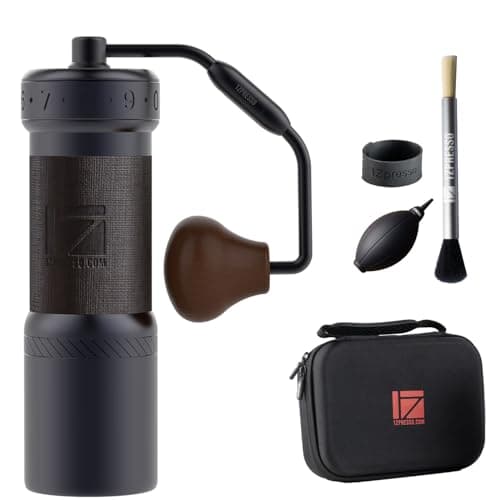
The best grinder here if you would rather own no motor at all, and the only pick that reads an exact setting back to you. The 48mm heptagonal burrs grind a full dose quickly and evenly for a hand grinder, and the external numbered dial - 100 clicks per rotation, roughly 20 microns each - turns switching from espresso to filter into a repeatable few clicks instead of a click-counting ritual. It ships in a travel case, so it doubles as your grinder on the road, and its retention is as close to zero as this page gets because you can tip it over. The honest catches: it leans filter, since roughly 20-micron steps are slightly coarse for chasing the finest light-roast espresso, and a full dose is real arm work every single morning.

Best manual option, and the only pick with a numbered dial
8.0
$207.20Amazon
05
TIMEMORE TIMEMORE Chestnut C3 ESP
TIMEMORE Chestnut C3 ESP

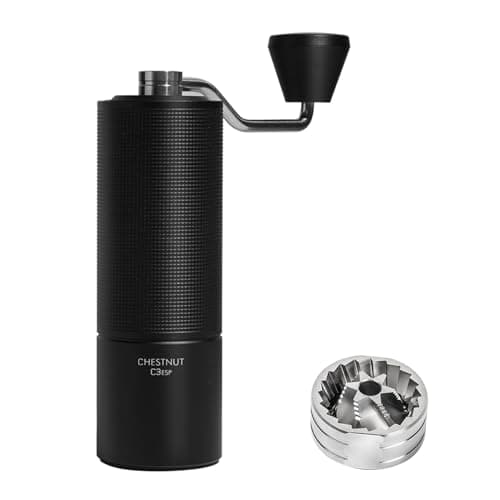
The budget pick, and the proof that the floor for espresso-capable grinding is well below this bracket. Timemore took the Chestnut C3 and gave it fine external stepped adjustment - about 0.023mm per click, 30 clicks per rotation - which is tight enough to dial a shot rather than merely approach one, wrapped in an all-metal body over a dual-bearing axle that feels well above its price. It is the cheapest grinder on this page by a wide margin and the easiest to pack. The limits are the ones every small manual grinder has: a fine espresso dose is about a minute of cranking, the 38mm burrs grind more slowly than a 48mm set, capacity is roughly one drink at a time, and the dial has no numbers, so you track a setting by counting clicks.

Budget pick - the cheapest grinder here that can genuinely dial a shot
8.0
$68.00Amazon
06
Baratza Baratza Encore ESP
Baratza Encore ESP

Last on this page's criteria and still the right grinder for a particular buyer: the one who wants to own this for ten years. The 40mm conical steel burrs are proven, the re-geared 40 steps put usable settings in the espresso range the standard Encore never reached, and it grinds happily for pour over, drip and French press too. What sets it apart is what happens after you buy it - Baratza sells parts and runs a repair program, so this is a grinder you fix rather than replace. It scores below the rest here because it is stepped rather than stepless, it is not fast, it retains some grounds and can be messy at the chute, and the plastic body feels entry-level. For a first espresso grinder you will not outgrow quickly, that trade is a good one.

Best for repairability and a forgiving first dial-in
7.9
$199.95Amazon

#ad · Live prices from the Amazon Product API, as of November 20, 2026. Where we have no verified live price, we show none — a gap beats a number that has rotted.

In detail

The picks, in full

01
DF DF54 Single Dose Coffee Grinder

Best overall under $300 - the cheapest flat-burr single-doser worth owning

DF54 Single Dose Coffee Grinder

54mm stainless steel flat burrsStepless micrometric adjustmentSub-0.1g retention, ionizer anti-staticSingle dose, espresso-first
8.6/10

The reason this bracket is worth writing about. The DF54 puts 54mm stainless flat burrs behind a stepless micrometric collar in a single-dose body, and its published retention is under 0.1g with an ionizer doing the anti-static work - no bellows required. That combination, at this price, is new: it means a grind change lands on the very next shot, and that you can creep the burrs by a hair instead of hopping between fixed steps. It shares its OEM lineage with the larger DF64, so the mechanism is proven rather than experimental. What you give up is burr size against the 64mm platform, and polish: the build is functional rather than premium, and the same hardware is sold under several relabeled brand names, so buy from a seller with clear warranty support.

Espresso resolution
9
Grind uniformity
8.5
Retention & workflow
9
Daily convenience
8
Value
8.5

Pros

  • The lowest price of any genuine flat-burr grinder we would recommend
  • Stepless collar gives real espresso resolution rather than coarse fixed steps
  • Published retention under 0.1g, so a setting change shows up on the next shot
  • Compact single-dose footprint that suits a small counter
  • Same OEM lineage as the DF64, so the core mechanism is proven

Cons

  • 54mm burrs are smaller than the 64mm platform, with slightly less outright clarity
  • Budget build and finish - functional, not premium, with modest fit and heft
  • Sold under several relabeled brand names, so warranty support varies by seller
  • Stepless means no numbered scale: you track your own setting
  • Single-dosing needs a scale and a few seconds of weighing per shot

Don't buy this if…

…you want to fill a hopper once a week and flip a switch. Single-dosing is a deliberate ritual, and the Notte below does the press-and-go job far better.

Our full DF54 review goes through the burr set and the retention claim in detail, and DF64 Gen 2 vs DF54 works out whether the step up to 64mm burrs is worth the money if you can stretch past this bracket.

$260.00View on Amazon

Price as of November 20, 2026. Prices change — Amazon's at checkout is the one that counts.

#ad · we may earn a commission from this link to DF54 Single Dose Coffee Grinder

02
Fellow Fellow Opus 2 Conical Burr Grinder

Best stepless single-dose grinder at the $200 mark

Fellow Opus 2 Conical Burr Grinder

48mm stainless steel conical burrsStepless dial, 48 marked positions100g single-dose bin + 30g espresso cup300 W, 5.1 lb, ionizer anti-static
8.3/10

The best stepless single-dose workflow at two hundred dollars, as long as you buy it for espresso and not as an all-rounder. The 48mm conical burrs sit behind a stepless dial with 48 marked positions, a hands-on reviewer ground 18g in nine seconds at 0.1-0.2g retention, and the included 30g dosing cup fits both 54mm and 58mm portafilters - which almost nothing else at this price bothers to do. The weaknesses are specific rather than vague: it was measured at 84-85 dB, so it is loud; the grind chamber and impeller are plastic; owner reports on retention conflict with that measured figure, with some describing 1-2.5g needing taps and a bellows; and filter coffee is adequate rather than good.

Espresso resolution
9
Grind uniformity
7.5
Retention & workflow
8.5
Daily convenience
7.5
Value
9

Pros

  • Fast: a hands-on reviewer ground an 18g espresso dose in 9 seconds
  • Low measured retention (0.1-0.2g), so a grind change lands on the very next shot
  • Stepless dial means no espresso setting is out of reach between clicks
  • Includes a 30g dosing cup that fits both 54mm and 58mm portafilters
  • Integrated ionizer keeps static clumping and mess down
  • Auto-stop when the bin empties, and a two-year Fellow warranty

Cons

  • Loud - measured at 84-85 dB by a hands-on reviewer, with some rattle
  • Grind chamber and impeller are plastic, not metal
  • Filter coffee is merely adequate; it lost pour-over comparisons against flat burrs
  • Owner reports conflict with the measured retention figure - some describe 1-2.5g
  • A stepless dial has no numbers you can trust absolutely, so repeating a setting takes feel

Don't buy this if…

…pour over or filter is your main brew method, or you are chasing light-roast espresso clarity. Both point at flat burrs - the DF54 above for espresso, or a flat-burr brew grinder for filter.

The full Fellow Opus 2 review covers the noise measurement and the retention disagreement in full, and Opus 2 vs Baratza Encore ESP is the head-to-head between the two $200 grinders on this page — stepless single-doser against stepped, repairable workhorse.

$159.95View on Amazon

$199.9520% off

Price as of November 20, 2026. Prices change — Amazon's at checkout is the one that counts.

#ad · we may earn a commission from this link to Fellow Opus 2 Conical Burr Grinder

03
Eureka Eureka Mignon Notte

Best grind-on-demand, and the quietest grinder here

Eureka Mignon Notte

50mm flat steel burrsStepless adjustment collarHopper-fed, grind on demandCompact Italian build, quiet for an electric
8.0/10

The pick if you want cafe-shaped mornings rather than a weighing ritual. The Notte runs 50mm flat steel burrs behind a stepless collar, so you nudge the grind by a hair rather than by a fixed step, and it is hopper-fed and grind-on-demand: you flip it on and it grinds straight into the portafilter. It is also notably quiet for an electric grinder, which matters more than people expect at six in the morning, and the compact Italian build feels like the most finished object on this page. It sits at the very top of this budget, it keeps some coffee inside between doses that you purge, and its stepless collar has no numbered scale - so once you find a setting you like, tracking it is your job.

Espresso resolution
9
Grind uniformity
9
Retention & workflow
6.5
Daily convenience
8.5
Value
7

Pros

  • Stepless adjustment tunes grind by the smallest possible increment
  • 50mm flat burrs deliver clean, uniform espresso grounds
  • Notably quiet for an electric grinder
  • Press-and-go workflow: no scale, no weighing, no dosing cup to empty
  • Compact Italian build that looks and feels premium

Cons

  • The most expensive pick here, right at the top of the bracket
  • Hopper-fed, so it retains some grounds you purge between doses
  • Stepless collar has no numbered scale, so you track settings yourself
  • Switching beans means emptying a hopper, which single-dosers avoid entirely

Don't buy this if…

…you rotate single-origin bags often or want near-zero waste. That is the single-dosing case, and the DF54 or Opus 2 above are built for it.

Our Eureka Mignon Notte review covers the quiet claim and the purge routine, and it is also a pick on best electric espresso grinders under $500, where it is ranked against grinders with another two hundred dollars of headroom.

$299.00View on Amazon

Price as of November 20, 2026. Prices change — Amazon's at checkout is the one that counts.

#ad · we may earn a commission from this link to Eureka Mignon Notte

04
1Zpresso 1Zpresso K-Ultra Manual Coffee Grinder

Best manual option, and the only pick with a numbered dial

1Zpresso K-Ultra Manual Coffee Grinder

48mm heptagonal stainless burrsExternal numbered dial, ~20 microns per click100 clicks per rotationCarry case included, no power needed
8.0/10

The best grinder here if you would rather own no motor at all, and the only pick that reads an exact setting back to you. The 48mm heptagonal burrs grind a full dose quickly and evenly for a hand grinder, and the external numbered dial - 100 clicks per rotation, roughly 20 microns each - turns switching from espresso to filter into a repeatable few clicks instead of a click-counting ritual. It ships in a travel case, so it doubles as your grinder on the road, and its retention is as close to zero as this page gets because you can tip it over. The honest catches: it leans filter, since roughly 20-micron steps are slightly coarse for chasing the finest light-roast espresso, and a full dose is real arm work every single morning.

Espresso resolution
7.5
Grind uniformity
9
Retention & workflow
9.5
Daily convenience
6
Value
8

Pros

  • External numbered dial makes a setting repeatable and readable, which no stepless pick here is
  • Big 48mm heptagonal burrs grind a full dose fast and evenly for a manual
  • Effectively zero retention - you can empty it completely
  • Genuinely does espresso and filter well, so one grinder covers both
  • Needs no outlet, makes no noise and travels in its own case

Cons

  • Roughly 20-micron steps are slightly coarse for the very finest light-roast espresso
  • A full single dose is about a minute of real cranking, every time
  • Premium end of hand-grinder pricing, and bulkier than travel grinders
  • No motor means no speed: back-to-back drinks for guests are a chore

Don't buy this if…

…you make more than two drinks a morning or anyone else in the house uses the grinder. Hand grinding is pleasant once and tedious four times - the electric picks above exist for that.

The full 1Zpresso K-Ultra review covers the dial and the burr set, and hand vs electric grinders is the honest version of the decision you are really making here.

$207.20View on Amazon

$259.0020% off

Price as of November 20, 2026. Prices change — Amazon's at checkout is the one that counts.

#ad · we may earn a commission from this link to 1Zpresso K-Ultra Manual Coffee Grinder

05
TIMEMORE TIMEMORE Chestnut C3 ESP

Budget pick - the cheapest grinder here that can genuinely dial a shot

TIMEMORE Chestnut C3 ESP

38mm S2C stainless conical burrsExternal stepped dial, ~0.023mm per click30 clicks per rotationAll-metal body, dual-bearing axle
8.0/10

The budget pick, and the proof that the floor for espresso-capable grinding is well below this bracket. Timemore took the Chestnut C3 and gave it fine external stepped adjustment - about 0.023mm per click, 30 clicks per rotation - which is tight enough to dial a shot rather than merely approach one, wrapped in an all-metal body over a dual-bearing axle that feels well above its price. It is the cheapest grinder on this page by a wide margin and the easiest to pack. The limits are the ones every small manual grinder has: a fine espresso dose is about a minute of cranking, the 38mm burrs grind more slowly than a 48mm set, capacity is roughly one drink at a time, and the dial has no numbers, so you track a setting by counting clicks.

Espresso resolution
8
Grind uniformity
7
Retention & workflow
9.5
Daily convenience
5.5
Value
10

Pros

  • Fine external stepped adjustment tight enough to actually dial in espresso
  • The cheapest genuinely espresso-capable grinder on this page, by a clear margin
  • All-metal body with a dual-bearing axle - feels well above its price
  • Handles pour over and French press as happily as it does a shot
  • Small, light and the easiest pick here to pack for travel

Cons

  • Manual: a fine espresso dose is about a minute of real cranking
  • 38mm burrs grind a dose more slowly than the 48mm grinders here
  • Roughly 20-25g capacity - one shot or one cup at a time
  • The stepped dial has no numbers, so you track a setting by counting clicks
  • The very finest light-roast espresso pushes its steps to their limit

Don't buy this if…

…you want a numbered dial you can read back, or the quickest, largest burrs - the K-Ultra above is the upgrade that fixes both.

Our Timemore C3 ESP review covers the espresso dial in detail, and best coffee grinders under $100 is the bracket below this one if the budget is the real constraint.

$68.00View on Amazon

$99.0031% off

Price as of November 20, 2026. Prices change — Amazon's at checkout is the one that counts.

#ad · we may earn a commission from this link to TIMEMORE Chestnut C3 ESP

06
Baratza Baratza Encore ESP

Best for repairability and a forgiving first dial-in

Baratza Encore ESP

40mm conical steel burrs40 stepped settings, re-geared for espressoEspresso plus pour over, drip and French pressBaratza parts and repair support
7.9/10

Last on this page's criteria and still the right grinder for a particular buyer: the one who wants to own this for ten years. The 40mm conical steel burrs are proven, the re-geared 40 steps put usable settings in the espresso range the standard Encore never reached, and it grinds happily for pour over, drip and French press too. What sets it apart is what happens after you buy it - Baratza sells parts and runs a repair program, so this is a grinder you fix rather than replace. It scores below the rest here because it is stepped rather than stepless, it is not fast, it retains some grounds and can be messy at the chute, and the plastic body feels entry-level. For a first espresso grinder you will not outgrow quickly, that trade is a good one.

Espresso resolution
7.5
Grind uniformity
8
Retention & workflow
6.5
Daily convenience
8.5
Value
9

Pros

  • Re-geared steps genuinely reach the espresso range the original Encore missed
  • Proven 40mm conical burrs deliver consistency well above the price
  • Repairable for years - Baratza sells parts and runs a repair program
  • Also grinds beautifully for pour over, drip and French press
  • Simple, approachable controls that are hard to get wrong

Cons

  • Stepped, not stepless, so a picky machine may want a setting between two clicks
  • Not fast - a double dose takes its time
  • Retains some grounds and can be a little messy at the chute
  • Plastic body and hopper feel entry-level, because they are
  • Fine for most espresso, but very light single-origin espresso pushes its limits

Don't buy this if…

…you want stepless micro-adjustment or a single-dose workflow out of the box. That is what the DF54 and Opus 2 above are for, at the same money or a little more.

The full Baratza Encore ESP review covers the re-gearing and the repair program, and best grinders for beginners ranks the field on how forgiving the adjustment is rather than on price.

$199.95View on Amazon

Price as of November 20, 2026. Prices change — Amazon's at checkout is the one that counts.

#ad · we may earn a commission from this link to Baratza Encore ESP

How to choose between these six

Start with the workflow question, not the spec sheet. All six of these grinders can make espresso you will be pleased with; the one you are still happy with in a year is the one whose morning routine you actually want. If you like the idea of weighing 18 grams of beans into a cup, tipping them in and getting almost all of them back out as fresh grounds, buy a single-doser: the DF54 or the Opus 2. If the thought of that makes you tired, buy the Notte and fill the hopper on Sundays. If you want to grind on a camping trip or in a hotel room, or you simply like the ritual, buy one of the two hand grinders. That decision eliminates most of this page in about ten seconds, and nothing else on the spec sheet matters as much.

Why stepless is not automatically better

Stepless adjustment is the headline feature on three of these grinders, and it is genuinely useful: espresso rewards resolution, and a stepless collar can always land between two points a stepped grinder has to skip. The catch is repeatability. A stepless collar has no numbers, so when you switch from a dark roast back to a light one, you are finding the setting by feel and memory rather than reading it off a dial. The 1Zpresso K-Ultra is the only pick here that does both — fine steps andan external numbered scale — which is a real part of why a hand grinder earns its place in an electric-grinder bracket. If you brew one coffee at a time and rarely change beans, stepless is a clear win. If you rotate bags and brew both espresso and filter, a numbered scale saves you more frustration than infinite resolution does.

Flat versus conical at this price, honestly

You will read that flat burrs are better. The more useful statement is that flat burrs tend to produce a narrower particle distribution, and that this shows up most audibly in light-roast espresso, where separation and clarity are the point. Dark and medium roasts hide the difference well, and a good conical grinder with fine adjustment will make espresso you are happy with for years. What is new in this bracket is simply that you now have the choice at all: the DF54 brings 54mm flat burrs in at the price of a mid-tier conical. If you mostly drink milk drinks made with a medium or dark roast, do not let geometry overrule workflow — what you will notice every day is the hopper, the noise and the repair program, not the burr shape.

What else you need, and what it costs

A grinder is half a setup. Single-dosing wants a scale that reads to 0.1g, which is a twenty-dollar item rather than a hundred-dollar one — best espresso scales has the picks. Everything on this page benefits from reasonable puck prep, which mostly means a WDT tool and a level tamp rather than anything expensive. And if you have not bought the machine yet, do not spend your whole budget on it: best espresso setup under $500 and best espresso setup under $1,000 split the money between machine and grinder in the proportions that actually produce good shots, which is more grinder than most people expect. Do you need a grinder for espresso answers the question underneath that, for anyone still hoping to skip this purchase.

Where to go next

If this bracket is more than you want to spend, best grinders under $200 is the next step down and shares only one pick with this page. If you can stretch, best electric espresso grinders under $500 is where 64mm burrs and heavier builds start. If single-dosing is clearly your answer, best single dose grinders ranks that category on retention and dosing behavior specifically. And if you want the espresso-first overall picks regardless of price, best grinders for espresso is the parent roundup for this hub. Pairing a grinder with a machine at the same time? The Nespresso alternatives page covers the machines people buy when they leave capsules behind, most of which need exactly this class of grinder.

How we picked

We did not lab-test this gear

Everyone in this category says they tested twenty machines. We have not pulled shots on every product here, and we say so. What we did instead: compiled the published specifications, cross-checked the manufacturer manuals, computed the running cost (wattage to energy, grams-per-shot to cost-per-cup), weighed aggregated owner reports, and scored each product against a published rubric. The scores are judgments from documented research — not measurements we took, because we do not have a test lab and we will not pretend we do. Where hands-on time would tell you more than a spec sheet, we flag it. Where a number came from someone else's work, we name them in Sources.
Questions

Frequently asked

Is $300 enough for a good espresso grinder?
Yes, comfortably — and it is more than enough. Three hundred dollars buys a grinder whose adjustment resolution and retention are no longer the limiting factor in your shot, which is the only thing you are really buying in a grinder. Above this bracket you are mostly paying for speed, larger burrs, quieter motors and heavier metal, all of which are nice and none of which makes better espresso by default. The Timemore Chestnut C3 ESP at the bottom of this page is the evidence: it costs about a third of the bracket and can genuinely dial in a shot.
What is the cheapest flat-burr espresso grinder?
On this site, the DF54— 54mm stainless flat burrs with a stepless micrometric collar, published retention under 0.1g, and an ionizer instead of a bellows. It is the reason this price bracket is interesting at all, because below it every electric espresso grinder we rank is a conical. If you want to see how it compares with the 64mm platform it is derived from, read DF64 Gen 2 vs DF54.
Do I need a single-dose grinder, or is a hopper fine?
A hopper is fine, and for a lot of people it is better. Single-dosing wins on freshness, on waste when you switch beans, and on how quickly a grind change shows up in the cup, because there is almost nothing held inside the grinder. A hopper wins every single morning, because you flip a switch instead of weighing beans. If you drink the same bag for a week and make two drinks a day, a hopper-fed grinder like the Eureka Mignon Notte is the more pleasant machine to own. If you rotate single origins, single-dosing stops you throwing away a hopper of the last bag every time you change.
Can a hand grinder really do espresso?
Yes — the two manual picks here are on this page on merit, not as curiosities. The relevant spec is the same as for an electric: how fine the adjustment steps are. The Timemore C3 ESP publishes roughly 0.023mm per click and the 1Zpresso K-Ultra roughly 20 microns, both tight enough for espresso. What you trade is time and effort: a fine espresso dose is around a minute of cranking, every shot, and that is the real reason most people end up with a motor. Hand vs electric grinders is the longer comparison.
How much of my budget should go to the grinder rather than the machine?
More than most people expect. The grinder decides whether you can hit the narrow window where espresso tastes good at all; the machine mostly decides how consistently and conveniently you get there. On a tight total budget we would rather see a modest machine and one of the grinders on this page than a showpiece machine fed by a blade grinder. Best espresso setup under $500 splits a fixed budget between the two explicitly.
Why is the Breville Smart Grinder Pro not on this page?
Because its listing has flipped in and out of unavailability across our last several price checks. It sits in this price band and we review it elsewhere on the site, but a price-bracket page is a promise that you can buy the thing today, so we leave out listings whose stock status we cannot rely on. If that settles down, it is a candidate for this page.

Keep reading

Same gear, other pages

We cover this gear elsewhere too

Receipts

Sources

We do not run a testing lab, and we do not pretend to. Where a measured number came from someone else's work, we name them and link them. Where we could not verify something, we say so on the page rather than quietly leaving it out. Read our full method.