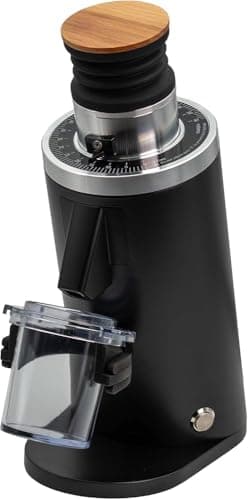
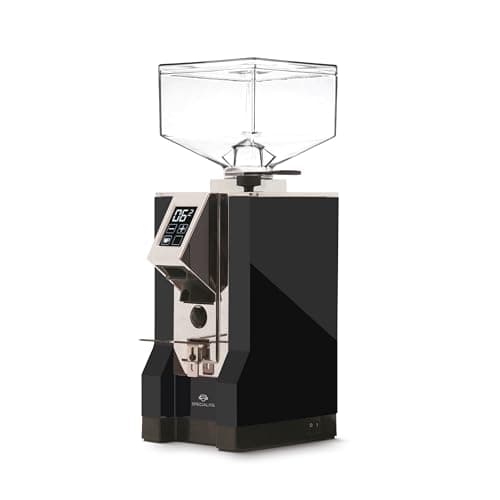
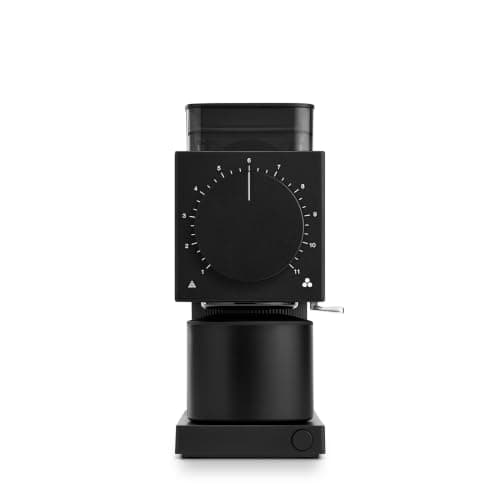
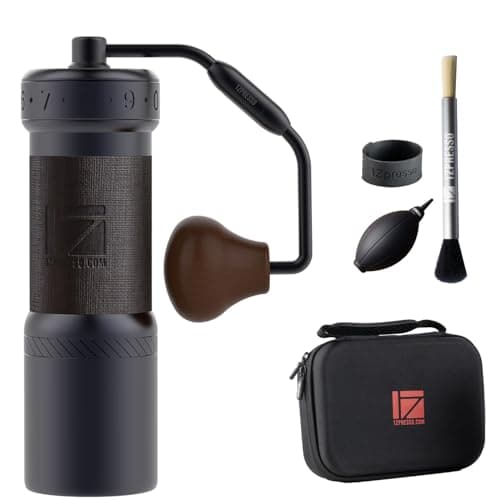
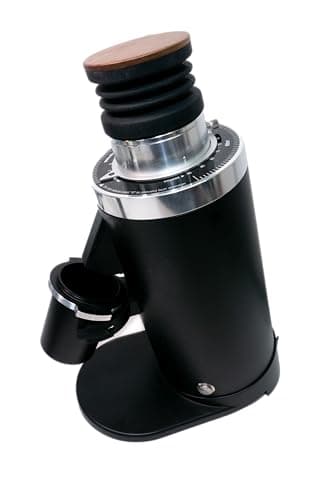
Single dosing means grinding exactly one dose of beans at a time. Instead of filling a hopper and letting beans sit on top of the grinder for days, you weigh out one shot's worth — 18 grams, say — drop it in, grind it, and brew. That is the whole idea, and people do it for three concrete reasons: the coffee is fresher, because nothing stales in a hopper; switching between beans and roasts is trivial, because there is nothing to empty first; and a well-designed single-doser leaves almost nothing stuck inside between doses, so what you weigh in is what you brew.
Here is the honest shape of this category in 2026. The affordable end is dominated by one platform: the DF64, a flat-burr single-dose grinder that made the whole approach mainstream at a home price, and its smaller and more versatile siblings. That is not marketing — it is genuinely the reference point everything else gets compared to, so three of our six picks are DF-family grinders and we explain plainly where each one earns its place. The rest of the field is more particular: a superb traditional espresso grinder that is technically hopper-fed but that a lot of people single-dose anyway, a beautiful filter grinder that its own maker says is not for espresso, and a hand grinder — which is inherently single-dose, and the cheapest, most portable way into the whole idea.
The real decisions come down to three things: flat versus conical burrs, how much ground coffee gets retained inside the grinder between doses, and whether you also want proper filter and pour-over versatility rather than espresso alone. We sort all of that out below. If you are still deciding whether espresso is even your priority, our best grinders for espresso roundup and the espresso grind size guide are the right places to start, then come back for the single-dose picks.
How we picked
Every grinder here is a real, currently-purchasable model, and we ranked them on the things that actually matter when you grind one dose at a time. Five criteria decided the order.
- Grind quality. The point of a good grinder is clean, uniform grounds. Flat burrs and conical burrs both do this well; what we rewarded is even output and enough resolution to dial a shot or a pour-over precisely.
- Low retention.This is the single-dose question. Retention is how much ground coffee gets stuck inside the grinder between doses. High retention means the coffee you weighed in is not the coffee you brew, and yesterday's beans hang around to mix with today's. Purpose-built single-dosers minimize it; hopper grinders you improvise with hold more.
- Versatility. Whether the grinder covers only espresso, only filter, or both. Some people want one grinder for everything; others want the best possible tool for one job. We scored honestly against what each grinder is built to do.
- Build and workflow. How well it is made, how loud it is, and how pleasant the weigh-grind-brew ritual actually is day to day. Single dosing is more hands-on than a hopper, so a smooth workflow matters.
- Value.What you pay against what you get. The DF platform earns its place here largely on this — flat-burr grind quality at a price that used to buy far less.
What we didn't test.We did not run these grinders in a lab — we do not have one, and we will not pretend otherwise. There are no particle-size distribution charts or retention measurements of our own here. Our scores are compiled from published manufacturer specifications and aggregated owner reports, exactly as our methodology describes. Where we were unsure of an exact number we kept the claim qualitative rather than invent a figure.
Why single dose (and who it's for)
Single dosing means weighing out exactly one brew's worth of beans, grinding that, and brewing it — with no beans stored in a hopper on top of the grinder. There are three honest reasons people switch to it. First, freshness: beans sitting in a hopper stale under light and air, and single dosing means every dose is beans you just scooped from the bag. Second, flexibility: with nothing in a hopper, you can go from a light Ethiopian pour-over to a dark espresso blend between two cups without emptying anything. Third, less waste from retention, because a grinder designed for single dosing gives you back nearly all of what you put in.
Who it is for: people who buy several bags at once and like to switch, people chasing the freshest possible cup, and anyone who finds the ritual of weighing and grinding a dose part of the pleasure rather than a chore. Who it is not for: someone who wants to press a button and walk away, or who brews the same beans in bulk every morning — a traditional hopper grinder is faster and less fuss for that. If that sounds more like you, the best grinders under $200 roundup leans toward simpler set-and-go options.
Flat vs conical burrs, and retention
Two technical questions cover most of the decision. The first is burr geometry. Flat burrs — the 64mm and 55mm flats in most of the grinders here — are two ring-shaped burrs facing each other, and they tend to produce a very uniform grind that many people prefer for clarity in espresso and filter alike. Conical burrs — like the 48mm cone in the 1Zpresso K-Ultra — are a cone spinning inside a ring; they are efficient, forgiving and common in hand grinders, and a good conical grinds beautifully. Neither is simply better; flats are the flavor of the affordable single-dose movement, but a great conical is a great grinder.
The second question, and the one that defines this category, is retention. Every grinder holds back a little ground coffee in its burr chamber and chute. In a hopper grinder that barely matters, because there is always more coffee flowing through. In single dosing it matters a lot: if you weigh in 18 grams and the grinder keeps two of them, your dose is off and those two grams are stale by the next brew. This is why the DF64 platform and the Fellow Ode built their reputations — short grind paths and features that push nearly all the coffee out. A hand grinder sidesteps the problem entirely: it starts empty every time, so retention is close to a non-issue. When you read that a single-doser has “low retention,” that is the promise being made.
Which single-dose grinder fits you
- Want one grinder, done right, and do not want to overthink it?DF64 Gen 2 — flat-burr grind quality, low retention, espresso to filter.
- Want flat-burr single dosing for the least money?DF54 — smaller, cheaper, same core idea.
- Genuinely switch between espresso and pour-over?DF64V Gen 3 — the versatile DF, if that flexibility is real for you.
- Want the quietest grinder and superb espresso, and do not mind single-dosing a hopper grinder? Eureka Mignon Specialita.
- Brew filter and pour-over, not espresso?Fellow Ode Gen 2 — beautiful, low-retention, filter by design.
- Want the cheapest, most portable way in, and do not mind the effort? 1Zpresso K-Ultra — single-dose by nature.
Whichever you land on, the grinder does more for your coffee than the machine does, so it is the right place to spend. If you are choosing the espresso machine to sit next to it, our best espresso machines under $1,000 roundup pairs naturally with these grinders, and the full coffee grinders hub covers every other angle.
There is a cheaper way into this workflow than most of the grinders above. Our Fellow Opus 2 reviewcovers a compact 48mm conical built around a 100g single-dose bin with auto-stop and low measured retention — not a flat-burr grinder, but the single-dose routine at a fraction of the price.