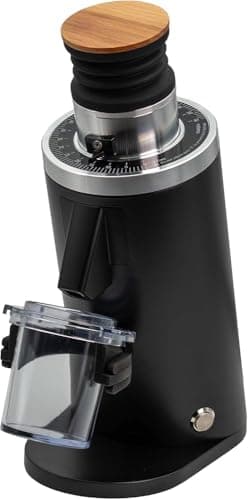
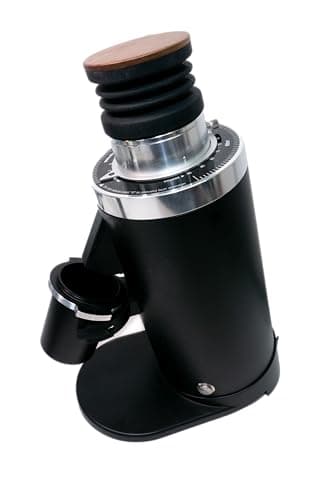
The DF64 Gen 2 and the DF54 are, in the ways that matter most, the same grinder built at two sizes. Both are single-dose flat-burr electrics from the DF family — you weigh in one shot's worth of beans, grind, and get almost all of it back with very little left inside — and both use a stepless micrometric collar to dial espresso continuously rather than in fixed clicks. The one headline difference is the burrs: the DF64 Gen 2 runs a 64mm flat-burr set, the DF54 a smaller 54mm one, and the DF54 costs meaningfully less because of it. So the entire decision comes down to a single question: is the bigger burr worth the premium, or does the cheaper sibling give you enough of the same thing?
Start with what is genuinely shared, because it is more than the price gap suggests. Both grinders are built as single-dosers from the start, with a short, low-retention grind path so what you weigh in is very close to what lands in the cup. Both use the same style of stepless micrometric adjustment— the continuous, no-clicks control that lets you creep the grind finer by a hair to slow a gushing shot or open it a whisker to rescue a choked one — which is the single most important thing an espresso grinder needs. Both grind fine enough for espresso and open up enough for pour-over and filter, and both share the same OEM lineage, so the core mechanism is proven rather than experimental. If you want the deeper single-grinder read on either one, our DF64 Gen 2 review and DF54 review are the companions to this head-to-head.
The differences are real but narrow. The 64mm burrs on the DF64 give a little more outright grind clarity and a touch more build heft; the DF54 trims burr size and finish to hit a lower price, but keeps the espresso-critical stepless collar and adds an ionizer that lets it hit sub-0.1g retention without even needing a bellows. Neither is a compromise on the fundamentals — both can grind fine, precise espresso — so the honest way to choose is to decide how much outright clarity and heft are worth to you against the money saved. Both sit in our best single-dose grinders roundup, and this page walks the burr size, the shared platform, the retention story and the build before naming who each one is for.
64mm vs 54mm: what the bigger burr actually buys
The whole premium sits on 10mm of burr diameter, so it is worth being precise about what that buys. A larger flat burr presents more cutting surface to the beans and tends to grind a little more uniformly, which reads in the cup as slightly cleaner, more separated flavors — the clarity that flat burrs are prized for, turned up a notch. The DF64 Gen 2's 64mm set is the more capable grinder on that measure, and if you chase light roasts and single-origin espresso where separation matters most, it is the honest pick. But be level-headed about the size of the gap: the DF54's 54mm burrs are not a downgrade to a coarse, muddy grind, they are a genuine flat-burr set that gives up a fraction of outright clarity, not the fundamentals. For a lot of drinkers — especially with milk drinks and medium roasts, where the milk and the roast blur fine distinctions anyway — the difference is small enough that the money saved matters more. Read burr diameter as one input among several, not the whole story; our best flat burr grinders roundup explains why alignment, tuning and adjustment matter at least as much as the number on the box.
The platform they share: stepless single-dosing
This is the part the price gap hides, and it is the reason the DF54 is such good value. Both grinders are built around the same idea and the same critical mechanism. Both are single-dosers— you weigh in one dose, grind it, and the short, low-retention path hands almost all of it back, so every shot is as fresh as the moment you scooped the beans and switching beans is effortless. And both use the same style of stepless micrometric collar, which is the single feature that most decides whether a grinder can pull good espresso. A stepless collar moves continuously instead of jumping between fixed clicks, so you can land on the exact grind point the espresso wants rather than being stuck between two settings — the difference between a balanced shot and one that runs a touch too fast or too slow. The DF54 keeps that collar in full. It did not cut the espresso-critical part to hit its price; it cut burr size and finish. That is what makes it an honest value pick rather than a false economy. If dialing in espresso is new to you, our guide to dialing in espresso shows what the stepless collar is actually for.
Retention and clump-management: ionizer vs bellows
Here the DF54 quietly out-features its bigger sibling, and it is worth knowing before you assume the pricier grinder wins everything. Like most home flat-burr grinders, the DF64 Gen 2 produces some static and the occasional clump, especially with fresh, oily or light-roast beans ground fine for espresso; the fix is a small ritual rather than a defect — a puff or two from the bellows to clear the chamber and keep retention low, and a quick stir with a WDT tool in the dosing cup to break up clumps before you tamp. It is about ten seconds of workflow. The DF54 addresses the same problem differently: an ionizerneutralizes the static charge that makes flat-burr grounds cling, so grounds fall cleanly and it reaches sub-0.1g retention without even needing a bellows. In practice that makes the cheaper grinder's single-dose workflow a touch tidier out of the box. Neither approach is wrong, and a good WDT tool earns its place next to either grinder for even distribution, but if a fuss-free retention story matters to you, note that here the money does not simply buy the better experience.
Build, seller and living with them
The DF64 Gen 2 carries a little more heft and finish than the DF54, whose build is honestly budget — functional and solid enough, but without the premium feel of a pricier grinder. Neither is a luxury object; both are workmanlike single-dosers where the money goes into the burrs and the mechanism, not the casing. The more important shared caveat is where you buy. Both are third-party platforms sold under several brand names and by a range of resellers, so the storefront you choose decides your warranty, your spares access and your after-sales support far more than it would with a single-brand grinder. Buy from a reputable, established seller with a stated warranty and available replacement burrs and small parts; chase the very cheapest listing and you can end up with thinner support if something goes wrong. Both are also noticeably louder than a premium traditional grinder, and both ask you to weigh and load each dose rather than fill a hopper — the single-dose ritual is slower and more hands-on by nature. We did not bench-test either unit; our methodology explains how we judge.
Which DF grinder fits you
- Buy the DF64 Gen 2 if you want the most grind clarity and build heft the DF single-dose platform offers, you chase light roasts and black espresso where separation shows, and the extra spend is comfortable. The 64mm burrs are the honest upgrade, and you keep the stepless collar and low-retention design in full.
- Buy the DF54 if the budget is tight and you want genuine flat-burr single-dosing for the least money. It keeps the espresso-critical stepless collar, adds an ionizer that hits sub-0.1g retention without a bellows, and the savings buy better beans that improve your shots more than 10mm of burr does.
- Consider looking wider ifoutright espresso precision or the quietest, most polished grinder matters more than single-dose freshness — a hopper-fed espresso specialist may suit you better. See the full field in our best grinders for espresso, and the tighter-budget options in our best grinders under $200.
What we did not test
We have not run either grinder on a bench for months, and we do not claim to. This comparison compiles the published specifications for the DF64 Gen 2 and the DF54 — the 64mm and 54mm flat burrs, the shared stepless micrometric collar, the single-dose low-retention designs and the DF54's ionizer — from the makers' own materials, listed in Sources, and weighs aggregated owner reports against our scoring rubric. Our scores are editorial judgments from that documented research, not measured numbers: there is no particle-size rig or retention scale behind them, so we did not independently verify the sub-0.1g figure ourselves — we report it as DF Grinders states it. Where hands-on time would tell you more than a spec sheet — exactly how much clarity the 54mm burrs give up to the 64mm set on the same bean, how each holds its setting over months, how one seller's revision differs from another — we say so rather than invent a figure. Prices are never quoted from memory; the live price renders from our pipeline with the date it was checked.