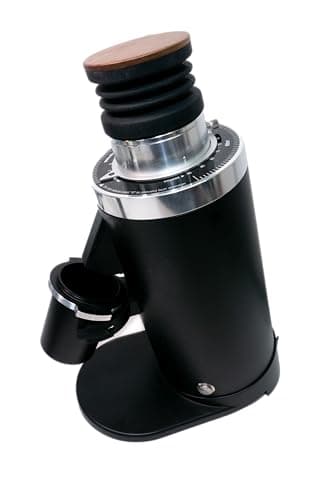
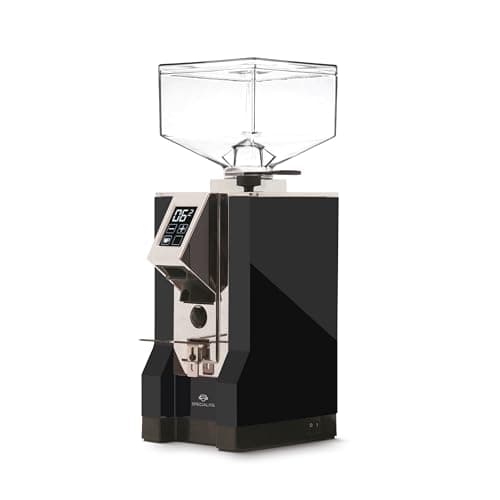
The Eureka Mignon Specialita and the DF64 Gen 2 land in the same conversation constantly, and for good reason: they sit in a similar price bracket, both are electric espresso grinders with stepless adjustment, and both are the grinder people reach for when an entry electric stops being enough. What separates them is not really quality — both grind espresso well — it is workflow. The Specialita is a quiet, hopper-fed, on-demand grinder you dial in once and then run with a tap. The DF64 Gen 2 is a single-doser: you weigh each shot's worth of beans, drop them in, grind, and start again next time. Pick the wrong one for how you actually make coffee and a very good grinder will feel like a chore.
The Specialita is the low-fuss, one-bean-and-go choice. It pairs 55mm flat burrs with Eureka's patented stepless micrometric dial, so you sweep continuously to the exact grind the espresso wants, and its Silent Technology makes it one of the quietest grinders you can put on a counter. Fill the hopper, program a timed dose on the touchscreen, and every morning you tap and grind — no scale, no weighing, no ritual. That is a genuine luxury if your household drinks one espresso bean day in, day out. The honest catch is that it is a hopper grinder; owners who want to weigh single doses can pull the hopper and drop beans straight onto the burrs, but that is an adopted workaround, and retention is modest but present. Read the full Eureka Mignon Specialita review for the deep dive.
The DF64 Gen 2 is the opposite temperament: a grinder built from the ground up around one dose at a time. Its 64mm flat burrs and short, low-retention path mean what you weigh in is very close to what lands in the cup, so you can switch beans in seconds with almost nothing left behind — a light-roast single origin at breakfast, a dark espresso blend after lunch, with no cross-contamination and no hopper to empty. It is the tinkerer's grinder too, with an ecosystem of burr options and mods around a hugely popular platform. The trade is that it is more hands-on: you weigh every dose, it wants a small clump-management routine to grind at its best, and it is noticeably louder than the Eureka. The full DF64 Gen 2 review covers the seller and workflow caveats. If you are still narrowing the field, both appear in our best grinders for espresso and the DF64 leads our best single-dose grinders.
The head-to-head, point by point
Dial-in feel:this is a near tie, and it is the reason both grinders are so widely recommended. Both are stepless, so both let you creep the grind finer by a hair to land the narrow espresso window instead of hopping between fixed clicks. The Specialita's micrometric collar feels a touch more refined and repeatable in the hand, and its touchscreen timer means once a shot is dialed you simply tap to repeat it; the DF64 gives you the same fine control but you confirm the dose by weight each time. Retention and mess:the DF64 wins clearly — it is built as a low-retention single-doser, so what you weigh in is very close to what lands in the cup, where the hopper-fed Specialita holds a modest but real amount inside. Noise:the Specialita wins decisively; Eureka's Silent Technology makes it one of the quietest grinders you can buy, and the DF64 is noticeably louder. Bean rotation:the DF64 wins — swapping beans is a few seconds with nothing to empty, while changing beans in the Specialita means running the hopper down or pulling it off. Everyday effort:the Specialita wins — fill, tap, grind, no scale, no clump routine. We did not lab-test either grinder; our methodology explains how we judge.
Retention, mess and the single-dose question
This is the axis the whole comparison really turns on. The DF64 Gen 2 was designed around one dose at a time: a short grind path and a low-retention body mean you can weigh in a single shot's worth of beans, grind, and be confident almost all of it comes out, so switching from a light-roast single origin to a dark espresso blend is a genuinely clean handover. The price of that freedom is a small ritual — a puff from the bellows to clear the chamber and a quick stir with a WDTtool to break up any clumps before you tamp. The Specialita comes at it from the other direction. It is a hopper grinder with an ACE anti-clump, anti-static system that keeps the chute tidy, and a great many owners single-dose it anyway by pulling the hopper and dropping beans straight onto the burrs. It works, but retention is modest and present, and you feel it most when you swap beans, because the last grind mingles with the next. If a low-retention, weigh-in-weigh-out workflow is your actual priority, the DF64 is purpose-built for it — and our best single-dose grinders roundup ranks it against the field.
Noise, and where you make coffee
Grinder noise reads as trivial on a spec sheet and matters enormously in a real kitchen, especially if you pull the first shot early or live in an apartment with thin walls or sleeping family. Here the two grinders are not close. The Specialita is part of Eureka's silent range and is one of the calmest, lowest-pitched grinders you can put on a counter; it will never be truly silent, because it is still crushing beans, but next to most grinders the difference is obvious. The DF64 Gen 2 is louder — not extreme, and because it is a single-doser motoring through a small load it runs in a short burst rather than a long drone, but it is unmistakably the noisier of the two. If near-silent operation is high on your list, that alone can decide it for the Eureka. If a brief burst of noise once or twice a day is a non-issue, the DF64's workflow advantages come back into play.
Bean rotation, tinkering and the ecosystem
The two grinders suit two different relationships with coffee. The Specialita rewards the person who has found a bean they love and wants to drink it with the least friction: dial it in once, program a dose, and the daily shot becomes a tap. It is a single-bean household's dream and a poor fit for someone who wants to change beans every few days. The DF64 Gen 2 is the grinder for the explorer and the tinkerer. Because it single-doses so cleanly, it invites constant bean rotation, and because it sits on a hugely popular third-party platform, there is a deep ecosystem around it — alternative burr sets that change the flavor profile, aftermarket bellows and funnels, and a wall of owner knowledge to draw on. That openness is a real strength if you enjoy fiddling, and largely irrelevant if you do not. One platform caveat carries over from the review: the DF is sold under several names and sellers, so buy from a reputable one for warranty and spares. Both grinders sit in our best grinders for espresso, and both use flat burrs if that is the geometry you are set on.
Which should you buy
- Buy the Eureka Mignon Specialita ifyou drink one bean day in and day out, you value quiet above almost everything, and you want espresso with the least possible fuss — fill the hopper, tap a timed dose, done, no scale and no clump routine. It is the calm, low-effort, on-demand choice, and the full Specialita review covers its quiet, stepless character in depth.
- Buy the DF64 Gen 2 if you love switching beans, you want to weigh every dose and leave almost nothing behind, and you do not mind a hands-on ritual and a bit more noise for that flexibility. It is the single-dose, tinker-friendly choice, and the full DF64 Gen 2 review covers its retention, clump-management and seller caveats.
Both are honestly good espresso grinders, so there is no wrong answer — only a right answer for your kitchen. If your coffee life is one bean and quiet mornings, the Specialita is the easier daily companion. If it is a rotating shelf of beans and a willingness to weigh and fiddle, the DF64 Gen 2 gives you freedom the hopper grinder cannot. Whichever you choose, grind fresh, dial in patiently, and pair it with a machine that can show off what a good grinder does.