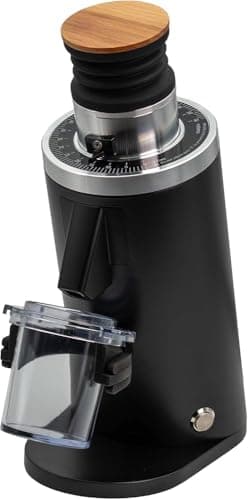
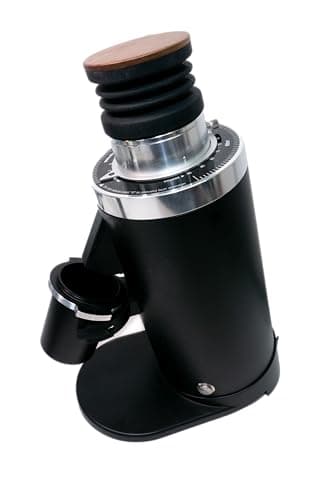
"Flat burr" has become shorthand for a certain kind of cup — clean, separated, with the acidity and the sweetness sitting in distinct layers rather than blended together. It is a real effect, and it is the reason serious home brewers keep migrating from the conical grinder that came with their setup to a flat-burr machine that costs more and does less on paper. This page ranks six grinders that genuinely use flat burrs, explains honestly what that geometry does and does not buy you, and helps you decide whether you are someone who will taste the difference or someone who should keep their money.
The mechanical difference is simple. A conical burr set is a cone spinning inside a ring; beans fall down the gap and get crushed as they travel. A flat burr set is two parallel rings, one fixed and one spinning, mounted face to face; beans are thrown out through the gap by centrifugal force and cut on the way. The flat arrangement tends to produce a more unimodalgrind — more of the particles landing near one target size, with a tighter spread — and that narrower distribution is what people are tasting when they call a flat-burr shot "clear" or "separated." Conicals, by contrast, tend to run a touch more bimodal, which reads in the cup as more body, more blended sweetness, and a rounder, more forgiving profile. Neither is objectively better. They are two flavors of correct.
Here is the part the marketing skips: for a lot of people, a good conical is completely enough. If you drink milk-based espresso, if you rotate light and dark roasts, or if you are still learning to pull a consistent shot, the extra clarity of a flat burr is often buried under milk, roast, or your own technique before it ever reaches your tongue. The people who genuinely benefit are black-coffee drinkers, light-roast and single-origin chasers, and anyone who has already dialed in their process and wants the last increment of definition. If that is not you yet, the honest move is a great conical — start with our best grinders for espresso or the best grinders under $200 and come back when the clarity is what is holding your cup back. If it is you, read on.
One more honest caveat before the ranking: flat burrs are not automatically "more uniform" than every conical. A cheap 64mm flat burr in a wobbly body will lose to a precision conical, and burr alignment — how truly parallel the two rings sit — matters as much as the format. Every grinder here is a real, currently purchasable flat-burr machine from a maker with a track record, and we ranked them for grind quality, adjustment feel, workflow and value rather than for the size on the box.
How we picked
Every grinder here genuinely uses flat burrs — we verified the burr type on each manufacturer or authorized-retailer page before it made the list, because mislabeling a conical grinder as flat would defeat the entire purpose of this page. From there, four things set the order.
- Grind uniformity.The reason to buy a flat burr is a tighter particle distribution, so how clean and consistent each grinder's output is — for its intended brew method — carried the most weight.
- Adjustment. Stepless micrometric collars that let you creep in on an espresso shot scored above coarse stepped dials. For filter-only grinders, we judged adjustment against the range they are actually meant to cover.
- Workflow and retention. Single-dose bodies with low retention, anti-static help and tidy dosing beat hopper-fed grinders when you change beans often; hopper grinders win on walk-away convenience. We scored each for the job it is built to do.
- Versatility and value. A grinder that spans espresso to French press earns points a single-purpose one cannot, and a grinder that delivers real flat-burr capability for less money beats a pricier one that only feels nicer. Support and repairability counted too.
What we did not test
We did not run these grinders through a lab. There is no particle-size laser-diffraction chart here and no side-by-side extraction log — our scores come from published manufacturer and retailer specifications, the mechanics of how flat and conical burrs cut, and aggregated owner feedback, exactly as our methodology explains. Treat the numbers as informed editorial judgment, not readings off an instrument. Where a spec drives a score — burr size, whether adjustment is stepless, whether the maker rules out espresso — we took it from the sources listed at the bottom of this page.
Flat vs conical: what you are actually choosing
The honest short version: a good flat burr tends to give you clarity and separation, and a good conical tends to give you body and forgiveness. Flat burrs throw a more unimodal grind — more particles clustered near your target size — and in the cup that reads as distinct, layered flavor, which is why light-roast and single-origin drinkers gravitate to them. Conicals run slightly more bimodal, adding a second population of finer particles that boosts body and blends the flavors into a rounder, sweeter, more approachable whole. That is also why a conical is more forgiving of a slightly-off dose or tamp: there is more margin before the shot falls apart.
So who should actually switch? You will likely taste the upgrade if you drink your espresso and filter black, chase light roasts and single origins, and have already got your dial-in process repeatable enough that the grinder is the limiting factor. You will likely not notice much if you drink milk-based espresso, live on medium-to-dark roasts, or are still fighting channeling and inconsistent shots — the clarity gets masked before it reaches you, and your money does more good on a WDT tool, scale and fresher beans. There is no shame in a great conical; our best grinders for espresso covers the strongest ones, and the entry-level standouts live in best grinders under $200.
Burr size is not the whole story
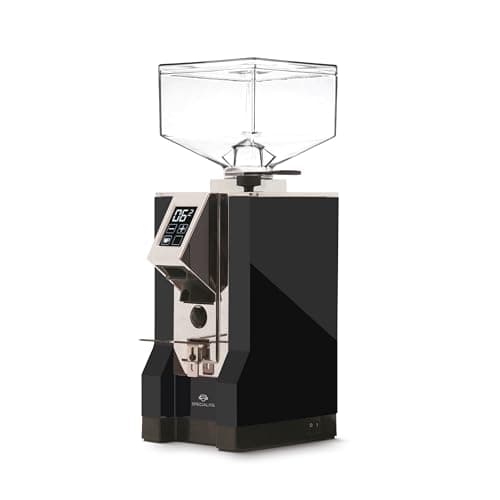
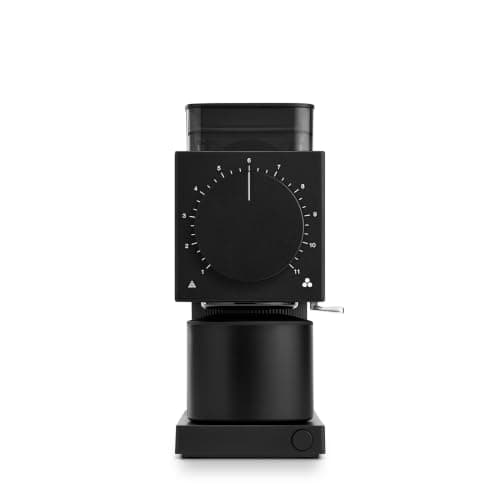
It is tempting to shop by burr diameter — 64mm must beat 55mm which must beat 54mm. It does not work that way. A larger flat burr can cut a dose faster and cooler, which helps consistency, but alignment (how perfectly parallel the two rings sit), burr tuning (the geometry ground into the teeth), and adjustment resolution matter at least as much. The 55mm Eureka Specialita out-refines plenty of 64mm grinders on espresso because its micrometric collar and build are dialed; the 64mm Fellow Ode is a filter specialist that cannot pull espresso at all despite its size. Read burr size as one input, not a ranking.
Espresso, filter, or both
Match the grinder to what you brew. For espresso, you need genuinely fine, precise adjustment — the stepless collars on the DF64, Specialita and DF54 are built for it, and the Vario+ and Sculptor reach espresso with their fine settings too. For filter and pour-over, the Fellow Ode is purpose-built and superb, and the versatile grinders here all cover drip comfortably. For both, a stepless espresso-capable single-doser (DF64, DF54, Sculptor) or the wide-range Vario+ lets you switch methods and return to a known setting. If bean-swapping is constant, prioritize a low-retention single-doser — our best single-dose grinders roundup goes deeper on that workflow. Still deciding whether you even need a dedicated grinder for shots? Start with do you need a grinder for espresso.
Which flat burr fits you
- Want the most flat-burr capability for the money? DF64 Gen 2 — 64mm burrs, stepless, espresso to filter, our overall pick.
- Espresso-first, and you want quiet and refined? Eureka Mignon Specialita.
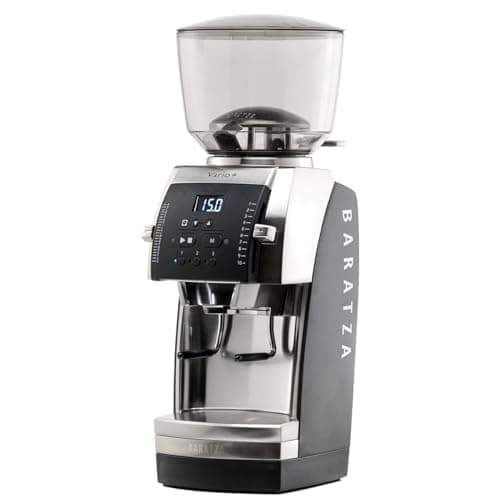
- Brew several ways and value long-term support? Baratza Vario+.
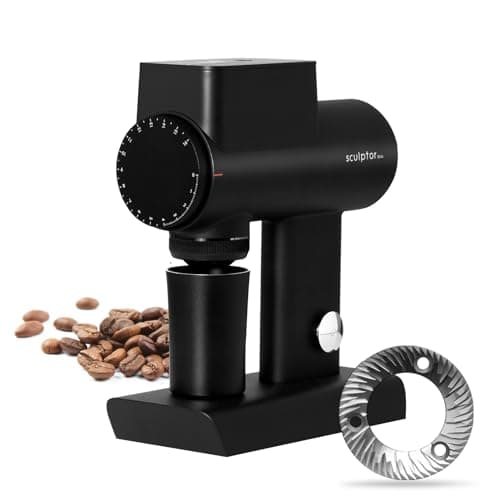
- Want a premium 64mm single-doser and will pay for polish? TIMEMORE Sculptor 064S.
- Filter, pour-over and AeroPress only? Fellow Ode Gen 2 — but not for espresso.
- Flat-burr espresso on the tightest budget? DF54 Single Dose.
Whichever you choose, a flat burr is an upgrade to clarity, not a shortcut around technique. Pair it with clean puck prep, a scale and fresh beans and it will show you what your coffee can do. Buy it hoping it fixes a shaky process, and a forgiving conical would have made you happier for less. Pick honestly and the grinder earns its place on the counter.