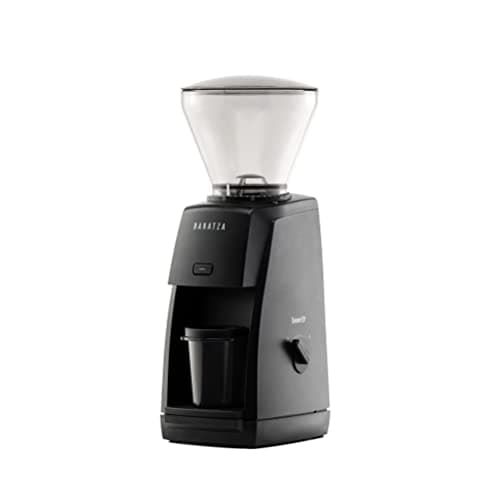
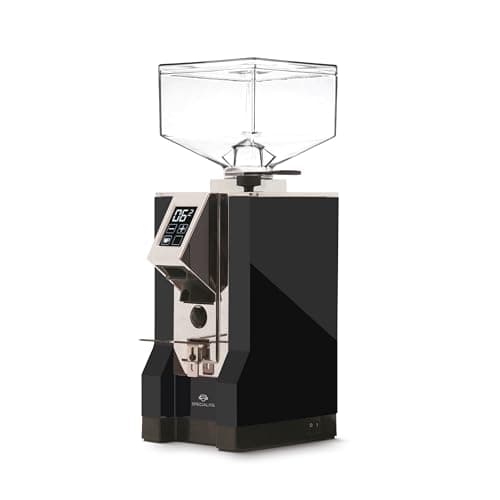
This is one of the most common crossroads in home espresso: you have decided you need a real grinder, and you are staring at a cheap-but-capable conical against a pricier flat-burr machine, wondering whether to start smart or stretch once and be done. The Baratza Encore ESP is the grinder that made entry espresso genuinely good, and the Eureka Mignon Specialita is the quiet, stepless flat burr a lot of people upgrade to next. The gap between them is roughly the difference between an entry price and a mid-hundreds price, so the real question is not which is "better" — the Eureka clearly is — but whether the better grinder is the right buy for you right now.
The two machines are built on different burrs. The Encore ESP uses 40mm conical steel burrs, recalibrated specifically for espresso, with a stepped dial. The Specialita uses 55mm flat steel burrs with a stepless micrometric collar. That is the heart of the decision: conical body and forgiveness at a low price, or flat-burr clarity and infinitely fine adjustment for meaningfully more. If you want the wider view first, both sit in our best grinders for espresso, and the Encore ESP anchors our best grinders under $200.
Our short answer, spelled out in full below: most people asking this question should start on the Encore ESP. It pulls genuinely good espresso, it will not embarrass you, and it leaves money for the beans and scale that improve your cup faster than a fancier grinder will. Stretch to the Specialita if espresso is clearly your long game, if you want near-silent mornings and stepless precision, or if you already know you will chase light roasts where flat-burr clarity earns its keep.
The head-to-head, point by point
Burrs:the core difference — the Specialita's 55mm flat steel burrs lean toward clarity and flavor separation, while the Encore ESP's 40mm conical burrs lean toward body and forgiveness. Adjustment:the Eureka wins clearly; its stepless micrometric collar lets you land on a shot time, where the Encore ESP's stepped dial — finer across its first twenty settings, coarser after — moves in jumps. Noise:not close — the Specialita's Silent Technology makes it far quieter. Workflow:the Eureka's timed on-demand dosing is quicker day to day, but the Encore ESP's included dosing cup and 58mm adapter make its prep tidy too. Espresso quality: the Eureka is the better cup, especially on black, light-roast espresso; the difference narrows in milk drinks. Value: the Encore ESP wins decisively — it costs less than half as much and still pulls good shots.
What we did not test
We did not bench-test these grinders. There is no laser particle-size chart here and no side-by-side extraction log — our scores come from published manufacturer and retailer specifications, the mechanics of flat versus conical burrs, and aggregated owner feedback, exactly as our methodology explains. Where a spec drives a score — burr size and type, whether adjustment is stepless, the dosing method — we took it from the sources listed at the bottom of this page. Treat the numbers as informed editorial judgment, not readings off an instrument.
Flat vs conical, honestly
This matchup is a clean example of the wider flat-versus-conical question. Flat burrs like the Eureka's tend to throw a more unimodal grind, which reads in the cup as clarity and separation — the acidity and sweetness sitting in distinct layers. Conical burrs like the Encore ESP's tend to run slightly more bimodal, adding body and a rounder, more forgiving sweetness. Neither is objectively better; they are different flavors of correct. The practical upshot: if you drink black espresso and chase light roasts, you are more likely to taste and value the Eureka's clarity. If you drink milk-based espresso or medium-to-dark roasts, the Encore ESP's conical character is not a compromise so much as a different, very likeable profile — and it saves you a lot of money. If you want to go deeper on the format, our best flat burr grinders roundup lays out who actually benefits from the switch.
Which one is worth the money?
For most buyers, the honest answer is start on the Encore ESP. It pulls genuinely good espresso, its stepped dial is workable once you learn where your beans land, and the money you save does more for your cup on a scale, fresh beans and time spent learning to dial in than a pricier grinder would. It is also endlessly repairable, so it is not a throwaway step. Choose the Specialita if you already know espresso is a long-term habit and you would rather buy once: the stepless precision, the near-silent motor and the flat-burr clarity are real upgrades you will use every morning for years. The mistake to avoid is buying the Eureka to compensate for shaky technique — a better grinder sharpens a good process, it does not rescue a rough one. And if you are still unsure whether you need a dedicated grinder at all, start with do you need a grinder for espresso.
Which grinder fits you
- Buy the Baratza Encore ESP if this is your first real espresso grinder, you want the best value, you drink milk drinks or medium-dark roasts, or you would rather put the savings toward beans and a scale. It is the smart start for most people.
- Buy the Eureka Mignon Specialita if espresso is clearly your long game, you want stepless precision and near-silent grinding, or you chase black, light-roast espresso where flat-burr clarity earns its keep. Buy once, skip the upgrade.
- Still deciding on the Baratza line? If you are not sure you even need the espresso-tuned burrs, weigh it against the base model in Encore vs Encore ESP first.
Either way, read the full write-ups before you commit — our Eureka Specialita review and Baratza Encore ESP review cover the daily quirks of each. Whichever you choose, pair it with good puck prep, a scale and fresh beans and it will pull its weight; the grinder is one piece of the shot, not all of it.
How we picked
We did not lab-test this gear
Everyone in this category says they tested twenty machines. We have not pulled shots on every product here, and we say so. What we did instead: compiled the published specifications, cross-checked the manufacturer manuals, computed the running cost (wattage to energy, grams-per-shot to cost-per-cup), weighed aggregated owner reports, and scored each product against a published rubric. The scores are judgments from documented research — not measurements we took, because we do not have a test lab and we will not pretend we do. Where hands-on time would tell you more than a spec sheet, we flag it. Where a number came from someone else's work, we name them in Sources.