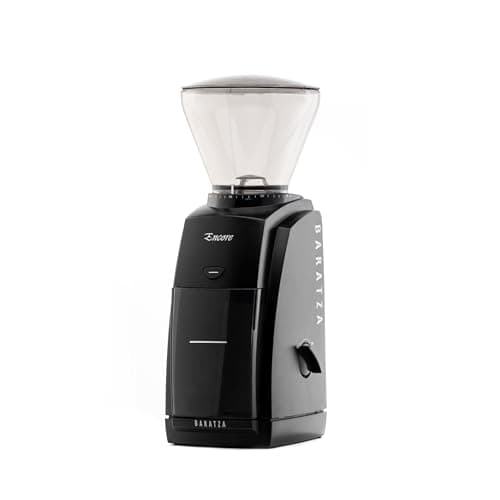
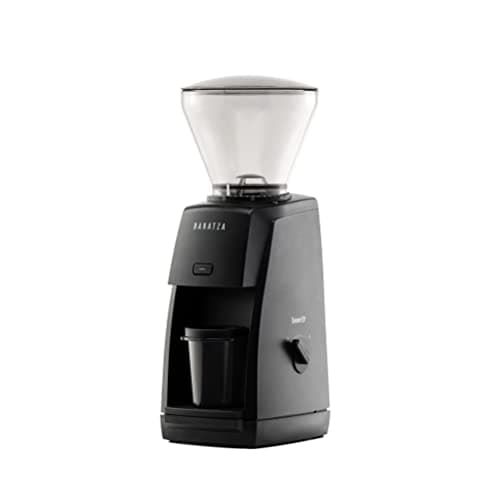
The Baratza Encore and the Encore ESP look almost identical, and under the hood they mostly are. Both run the same 40mm steel conical burrs, both are driven by the same DC motor and gearbox, both give you 40 stepped grind settings on the same collar, and — crucially — both are built to be opened up and repaired rather than binned. If you put them side by side on the counter you would struggle to tell which is which. So the obvious question is why Baratza sells two of them, and whether the ESP is worth the little bit extra it costs.
The honest answer is that there is exactly one difference that matters, and it is the gearing— how those 40 steps are spread across the grind range. The original Encore is geared for filtercoffee: its steps are spaced to land in the medium-to-coarse window that drip, pour over and French press want, and it does that beautifully. Ask it to grind fine and precise enough for espresso and it runs out of runway — the finest settings are still a touch coarse for a proper shot, and the jumps between steps are too big to dial one in. The Encore ESP re-gears the same 40 steps so that a useful block of them falls in the espresso range, while the coarser steps still reach far enough for filter. Same hardware, different map.
So the decision is refreshingly simple. If espresso is on the menu now or might be later, buy the Encore ESP. If you know you will only ever brew filter — drip, pour over, French press — the cheaper standard Encore does that job as well as the ESP does and saves you money. Below we lay out the head-to-head so you can be sure which camp you are in. For the wider field, see our coffee grinder hub; if you have already decided espresso is the priority, our Encore ESP review goes deeper on that grinder alone.
One thing to be straight about before the picks: neither of these is a stepless enthusiast grinder. Both are stepped, which means you choose from fixed clicks rather than a smooth infinite dial, and even the ESP's espresso steps are coarser jumps than a dedicated espresso grinder gives you. What both do offer, and what keeps them the default recommendation years after launch, is that they are honest, consistent, and serviceable— you can buy a new part and fix one at your kitchen table rather than throwing it away. That is the real Baratza value.
The head-to-head, point by point
Gearing and espresso range:this is the whole ballgame. Both grinders have 40 steps, but the standard Encore spaces them for filter, so even its finest setting is a bit too coarse for espresso and the gaps between steps are too wide to dial a shot in. The Encore ESP re-gears those same 40 steps so a usable block of them lands in the espresso window while the coarse end still reaches filter. If you want espresso, this single difference decides it — the ESP can do it and the Encore genuinely cannot. Our espresso grind size guide explains where that fine window sits relative to filter grinds and why the gearing matters so much.
Filter performance:here it is essentially a tie. Both use the same 40mm conical burrs and both grind drip, pour over and French press cleanly and consistently, with the low fines and even particle size that made the Encore a default recommendation for years. If filter is all you brew, you are not giving anything up by choosing the cheaper standard Encore — it grinds that range just as well as the ESP does.
Stepped adjustment:both are stepped, not stepless, and both give you the same 40 clicks — you just get a different map of where those clicks land. Stepped adjustment is easy to live with and repeatable (you can count back to your setting), but it is worth being clear-eyed: even on the ESP, the espresso steps are coarser jumps than a dedicated stepless espresso grinder gives you, so you will do the final fine-tuning of a shot at your machine, not purely on the grinder.
Serviceability:identical, and it is a genuine reason to buy either one. Baratza sells replacement parts — burrs, gears, the drive assembly — and publishes repair support, so when something wears out you fix it at your kitchen table instead of replacing the whole grinder. Over years of use that is what makes a Baratza cheaper to own than its sticker suggests, and it is why both grinders score high on build here even though neither is a premium enthusiast machine.
Price:the standard Encore is the cheaper of the two, and the ESP costs a little more. That gap is the price of the espresso gearing — nothing else. So the value question is not "which is better" but "will I ever brew espresso?" If yes, the small premium for the ESP is easily worth it. If no, paying it buys you a capability you will never use.
What we did not test
We did not run these grinders in a lab — we do not have one, and we will not pretend otherwise. This comparison is compiled from Baratza's published specifications for the two grinders plus aggregated owner reports about how each performs across filter and espresso. Our methodology explains exactly how we reach a verdict from documented specs and real-world owner feedback rather than from measurements we did not make.
Which should you buy
- Buy the Encore ESP ifespresso is on the menu now, or might be later. It reaches the fineness the original cannot, still handles all your filter brewing, and costs only a little more — it is the more versatile grinder and the safer long-term buy. See the full write-up in our Encore ESP review, and how it stacks up against rivals in the best grinders for espresso.
- Buy the standard Encore ifyou are certain you will only ever brew filter — drip, pour over or French press. It grinds that range just as well as the ESP for less money, which makes it the smarter buy for a filter-only kitchen. It sits among our top grinders for drip and pour over.
If you are still unsure, err toward the ESP. The extra cost is small, and the one thing you cannot do is add espresso capability to a standard Encore later — you would have to buy a second grinder. Paying a little more once for the option is almost always the better call. Either way, both are stepped, serviceable grinders rather than stepless enthusiast machines; if that is what you are after, look higher up our best grinders under $200 instead.
How we picked
We did not lab-test this gear
Everyone in this category says they tested twenty machines. We have not pulled shots on every product here, and we say so. What we did instead: compiled the published specifications, cross-checked the manufacturer manuals, computed the running cost (wattage to energy, grams-per-shot to cost-per-cup), weighed aggregated owner reports, and scored each product against a published rubric. The scores are judgments from documented research — not measurements we took, because we do not have a test lab and we will not pretend we do. Where hands-on time would tell you more than a spec sheet, we flag it. Where a number came from someone else's work, we name them in Sources.