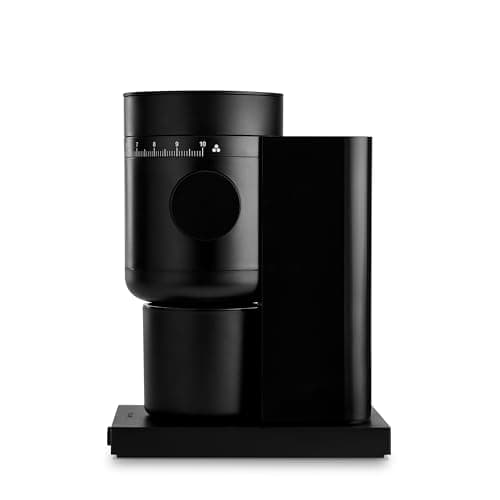
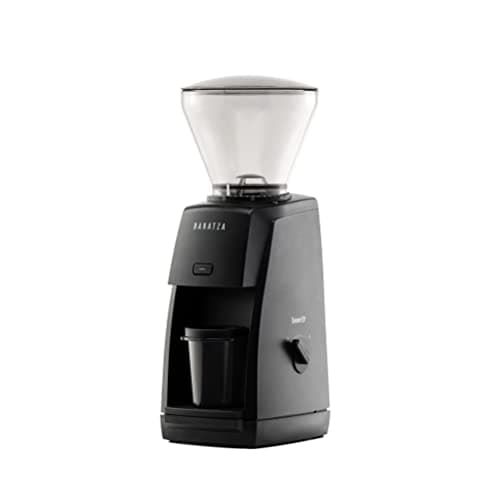
Buy the Baratza Encore ESP if you want numbered settings you can write down, a hopper you can scoop from, and a grinder you will still be repairing in ten years. Buy the Fellow Opus 2 if you weigh every dose, want stepless adjustment and a 30g dosing cup that actually fits both 54mm and 58mm portafilters, and you can live with a loud grinder made partly of plastic. They cost nearly the same, they both grind genuinely well for espresso, and the right answer is decided almost entirely by workflow rather than by cup quality.
This comparison exists because these two are the only serious espresso-capable electrics at two hundred dollars, and they are built on opposite philosophies. One is a single-dose tool; the other is a hopper grinder with a service manual. Nearly every difference below follows from that.
Stepped versus stepless.The Encore ESP has 40 discrete clicks, re-geared by Baratza so they land inside the espresso range rather than clustering at the coarse end. Each click is a known position you can record — "setting 8 for this bag" — and return to exactly after cleaning or after a month on filter. The Opus 2 is stepless with 48 marked reference positions: you can land anywhere between them, which means no grind you want is unreachable, but the setting is a line on a dial rather than a number. For dialing in a single bag, stepless is better. For managing several bags, or coming back to a recipe after a gap, numbered steps are better.
Single-dose versus hopper. The Opus 2 is built around weighing beans into the top and getting nearly all of them back: a hands-on reviewer measured 18g ground in 9 seconds with 0.1 to 0.2g retention, and it ships with a 100g bin plus a 30g espresso dosing cup. The Encore ESP has a hopper and grinds on demand straight into the portafilter, which is faster and simpler but means the first grams of a session carry coffee ground before the last adjustment. Neither is wrong. They suit different mornings.
Burrs. 48mm conical on the Opus 2, 40mm conical on the Encore ESP. Bigger burrs grind faster and generally a touch more evenly at the same quality of manufacture, which is a real if modest edge to Fellow. It is not the decisive difference people expect — both are conical, both sit well below the flat-burr tier, and in the cup the gap is smaller than the eight-millimetre spec gap suggests.
Serviceability.This is Baratza's moat and it is not marketing. The company sells spare parts, publishes exploded diagrams and runs a repair program, so an Encore ESP is a grinder you fix rather than replace. The Opus 2's grind chamber and impeller are plastic, and Fellow does not operate anything comparable. If you intend to own one grinder for a decade, weight this heavily.
Noise. The Opus 2 is loud — 84 to 85 dB — and the Encore ESP is not quiet either. If noise is a real constraint in your home, neither of these is the answer; our best quiet coffee grinders page covers that requirement specifically.
Filter coffee. The Encore ESP is the better all-rounder here, though it is worth being precise: the ESP gearing is biased toward espresso, so the plain Baratza Encoreremains the better filter-only buy. The Opus 2's filter performance is adequate rather than good. If pour over is your main brew and espresso is occasional, neither of these is the optimum — see best grinders for drip and pour over.
Specs side by side
Figures below are the manufacturers' published specifications for the exact listings above, plus the retention and noise figures from the hands-on review cited in Sources. Prices come from the live price layer with the "as of" date in the quick picks table.
| Baratza Encore ESP | Fellow Opus 2 |
|---|
| Burrs | 40mm conical steel | 48mm conical stainless |
| Adjustment | 40 stepped settings, espresso-geared | Stepless, 48 marked positions |
| Dosing | Hopper, grinds into the portafilter | 100g single-dose bin + 30g cup |
| Retention | Hopper-grinder typical (moderate) | 0.1-0.2g measured in hands-on testing |
| Grind speed | Slower — smaller burrs | 18g in about 9 seconds |
| Noise | Not quiet | 84-85 dB |
| Materials | Metal burr carrier, plastic housing | Plastic grind chamber and impeller |
| Parts and repair | Parts sold, diagrams published, repair program | No comparable program |
| Filter coffee | Usable, though espresso-geared | Adequate rather than good |
Which one for which setup
A Breville Barista or Bambino.Either works, and the Opus 2's 30g dosing cup fitting a 54mm portafilter is a genuine convenience. But a Breville owner usually wants the simplest possible morning, and grind-into-the-cradle with a recorded number is simpler than weigh, grind, transfer. Encore ESP, unless you already weigh. Our best grinders for the Breville Bambino page covers that pairing in full.
A Gaggia Classic. You are weighing doses anyway on a 58mm basket with no dosing display, so the single-dose argument is stronger here. Both are good; the Opus 2 suits the workflow and the Encore ESP suits the decade. See best grinders for the Gaggia Classic.
A first espresso setup under $500 total. Encore ESP. At that budget the grinder has to be the one component you are not replacing in two years, and repairability is worth more than nine-second grind times. Our best espresso setup under $500 page splits the budget accordingly.
Espresso and pour over from one grinder. Neither is ideal, and the Encore ESP is the less bad answer. If filter is genuinely half your brewing, a flat-burr filter grinder plus a hand grinder for shots beats one compromised electric — see best flat burr grinders.
Where neither of them lands
Both grinders sit below the flat-burr tier, and it is worth saying what that means so you know what you are not buying. Flat burrs produce a narrower particle distribution, which in espresso shows up as more clarity in the cup and a wider dial-in window — the shot forgives a slightly wrong grind more readily. The cheapest flat-burr single-dosers start well above this pair. If you want that, the DF54 and DF64 Gen 2 are where the category begins, and best electric espresso grinders under $500 is the bracket above this one.
Equally, both of these are a large step up from anything under a hundred dollars that plugs in. If two hundred is the ceiling and you make more than a couple of drinks a day, this page is the right page — the real decision is the one at the top, and it is about your morning, not about the burrs.
The deciding question
Ask yourself one thing: do you own a scale and use it every time you make espresso?
If yes, the Opus 2 is built for you. Weighing in is already your habit, stepless adjustment rewards the precision you are already applying, and near-zero retention means the grind change you just made lands on this shot rather than the one after it.
If no — if you grind into the portafilter, eyeball the dose and adjust by taste — the Encore ESP is built for you, and the numbered settings are worth more than the eight extra millimetres of burr. Our how to dial in espresso guide covers the loop either way, and best espresso scales covers the tool that makes the first answer possible.