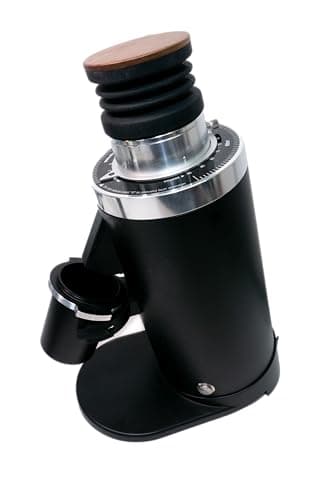
Under five hundred dollars is where an electric grinder stops being the compromise in an espresso setup and starts being the part that makes it work. Spend here and you get a grinder that grinds on demand, holds a fine setting between shots, and can actually reach the narrow window where espresso lives — the sweet spot between a hand grinder you crank yourself and the prosumer machine you are probably pairing it with. For espresso, that grind matters more than the machine, because a shot is espresso only when pressurized water is forced through a finely, evenly ground puck, and the grinder is the single tool that decides how fine and how even that puck is.
What your money buys at this ceiling is resolution and consistency, not gimmicks. Espresso occupies a sliver of the grind range, so an espresso grinder has to move the grind by a hair — through a stepless collar or many closely spaced steps — to land the shot, and it needs burrs that turn out uniform particles so the water meets even resistance across the whole puck. Every grinder below clears that bar and does it electrically: you flip it on or press a dose, and it repeats the same grind tomorrow. If you want the wider field that includes premium picks climbing past this budget, our best grinders for espresso ranks them, and our best grinders under $200 covers the tighter end for anyone not ready to spend to this level.
One honest note before the picks, because it shapes the whole page: these grinders sit near the top of a real budget, and a great hand grinder can match several of them for grind consistency at a lower price — you are paying the premium here for the motor, the on-demand convenience and holding a setting, not for a better grind per dollar. If that trade is worth it to you, read on; if you would rather crank and pocket the difference, we say so plainly below. Our top pick is the DF64 Gen 2 — read the full DF64 Gen 2 reviewfor the deep dive — and the five that follow are ranked best-first.
How we picked
Every grinder here is a real, currently-purchasable electric grinder that can genuinely reach espresso fineness, and every spec below is taken from the maker's own materials. Because this is a budget with a firm ceiling, we ranked on the things that actually change the shot, in this order.
- Adjustment resolution.How small a change you can make to the grind near the espresso end — a stepless collar or many closely spaced steps. Espresso lives in a tiny band, so this is the spec that most decides whether you can dial a shot in.
- Grind consistency. How uniform the particles are, which is what lets water meet even resistance across the puck. Bigger and flat burrs generally edge conical ones here.
- Workflow. Single-dose versus hopper, how much the grinder retains, and how cleanly it fits the morning you actually have.
- Build and support.Materials, how solid it feels, and — underrated — whether you can get parts and fix it years from now.
- Value. What you get for near-the-top-of-budget money: the burrs, the adjustment, the workflow, versus what you actually need.
We did not lab-test these grinders; we do not run a lab. The scores are editorial judgments built from published manufacturer specifications, decoded manuals and aggregated owner reports, and our methodology pagespells out exactly how. Specifications come from the makers' own product pages, listed in Sources. Prices move constantly and every pick here sits near the ceiling, so we keep price talk qualitative and let the live price render inside the buy button rather than quoting a figure that could be wrong by the time you read it.
What under $500 buys you in an espresso grinder
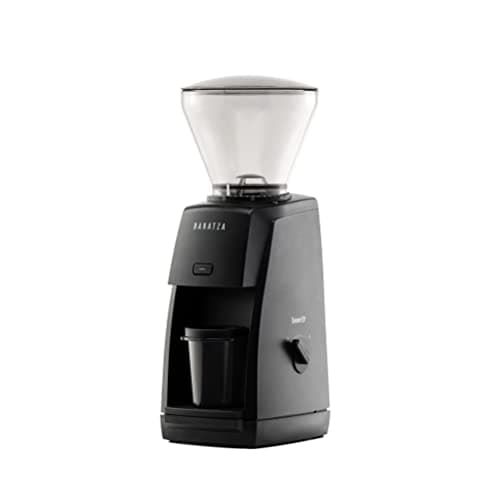
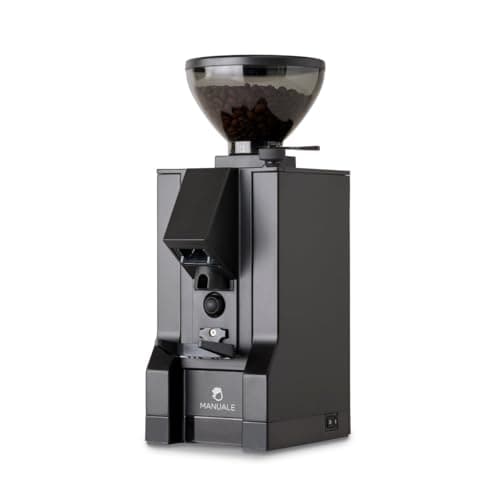
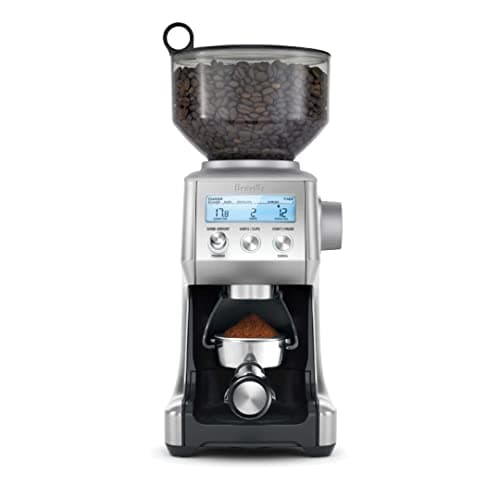
The single most important thing at this price is adjustment resolution — how small a change you can make to the grind near the fine end. Espresso lives in a tiny band, and moving a hair too fine or too coarse is the difference between a balanced shot and one that chokes or gushes. That is why the numbers to weigh are not marketing headlines but how the grinder adjusts. A steplesscollar, like the Eureka Notte's and the DF64's, moves continuously, so you can nudge by the smallest possible amount; a steppedgrinder like the Baratza Encore ESP or the Breville gives you fixed clicks, which is enough for most home setups but can occasionally leave you wishing for a setting between two of them. Neither is wrong — stepped is simpler to track and return to, stepless is finer — but it is the spec that most separates these grinders for espresso.
Burr size and typecome next. Bigger burrs and flat geometry, like the DF64's 64mm flat set and the Notte's 50mm flat set, tend to produce an especially uniform espresso grind with a clean, defined flavor, which is why they turn up in cafes. Conical burrs, like the Encore ESP's and the Breville's, are efficient, forgiving and make excellent espresso too — burr shape matters less than resolution and build at this level. What bigger, better burrs really buy you is a little more clarity in the cup and a little more room to dial in, not the basic ability to pull a shot, which every grinder here already has. If dialing in is new to you, our coffee guideswalk through what “fine enough” actually means and how the grind and the shot connect.
Single-dose vs hopper, and how much retention matters
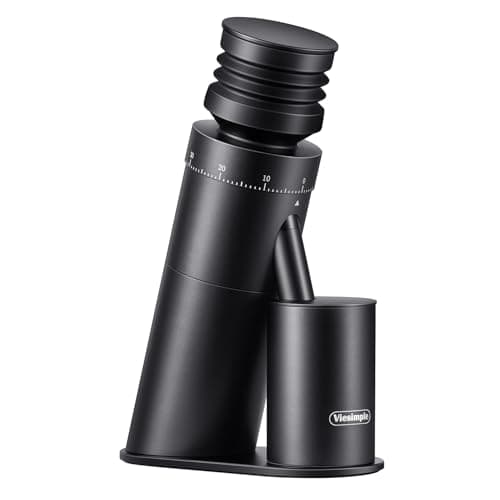
The other big decision at this price is how the grinder feeds. A single-dose grinder — the DF64 Gen 2 and the Viesimple Gen 4 here — grinds only the beans you weigh in, so every dose is as fresh as the moment you scoop it and almost nothing is left inside between shots. That freshness and near-zero waste is exactly what enthusiasts chase, and it makes switching between beans effortless. The cost is a slower, more hands-on ritual: you weigh, you load, and with fine espresso grinds you usually add a bellows puff and a quick stir to keep retention low and the grounds even. A hoppergrinder — the Breville, and the Eureka Notte run this way — holds a batch of beans and grinds on demand, so you press once and walk away, which suits a household that brews the same coffee every morning. It is faster and lower-effort, but beans sit exposed in the hopper and a little coffee stays in the machine between doses.
Retention— the grounds a grinder traps inside and hands you later, stale — is the mess-and-freshness spec that ties this together. Single-dose designs are built to minimize it; hopper grinders carry more. It is rarely a dealbreaker, but it is why single-dosing feels cleaner and more precise, and why it costs you time. If that trade appeals, our best single-dose grinders roundup goes deeper on the workflow and ranks the DF64 against its siblings.
The honest caveat — a hand grinder can match these for less
It would be dishonest to rank five electric grinders near the top of this budget without saying the quiet part out loud: for pure grind consistency, a good hand grinder can match or beat several of these for less money. A manual grinder has no motor to pay for, so every dollar goes into the burrs and the adjustment, and the best of them turn out espresso-fine, repeatable grounds that rival electrics costing far more. What you give up is exactly what you are paying the premium here for — a motor that does the work, grind-on-demand speed, and the ability to press a button on a busy morning instead of cranking for a minute. That is a real convenience, and for a lot of people it is worth every cent; for others, the smarter move is a great hand grinder and putting the savings toward beans or the machine. Be honest with yourself about which camp you are in before you spend to this ceiling.
If the budget should stretch to the machine and beans as much as the grinder, the value end of this list is the place to start — our full Baratza Encore ESP review lays out why the entry electric here is still a genuinely capable first espresso grinder, repairable enough to keep for years. Spend up from there for stepless adjustment, bigger burrs and single-dose cleanliness, not for the basic ability to pull a good shot, which every grinder on this page already has.
Which grinder fits you
- Want the best electric espresso grinder for the money?The DF64 Gen 2 — 64mm flat burrs, stepless, single-dose, and the one to beat.
- New to espresso and stretching the budget across the whole setup?The Baratza Encore ESP — the value starter, and repairable for years.
- Want quiet, grind-on-demand espresso? The Eureka Mignon Notte, with its stepless flat burrs.
- Brew espresso and filter from one grinder? The Breville Smart Grinder Pro, espresso through French press on 60 settings.
- Want clean single-dosing without spending to the ceiling? The Viesimple Gen 4.
Whichever you choose, remember the grinder is one leg of the setup: pair it with a capable machine from our espresso machines hub and fresh beans, and the money you spent on the grind will show up in the cup.