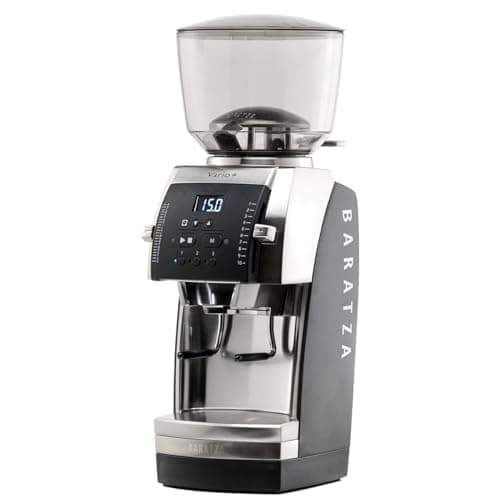
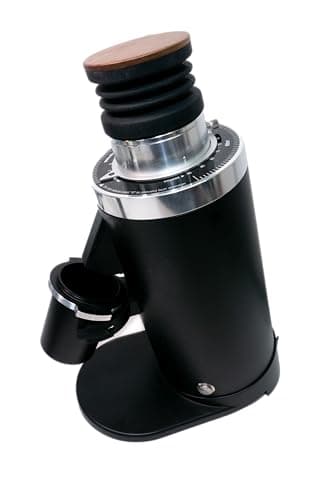
The DF64 Gen 2 and the Baratza Vario+ are both flat-burr electric grinders that grind fine enough for espresso and open up far enough for filter — and almost everything about how they get there points in a different direction. The DF64 is a 64mm stepless single-doser built around one idea: weigh in a shot's worth of beans, grind it all out with very little left behind, and creep the grind in by a hair. The Vario+ is a 54mm flat-ceramic hopper grinder built around a different idea: a dual macro-and-micro adjustment system with hundreds of repeatable, labeled positions, timed dosing, and a Baratza repair ecosystem designed to keep the grinder running for a decade. Same category on paper, two genuinely different relationships with the machine.
That split is the whole decision, so name it before the specs. The DF64 is the value benchmark for flat-burr single-dosing: it dragged 64mm flat burrs and a low-retention single-dose design down to a home price and became the grinder the category measures itself against. Its stepless collar lets you nudge the espresso grind continuously, and single dosing keeps every shot fresh with almost nothing retained. The Vario+ answers a different question — how do I brew several ways from one grinder, return to exact settings, and fix it myself years from now? Its 10 macro steps times 22 micro steps give 220 labeled positions from espresso to French press, and Baratza's parts-and-service culture is the best in the category. Read the DF64 in full in our DF64 Gen 2 review; this page is about which of the two belongs on your counter.
One thing is true of both and worth saying up front: both are genuine flat-burr grinders that will out-grind almost any bundled or blade grinder, and both put grind quality where your money should go in an espresso setup. The real fork is workflow and priorities — single-dose freshness and stepless value on one side, repeatable multi-method versatility and long-term serviceability on the other. If you want to see where each sits among the wider field first, our best flat-burr grinders ranks them both.
Workflow: single-dose freshness vs hopper-and-timer convenience
Start with the difference you feel every morning, because it decides more than any spec. The DF64 is a single-doser: you weigh a shot's worth of beans, grind them all out, and very little stays inside. Every dose is as fresh as the moment you scooped it, switching beans is effortless, and there is almost no stale coffee handed back to you later. The cost is a slower, more hands-on ritual — you weigh, you load, and with fine espresso grinds you usually add a bellows puff and a quick stir to keep retention low and the grounds even. The Vario+ is a hopper-and-timergrinder: you fill the hopper, and timed dosing grinds hands-free into the portaholder, so you press once and walk away. That suits a household that brews the same coffee every day and does not want to weigh each dose. The trade is retention — a hopper grinder carries more coffee between doses, so back-to-back bean changes are messier and less fresh than on a single-doser. Neither is wrong; they are built for different mornings. If low-retention, bean-swapping single dosing is clearly your priority, our best single-dose grinders roundup goes deeper on that workflow and ranks the DF64 against its siblings.
Adjustment: stepless collar vs dual macro-and-micro steps
Both grinders can land an espresso shot, but they get there differently. The DF64 is stepless: the collar moves continuously, so you can nudge the grind by the smallest possible amount to chase a target shot time. That infinite fine control is exactly what the narrow espresso window rewards, and it is a genuine advantage for someone who obsesses over dialing in. The Vario+ is stepped, but cleverly so: ten macro steps times twenty-two micro steps give 220 discrete positions, which is fine enough that most people will find a setting that works for any brew method. What the Vario+ gives up in stepless continuity it gains in repeatability— each position is labeled, so “espresso is 1-C, pour over is 4-J” becomes a real, returnable instruction. You can switch from a shot to a V60 and back to your exact espresso setting without hunting. So the honest split: the DF64 is finer for chasing the last hair of an espresso dial-in, while the Vario+ is more repeatable for switching between brew methods and returning to a known point. Our best grinders for espresso puts both styles of adjustment in context.
Burrs: 64mm steel vs 54mm ceramic
The DF64 runs a 64mm stainless steel flat-burr set; the Vario+ runs 54mm flat ceramic burrs. Two real differences hide in that sentence. First, size: the larger 64mm set can cut a dose a touch faster and cooler, which nudges consistency and clarity in the DF64's favor, and 64mm is the platform most boutique grinders use, so aftermarket burr swaps are an easy future upgrade. Second, material: steel and ceramic are both legitimate, but they divide opinion. Ceramic burrs like the Vario+'s run cool and hold their edge for a very long life, which suits a keep-it-for-years grinder; some tasters, though, prefer the character steel gives, and this is genuinely a matter of preference rather than a clear winner. Do not read 64mm-steel versus 54mm-ceramic as good versus bad — both produce clean, espresso-ready grounds. Read it as one more expression of the two grinders' philosophies: the DF64 chasing outright flat-burr capability per dollar, the Vario+ chasing longevity and a wide, repeatable range. Our best flat-burr grinders page explains how much burr format really changes the cup.
Serviceability: a third-party platform vs the Baratza repair culture
This is where the two grinders stop pretending to be the same kind of purchase. The DF64 is a third-party platform— designed and made by Coffee-Tech Engineering and sold under several brand names and resellers — so the badge on the front and the storefront you buy from decide your warranty and spares more than they would with a single-brand grinder. Buy from a reputable, established seller and you get a supported product with parts you can source; chase the cheapest listing and support can be thin. The Vario+ is the opposite: Baratza publishes exploded diagrams, sells parts, and runs a repair program, and that culture is the best in the category. If you value being able to fix a grinder years from now — replace a burr, a motor part, a lever — the Vario+ is built for exactly that, and it is a large part of what its premium buys. The DF64 is fixable too, thanks to a huge owner community and a standard 64mm burr platform, but the support you get depends on the seller you chose. Neither of us bench-tested these; our methodology explains how we score from documented specs and aggregated owner reports instead.
Value and which flat burr fits you
On price, the DF64 is the value pick — it delivers the most flat-burr capability per dollar, which is precisely why it became the category benchmark. The Vario+ costs a premium, and you are paying for the dual-adjust repeatability, the wide multi-method range, and above all the serviceability. Keep the exact figures out of your decision, because prices move and the live price renders in the buy button; weigh the relationship instead. Buy the DF64 Gen 2 if single-dose freshness, stepless espresso control and value are your priorities and you are comfortable buying from a reputable seller and doing a little clump-management. Buy the Vario+ if you brew several ways, want labeled returnable settings and hands-free timed dosing, and value a grinder you can repair and keep for a decade over the last few dollars of value. If even the DF64 is more grinder than you need right now, our best electric espresso grinders under $500 covers the tighter end and shows exactly what you would trade away.