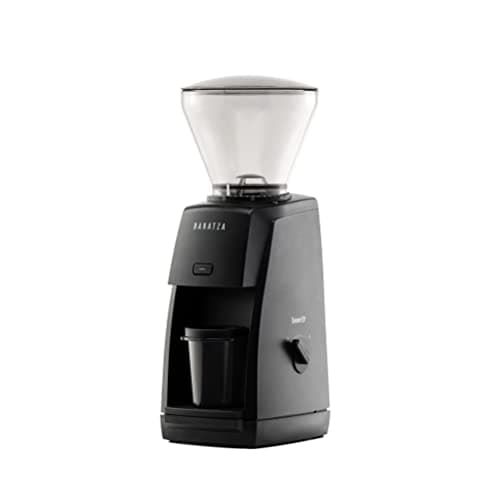
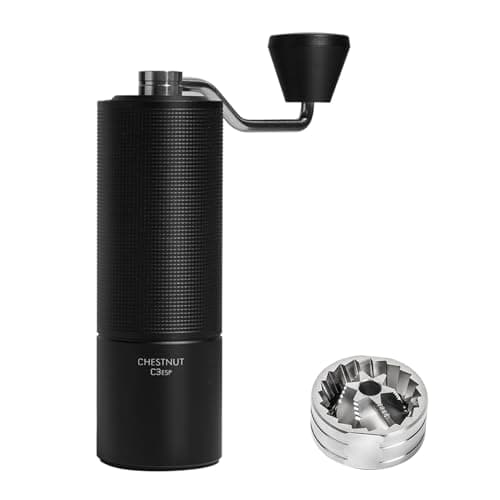
Almost everyone buying their first espresso grinder on a tight budget lands on the same fork in the road: a great cheap hand grinder or a great entry electricone. The TIMEMORE Chestnut C3 ESP and the Baratza Encore ESP are the two picks that fork usually comes down to, and they are not really competing on the same terms — they are the same idea (an affordable, espresso-capable grinder) solved two opposite ways. The C3 ESP is a pocket-sized manual grinder you crank by hand; the Encore ESP is a countertop electric that grinds at the push of a button. Pick wrong and you will feel it every single morning, so this page is about matching the machine to your routine, not crowning a universal winner.
The case for the C3 ESP is that it is the cheapest way into a genuinely consistent espresso grind. TIMEMORE re-geared the standard Chestnut C3's dial into fine, closely spaced clicks so it can actually land in the narrow espresso window, and it does that in an all-metal body that shames its price. It is silent, it needs no outlet, and it packs into a bag — but you pay for every shot with about a minute of cranking, and a fine espresso dose is the hardest, most effortful grind there is. You also grind one dose at a time. The case for the Encore ESP is convenience: it grinds a dose in seconds, holds its setting between shots, and carries Baratza's famous parts-and-repair support — at the cost of more money, counter space and noise. If you want the wider argument behind this whole decision, our hand vs electric grinder guide lays out the trade in full; below we settle it specifically for these two, and you can read each in depth in the Timemore C3 ESP review and the Baratza Encore ESP review.
Consistency for espresso: closer than the price gap suggests
The thing that decides whether either grinder can pull a shot is not brand or burr size — it is whether the adjustment is fine enough to land in the narrow espresso window, and both of these were built specifically to do that. The C3 ESP gets there with a re-geared stepped dial of roughly 0.023mm per click; the Encore ESP gets there with 40 steps re-geared so a usable number of them fall in the espresso range. In practice both are genuinely espresso-capable for most home setups, and both hit the same honest ceiling at the extreme fine end: with very fresh, hard, light-roast beans on a demanding non-pressurized basket, a stepped grinder can occasionally leave you wanting a setting halfway between two clicks. Neither is stepless, so neither fully escapes that. The C3 ESP's 38mm stainless conical burrs and the Encore ESP's 40mm steel conical burrs are both well cut and grind evenly for the money; the real difference is not in the cup so much as in what it takes to get there. We did not lab-test these grinders — our methodology explains how we judge, and we do not own a particle analyzer.
Effort, speed and noise: the everyday reality
This is where the two split hardest, and it is the part you live with every morning. The C3 ESP is a hand grinder, so every shot costs you about a minute of cranking — and a fine espresso dose is the most effortful setting there is, because the finer you go the more resistance the burrs put up. The 38mm burrs are smaller than premium sets, so they clear a dose in more turns. For one or two drinks that is a pleasant, meditative part of the routine; for a busy household it becomes real labor. The Encore ESP flips all of that: press a button and it grinds a dose in seconds, hands-free, and holds its setting so you are not counting clicks each time. The costs of that convenience are noise and counter presence — an electric burr grinder is loud in a quiet kitchen, where the C3 ESP is nearly silent. If your household is asleep when you brew, or you want to grind at a desk or in a hotel, silence is a real feature. If you value seconds over silence, the electric wins the morning.
Portability, capacity and counter space
The C3 ESP is small, light and needs no outlet, which makes it one of the easiest grinders to pack — it is the natural partner for a manual or portable espresso maker, a travel kit, or an office drawer. Its limit is capacity: the roughly 20-25g single-dose throat holds one espresso dose or one cup's worth of filter at a time, so it grinds dose by dose and never batches. The Encore ESP is the opposite — it lives plugged in on the counter, takes up real space, and is not going anywhere, but it grinds on demand as many doses as you want back to back and holds a hopper of beans ready to go. If you pull several shots across a morning, or grind for more than one person, grinding one hand-cranked dose at a time gets old fast, and the electric's on-demand convenience is exactly what you are paying the extra money for. If you travel, live small, or want the quietest option, the hand grinder's portability is worth as much as the electric's speed.
Price bracket, longevity and which to buy
Both sit at the value end of espresso grinding, but not at the same rung: the hand-cranked C3 ESP is the cheaper way in, and the electric Encore ESP asks for more money in exchange for grinding on demand. What the Encore ESP adds for that money is not just a motor but Baratza's parts-and-repair support — exploded diagrams, individual replacement parts and a repair program — so it is a grinder you fix rather than bin years down the line. The C3 ESP earns its keep differently: it is nearly all metal, with few things to break, and a hand grinder has no motor to burn out. Both belong in our best value grinders roundup for good reason. The clean way to choose:
- Buy the TIMEMORE C3 ESP ifyou pull one or two shots a day, you are on the tightest budget, or you want something silent and packable for travel, an office, or a portable espresso maker. You are trading a minute of cranking per shot for the lowest price of entry and the freedom to grind anywhere — the full case is in the Timemore C3 ESP review.
- Buy the Baratza Encore ESP ifyou pull several shots a day, grind for more than yourself, or simply do not want arm work as part of your morning — and you value being able to repair a grinder rather than replace it. You are paying more, and giving up silence and portability, for grinding on demand at the push of a button — the full case is in the Baratza Encore ESP review.
There is no wrong answer here, only a mismatch: the person who buys a hand grinder for a four-cup household ends up resenting it, and the person who buys an electric for a single quiet morning shot spent money on speed they never needed. Match the grinder to how often you actually brew and where, and either one will serve you for years. If you are still weighing the whole category rather than just these two, the hand vs electric grinder guide zooms back out to the full decision.