Skip to content
Portafilter Co

Machines · Espresso Machines

The best espresso setup under $1,000

A thousand dollars buys the 58mm commercial platform, not a fancier one-box machine. Seven parts that work as one kit, and the honest reason this build beats a single $1,000 appliance.

By Stephen V.Updated How we pick
#ad

We earn a commission when you buy through our Amazon links, at no extra cost to you. It never changes a verdict, and we say so when the cheaper product is the better buy. How this works.

The best espresso setup under $1,000 is a Gaggia Classic Evo Pro paired with a Baratza Encore ESP, plus about $170 of puck-prep and measurement gear — a precision basket, a calibrated tamper, a WDT tool, a 0.1g scale and a milk pitcher. That build is for the person who wants to learn espresso on the platform the whole industry uses, and who would rather own seven good parts than one clever appliance. If you want a button instead of a craft, stop reading and go to our best super-automatic machines page — a thousand dollars buys a competent bean-to-cup, and nothing on this page will make you happier than that will.

At this budget almost every buyer asks the wrong question, which is "which $1,000 espresso machine should I buy?" The useful question is how to split $1,000 across the four things that actually decide what is in the cup: the grinder, the puck, the temperature stability of the brew water, and the pressure profile. A single $1,000 all-in-one has to pay for a grinder, a touchscreen, a milk system and a chassis out of the same money, so every one of those parts is a compromise. Buying the parts separately means each one is chosen on its own merits, and any one of them can be upgraded later without replacing the rest.

Why this build is 58mm

This is the single decision that separates a $1,000 setup from the $500 setup we also publish, and it is worth being precise about. The portafilter is the handle and basket you lock into the group head, and its diameter sets the accessory ecosystem you can buy into for the life of the machine. 58mm is the commercial standard. It is what cafes use, which means it is the size that precision baskets, puck screens, distribution tools, naked portafilters and replacement gaskets are made for first and in the widest variety. 54mm (Breville) and 51mm (most budget De'Longhi and Amazon-brand machines) all have accessories, but fewer of them, and the good ones arrive later.

The second thing 58mm usually brings is a metal group head with real thermal mass. The Gaggia Classic Evo Pro has a lead-free brass boiler bolted into a single-piece stainless body, which is why it holds a shot temperature better than a lighter machine and why it is still serviceable in ten years. That is the part of a $1,000 build that genuinely cannot be bought back later.

How the money splits

Roughly half the budget goes to the machine, a fifth to the grinder and the rest to puck prep and measurement. That split looks lopsided toward the machine until you notice that the Encore ESP is a real espresso grinder, not a token one — its burrs and its espresso-range adjustment are the reason the shots are repeatable at all. Spending less than about $200 on the grinder in a build this size is the most common way people waste the machine they just bought, and spending more than about $250 on it stops buying better espresso and starts buying speed and lower retention.

What to look for in each slot. Five things, in the order they matter.

A grinder with fine adjustment inside the espresso range. Espresso lives in a window a few tens of microns wide. A grinder with coarse, widely spaced steps hops straight over the setting you need — one step chokes the machine, the next gushes. The Encore ESP exists precisely because the standard Baratza Encore does not have enough steps down there.

A non-pressurized basket, and a precise one.The basket that ships with most machines under $500 is "pressurized" or dual-wall: it manufactures crema through a single small hole, which makes bad coffee look good and caps how good a shot can get. The Evo Pro ships with a real single-wall commercial basket, and a precision basket upgrades the hole pattern so flow is even across the whole puck. Pressurized vs unpressurized baskets is the full explanation.

Repeatable tamp pressure. A calibrated tamper clicks at a set force, so the one variable you cannot see — how hard you pressed — stops moving between shots. This is cheap and it removes a whole class of mystery.

A way to break up clumps before you tamp. A WDT tool is a handful of fine needles you stir through the dry grounds. It is the most effective eight-dollar upgrade in espresso because it attacks channeling at the cause rather than the symptom — see how to fix channeling.

A 0.1g scale that fits under the portafilter. Espresso is a ratio: in grams of dry coffee, out grams of liquid, over seconds. Without a scale you are guessing at two of the three numbers, and dialing in becomes trial and error with no record of what you tried.

One honest note before the picks. This build asks you to learn something. The Evo Pro has no PID from the factory, so you manage brew temperature by timing your shot after the heat-up light cycles — a technique called temperature surfing — or you fit a PID kit later. If that sentence sounds like a chore rather than a hobby, the Breville Barista Express puts a grinder, a thermocoil and a 54mm portafilter in one box for similar money and asks far less of you. We would rather point you there than sell you a machine you resent.

The short answer

Quick picks

#ProductBest forScorePrice
01
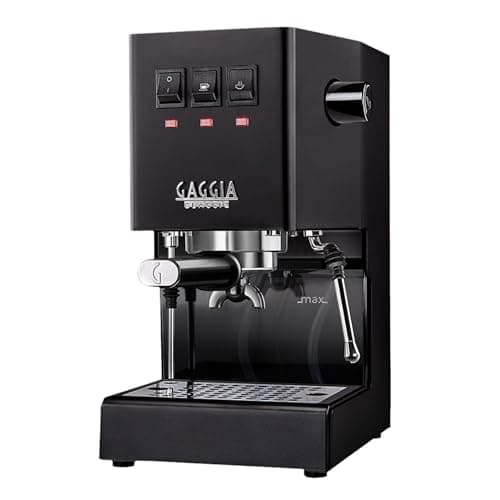
Gaggia Gaggia Classic Evo Pro
Gaggia Classic Evo Pro

The machine in the kit, and the cheapest route onto the 58mm commercial platform. A lead-free brass boiler in a single-piece stainless body, a genuine 58mm commercial portafilter with a real single-wall basket in the box, a 15-bar Ulka vibratory pump and the largest parts-and-mods community in home espresso. It asks you to learn temperature surfing and gives you nothing automatic in return — and that is exactly why it is still a good machine a decade in, when a sealed all-in-one of the same vintage is landfill.

The machine in the kit
7.8
$505.09Amazon
02
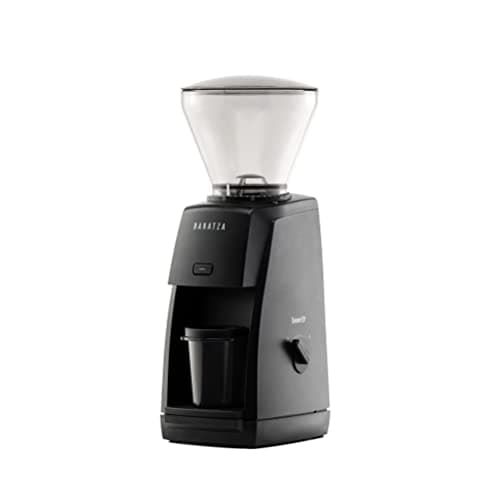
Baratza Baratza Encore ESP Coffee Grinder (ZCG495)
Baratza Encore ESP Coffee Grinder (ZCG495)

The grinder in the kit, and the part most people under-buy. The Encore ESP is the espresso-geared Encore: 40mm conical steel burrs with 20 of its 40 settings packed into the espresso range, which is the specification that decides whether dialing in is a conversation or a fight. It grinds filter perfectly well on the coarse half of the dial, Baratza sells every part and runs a repair program, and it fits beside the Gaggia without dominating the counter.

The grinder in the kit
8.2
$199.95Amazon
03
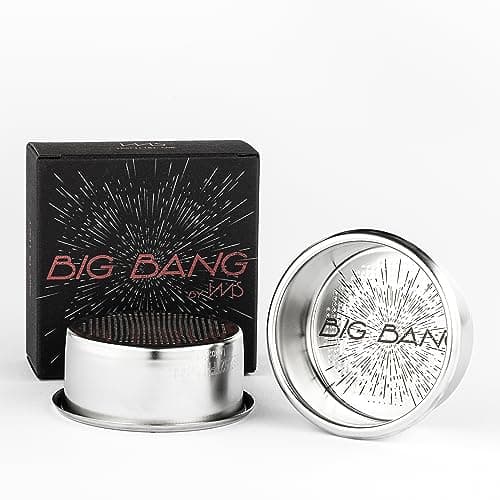
IMS IMS Big Bang Precision Filter Basket (58mm, 18-20g)
IMS Big Bang Precision Filter Basket (58mm, 18-20g)

The cheapest upgrade on this page that changes the shot. A stock basket's holes are stamped to a tolerance that is fine for a cafe replacing baskets every year and loose for someone chasing an even extraction. IMS's Big Bang pattern is a precision-etched hole field designed so flow is uniform across the whole bed rather than concentrated at the centre, in an 18-20g size that suits the dose a 58mm double wants.

Even flow across the puck
9.3
$25.90Amazon
04
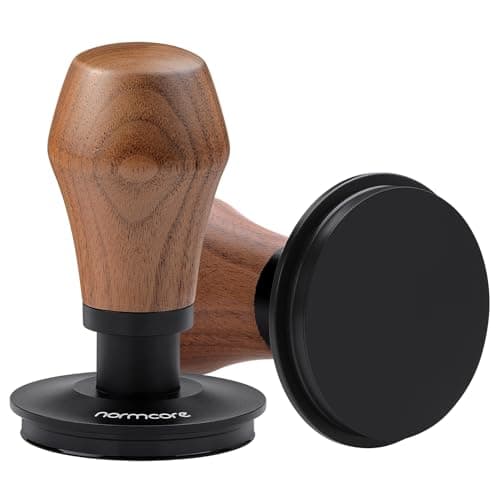
Normcore Normcore 58.5mm Espresso Tamper V4
Normcore 58.5mm Espresso Tamper V4

A calibrated, spring-loaded tamper removes the one variable you cannot see or record. At 58.5mm it is deliberately a hair wider than the nominal 58mm basket, which is what lets it reach the basket wall instead of leaving a rim of loose grounds for water to run down. The V4's spring releases at a set force, so your tamp stops being a thing you do by feel and becomes a number that repeats.

Repeatable tamp pressure
8.5
$49.99Amazon
05
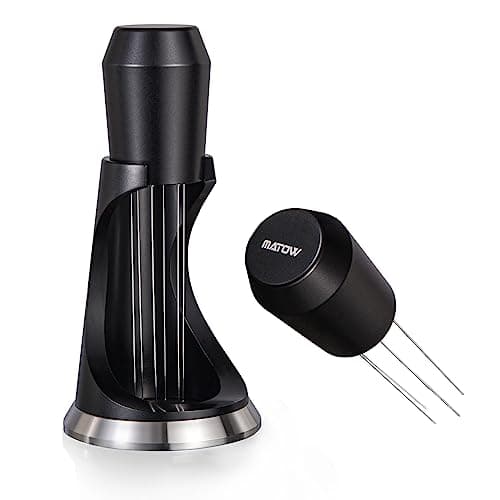
MATOW MATOW 6-Prong WDT Espresso Tool (Weighted Stand)
MATOW 6-Prong WDT Espresso Tool (Weighted Stand)

Six fine needles on a weighted stand, and the best value-for-money item in this entire build. Ground coffee leaves any grinder in clumps, and a clump is a dense spot that water refuses to pass through evenly — so it goes around, which is channeling. Stirring the dry bed for ten seconds breaks the clumps before they become a problem, and the weighted stand means the needles live upright beside the machine instead of stabbing you in a drawer.

Fixing channeling at the cause
8.5
$27.99Amazon
06
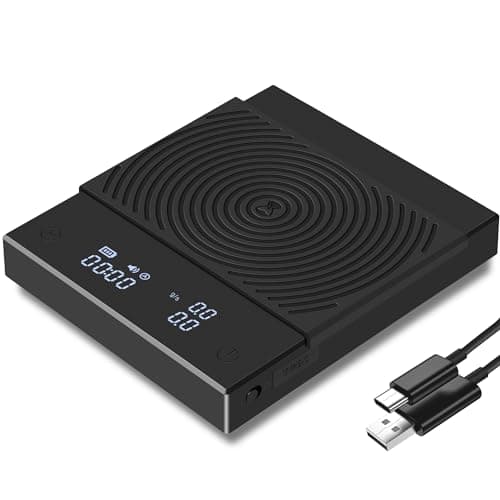
Timemore TIMEMORE Black Mirror Basic 2 Coffee Scale with Timer
TIMEMORE Black Mirror Basic 2 Coffee Scale with Timer

The part that turns the other six into a recipe. Espresso is a ratio of dry grams in to liquid grams out over a number of seconds, and you cannot hold any of that steady by eye. The Black Mirror Basic 2 resolves to 0.1g, has a built-in timer, and is flat and small enough to sit on the Gaggia's drip tray with a cup on top — which is the specification that actually matters, because a scale that does not fit under the group head is a scale you stop using.

Making every shot repeatable
8.8
$55.00Amazon
07
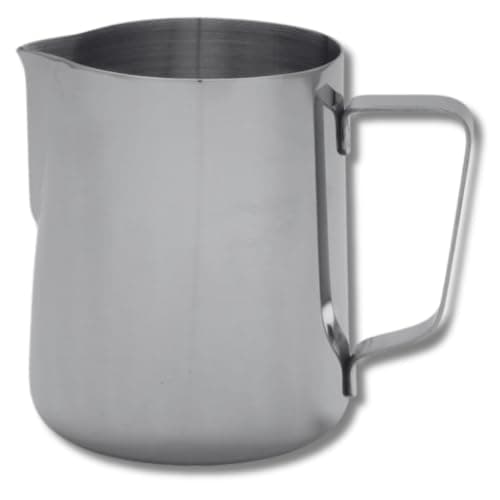
Rattleware Rattleware 20 oz Latte Art Milk Pitcher
Rattleware 20 oz Latte Art Milk Pitcher

The last twenty dollars, and the one that decides whether your milk drinks are pleasant. A 20 oz pitcher is the right size for the Gaggia's single boiler: large enough for two 6 oz lattes, small enough that the steam wand can set the whole volume spinning rather than churning the top of it. The Rattleware has a sharp, well-defined spout, which is what makes pouring a pattern possible instead of pouring a blob.

Texturing milk for two drinks
8.8
$19.99Amazon

#ad · Live prices from the Amazon Product API, as of October 17, 2026. Where we have no verified live price, we show none — a gap beats a number that has rotted.

In detail

The picks, in full

01
Gaggia Gaggia Classic Evo Pro

The machine in the kit

Gaggia Classic Evo Pro

58mm commercial portafilterLead-free brass boilerSingle-piece stainless body15-bar Ulka vibratory pump
7.8/10

The machine in the kit, and the cheapest route onto the 58mm commercial platform. A lead-free brass boiler in a single-piece stainless body, a genuine 58mm commercial portafilter with a real single-wall basket in the box, a 15-bar Ulka vibratory pump and the largest parts-and-mods community in home espresso. It asks you to learn temperature surfing and gives you nothing automatic in return — and that is exactly why it is still a good machine a decade in, when a sealed all-in-one of the same vintage is landfill.

Shot potential
9
Accessory ecosystem
10
Temperature stability
6
Ease of use
5
Value in this build
9

Pros

  • Genuine 58mm commercial portafilter — the widest accessory ecosystem in espresso
  • Brass boiler and metal group hold temperature far better than a lightweight thermoblock
  • Ships with a real single-wall basket rather than a pressurized dual-wall one
  • Serviceable and moddable: gaskets, shower screens, OPV springs and PID kits are all off-the-shelf
  • Single-piece stainless body that survives daily use for years

Cons

  • No PID from the factory — you temperature-surf or buy a kit later
  • Single small boiler, so you wait between pulling a shot and steaming milk
  • The two-hole steam wand takes practice before it textures milk properly
  • No grinder in the box, which is why this page spends another $200 on one

Don't buy this if…

…you want a drink at the press of a button. The Evo Pro is a machine you learn; it does not meet you halfway. A bean-to-cup super-automatic at this money will make you more coffee and less frustration.

The reason the Evo Pro anchors a $1,000 build rather than a $500 one is what it leaves room for. At roughly half the budget it is the most machine you can buy while still funding a real grinder and real puck prep — and in espresso that split produces a better cup than putting the whole thousand into one chassis. Our full Gaggia Classic Evo Pro review covers the machine on its own terms, and best single boiler espresso machines shows where it ranks against the rest of the single-boiler field.

Two cross-shops are worth your time before you commit. The Rancilio Silvia vs Gaggia Classic comparison is the step up: the Silvia is a similar recipe with heavier brass and a better wand, and it costs roughly this whole page's budget by itself. The Gaggia Classic Evo Pro vs Breville Bambino Plus comparison is the sideways move, and it is the honest test of whether you want to learn espresso or simply drink it.

$505.09View on Amazon

Price as of October 17, 2026. Prices change — Amazon's at checkout is the one that counts.

#ad · we may earn a commission from this link to Gaggia Classic Evo Pro

02
Baratza Baratza Encore ESP Coffee Grinder (ZCG495)

The grinder in the kit

Baratza Encore ESP Coffee Grinder (ZCG495)

40mm conical steel burrs40 settings, 20 in the espresso rangePortaholder fits the 58mm basketBaratza parts and repair program
8.2/10

The grinder in the kit, and the part most people under-buy. The Encore ESP is the espresso-geared Encore: 40mm conical steel burrs with 20 of its 40 settings packed into the espresso range, which is the specification that decides whether dialing in is a conversation or a fight. It grinds filter perfectly well on the coarse half of the dial, Baratza sells every part and runs a repair program, and it fits beside the Gaggia without dominating the counter.

Espresso capability
8
Adjustment resolution
8
Build and repairability
9
Speed
7
Value in this build
9

Pros

  • Half its settings sit inside the espresso window, which is the whole point of the ESP version
  • Grinds filter coffee properly on the coarse half of the dial, so one grinder covers the house
  • Every wear part is sold separately and Baratza's repair program is genuinely good
  • Grinds straight into the portafilter with the supplied holder
  • Quiet enough and quick enough for a weekday morning, unlike a hand grinder at this dose

Cons

  • Stepped rather than stepless, so occasionally your ideal setting sits between two clicks
  • Some grounds retention in the chute — a short purge is normal before a dialled shot
  • Plastic hopper and body, so it looks less serious than its output is
  • A flat-burr grinder gives more clarity in the cup, and starts around twice this price

Don't buy this if…

…you only ever brew filter coffee. The standard Baratza Encore is cheaper and better suited to the coarse end, and the ESP's espresso gearing buys you nothing you would use.

The honest comparison here is the Encore ESP against a good hand grinder a hundred dollars cheaper. The hand grinder matches it in the cup. It does not match it on a Tuesday, when there are two milk drinks to make before work and a fine espresso dose is a minute of hard cranking each. In a build this size the grinder has to be something you will still use in a hurry, which is why this one is electric. Our Baratza Encore vs Encore ESP comparison explains exactly what the espresso gearing changes, and Encore ESP vs DF64 Gen 2 is the step up if you later want single-dosing and flat burrs.

$199.95View on Amazon

Price as of October 17, 2026. Prices change — Amazon's at checkout is the one that counts.

#ad · we may earn a commission from this link to Baratza Encore ESP Coffee Grinder (ZCG495)

03
IMS IMS Big Bang Precision Filter Basket (58mm, 18-20g)

Even flow across the puck

IMS Big Bang Precision Filter Basket (58mm, 18-20g)

58mm, 18-20g dose rangePrecision-etched Big Bang hole patternStainless steelDrops into the stock Gaggia portafilter
9.3/10

The cheapest upgrade on this page that changes the shot. A stock basket's holes are stamped to a tolerance that is fine for a cafe replacing baskets every year and loose for someone chasing an even extraction. IMS's Big Bang pattern is a precision-etched hole field designed so flow is uniform across the whole bed rather than concentrated at the centre, in an 18-20g size that suits the dose a 58mm double wants.

Flow evenness
9
Build
9
Fit
10
Value
9

Pros

  • Precision hole pattern gives more even flow than a stamped stock basket
  • 18-20g range matches the dose a 58mm double basket is designed around
  • Drops straight into the Evo Pro's portafilter with no modification
  • Makes a bottomless portafilter genuinely diagnostic later, because the basket is no longer the variable
  • Cheap enough that there is no reason to skip it in a $1,000 build

Cons

  • It will not rescue a bad grind — this is a refinement, not a fix
  • Changing basket changes your dialled recipe, so expect to re-dial once
  • Tighter tolerance means it clogs more noticeably if you do not clean it
  • No visible difference in the cup if your grinder cannot hold a setting

Don't buy this if…

…you have not yet got consistent shots from the stock basket. Fix the grind and the puck prep first; a precision basket rewards a process that is already close.

Baskets are the least glamorous part of a build and the one with the best ratio of improvement to money. Our best precision baskets roundup ranks the field, and 58mm portafilter accessories covers everything else that fits this platform.

$25.90View on Amazon

Price as of October 17, 2026. Prices change — Amazon's at checkout is the one that counts.

#ad · we may earn a commission from this link to IMS Big Bang Precision Filter Basket (58mm, 18-20g)

04
Normcore Normcore 58.5mm Espresso Tamper V4

Repeatable tamp pressure

Normcore 58.5mm Espresso Tamper V4

58.5mm base for a true wall-to-wall tampCalibrated spring releaseStainless base, weighted handleFlat base profile
8.5/10

A calibrated, spring-loaded tamper removes the one variable you cannot see or record. At 58.5mm it is deliberately a hair wider than the nominal 58mm basket, which is what lets it reach the basket wall instead of leaving a rim of loose grounds for water to run down. The V4's spring releases at a set force, so your tamp stops being a thing you do by feel and becomes a number that repeats.

Repeatability
9
Fit
9
Build
8
Value
8

Pros

  • Calibrated release means identical tamp force on every shot, including a bad morning
  • 58.5mm closes the gap at the basket wall where edge channeling starts
  • Heavy enough that you are guiding it rather than pushing it
  • Removes a whole category of dial-in confusion for about fifty dollars
  • Flat base is the right default; convex bases solve a problem most home setups do not have

Cons

  • Will not fix an uneven bed — that is the WDT tool's job, below
  • The spring click takes a few shots to stop over-riding by habit
  • Slightly heavier than an uncalibrated tamper, which some people dislike
  • Nothing about it helps if your dose is not weighed

Don't buy this if…

…you are buying a bottomless portafilter and a distribution tool at the same time. Add one puck-prep variable at a time or you will not know which change did what.

The reason tamping gets so much attention and deserves rather less of it: consistent tamping matters enormously, but hard tamping does not. Past the point where the bed is compacted, extra force changes very little and mostly risks cracking the puck. How to tamp espresso is the technique in full, and best espresso tampers ranks the alternatives at every size.

$49.99View on Amazon

Price as of October 17, 2026. Prices change — Amazon's at checkout is the one that counts.

#ad · we may earn a commission from this link to Normcore 58.5mm Espresso Tamper V4

05
MATOW MATOW 6-Prong WDT Espresso Tool (Weighted Stand)

Fixing channeling at the cause

MATOW 6-Prong WDT Espresso Tool (Weighted Stand)

6 fine stainless needlesWeighted stand includedWorks in 51mm, 54mm and 58mm basketsNeedles replaceable
8.5/10

Six fine needles on a weighted stand, and the best value-for-money item in this entire build. Ground coffee leaves any grinder in clumps, and a clump is a dense spot that water refuses to pass through evenly — so it goes around, which is channeling. Stirring the dry bed for ten seconds breaks the clumps before they become a problem, and the weighted stand means the needles live upright beside the machine instead of stabbing you in a drawer.

Effect on the shot
9
Build
7
Convenience
8
Value
10

Pros

  • Attacks channeling at the cause rather than masking the symptom
  • The single largest shot-quality improvement per dollar in this build
  • Weighted stand keeps the needles upright, clean and off the counter
  • Works with any basket size, so it survives a machine change
  • Ten seconds of stirring, no learning curve

Cons

  • Fine needles bend if you treat them roughly
  • Adds a step to every shot, which some people find tedious
  • Does nothing for a grind that is simply the wrong size
  • A palm distributor looks tidier but does not break clumps the way needles do

Don't buy this if…

…nothing — at this price and in this build there is no honest argument against owning one. If you already own a WDT tool, spend the money on beans instead.

The distinction worth knowing: a WDT tool breaks clumps, and a distribution tool (a palm leveler) flattens the surface. They are not interchangeable, and the needles are the one that changes extraction. Best WDT tools and best distribution tools cover each category properly, and espresso puck prep is the whole routine in order.

$27.99View on Amazon

Price as of October 17, 2026. Prices change — Amazon's at checkout is the one that counts.

#ad · we may earn a commission from this link to MATOW 6-Prong WDT Espresso Tool (Weighted Stand)

06
Timemore TIMEMORE Black Mirror Basic 2 Coffee Scale with Timer

Making every shot repeatable

TIMEMORE Black Mirror Basic 2 Coffee Scale with Timer

0.1 g resolutionBuilt-in shot timerLow profile, fits a drip trayUSB-C rechargeable
8.8/10

The part that turns the other six into a recipe. Espresso is a ratio of dry grams in to liquid grams out over a number of seconds, and you cannot hold any of that steady by eye. The Black Mirror Basic 2 resolves to 0.1g, has a built-in timer, and is flat and small enough to sit on the Gaggia's drip tray with a cup on top — which is the specification that actually matters, because a scale that does not fit under the group head is a scale you stop using.

Resolution
9
Fit under a group head
9
Build
8
Value
9

Pros

  • 0.1g resolution is the real requirement for an 18g dose and a 36g yield
  • Timer and weight on one display, so the whole recipe is in one glance
  • Low enough to fit under the group head with a cup on it
  • Also the scale you weigh beans on for pour over, so it earns its place twice
  • Fast settling time, which matters when the shot is already running

Cons

  • No auto-start on first drip, which pricier espresso scales offer
  • A glass top needs wiping, and espresso is a messy process
  • Battery means remembering to charge it
  • Not waterproof — sensible care required on a drip tray

Don't buy this if…

…you genuinely will not weigh anything. In that case skip it and accept that dialing in will be guesswork — but do not buy the precision basket either, because it is the same money chasing a precision you are not keeping.

If you are wondering whether a dedicated espresso scale is worth it over a kitchen scale: resolution and settling speed are the two differences, and both bite during a shot. Best espresso scales ranks the field including the cheaper options, and how to dial in espresso is what you do with the numbers.

$55.00View on Amazon

Price as of October 17, 2026. Prices change — Amazon's at checkout is the one that counts.

#ad · we may earn a commission from this link to TIMEMORE Black Mirror Basic 2 Coffee Scale with Timer

07
Rattleware Rattleware 20 oz Latte Art Milk Pitcher

Texturing milk for two drinks

Rattleware 20 oz Latte Art Milk Pitcher

20 oz (600 ml) capacitySharp latte-art spoutStainless steel, dishwasher safeWeighted base
8.8/10

The last twenty dollars, and the one that decides whether your milk drinks are pleasant. A 20 oz pitcher is the right size for the Gaggia's single boiler: large enough for two 6 oz lattes, small enough that the steam wand can set the whole volume spinning rather than churning the top of it. The Rattleware has a sharp, well-defined spout, which is what makes pouring a pattern possible instead of pouring a blob.

Pour control
9
Size for this machine
9
Build
8
Value
9

Pros

  • 20 oz is the correct size for a single-boiler machine and two small milk drinks
  • Defined spout makes latte art achievable rather than theoretical
  • Heavy enough to hold its shape and read temperature by hand on the side
  • Stainless and dishwasher-safe, so milk residue is not a project
  • Industry-standard shape that every steaming tutorial assumes

Cons

  • Too large for a single 4 oz cortado's worth of milk
  • No thermometer notch — you judge by hand or buy a clip-on
  • Plain finish; prettier pitchers exist for more money and pour the same
  • A 20 oz pitcher of milk is more than the Gaggia's boiler steams comfortably in one go when cold

Don't buy this if…

…you drink straight espresso only. Nothing on this page needs a pitcher, and the money is better spent on beans.

Milk is the half of a home setup that gets ignored in buying guides and then decides how good the drinks are. How to steam milkis the technique on the Gaggia's two-hole wand specifically, and best milk pitchers covers the other sizes if you drink cortados or make four drinks at a time.

$19.99View on Amazon

Price as of October 17, 2026. Prices change — Amazon's at checkout is the one that counts.

#ad · we may earn a commission from this link to Rattleware 20 oz Latte Art Milk Pitcher

The whole build, part by part

Specs below are the manufacturers' published figures for the exact listings above. Prices come from the live price layer, with the "as of" date shown in the quick picks table — add the seven figures there for the current total, because they move.

SlotPickWhat it decidesSkippable?
MachineGaggia Classic Evo ProPortafilter platform, thermal mass, serviceabilityNo
GrinderBaratza Encore ESPGrind consistency and espresso-range resolutionNo
BasketIMS Big Bang 58mm 18-20gFlow evenness across the puckLater, not never
TamperNormcore 58.5mm V4Repeatable tamp force, wall-to-wall coverageNo
WDT toolMATOW 6-prongClump-free bed, which is channeling preventionNo
ScaleTimemore Black Mirror Basic 2Dose, yield and shot time — the recipeNo
PitcherRattleware 20 ozMilk texture and pour controlOnly if you drink espresso straight

What we deliberately did not buy

A bottomless portafilter. It is a diagnostic tool, not an upgrade: it shows you channeling by spraying when it happens. Buy one after the build is dialled in, when you want to see what your puck prep is doing — best bottomless portafilters and bottomless vs spouted portafilters cover the choice.

A PID kit.A PID holds the Gaggia's boiler at a set temperature and is the most popular mod in home espresso for good reason. It is also a hundred-plus dollars and an afternoon with a screwdriver, and temperature surfing works. Learn the machine first, then decide whether the flat line is worth it to you.

A puck screen. Cheap, pleasant, and mostly about keeping the shower screen clean rather than about the shot. Are puck screens worth it is the honest answer, and it is a $14 purchase you can make any time.

A water filter. Not optional forever — scale is what kills espresso machines — but it depends entirely on your water, and the first step is finding out what your water is. Water for espresso and best espresso water filters cover it, and both are a later purchase.

If you would rather spend it all on one machine

That is a defensible choice and we are not going to pretend otherwise. A thousand dollars buys a Breville Barista Express Impress or a De'Longhi La Specialista Arte Evo: one box, a grinder inside it, an assisted tamp, and a 54mm portafilter. You will make coffee sooner and think about it less. What you give up is the 58mm ecosystem, the ability to upgrade one part at a time, and a grinder you would choose on its own merits — because the grinder inside an all-in-one is the part the price pressure lands on.

Our best espresso machines with a grinder roundup is the right page if that is the direction you are leaning, and the Barista Express vs Barista Express Impress comparison settles the main question inside it. The best espresso machines under $1,000 roundup ranks the single-machine field at exactly this budget.

The order to buy it in

If you cannot buy everything at once, buy in this order: machine, grinder, scale, WDT tool, tamper, basket, pitcher. The logic is that the first two are the only parts you cannot work around, the scale is what lets you learn anything from the shots you pull, and the puck-prep items are refinements that only pay off once the first three are in place. Buying the basket before the scale is the classic mistake — a precision basket cannot tell you anything if you are not measuring what went into it.
How we picked

We did not lab-test this gear

Everyone in this category says they tested twenty machines. We have not pulled shots on every product here, and we say so. What we did instead: compiled the published specifications, cross-checked the manufacturer manuals, computed the running cost (wattage to energy, grams-per-shot to cost-per-cup), weighed aggregated owner reports, and scored each product against a published rubric. The scores are judgments from documented research — not measurements we took, because we do not have a test lab and we will not pretend we do. Where hands-on time would tell you more than a spec sheet, we flag it. Where a number came from someone else's work, we name them in Sources.

Questions

Frequently asked

What is the best espresso setup under $1,000?
A Gaggia Classic Evo Pro with a Baratza Encore ESP, plus an IMS precision basket, a calibrated Normcore tamper, a MATOW WDT tool, a Timemore 0.1g scale and a 20 oz Rattleware pitcher. That build puts you on the 58mm commercial platform with a real espresso grinder and proper puck prep, and at the prices shown in the table above it leaves room in the budget for beans. Live prices and the "as of" date are in the quick picks table.
Is it better to buy one $1,000 espresso machine or build a setup?
Build the setup if you want the best espresso and are happy to learn; buy the one-box machine if you want coffee with less involvement. An all-in-one at this price has to fund a grinder, a chassis and a milk system out of the same money, so its grinder is always the compromise — and the grinder is what most affects the cup. See best espresso machines with a grinder for the other route.
Why does this setup use 58mm instead of 54mm?
58mm is the commercial standard, so it has the widest and best-supported accessory ecosystem: precision baskets, puck screens, naked portafilters, distribution tools and gaskets are all made for 58mm first. 54mm is Breville's size and well supported but narrower. Our portafilter sizes explained guide covers all three sizes, and 58mm portafilter accessories shows what the platform gets you.
Do I need a PID for the Gaggia Classic Evo Pro?
No, but you will probably want one eventually. Without a PID the thermostat lets the boiler swing through a band, and the technique owners use is temperature surfing — timing your shot relative to the heater light. It works, and thousands of people pull excellent espresso this way. A PID kit costs over a hundred dollars and an afternoon of fitting, and it holds the line flat instead. Learn the machine first.
Can I spend less on the grinder and more on the machine?
You can, and it is the most common way a $1,000 budget gets wasted. Espresso is brutally sensitive to grind consistency and a machine cannot fix unevenly ground coffee, so dropping below roughly $150-200 on the grinder caps what the rest of the build can do. If money is tight, buy a cheaper machine and keep the grinder — the $500 setup page does exactly that.
What is missing from this build?
Deliberately: a bottomless portafilter (a diagnostic, best bought once you are dialled in), a puck screen, a water filter and a PID kit. None of them is needed to pull good espresso on day one, and all four are better decisions once you know how your water and your routine behave. Beans are the real omission — budget for fresh ones, because they matter more than any accessory here.

Keep reading

Same gear, other pages

We cover this gear elsewhere too

Receipts

Sources

We do not run a testing lab, and we do not pretend to. Where a measured number came from someone else's work, we name them and link them. Where we could not verify something, we say so on the page rather than quietly leaving it out. Read our full method.