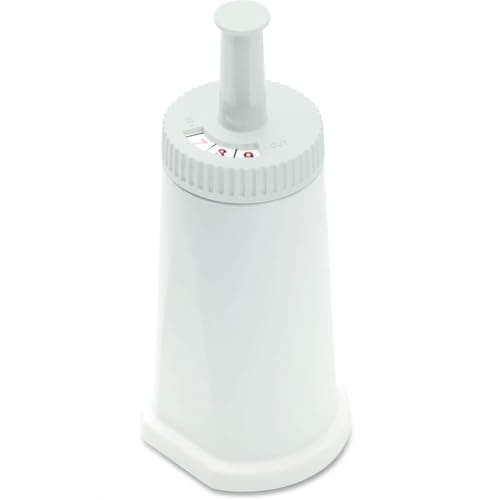
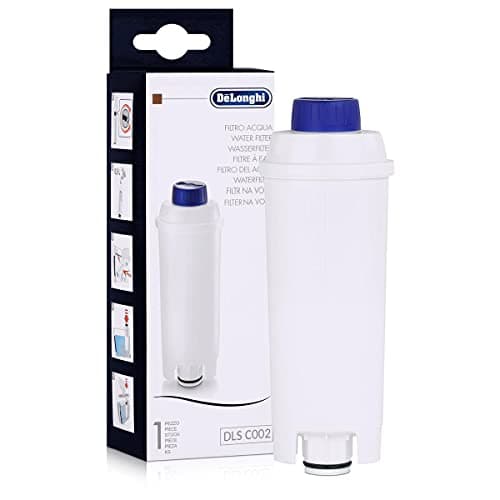
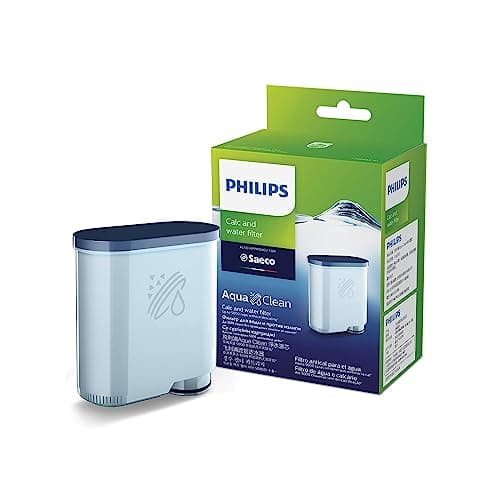
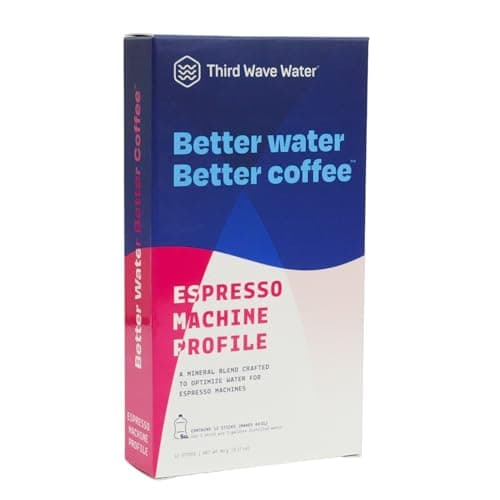
If you want the best-tasting espresso, the answer is not a filter at all — it is Third Wave Water's Espresso Machine Profile, a chloride-free mineral stick you drop into a gallon of distilled or reverse-osmosis water to hit roughly 150 ppm TDS on purpose instead of hoping your tap is close. If you want the easiest protection for a specific machine, buy the cartridge your manufacturer designed for it: the Breville Claro Swiss for Breville, the De'Longhi DLSC002 for De'Longhi, the Philips AquaClean for Philips and Saeco super-automatics. And before you buy any of them, spend fifteen dollars on a TDS meter, because every recommendation on this page changes depending on what comes out of your tap.
Here is the thing almost every "best water filter" list gets wrong, and it is the reason this page is organized the way it is. The water that extracts the best espresso is not the water that protects your boiler best. 1st-line, who repair these machines for a living, publish both targets side by side and they do not overlap: the Specialty Coffee Association's extraction-oriented range is roughly 75 to 250 mg/L TDS with 50 to 100 mg/L hardness as calcium carbonate, while 1st-line's own machine-protection recommendation is tighter and softer — around 80 to 100 mg/L TDS and just 1 to 2 grains per gallon of hardness, which is 17 to 33 mg/L. They state the conflict plainly: the best water for extraction may not be the best for limescale prevention, and the reverse. Any page that hands you one filter and calls it correct for both jobs is skipping that.
So the honest framing is a question, not a product. Which problem do you have?
Problem one: your shots taste flat, dull or thin even after dialing in. That is a mineral-content problem and no cartridge will fix it, because cartridges remove things. You fix it by building water up from a known-empty base — distilled or RO water plus a measured mineral dose. That is pick one.
Problem two: you live somewhere hard and you are scared of scale. That is what the in-tank cartridges are for. They sit in the reservoir, run every drop through an ion-exchange resin that pulls calcium out before it reaches a hot boiler, and they are the lowest-effort option that exists because you already own the slot they go in. Picks two through four, split by brand, because these are not interchangeable.
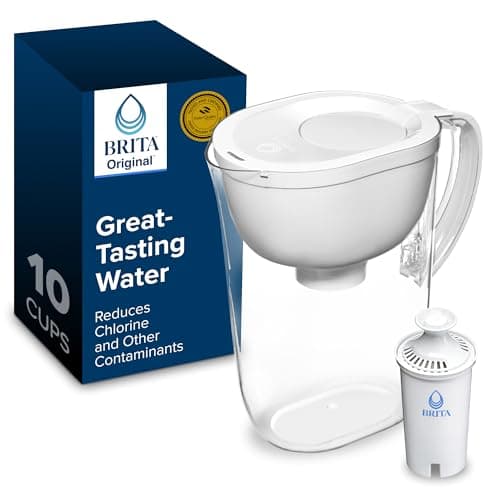
Problem three: your tap water tastes of chlorine and that taste is in the cup. A cheap carbon pitcher solves this for under thirty dollars. It will not touch your scale risk, and the honest version of this recommendation says so out loud rather than letting you assume otherwise. Pick six.
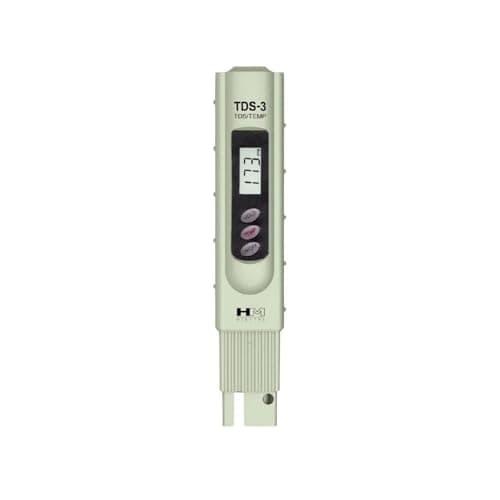
Problem four: you do not actually know which of the above you have. Then you are pick seven, and it costs fifteen dollars.
What we looked for
Does it reduce hardness, or only taste?This is the single most misunderstood distinction in the category, and it decides whether a product protects your machine at all. An ion-exchange resin swaps calcium and magnesium ions out of the water, which is what actually prevents scale. Activated carbon adsorbs chlorine and some metals, which is what fixes taste. Many pitcher filters do the second and make no claim about the first — Brita's published claim list for the Standard filter is chlorine taste and odor plus copper, cadmium and mercury, with no hardness or scale claim anywhere in it. That is not a flaw in the product; it is a flaw in how the product gets recommended.
Does it fit your machine, specifically?In-tank cartridges are keyed to a manufacturer's reservoir and often to a list of model numbers. The Breville Claro Swiss two-pack lists compatibility with the BES995, BES990, BES985, BES980, BES920, BES881, BES880, BDC465 and BDC415. The De'Longhi DLSC002 fits De'Longhi reservoirs. The Philips AquaClean fits Philips and Saeco super-automatics and is activated through the machine's own menu. Buying the wrong one is the most common waste of money here. If you are unsure what you own, our portafilter size by brand page is the quickest way to pin down which platform your machine belongs to.
What does a year of it really cost?Cartridges are a subscription whether or not you think of them that way. A filter rated for 90 days is four a year; a filter rated by cup count is replaced on the machine's prompt, not your calendar. We looked at the published replacement cadence for every cartridge here and said what it implies, because a cheap cartridge replaced six times a year is not cheap.
Is the marketing claim the whole claim?Philips advertises up to 5,000 cups without descaling, which is true and also requires eight filters — roughly 625 cups each, and only if you replace on prompt. We quote the number and the condition together every time, because the number alone is how people end up surprised.
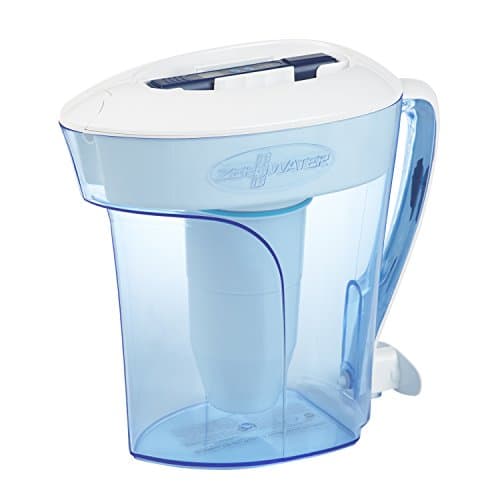
Does it leave water a machine should actually drink?A filter that strips water to near-zero dissolved solids is not automatically better. Very soft, low-alkalinity water extracts poorly — thin and sour — and 1st-line warn that it is also more aggressive toward metal than moderately mineralized water. That is why the ZeroWater pitcher is ranked as a base for building water rather than as a finished answer, and why we do not recommend running distilled water straight into a boiler. Our water for espresso guide covers that chemistry in full if you want the longer version.
Why one filter cannot do both jobs
Water does two unrelated things inside an espresso machine, and they pull in opposite directions. Dissolved minerals are the solvent chemistry that pulls flavor compounds out of coffee — magnesium in particular is strongly associated with extraction — so water with too few of them produces shots that taste thin, sour and hollow no matter how well you dialed in the grind. The same minerals, specifically the calcium carbonate that makes water "hard", come out of solution when water is heated and bond to the inside of a boiler as limescale. Scale insulates the heating element, chokes narrow water paths, and is the single most common cause of a dead home espresso machine.
So there is no "best water", only a chosen compromise, and the published targets show you the gap. The SCA extraction range sits around 75 to 250 mg/L TDS with 50 to 100 mg/L hardness; 1st-line, writing from the repair bench, recommend 80 to 100 mg/L TDS and 17 to 33 mg/L hardness for machine protection, and advise against relying on routine descaling because descaling chemicals attack metals and gaskets too. Both of those positions are reasonable. They are also different numbers, and a shop that tells you otherwise is selling something.
The way out of the compromise is to pick which risk you can afford. A $200 single-boiler machine you expect to replace in four years can run slightly harder water and taste better for it. A $1,500 dual boiler with an internal brew group should get softer water and you should accept a marginally less lively shot in exchange. Our descaling guide covers the other end of that decision, and best dual boiler espresso machines is where the softer-water logic matters most.
Match the filter to how your machine takes water
There are only three real delivery mechanisms, and they are not substitutes.
In-tank cartridgessit in the reservoir and treat every drop on its way into the machine. They are the lowest-effort option in existence, because the slot already exists and your routine does not change. They are also keyed to a manufacturer, so the cartridge is chosen by the badge on your machine rather than by review. Breville, De'Longhi and Philips each have their own, and all three are on this page.
Pitcher filters treat water before it reaches the tank, which means they work with any machine and add a pour-and-wait step. The important question with a pitcher is what the cartridge actually claims: a carbon pitcher is a taste tool, and a multi-stage ion-exchange pitcher is a stripping tool. Those are different products that look identical on a shelf.
Built waterskips filtration entirely: start from distilled or RO water, which is effectively empty, and add a measured mineral dose. This is the only approach that can raise minerals rather than lower them, which makes it the only fix for water that is already too soft. It is also the only approach that gives you the same water in January and July, which is more than municipal supplies can promise — tap mineral content shifts with season and source.
Why distilled water alone is a mistake
This comes up constantly and it deserves a direct answer: do not run distilled or RO water neat through an espresso machine. Two reasons, both documented. First, taste — with almost no dissolved minerals there is little to carry extraction, and the resulting shots read as thin, sour and flat. Second, machine health — 1st-line note that stripped water needs remineralizing to reach sane TDS and hardness targets, and very low-alkalinity water is more corrosive to metal than moderately mineralized water. Many machines with conductivity-based water-level sensors also simply cannot detect distilled water, and will report an empty tank that is visibly full.
Distilled water is an excellent starting point and a poor finished product. That is the whole reason picks one and five are on this page as a pair rather than as rivals.
What a TDS meter tells you, and what it does not
A TDS meter measures electrical conductivity and converts it to an estimate of total dissolved solids in parts per million. That one number is genuinely decision-changing: it separates "my water is too soft, I need minerals" from "my water is hard, I need a softener", and those two conclusions lead to opposite purchases.
What it does not do is tell you whichsolids. Two samples can both read 150 ppm while one is mostly calcium bicarbonate and the other is mostly sodium chloride — and chloride is the ion that pits stainless steel, which is exactly why Third Wave specifies only its chloride-free profiles for espresso machines. A meter also says nothing about alkalinity, pH, chlorine or lead. For the fuller picture, your water utility publishes an annual report with hardness and alkalinity in it, and that report plus a $15 meter is a better basis for buying than either alone. Clive Coffee make the same point: TDS meters do not identify specific minerals, pH, or contaminants like chlorine or lead.
The running cost nobody quotes
Every option here is a subscription. Four Breville cartridges a year, roughly six Brita filters a year at two months each, a Philips cartridge about every 625 cups, a mineral stick per gallon of water you mix, a ZeroWater cartridge whose life falls as your tap TDS rises. None of those are expensive individually, and all of them are the part people forget when comparing a $12 cartridge against a $29 box of sticks.
The honest way to compare is per year, against the machine you are protecting. On a machine worth several hundred dollars, every option on this page costs less annually than one service visit, and all of them cost less than a boiler. The expensive choice is the one where you buy a filter that does not address your actual problem — a carbon pitcher against a scale risk, or a softener against water that was already too soft. That is the mistake this page is built to prevent, and it is why the $15 meter is on it.
What we did not test
We did not assay any of these filters. We have no lab and we say so on our methodologypage. Every mineral figure, cup rating, replacement interval and contaminant claim above is the manufacturer's own published figure or a number from the named third party in Sources, and where a manufacturer's own pages disagree with each other — Third Wave on alkalinity, Breville on replacement interval — we have printed both rather than picking the tidier one. We have not measured TDS before and after any of these cartridges, have not verified ZeroWater's 99.6% figure, and have not independently confirmed Philips' cup ratings. The scores above are editorial judgments from documented research against a published rubric, not measurements we took.