Skip to content
Portafilter Co

Learn · Guides

Cleaning vs descaling an espresso machine

Two jobs people treat as one. A cleaner strips coffee oil from the group and basket; a descaler strips limescale from the boiler. Using one for the other does nothing useful and can do harm.

By Stephen V.Updated How we pick
#ad

We earn a commission when you buy through our Amazon links, at no extra cost to you. It never changes a verdict, and we say so when the cheaper product is the better buy. How this works.

They are two completely different jobs. Cleaninguses an alkaline detergent to dissolve coffee oil and fines from the parts the coffee touches — the group head, shower screen, portafilter and baskets. Descaling uses an acid to dissolve limescale from the parts the watertouches — the boiler, heating element and internal plumbing. A cleaner will not remove scale and a descaler will not remove coffee oil. You need both, on different schedules, and if you only ever do one, do the cleaning: it affects how every shot tastes, starting with the next one.

The symptoms tell you which one you are overdue for. Dirty-machine symptoms are taste symptoms: shots that taste harsh, rancid or ashy no matter which beans you use, a portafilter that smells stale, a gasket that has started leaking, brown residue on the shower screen. Scale symptoms are flow and heat symptoms: the machine takes longer to come up to temperature, the pump sounds strained, the flow rate drops, the steam wand splutters, or the machine simply starts demanding a descale cycle because it has counted your shots.

The chemistry is the reason you cannot substitute one for the other. Coffee oil is a lipid residue and it comes off with an alkaline detergent — typically sodium percarbonate based, which is what espresso cleaning tablets and powders are. Limescale is calcium carbonate deposited out of hard water by heat, and it dissolves in acid — citric, lactic or sulfamic. Put a cleaner through the boiler and it does nothing to the scale; put a descaler through the group and portafilter and it does nothing to the oil, while exposing the group gasket and any aluminium or brass parts to acid for no benefit.

A short note on vinegar, because it is the most common home-remedy mistake: it is an acid, so it does remove some scale, but it is a weak and slow one, it leaves a smell and a taste that takes many litres of water to flush out, and on some machines it attacks seals and aluminium. Purpose-made descalers are formulated to be effective at a safe concentration and to rinse clean. The few dollars saved is not worth the risk to a machine that cost hundreds.

Two machine-specific cautions before the picks. First, if your machine is a super-automatic(a bean-to-cup), descale only with a product your manufacturer approves and run the machine's own descale program — the internal plumbing is far more complex and the wrong chemistry at the wrong concentration is a real risk. Second, only machines with a three-way solenoid valve can be backflushed, which is how cleaner gets into the group; on machines without one, you clean by soaking the portafilter and baskets instead. The procedure for each is in how to backflush and how to descale.

The short answer

Quick picks

#ProductBest forScorePrice
01
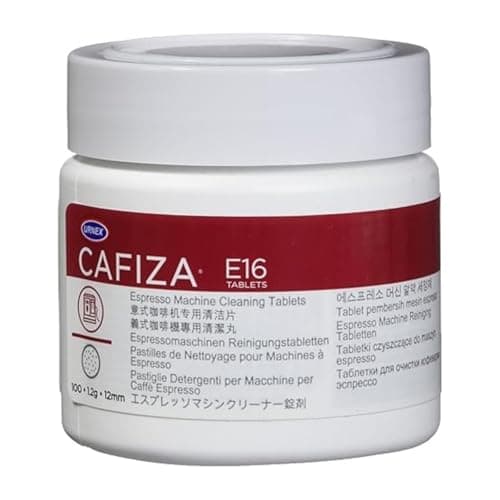
Urnex Urnex Cafiza Espresso Machine Cleaning Tablets (100 ct)
Urnex Cafiza Espresso Machine Cleaning Tablets (100 ct)

The cleaner — the alkaline detergent half of the job. One tablet in a blind basket, backflush, and the coffee oil comes off the group, screen and valve; a tablet in hot water soaks portafilters and baskets clean on machines that cannot be backflushed. The industry-standard product for this, and a 100-count tub is a multi-year supply for a home machine. This is what you buy if you have never cleaned your machine.

Best cleaner (removes coffee oil)
8.8
$17.99Amazon
02
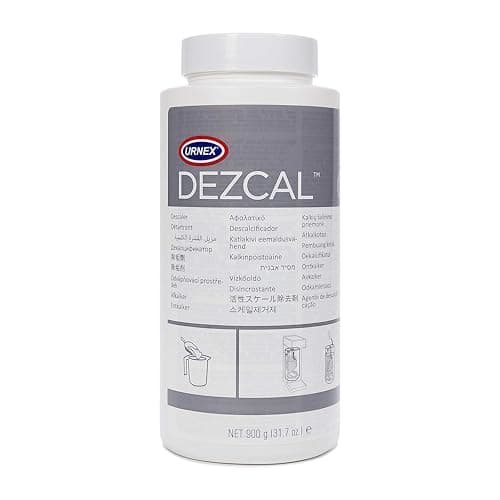
Urnex Urnex Dezcal Coffee & Espresso Descaler (900g)
Urnex Dezcal Coffee & Espresso Descaler (900g)

The descaler — the acid half of the job, and the one that protects the part of the machine you cannot see. An activated powder that dissolves calcium carbonate out of the boiler, heating element and water path, sold in a tub large enough for many descales. Use it on the schedule your water hardness demands, not when the machine finally complains.

Best descaler (removes limescale)
8.4
$29.98Amazon
03
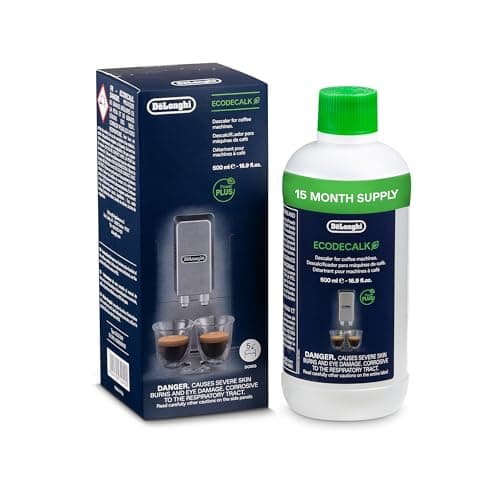
De'Longhi De'Longhi EcoDecalk Universal Descaler (16.9 oz)
De'Longhi EcoDecalk Universal Descaler (16.9 oz)

The descaler to use if you own a bean-to-cup machine. A lactic-acid liquid that De'Longhi recommends for its own machines and that works on most super-automatics, pre-measured per use so there is no mixing error inside a machine with complex internal plumbing. Gentler-smelling and lower-odour than powder descalers, and the safer default where the manufacturer specifies a liquid.

Best for super-automatics
8.2
$16.95Amazon
04
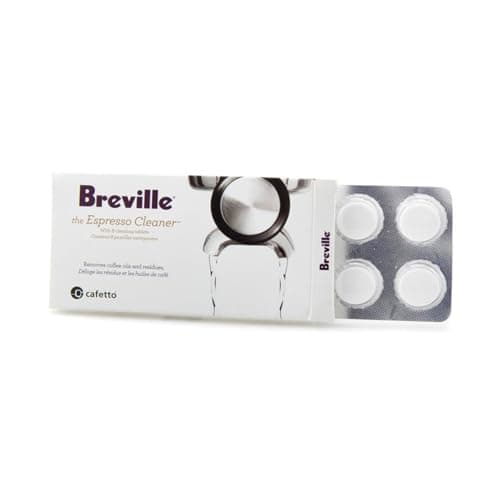
Breville Breville BEC250 Espresso Cleaning Tablets (8 pack)
Breville BEC250 Espresso Cleaning Tablets (8 pack)

The cleaner sized for Breville's own cleaning cycle. These are OEM detergent tablets dimensioned for the cleaning disc that ships with Breville machines, which is the reason to pay a premium over a generic tub: the tablet fits the disc, and the machine's cleaning-cycle prompt assumes it. Note what the pack is — a cleaner, not a descaler. Breville sells those separately.

Best for Breville machines
7.4
$11.98Amazon

#ad · Live prices from the Amazon Product API, as of October 5, 2026. Where we have no verified live price, we show none — a gap beats a number that has rotted.

In detail

The picks, in full

01
Urnex Urnex Cafiza Espresso Machine Cleaning Tablets (100 ct)

Best cleaner (removes coffee oil)

Urnex Cafiza Espresso Machine Cleaning Tablets (100 ct)

Backflush detergent tablets100-count tub (long supply)Cleans group head, portafilter & basketsOdorless, food-safe, rinses clean
8.8/10

The cleaner — the alkaline detergent half of the job. One tablet in a blind basket, backflush, and the coffee oil comes off the group, screen and valve; a tablet in hot water soaks portafilters and baskets clean on machines that cannot be backflushed. The industry-standard product for this, and a 100-count tub is a multi-year supply for a home machine. This is what you buy if you have never cleaned your machine.

Effectiveness on oil
9
Value per use
10
Ease of use
8
Machine compatibility
8

Pros

  • The job most home users neglect, in the simplest possible form
  • Works both as a backflush tablet and as a soak
  • Tiny cost per use; the tub lasts years
  • Food-safe and rinses without residual taste

Cons

  • Does nothing about limescale — it is not a descaler
  • Backflushing needs a three-way valve
  • Tablets are sized for 58mm-class machines; use as a soak on smaller ones

Don't buy this if…

…your symptoms are slow flow and long heat-up. That is scale, and you need the descaler below.

Schedule: a water-only backflush after the last shot of the day, and a detergent backflush weekly on a daily-use machine. Soak the portafilter and baskets monthly — they collect more oil than people expect, and a stale basket flavours every shot that passes through it. The whole cleaning kit is ranked in best espresso cleaning kits.

$17.99View on Amazon

Price as of October 5, 2026. Prices change — Amazon's at checkout is the one that counts.

#ad · we may earn a commission from this link to Urnex Cafiza Espresso Machine Cleaning Tablets (100 ct)

02
Urnex Urnex Dezcal Coffee & Espresso Descaler (900g)

Best descaler (removes limescale)

Urnex Dezcal Coffee & Espresso Descaler (900g)

Activated descaling powder900g resealable tub (many descales)Strips scale from boiler & heating elementUniversal — most coffee & espresso machines
8.4/10

The descaler — the acid half of the job, and the one that protects the part of the machine you cannot see. An activated powder that dissolves calcium carbonate out of the boiler, heating element and water path, sold in a tub large enough for many descales. Use it on the schedule your water hardness demands, not when the machine finally complains.

Effectiveness on scale
9
Value per use
9
Ease of use
7
Machine compatibility
8

Pros

  • Removes the scale that quietly kills heating elements and restricts flow
  • 900g tub is far cheaper per descale than single-use sachets
  • Works across coffee makers, kettles and espresso machines
  • Formulated to rinse clean, unlike vinegar

Cons

  • Powder means measuring; liquids are more convenient
  • Does nothing about coffee oil — it is not a cleaner
  • Check manufacturer approval before using on a super-automatic

Don't buy this if…

…you own a super-automatic that specifies its own descaler. Follow the manufacturer there — the liquid below is the usual answer.

Frequency is a water-hardness question, not a calendar one: soft water might mean every four to six months, genuinely hard water every month or two. The cheapest way to reduce the whole problem is to brew with filtered or appropriately-mineralised water in the first place — water for espresso covers what the right water actually looks like, and it improves taste as well as longevity.

$29.98View on Amazon

Price as of October 5, 2026. Prices change — Amazon's at checkout is the one that counts.

#ad · we may earn a commission from this link to Urnex Dezcal Coffee & Espresso Descaler (900g)

03
De'Longhi De'Longhi EcoDecalk Universal Descaler (16.9 oz)

Best for super-automatics

De'Longhi EcoDecalk Universal Descaler (16.9 oz)

Lactic-acid (plant-derived) liquid500 ml / 16.9 oz (5 uses)Universal; De'Longhi-recommendedEco-friendly, low odor
8.2/10

The descaler to use if you own a bean-to-cup machine. A lactic-acid liquid that De'Longhi recommends for its own machines and that works on most super-automatics, pre-measured per use so there is no mixing error inside a machine with complex internal plumbing. Gentler-smelling and lower-odour than powder descalers, and the safer default where the manufacturer specifies a liquid.

Effectiveness on scale
8
Value per use
7
Ease of use
9
Machine compatibility
9

Pros

  • Manufacturer-recommended chemistry for De'Longhi bean-to-cups
  • Liquid means no mis-measured powder inside a sealed machine
  • Low odour and plant-derived acid
  • Works on most other super-automatics too

Cons

  • More expensive per descale than a large powder tub
  • Five uses per bottle
  • Still not a cleaner — oil needs detergent

Don't buy this if…

…you have a manual pump machine and a big tub of powder descaler. There is no benefit to paying for the liquid.

On a super-automatic, always run the machine's own descale program rather than improvising — it sequences the pump and valves so the solution reaches everything and then rinses properly. The descaler field is ranked in best espresso descaling solutions, and best super-automatic machines covers the machines this applies to.

$16.95View on Amazon

$19.9515% off

Price as of October 5, 2026. Prices change — Amazon's at checkout is the one that counts.

#ad · we may earn a commission from this link to De'Longhi EcoDecalk Universal Descaler (16.9 oz)

04
Breville Breville BEC250 Espresso Cleaning Tablets (8 pack)

Best for Breville machines

Breville BEC250 Espresso Cleaning Tablets (8 pack)

OEM Breville cleaning tablets8 tablets per packSized for the cleaning cycle & discBackflush detergent (not a descaler)
7.4/10

The cleaner sized for Breville's own cleaning cycle. These are OEM detergent tablets dimensioned for the cleaning disc that ships with Breville machines, which is the reason to pay a premium over a generic tub: the tablet fits the disc, and the machine's cleaning-cycle prompt assumes it. Note what the pack is — a cleaner, not a descaler. Breville sells those separately.

Effectiveness on oil
8
Value per use
5
Ease of use
9
Machine compatibility
9

Pros

  • Correct size for the Breville cleaning disc and cycle
  • No guesswork on an in-warranty machine
  • Same alkaline-detergent job as a generic tablet, in the right dimensions
  • Easy to use with the machine's own prompt

Cons

  • Far more expensive per tablet than a 100-count generic tub
  • Only eight per pack
  • Explicitly not a descaler, which the packaging confuses people about

Don't buy this if…

…you do not own a Breville with a cleaning disc. A generic tablet does the same chemistry for a fraction of the price.

If you own a Breville, the practical setup is this pack for the prompted cleaning cycle and a tub of descaler for the separate descale prompt. The machine will ask for both, at different intervals, and they are not the same request — which is the entire point of this page.

$11.98View on Amazon

$14.9520% off

Price as of October 5, 2026. Prices change — Amazon's at checkout is the one that counts.

#ad · we may earn a commission from this link to Breville BEC250 Espresso Cleaning Tablets (8 pack)

The difference in one table

Cleaning (backflush / soak)Descaling
RemovesCoffee oil, fines, residueLimescale (calcium carbonate)
ChemistryAlkaline detergentAcid (citric, lactic or sulfamic)
Where it worksGroup head, screen, portafilter, basketsBoiler, heating element, water lines
Symptoms it fixesHarsh, rancid or ashy taste; leaks from a dirty gasketSlow heat-up, weak flow, spluttering steam
How oftenWater flush daily; detergent weekly; soak monthlyEvery 1-6 months, depending on water hardness
NeedsBlind basket and a three-way valve, or a soakMachine's descale cycle or a manual flush
If you skip itEvery shot tastes worse, starting nowFlow and temperature degrade; elements eventually fail

Which one do I need right now?

Taste problem, clean. Flow or heat problem, descale. If coffee tastes harsh or stale across different beans and a fresh bag does not help, the oil in your group and baskets is the likeliest culprit and detergent fixes it the same day. If the machine is slower to heat than it used to be, the pump sounds like it is working harder, the shot takes longer to start or the steam wand sputters, that is restriction from scale. If your machine has a descale light or a shot counter, treat it as a reminder rather than the authority — it counts shots, it does not measure your water.

A realistic maintenance schedule

Every day: flush the group for a couple of seconds after the last shot, wipe the gasket and shower screen with a group brush, rinse the portafilter and basket, and purge and wipe the steam wand immediately after use. Every week: detergent backflush if your machine has a three-way valve. Every month: soak the portafilter, baskets and shower screen in cleaning solution. Every 1-6 months:descale, with the interval set by your water hardness. That is the whole programme, and the daily part matters most — it is also the part that prevents the leaking gasket in espresso machine leaking from the portafilter.

What about the steam wand and the grinder?

Neither needs descaling and neither wants detergent inside it. A steam wand needs purging and wiping while it is still hot, every single time, because dried milk is almost impossible to remove later and will block the tip — how to clean a steam wand covers it. A grinder needs brushing out, never water: moisture plus coffee fines makes a paste that sets hard in the burr carrier.

Water: the way to need less of both

Scale is a water problem before it is a machine problem. Brewing with water of a sensible mineral content — filtered, or a bottled water with moderate hardness — stretches descaling intervals dramatically and improves extraction at the same time. Very soft or distilled water is not the answer either: it tastes hollow and, on some machines, it confuses water-level sensors. Water for espresso has the detail, and best descaling solutions ranks the products for when you do need them.

How we picked

We did not lab-test this gear

Everyone in this category says they tested twenty machines. We have not pulled shots on every product here, and we say so. What we did instead: compiled the published specifications, cross-checked the manufacturer manuals, computed the running cost (wattage to energy, grams-per-shot to cost-per-cup), weighed aggregated owner reports, and scored each product against a published rubric. The scores are judgments from documented research — not measurements we took, because we do not have a test lab and we will not pretend we do. Where hands-on time would tell you more than a spec sheet, we flag it. Where a number came from someone else's work, we name them in Sources.
Questions

Frequently asked

Is descaling the same as cleaning an espresso machine?
No. Cleaning uses an alkaline detergent to remove coffee oil from the group head, shower screen, portafilter and baskets. Descaling uses an acid to remove limescale from the boiler and water lines. Different chemicals, different parts of the machine, different schedules — and you need both.
Can I use a descaler to clean my group head?
You should not. A descaler is an acid and does nothing to coffee oil, while exposing the group gasket and metal parts to acid for no benefit. Use a cleaning detergent for the group and a descaler for the boiler.
Can I use vinegar to descale my espresso machine?
It is not worth it. Vinegar is a weak acid that works slowly, leaves a taste and smell that takes many litres of flushing to clear, and can attack seals and aluminium in some machines. A purpose-made descaler costs a few dollars per use and rinses clean.
How often should I descale?
Between every month and every six months, set by your water hardness rather than the calendar. Hard water means more often. Using filtered water of moderate mineral content stretches the interval considerably — see water for espresso.
How often should I backflush?
A water-only backflush after the last shot of the day, and a detergent backflush weekly on a machine in daily use. Only machines with a three-way solenoid valve can be backflushed at all; on others, soak the portafilter and baskets instead. The procedure is in how to backflush.
My machine has a descale light — do I still need to clean it?
Yes, and the light has nothing to do with cleaning. Descale prompts are usually driven by a shot counter or a water-volume counter; no machine detects coffee-oil build-up. Cleaning is on you, weekly, and it is the job that changes how the coffee tastes.

Keep reading

Receipts

Sources

We do not run a testing lab, and we do not pretend to. Where a measured number came from someone else's work, we name them and link them. Where we could not verify something, we say so on the page rather than quietly leaving it out. Read our full method.