Skip to content
Portafilter Co

Learn · Guides

How to remove a stuck portafilter

A portafilter that will not come out is almost never broken hardware. It is residual pressure, a swollen puck, a hardened gasket or a dose that was too big — and three of those four have a fix you can do in the next five minutes.

By Stephen V.Updated How we pick
#ad

We earn a commission when you buy through our Amazon links, at no extra cost to you. It never changes a verdict, and we say so when the cheaper product is the better buy. How this works.

If the portafilter will not budge, stop pulling sideways and do this instead: turn the machine off, wait two minutes, then try again with a slow, steady anticlockwise pull while pressing the handle gently upward into the group. Most stuck portafilters are held by residual pressure behind a swollen puck, and two minutes of waiting releases it. Yanking harder is how people tear a group gasket or snap a handle, and neither of those is a five-minute repair.

Below is the full sequence, then the four causes, then what stops it happening again. Read the safety note first, because the group head and the water inside it are hot enough to scald.

Before you touch it: two safety points

There is pressurised hot water in there. Immediately after a shot the group and the puck hold water well above 190°F / 88°C, and if the puck is holding pressure it can release suddenly when the handle finally turns. Keep your face away from the group, use a towel, and never hold a cup underneath while you work.

Do not use a lever or a wrench. Portafilter handles are usually a plastic or wood grip on a brass body, and the ears that lock into the group are the weakest point. Adding mechanical advantage with a tool is how the ears shear off. Your hands, in the right sequence, are enough for every cause on this page.

The removal sequence, in order

1. Switch the machine off and wait. Two minutes. On a machine with a three-way solenoid valve the pressure behind the puck dumps to the drip tray on its own; on a machine without one it bleeds off slowly through the puck. Either way, time does most of the work. This single step frees the majority of stuck portafilters, and it is the step people skip.

2. Pull the brew lever or press the brew button briefly, then stop. On many machines a short burst of flow equalises the pressure either side of the puck. On a lever machine, lifting and lowering the lever does the same. If your machine has a steam wand, opening it for a second also drops boiler pressure.

3. Push up, then turn. This is the technique that matters. Press the handle gently upward — into the group, not down — which takes the load off the gasket, then turn anticlockwise in one slow continuous movement. Do not jerk, and do not rock it side to side: rocking is what rolls the gasket out of its seat.

4. If it still will not move, let it cool completely. A fully cold machine has a contracted group and a relaxed gasket, and portafilters that were immovable hot come out of a cold machine with ordinary effort. This is slow but it is the safest option, and it has never failed us.

5. Only then consider a controlled tap. With the machine cold and off, a light tap on the end of the handle in the direction of rotation, using the heel of your hand, can break a residue bond. The heel of your hand, not a mallet, and one tap, not ten. If that does not do it, the problem is a seized gasket and the next step is removing the group gasket and shower screen from above — which on most machines is three screws, and on some is a service job.

What to look for: the four causes

Knowing which one you have tells you whether it will recur tomorrow.

Residual pressure behind the puck. The most common cause by a wide margin, and the most harmless. Water trapped between the shower screen and a compacted puck holds the portafilter against the gasket. Machines with a three-way solenoid vent this automatically; many single-boiler machines, and most lever machines, do not. If your portafilter is sticky right after a shot and easy five minutes later, this is you, and the answer is simply to wait.

An over-dosed puck. Too much coffee in the basket means the puck is crushed against the shower screen when you lock in. Once wet it swells further, and the whole assembly is wedged. The tell is a deep circular imprint of the screen on the top of the puck with no headspace at all. The fix is a smaller dose or a deeper basket — our how much coffee goes in a portafilter guide covers the right dose for each basket diameter.

A hardened or swollen group gasket. The rubber gasket in the group head compresses and hardens with heat cycles, and coffee oils swell it. An old gasket grips the portafilter rim instead of sealing against it, so the handle sits further round than it used to — a portafilter that has gradually needed more and more force to insert and remove over months is telling you the gasket is due. Group gaskets are a consumable, usually rated around a year of daily use, and replacing one is inexpensive.

Coffee residue and oils in the group. Fines and oils build up on the shower screen and in the gasket seat, and the result is a sticky, gritty interface that binds. This is the cause that cleaning fixes outright, and it is also the cause that makes the other three worse — a clean group with a tired gasket is usable; a filthy group with a tired gasket seizes.

Which means the practical answer to "how do I stop this" is almost always the same: clean the group properly, on a schedule. The three products below are the ones that do that job, and nothing on this page is a gadget for extracting a stuck handle — no such thing exists, and anyone selling you one is selling you a lever that will break your portafilter ears.

The short answer

Quick picks

#ProductBest forScorePrice
01
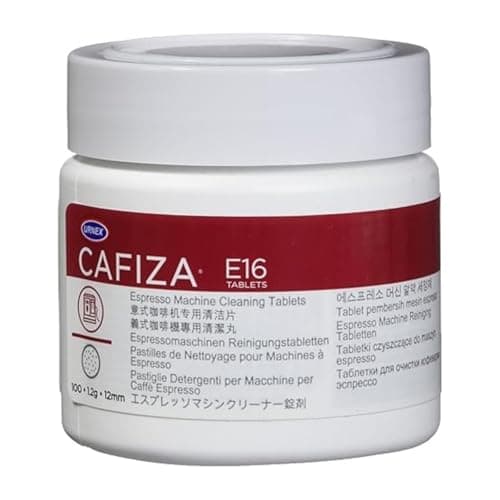
Urnex Urnex Cafiza Espresso Machine Cleaning Tablets (100 ct)
Urnex Cafiza Espresso Machine Cleaning Tablets (100 ct)

The industry-standard backflush detergent, and the single product that most reliably stops a portafilter sticking. Cafiza tablets dissolve the coffee oils and fines that build up on the shower screen and in the gasket seat — the residue that turns a normal interface into a gritty, binding one. A hundred tablets is roughly two years of weekly backflushing for a home machine, which makes the cost per clean trivial. Used weekly, this plus a group brush is the whole prevention routine.

Best for weekly backflushing on any machine with a three-way valve
8.8
$17.99Amazon
02
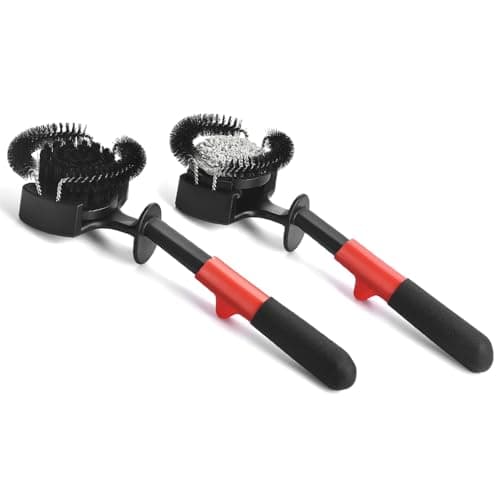
CAFEMASY CAFEMASY Grouphead Cleaning Brush (58mm, 2-pack)
CAFEMASY Grouphead Cleaning Brush (58mm, 2-pack)

The tool for the part of the machine that actually seizes. A group brush has angled bristles that reach up under the gasket lip and across the shower screen, which is exactly where the residue that binds a portafilter accumulates — and exactly where a dishcloth cannot go. Thirty seconds after each session, dry, then a wipe. This is the cheapest preventative item in home espresso and the one most people do not own.

Best for scrubbing the gasket seat and shower screen after every session
8.3
$22.99Amazon
03
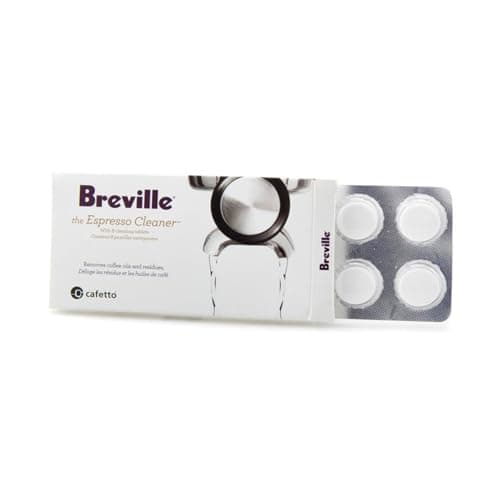
Breville Breville BEC250 Espresso Cleaning Tablets (8 pack)
Breville BEC250 Espresso Cleaning Tablets (8 pack)

The right tablet if you own a Breville, because the machine asks for it by name. Breville's cleaning cycle is designed around these tablets and the included cleaning disc, and the machine's own prompt counts shots and tells you when to run it. Eight tablets is about two years of the recommended cycle. If you have a Barista Express, Pro, Touch or an Impress model and your portafilter has started feeling gritty going in, run this cycle before you assume anything is wrong.

Best for Breville and Sage owners following the machine's own cleaning cycle
6.5
$11.98Amazon

#ad · Live prices from the Amazon Product API, as of October 10, 2026. Where we have no verified live price, we show none — a gap beats a number that has rotted.

In detail

The picks, in full

01
Urnex Urnex Cafiza Espresso Machine Cleaning Tablets (100 ct)

Best for weekly backflushing on any machine with a three-way valve

Urnex Cafiza Espresso Machine Cleaning Tablets (100 ct)

100 tablets, ~0.5 g eachOdourless, NSF-listed espresso detergentFor backflushing and soaking basketsRoughly two years of weekly home use
8.8/10

The industry-standard backflush detergent, and the single product that most reliably stops a portafilter sticking. Cafiza tablets dissolve the coffee oils and fines that build up on the shower screen and in the gasket seat — the residue that turns a normal interface into a gritty, binding one. A hundred tablets is roughly two years of weekly backflushing for a home machine, which makes the cost per clean trivial. Used weekly, this plus a group brush is the whole prevention routine.

Effectiveness
9
Ease of use
8
Cost per clean
10
Versatility
8

Pros

  • Removes the oil and fines residue that is the root cause of a binding group interface
  • Tablet dosing means no measuring powder into a blind basket
  • Also cleans baskets, portafilters and dosing cups by soaking
  • Cost per clean is negligible at 100 tablets
  • The standard product in commercial cafés, not a consumer-only formulation

Cons

  • Backflushing needs a blind basket, which some machines do not include
  • Does nothing for scale — descaling is a separate job with a separate product
  • Cannot be backflushed on machines without a three-way solenoid valve
  • Must be rinsed thoroughly or the next shot tastes of detergent

Don't buy this if…

…your machine has no three-way solenoid valve — most entry-level single-boiler machines do not, and backflushing them does nothing. Soak the basket and portafilter in a Cafiza solution instead, and clean the group with a brush.

If you take one thing from this page, it is that a weekly backflush changes how the machine feels. The portafilter goes in and out smoothly, the shots are cleaner, and the gasket lasts longer because it is not being asked to seal against a crust. Our how to backflush an espresso machine guide covers the routine, and cleaning vs descaling explains why this is not the same job as descaling.

$17.99View on Amazon

Price as of October 10, 2026. Prices change — Amazon's at checkout is the one that counts.

#ad · we may earn a commission from this link to Urnex Cafiza Espresso Machine Cleaning Tablets (100 ct)

02
CAFEMASY CAFEMASY Grouphead Cleaning Brush (58mm, 2-pack)

Best for scrubbing the gasket seat and shower screen after every session

CAFEMASY Grouphead Cleaning Brush (58mm, 2-pack)

58mm group head profileAngled bristles reach under the gasket lipHeat-resistant bristlesTwo brushes per pack
8.3/10

The tool for the part of the machine that actually seizes. A group brush has angled bristles that reach up under the gasket lip and across the shower screen, which is exactly where the residue that binds a portafilter accumulates — and exactly where a dishcloth cannot go. Thirty seconds after each session, dry, then a wipe. This is the cheapest preventative item in home espresso and the one most people do not own.

Effectiveness
8
Ease of use
9
Cost per clean
10
Versatility
6

Pros

  • Reaches the gasket seat, which is the precise location residue binds a portafilter
  • Takes under a minute and needs no chemicals for daily use
  • Heat-resistant bristles so it can be used on a warm group
  • Two in a pack means one stays clean for the shower screen
  • Costs a fraction of a group gasket replacement it helps you avoid

Cons

  • Shaped for 58mm groups — a 54mm Breville needs a smaller brush or a careful angle
  • Bristles flatten over months and need replacing
  • Daily brushing does not substitute for a weekly chemical backflush
  • Easy to forget, which is why most people's gasket seats are dirty

Don't buy this if…

…you have a 54mm Breville or Sage machine and want a perfect fit — this is a 58mm profile. The bristles still reach, but a brush sized for your group is better.

Routine: knock the puck out, run a short flush of water through the group, brush the gasket seat and screen while the water runs, wipe with a cloth. Thirty seconds. Do that and the sticky-portafilter problem mostly disappears without any chemistry at all — best espresso cleaning kits covers the fuller kit if you want brushes, a blind basket and detergent together.

$22.99View on Amazon

Price as of October 10, 2026. Prices change — Amazon's at checkout is the one that counts.

#ad · we may earn a commission from this link to CAFEMASY Grouphead Cleaning Brush (58mm, 2-pack)

03
Breville Breville BEC250 Espresso Cleaning Tablets (8 pack)

Best for Breville and Sage owners following the machine's own cleaning cycle

Breville BEC250 Espresso Cleaning Tablets (8 pack)

8 tablets per packSpecified for Breville's own cleaning cycleUsed with the supplied cleaning discRoughly two years of recommended use
6.5/10

The right tablet if you own a Breville, because the machine asks for it by name. Breville's cleaning cycle is designed around these tablets and the included cleaning disc, and the machine's own prompt counts shots and tells you when to run it. Eight tablets is about two years of the recommended cycle. If you have a Barista Express, Pro, Touch or an Impress model and your portafilter has started feeling gritty going in, run this cycle before you assume anything is wrong.

Effectiveness
8
Ease of use
9
Cost per clean
5
Versatility
4

Pros

  • Matches the cleaning cycle Breville's manual and on-machine prompt specify
  • Removes the residue behind a gritty, binding 54mm portafilter
  • No measuring or guesswork — one tablet per cycle
  • Keeps you inside the maintenance Breville documents for warranty purposes

Cons

  • Far more expensive per clean than generic Cafiza tablets
  • Only eight per pack
  • Breville-specific cycle — of limited use on other machines
  • Again, not a descaler: scale is a separate product and a separate schedule

Don't buy this if…

…you do not own a Breville. Cafiza tablets do the same chemistry for a fraction of the cost per clean, and nothing about your machine requires the branded version.

Breville machines are the ones we hear about most for this problem, partly because there are so many of them and partly because the 54mm group is shallower than a commercial 58mm one, so a slightly over-dosed basket wedges more readily. Run the cleaning cycle, then check your dose — see 54mm portafilter accessories for baskets with more headroom.

$11.98View on Amazon

$14.9520% off

Price as of October 10, 2026. Prices change — Amazon's at checkout is the one that counts.

#ad · we may earn a commission from this link to Breville BEC250 Espresso Cleaning Tablets (8 pack)

Cause, symptom and fix, at a glance

CauseHow you knowFix nowStop it recurring
Residual pressureStuck right after a shot, free a few minutes laterSwitch off, wait two minutes, push up and turnNothing — normal on machines without a three-way valve
Over-dosed puckDeep screen imprint, no headspace, hard to lock in tooLet it cool fully, then push up and turnReduce the dose or fit a deeper basket
Hardened group gasketHandle has crept further round over months; stiff hot and coldCool fully, remove, then replace the gasketReplace the gasket roughly annually with daily use
Coffee residue and oilsGritty, sticky feel going in and out; dark screenCool, remove, brush the group and backflushBrush daily, backflush weekly

What not to do

Do not use a tool for leverage. A spanner, a screwdriver through the spouts, a hammer. Every one of these transfers force into the portafilter ears, which are the part designed to be the weak link. A broken ear means a new portafilter; a broken group lug means a service visit.

Do not rock it side to side. It feels like the obvious move and it is the one that rolls the gasket out of its groove. Once the gasket is displaced, the portafilter is harder to remove, not easier, and you have added a repair.

Do not force it while the machine is hot and pressurised. Beyond the burn risk, metal expands: the group is at its tightest exactly when you are most tempted to pull hard. Patience is mechanically on your side here.

Do not grease the gasket. People suggest food-grade silicone grease, and it works for a week before the heat and the coffee oils turn it into a sticky film that holds more residue. If a gasket needs grease to work, it needs replacing.

If it is the gasket: what replacement involves

On most machines the group gasket sits behind the shower screen, held by one central screw or three around the edge. Remove the screen, prise the old gasket out with a flat screwdriver or a dedicated hook, clean the seat thoroughly — this is where the brush above earns its keep — and press the new one in with the chamfered edge facing out.

Two practical notes. Gaskets come in thicknesses, commonly 8mm and 8.5mm for 58mm groups, and a gasket that is too thick makes the handle sit short while one too thin makes it go too far round; match what came out. And on sealed machines — most super-automatics, some entry-level machines — this is not a user-serviceable part, and the answer is a service appointment rather than a screwdriver. If you are not sure which kind you have, our how to choose an espresso machine guide covers the serviceability difference between machine classes, and semi-automatic vs super-automatic is the plainest version of that distinction.

The prevention routine, in full

After every session. Knock the puck out, run a two-second flush, brush the gasket seat and shower screen, wipe with a cloth. Dry the portafilter rather than leaving it locked in the warm group — leaving it in is the single habit that bakes residue into the interface, and it also cooks the gasket.

Weekly. Backflush with detergent if your machine has a three-way valve, or soak the basket and portafilter in a detergent solution if it does not. Scrub the shower screen properly. How to backflush an espresso machine has the full procedure.

Monthly. Remove the shower screen and clean behind it. This is the step that most owners have never done, and the first time is usually unpleasant.

Annually, with daily use. Replace the group gasket. It is a consumable, it is cheap, and a fresh one transforms how the portafilter feels.

Descaling is a separate schedule driven by your water hardness, not by shot count, and it has nothing to do with a stuck portafilter — see how to descale an espresso machine and water for espresso. If the portafilter is also dripping or spraying, that is a different fault with a different cause: espresso machine leaking from the portafilter covers it.
How we picked

We did not lab-test this gear

Everyone in this category says they tested twenty machines. We have not pulled shots on every product here, and we say so. What we did instead: compiled the published specifications, cross-checked the manufacturer manuals, computed the running cost (wattage to energy, grams-per-shot to cost-per-cup), weighed aggregated owner reports, and scored each product against a published rubric. The scores are judgments from documented research — not measurements we took, because we do not have a test lab and we will not pretend we do. Where hands-on time would tell you more than a spec sheet, we flag it. Where a number came from someone else's work, we name them in Sources.

Questions

Frequently asked

Why is my portafilter stuck in the machine?
Almost always one of four things: residual pressure behind a compacted puck, an over-dosed puck crushed against the shower screen, a hardened or swollen group gasket, or coffee oils and fines gumming up the gasket seat. The first is harmless and resolves in two minutes; the other three have fixes you can do yourself.
How do I get a stuck portafilter out safely?
Switch the machine off and wait two minutes. Briefly run the brew cycle or open the steam wand to drop pressure. Then press the handle gently upward into the group and turn anticlockwise in one slow, continuous movement — do not rock it side to side. If it still will not move, let the machine cool completely; a cold group releases portafilters that were immovable hot.
Can I use a tool to lever a stuck portafilter out?
No. The ears that lock the portafilter into the group are the designed weak point, and any tool that adds mechanical advantage will shear them before the residue bond gives way. A broken ear means a new portafilter; a damaged group lug means a service visit. Patience and a cold machine solve this without either.
Does over-dosing make the portafilter stick?
Yes, and it is one of the most common causes. Too much coffee means the puck is crushed against the shower screen as you lock in, and it swells further once wet. The tell is a deep circular screen imprint with no headspace. See how much coffee goes in a portafilter for the right dose per basket size.
How often should I replace the group gasket?
Roughly annually with daily use, sooner if the handle has crept noticeably further round than it used to or if it is stiff both hot and cold. Gaskets are a cheap consumable; match the thickness of the one you remove, because too thick makes the handle sit short and too thin lets it go too far round.
Will backflushing stop my portafilter sticking?
It addresses the one cause that cleaning fixes outright — oils and fines in the gasket seat and on the shower screen — and it makes the other causes less severe. It only works on machines with a three-way solenoid valve; on machines without one, soak the basket and portafilter in detergent and brush the group instead. See how to backflush an espresso machine.
Should I leave the portafilter in the machine between shots?
No, despite it being the common habit. Leaving it locked in bakes coffee residue into the gasket interface, which is exactly what causes sticking, and it cooks the gasket so it hardens sooner. Knock the puck out, rinse, and leave the portafilter out to dry.

Keep reading

Same gear, other pages

We cover this gear elsewhere too

Receipts

Sources

We do not run a testing lab, and we do not pretend to. Where a measured number came from someone else's work, we name them and link them. Where we could not verify something, we say so on the page rather than quietly leaving it out. Read our full method.