Skip to content
Portafilter Co

Learn · Guides

How much coffee goes in a portafilter?

The basket decides, not the machine and not the recipe. A 58mm double takes around 18 grams, a 54mm Breville 18 to 22, a 51mm basket 15 to 18 — and the number stamped on your basket beats every one of those.

By Stephen V.Updated How we pick
#ad

We earn a commission when you buy through our Amazon links, at no extra cost to you. It never changes a verdict, and we say so when the cheaper product is the better buy. How this works.

The short answer, by basket diameter: a 58mm double takes around 18 grams, with aftermarket precision baskets commonly specified 18-20g or 18-22g. A 54mm Breville double takes roughly 18-22 grams. A 51mm basket takes about 15-18 grams. A single basket of any diameter is roughly half its double. But the number that actually matters is the one specified for your basket — baskets are manufactured to a dose range, and that range is printed on the box or stamped on the rim.

The useful thing to understand is whythe basket decides. People ask this question about their machine — "how much coffee goes in a Bambino" — and that is the wrong frame. The machine sets the diameter and nothing else. Swap the basket and the dose changes, on the same machine, the same day.

Why the basket sets the dose

A basket is a volume, and coffee is a volume.The dose has to fill the basket to a particular depth — enough coffee that the puck, once tamped, sits a few millimetres below the shower screen. Too much and the puck is crushed against the screen when you lock in; too little and there is a void the water pools in instead of flowing evenly through the bed. The basket's diameter and depth together define how many grams achieve that, which is why the number changes with diameter and why a deeper 58mm basket takes more than a shallow one of the same width.

Headspace is the thing you are really setting. The usual target is about 3 to 5mm between the top of the tamped puck and the shower screen. You can check it directly: dose, tamp, lock the portafilter in, then remove it and look at the puck. A faint ring from the screen is fine. A deep circular imprint across the whole surface means you are over-dosed. No mark at all with a visible gap means you have room for more.

Bean density moves the grams, not the volume. This is why a dose that works all month suddenly over-fills when you open a new bag. Darker roasts are less dense than lighter ones, so the same 18 grams occupies more space. If you change roast level and the puck starts imprinting, that is the cause — and the fix is a gram or two less, not a different basket.

Dose by diameter

58mm — the commercial standard.Around 18g in a stock double. Gaggia, Rancilio, Breville's Dual Boiler and most prosumer and commercial machines use this size. Aftermarket precision baskets are commonly specified 18-20g or 18-22g, which gives you headroom to run a bigger dose if you prefer a shorter, more concentrated shot. Singles are typically 7-9g, triples 21g and up.

54mm — the Breville and Sage standard. Roughly 18-22g in a precision double, and that is a genuinely useful range: it is wider than people assume given the smaller diameter, because Breville baskets are comparatively deep. The stock dual-wall pressurized basket is a different matter — see below, because on that basket the dose question is partly moot.

51mm — De'Longhi Dedica, Stilosa, CASABREWS and the budget tier. About 15-18g. These baskets are both narrower and shallower, which is why the number drops. It also means 51mm is the diameter least forgiving of over-dosing: there is simply less headroom to absorb an extra gram.

If you are not sure which diameter you have, measure the inside of the basket rather than the outside of the portafilter body, or look your machine up in portafilter size by brand. Portafilter sizes explained covers why the standards exist and why the measurements never quite match the names.

What to look for in a basket, before you pick a dose

The dose question only becomes meaningful once you are on a basket that extracts properly. Two things matter.

Single wall, not pressurized. Most machines ship with a dual-wall pressurized basket, which has a single tiny outlet hole and manufactures crema through back-pressure rather than through extraction. On that basket, dose precision barely changes the cup, because the restriction is doing the work. The moment you own a real grinder, swap to single wall — pressurized vs unpressurized baskets covers the difference in full.

A stated dose range. Precision baskets from manufacturers like IMS are made to a tolerance and published with a dose range, which is the whole point: you are not guessing, you are reading a specification. Generic baskets often give no figure at all, which leaves you back at eyeballing headspace.

The three baskets below are the ones in our registry that carry published dose ranges, one per diameter — followed by the scale that makes any of this repeatable.

The short answer

Quick picks

#ProductBest forScorePrice
01
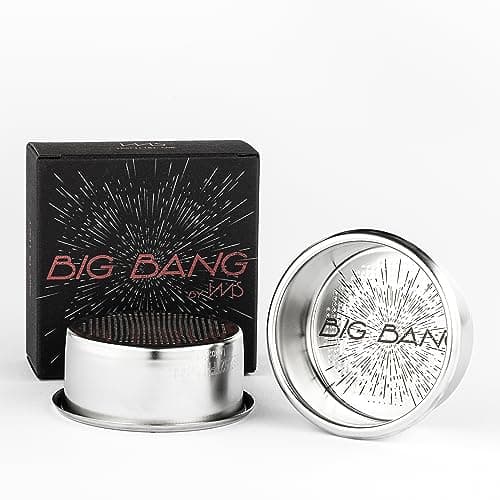
IMS IMS Big Bang Precision Filter Basket (58mm, 18-20g)
IMS Big Bang Precision Filter Basket (58mm, 18-20g)

The 58mm answer, with the dose range published rather than guessed. IMS's Big Bang hole pattern opens up the filtering area for a faster, higher flow, which makes the basket more tolerant of a slightly coarser grind or an imperfect puck — and the stated 18-20g window gives you a gram of latitude either side of the standard 18g double. AISI 304 stainless, made to a tight tolerance so water meets even resistance across the bed. If you own a 58mm machine and have never read a dose figure off a basket, this is where to start.

Best for 58mm machines — a published 18-20g window
8.8
$25.90Amazon
02
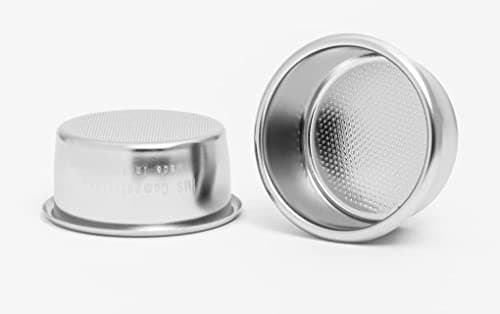
IMS IMS Precision Filter Basket for Breville 54mm (18-22g)
IMS Precision Filter Basket for Breville 54mm (18-22g)

The 54mm answer, and the single upgrade that changes a Breville shot most. A lot of these machines get used on the dual-wall pressurized baskets that ship in the box, which manufacture crema through back-pressure instead of extraction — a single-wall IMS precision basket takes that ceiling off. It is perforated to a tight tolerance so water meets even resistance across the puck, and the published 18-22g range is unusually wide for the diameter, which gives Breville owners real latitude to find a dose. IMS lists compatibility explicitly across the 54mm Breville line, with the Oracle Jet named as the exception.

Best for Breville and Sage 54mm machines — a wide 18-22g window
8.8
$16.88Amazon
03
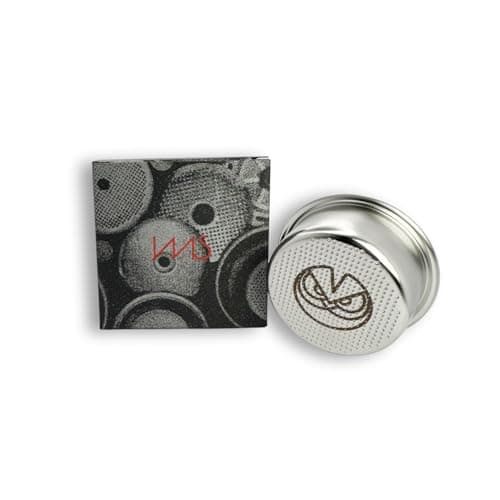
IMS IMS Precision Big Bang Filter Basket (51mm, 15-18g)
IMS Precision Big Bang Filter Basket (51mm, 15-18g)

The 51mm answer, and the best thing to happen to the diameter in years: a genuine Italian precision basket, from the manufacturer that dominates 58mm, cut for 51mm portafilters and listed by model for the De'Longhi La Specialista and Dedica. The Big Bang perforation is a dense, tightly-toleranced hole field designed to keep flow even across the whole puck, and the published 15-18g range matches what a 51mm basket physically holds. If you have a burr grinder and you are still on the pressurized basket that came with the machine, this is the upgrade that takes the ceiling off.

Best for 51mm machines — a published 15-18g window
8.0
$22.90Amazon
04
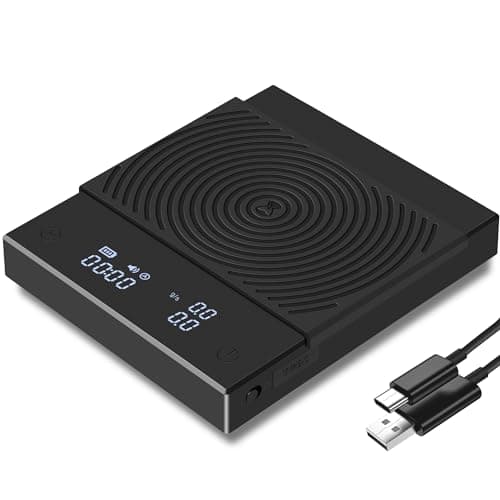
Timemore TIMEMORE Black Mirror Basic 2 Coffee Scale with Timer
TIMEMORE Black Mirror Basic 2 Coffee Scale with Timer

The tool that makes every number on this page usable. A dose range is meaningless if you are eyeballing it: a scale reading to 0.1g up to 2kg lets you put 18.0g in the basket today and 18.0g in tomorrow, which is the only way a grind adjustment tells you anything. It times the shot and shows the flow rate as the coffee pours, and at 26mm thin it slides under most portafilters. The cheapest, highest-leverage tool in home espresso, and the one most people skip.

Best for weighing the dose so the range actually means something
9.0
$55.00Amazon

#ad · Live prices from the Amazon Product API, as of October 10, 2026. Where we have no verified live price, we show none — a gap beats a number that has rotted.

In detail

The picks, in full

01
IMS IMS Big Bang Precision Filter Basket (58mm, 18-20g)

Best for 58mm machines — a published 18-20g window

IMS Big Bang Precision Filter Basket (58mm, 18-20g)

58mm diameter18-20g dose rangeBig Bang high open-area patternAISI 304 stainless
8.8/10

The 58mm answer, with the dose range published rather than guessed. IMS's Big Bang hole pattern opens up the filtering area for a faster, higher flow, which makes the basket more tolerant of a slightly coarser grind or an imperfect puck — and the stated 18-20g window gives you a gram of latitude either side of the standard 18g double. AISI 304 stainless, made to a tight tolerance so water meets even resistance across the bed. If you own a 58mm machine and have never read a dose figure off a basket, this is where to start.

Dose precision
9
Flow evenness
8
Build tolerance
9
Forgiveness
9

Pros

  • Published 18-20g dose range, so you are reading a specification rather than guessing
  • Big Bang pattern's higher flow forgives a slightly coarse grind or imperfect prep
  • Tight manufacturing tolerance means even resistance across the whole bed
  • Fits the 58mm commercial standard used by Gaggia, Rancilio and most prosumer machines
  • The single biggest cup improvement if you are still on a stock pressurized basket

Cons

  • Higher flow gives up some of the restriction that builds body in a Competition-pattern basket
  • 58mm only — the wrong basket for a Breville or a Dedica
  • A precision basket exposes grind and prep faults the stock basket hid
  • Needs a real grinder to be worth fitting at all

Don't buy this if…

…you prefer a shorter, heavier, more syrupy shot. The tighter Competition-pattern baskets restrict flow more and build more body — see our precision baskets roundup for that comparison.

Practical note on using a stated range: start in the middle. At 18-20g, dose 19g, tamp, lock in and check the puck for a screen imprint. If it is clean, you have the full range available and can move either way by taste. Our best precision baskets page compares the patterns, and 58mm portafilter accessories is the full shopping list for the diameter.

$25.90View on Amazon

Price as of October 10, 2026. Prices change — Amazon's at checkout is the one that counts.

#ad · we may earn a commission from this link to IMS Big Bang Precision Filter Basket (58mm, 18-20g)

02
IMS IMS Precision Filter Basket for Breville 54mm (18-22g)

Best for Breville and Sage 54mm machines — a wide 18-22g window

IMS Precision Filter Basket for Breville 54mm (18-22g)

54mm Breville / Sage fit (B62.52TH28E)18-22g dose rangeSingle wall, non-pressurizedStainless, made in Italy
8.8/10

The 54mm answer, and the single upgrade that changes a Breville shot most. A lot of these machines get used on the dual-wall pressurized baskets that ship in the box, which manufacture crema through back-pressure instead of extraction — a single-wall IMS precision basket takes that ceiling off. It is perforated to a tight tolerance so water meets even resistance across the puck, and the published 18-22g range is unusually wide for the diameter, which gives Breville owners real latitude to find a dose. IMS lists compatibility explicitly across the 54mm Breville line, with the Oracle Jet named as the exception.

Dose precision
9
Flow evenness
9
Build tolerance
9
Forgiveness
8

Pros

  • Published 18-22g range is unusually wide for a 54mm basket — plenty of room to dial in
  • Replaces the pressurized dual-wall basket that limits most Breville shots
  • IMS lists compatibility explicitly across the Breville 54mm line
  • Tight perforation tolerance for even flow across the bed
  • Transforms the ceiling on a Bambino, Barista Express, Pro, Touch or Impress

Cons

  • Oracle Jet is named by IMS as an exception — check before buying for that machine
  • 54mm only
  • Needs a burr grinder to be worth fitting; it will expose a bad grind immediately
  • The machine's dosing display, if it has one, is calibrated to the stock basket

Don't buy this if…

…you have an Oracle Jet. IMS lists it as the exception in the 54mm Breville line, and fitting the wrong basket is worse than keeping the stock one.

One Breville-specific caution on dose: if your machine has an Impress system or a dosing display, those are calibrated around the stock basket's target. Fit a basket with a different range and the number on screen is advisory rather than correct — weigh the dose for a week until you know the offset. See 54mm portafilter accessories for the rest of the Breville kit.

$16.88View on Amazon

$21.5822% off

Price as of October 10, 2026. Prices change — Amazon's at checkout is the one that counts.

#ad · we may earn a commission from this link to IMS Precision Filter Basket for Breville 54mm (18-22g)

03
IMS IMS Precision Big Bang Filter Basket (51mm, 15-18g)

Best for 51mm machines — a published 15-18g window

IMS Precision Big Bang Filter Basket (51mm, 15-18g)

51mm, 15-18g doseBig Bang precision perforationSingle wall, non-pressurizedListed for De'Longhi La Specialista and Dedica
8.0/10

The 51mm answer, and the best thing to happen to the diameter in years: a genuine Italian precision basket, from the manufacturer that dominates 58mm, cut for 51mm portafilters and listed by model for the De'Longhi La Specialista and Dedica. The Big Bang perforation is a dense, tightly-toleranced hole field designed to keep flow even across the whole puck, and the published 15-18g range matches what a 51mm basket physically holds. If you have a burr grinder and you are still on the pressurized basket that came with the machine, this is the upgrade that takes the ceiling off.

Dose precision
8
Flow evenness
8
Build tolerance
9
Forgiveness
7

Pros

  • A real precision basket for a diameter the accessory market has historically ignored
  • Published 15-18g range, which is the dose a 51mm basket genuinely holds
  • Listed by model for the De'Longhi La Specialista and Dedica
  • Big Bang pattern keeps flow even across a shallow bed that channels readily
  • Takes the ceiling off a budget machine for a fraction of a machine upgrade

Cons

  • 51mm has the least headspace of the three, so over-dosing bites fastest here
  • 51mm only
  • Needs a burr grinder — a blade grinder will channel immediately on a single-wall basket
  • Smaller dose means a smaller shot; this is physics, not a shortcoming

Don't buy this if…

…you are still grinding with a blade grinder or using pre-ground coffee. A single-wall basket exposes exactly the unevenness those produce — fix the grinder first.

51mm machines are where dose discipline pays off most, because the margin for error is smallest. Fifteen to eighteen grams is a narrow window in a shallow basket, and an extra gram is the difference between a clean puck and one crushed against the screen. A scale is not optional here. See 51mm portafilter accessories for the rest of the kit.

$22.90View on Amazon

$24.005% off

Price as of October 10, 2026. Prices change — Amazon's at checkout is the one that counts.

#ad · we may earn a commission from this link to IMS Precision Big Bang Filter Basket (51mm, 15-18g)

04
Timemore TIMEMORE Black Mirror Basic 2 Coffee Scale with Timer

Best for weighing the dose so the range actually means something

TIMEMORE Black Mirror Basic 2 Coffee Scale with Timer

0.1 g resolution up to 2 kgBuilt-in timer + real-time flow rateUSB-C rechargeable26 mm thin — fits under most portafilters
9.0/10

The tool that makes every number on this page usable. A dose range is meaningless if you are eyeballing it: a scale reading to 0.1g up to 2kg lets you put 18.0g in the basket today and 18.0g in tomorrow, which is the only way a grind adjustment tells you anything. It times the shot and shows the flow rate as the coffee pours, and at 26mm thin it slides under most portafilters. The cheapest, highest-leverage tool in home espresso, and the one most people skip.

Resolution
9
Usefulness
10
Build
8
Value
9

Pros

  • 0.1g resolution is what turns a published dose range into a repeatable recipe
  • Built-in timer means you can judge the shot by time as well as by weight out
  • 26mm thin, so it fits under the portafilter on most machines while dosing
  • USB-C rechargeable rather than swallowing coin batteries
  • Costs less than almost any other espresso accessory and changes more

Cons

  • 2kg capacity is plenty for coffee but not a kitchen scale replacement
  • Thin profile means it needs care around steam and spills
  • Does not fit under the drip tray on every machine — check clearance
  • One more thing on a small counter

Don't buy this if…

…you already own a scale that reads to 0.1g and has a timer. There is nothing magic here beyond resolution and a stopwatch — any scale with both does the job.

The reason a scale belongs on a page about dose is that without one, nothing else on this page can be acted on. "Eighteen grams" is not a volume you can judge by eye, and bean density changes enough between roasts that a scoop that was right last month is wrong today. Our best espresso scales page covers the alternatives, and how to dial in espresso is the loop this tool exists to close.

$55.00View on Amazon

Price as of October 10, 2026. Prices change — Amazon's at checkout is the one that counts.

#ad · we may earn a commission from this link to TIMEMORE Black Mirror Basic 2 Coffee Scale with Timer

Dose by basket diameter

Ranges below are the published specifications for the exact baskets in our registry, plus the standard stock-basket figures for each diameter. Always prefer the figure printed on your own basket.

DiameterMachinesStock doublePrecision basket rangeSingle
58mmGaggia, Rancilio, Breville Dual Boiler, most prosumer~18g18-20g or 18-22g~7-9g
54mmBreville and Sage Barista line, Bambino~19g18-22g~8-10g
51mmDe'Longhi Dedica, Stilosa, CASABREWS and similar~14-16g15-18g~7g

What goes wrong when the dose is off

Over-dosed. The puck is crushed against the shower screen when you lock in, and once wet it swells further. Symptoms: a deep circular screen imprint across the whole puck, a portafilter that is hard to lock in and sometimes hard to remove, and a shot that runs slow and tastes harsh. In the worst case the handle sticks — see how to remove a stuck portafilter. Over-dosing is far more common than under-dosing, because people assume more coffee means a stronger shot.

Under-dosed. Too much headspace means the water pools above the puck instead of meeting it evenly, and the bed can lift and crack under pressure. Symptoms: a shot that runs fast and pale, a wet sloppy puck that will not knock out cleanly, and a thin sour cup. The puck surface often shows a crater where the water broke through.

Right dose, wrong grind. Worth distinguishing, because the symptoms overlap and people change the wrong variable. A correct dose with too coarse a grind also runs fast and sour; a correct dose with too fine a grind also runs slow and bitter. The tell is the puck: a clean, intact puck with a faint screen ring means your dose is right and the grind is the variable to move. A crushed or cratered puck means fix the dose first. Espresso grind size covers which way to turn the dial.

How to find your own number, in five minutes

1. Read the basket. Precision baskets are stamped or boxed with a dose range. If yours has one, start at the middle of it and stop reading here.

2. If there is no figure, use the diameter table above as a starting point: 18g at 58mm, 19g at 54mm, 15g at 51mm.

3. Dose, tamp level, lock in, then take it out and look. You are checking the puck surface for headspace. A faint ring from the screen is correct. A deep imprint across the whole face is over-dosed — drop a gram and repeat. No contact and an obvious gap is under-dosed — add a gram.

4. Write the number down with the basket and the bean. That is your dose until you change one of them.

5. Re-check when you change beans. Especially across roast levels, because density shifts the volume the same grams occupy.

Two notes. Level the bed before tamping or the headspace reading is meaningless — a lopsided puck has no single height. Our best espresso distribution tools page covers that step, and espresso puck prep covers the whole routine. And weigh it — our scale pick above exists for this reason, and how to tamp espresso covers the step that turns the dose into a puck.

Dose, yield and ratio: how the three connect

Dose is coffee in. Yield is liquid espresso out, by weight, not by volume. Ratio is the relationship between them, and it is the number that defines the drink.

A standard double is around 1:2 — 18 grams in, roughly 36 grams out, in about 25 to 30 seconds. Tighter ratios give you a ristretto: shorter, heavier, sweeter, less developed. Wider ratios give you a lungo: longer, thinner, more extracted and usually more bitter. Our ristretto vs lungo guide covers that spectrum, and single vs double shot espresso covers why doubles dominate — a single basket is harder to extract evenly because the bed is so shallow.

The practical consequence for dose: pick a dose that suits your basket, then adjust yield and grind to taste. Do not use dose as your flavour dial. Changing dose changes the bed depth and therefore the resistance, so it moves two variables at once — which is exactly what makes dialing in feel impossible. Fix the dose, then work the grind, as in how to dial in espresso.
How we picked

We did not lab-test this gear

Everyone in this category says they tested twenty machines. We have not pulled shots on every product here, and we say so. What we did instead: compiled the published specifications, cross-checked the manufacturer manuals, computed the running cost (wattage to energy, grams-per-shot to cost-per-cup), weighed aggregated owner reports, and scored each product against a published rubric. The scores are judgments from documented research — not measurements we took, because we do not have a test lab and we will not pretend we do. Where hands-on time would tell you more than a spec sheet, we flag it. Where a number came from someone else's work, we name them in Sources.

Questions

Frequently asked

How many grams of coffee go in a portafilter?
It depends on the basket, not the machine. A 58mm double takes around 18g, with precision baskets commonly specified 18-20g or 18-22g; a 54mm Breville double takes roughly 18-22g; a 51mm basket takes about 15-18g. Singles are roughly half their double. The figure printed on your own basket beats all of these.
How much coffee goes in a Breville portafilter?
Breville and Sage machines use 54mm baskets, and a precision double is published at 18-22g — an unusually wide window for the diameter, because Breville baskets are comparatively deep. The stock dual-wall pressurized basket is a different case: on that basket the restriction does the work and dose precision matters much less. See 54mm portafilter accessories.
What happens if I put too much coffee in the portafilter?
The puck gets crushed against the shower screen as you lock in and swells further once wet. You get a deep circular screen imprint, a portafilter that is stiff to insert and remove, a slow harsh shot, and sometimes a handle that will not come out at all — see how to remove a stuck portafilter. Drop a gram and check the puck again.
How do I know if my dose is right?
Dose, tamp level, lock the portafilter in, then take it out and look at the puck. A faint ring from the shower screen is correct. A deep imprint across the whole surface means over-dosed; no contact with a visible gap means under-dosed. That five-second check is more reliable than any recipe you can read.
Does the dose change when I change beans?
The grams do, because the volume does not. Darker roasts are less dense, so the same 18g occupies more space in the basket. If a dose that worked all month suddenly starts imprinting the puck after you open a new bag, drop a gram — that is density, not a problem with the basket.
Should I use more coffee for a stronger espresso?
Not as your first move. Changing dose changes the bed depth and therefore the resistance, so it moves two variables at once and makes the shot harder to control. Set the dose to suit the basket, then make the drink stronger by tightening the ratio — a shorter yield for the same dose. See ristretto vs lungo.
Do I need a scale to dose espresso?
Effectively yes. Eighteen grams is not a volume you can judge by eye, and bean density varies enough between roasts that a scoop drifts by a gram or more. A scale reading to 0.1g is the cheapest and highest-leverage tool in home espresso — our best espresso scales page covers the options.

Keep reading

Same gear, other pages

We cover this gear elsewhere too

Receipts

Sources

We do not run a testing lab, and we do not pretend to. Where a measured number came from someone else's work, we name them and link them. Where we could not verify something, we say so on the page rather than quietly leaving it out. Read our full method.