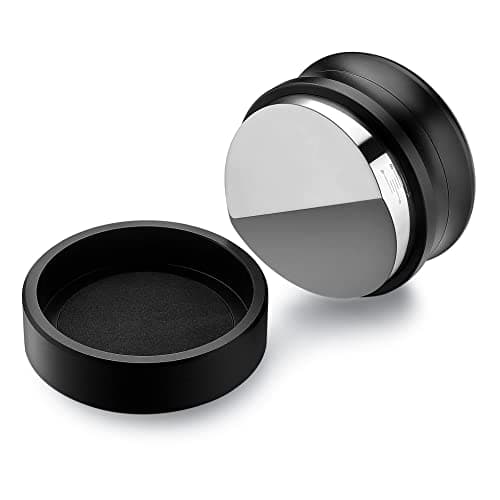
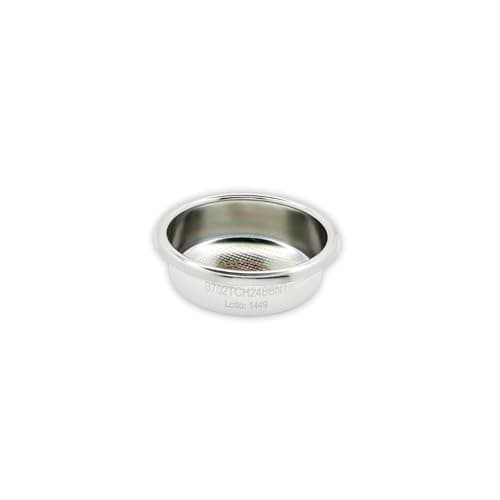
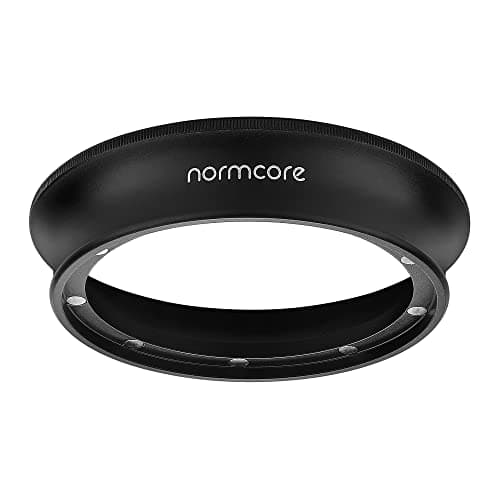
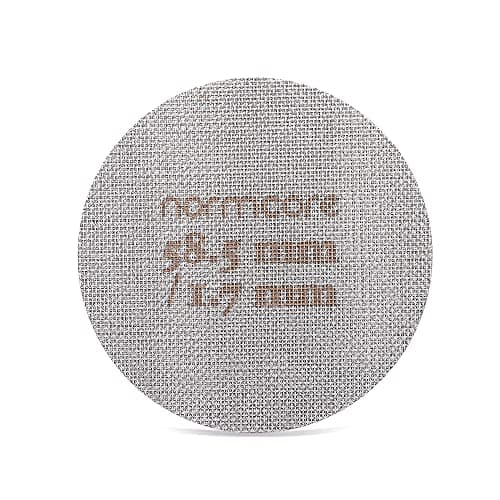
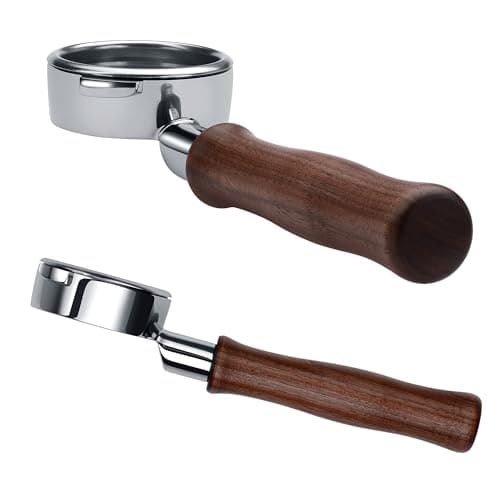
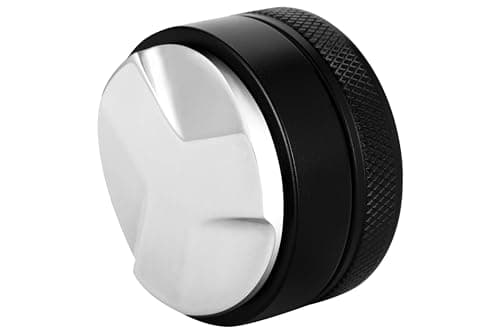
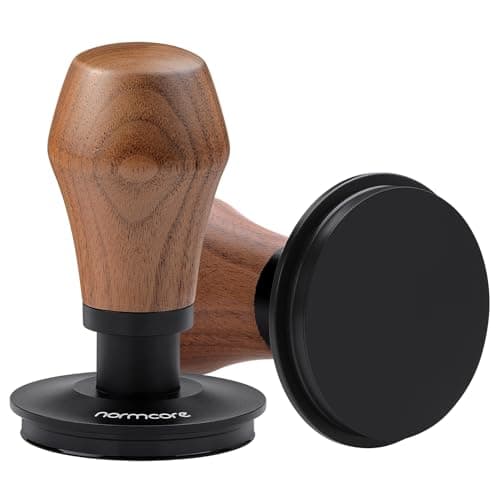
If your machine is 58mm you have the easiest shopping job in home espresso. Fifty-eight millimetres is what commercial group heads have used for decades, so you are buying out of the same parts bin as cafes: competition baskets in every dose and hole pattern, machined levelers, titanium-coated tampers, puck screens, dosing funnels, naked portafilters. Nothing on this page is a compromise forced by your size, which is genuinely not true one page down at 51mm.
Which machines this covers: the Gaggia Classic and Classic Evo Pro, the Rancilio Silvia and Silvia Pro X, Breville's top tier (Dual Boiler, Oracle Touch, Oracle Jet), every E61 machine, the Flair 58 lever, and — per the retail spec sheets — the Chefman Crema Supreme. If you are not certain yours is 58mm, check the portafilter size chart by brand first; the whole point of buying at this diameter is that everything fits, and that only works if the number is right.
One warning before the picks, because it is the mistake 58mm owners make most. Everything that goes insidethe basket is size-compatible across brands — a basket, tamper, funnel or screen made for a Gaggia works on a Silvia. The portafilter bodyis not. Its ears are cut to a specific group head, so a bottomless portafilter has to be bought for your machine by name, not just by diameter. That is why pick six below is listed for the Gaggia Classic specifically rather than as “a 58mm bottomless portafilter” — the E61, Breville Dual Boiler and Rancilio versions are different parts at the same diameter, and we say which is which.
The order to buy in, if you are starting from a bare 58mm machine
You do not need all seven. On a 58mm machine the baskets in the box are usually already decent — Gaggia ships a 7g single, a 14g double and a pressurized double; Rancilio ships commercial singles and doubles; Breville's Dual Boiler ships a 22g basket. So the gaps are in prep, not filtration, and the sensible order is:
- A real tamper. The stock one is usually plastic or uncalibrated. Fixing tamp pressure removes a variable from every shot you pull afterwards.
- A WDT tool.Not on this page because needle tools are not size-specific — one works at any diameter — but it is the highest-value thirty dollars in home espresso. See best WDT tools.
- A dosing funnel. Makes WDT practical instead of messy, and stops the counter filling with grounds.
- A distributor. Levels the bed after WDT. Optional if your WDT routine is already tidy.
- A precision basket. The last measurable step, once the four above are habits.
- A naked portafilter. Buy it when you want to seewhat your prep is doing — it is the best diagnostic here, and the only item that must match your machine model rather than your diameter.
What 58mm actually buys you over 54mm and 51mm
Not a better shot. A 58mm basket does not extract better than a 54mm one because it is wider; grind, dose, distribution and tamp dominate the cup, and excellent espresso comes out of Breville 54mm machines every day. What 58mm buys is choice and longevity. Because it is the commercial standard, you get the widest catalog of precision baskets (single, double, triple, ridged, ridgeless, 15g to 22g), the most tampers and levelers, the most naked portafilters, and the easiest access to spares in five years' time. At 54mm the catalog is healthy; at 51mm it is thin and often model-specific. Our portafilter sizes explained guide makes the full case, and the 54mm and 51mm pages show you exactly how much narrower those shelves are.
58mm, 58.5mm and 58.35mm: why the numbers differ
You will see 58mm, 58.5mm and occasionally 58.35mm on tampers and puck screens, and it is not sloppiness. The basket bore is nominally 58mm, and a tamper base has to be fractionally underthat bore or it will not enter the basket at all — while being as close to it as possible, so no un-compressed ring of coffee is left at the wall. 58.5mm tampers are sold for 58mm baskets and are the correct fit, not an oversized one; the basket bore on most 58mm baskets is slightly over the nominal figure. The same logic applies to puck screens, which are usually cut at 58.5mm to sit on the rim rather than drop inside. Do not try to solve this with arithmetic — buy the part described for 58mm machines.
The one thing on this page that is not about diameter
Bottomless portafilters. It is worth repeating because it is the single most common return in this category: the diameter tells you which basket fits, and the group head tells you which portafilter body fits. All of these are 58mm and none of them interchange:
| Machine family | Examples | Buy a portafilter listed for |
|---|
| E61 group | Lelit, Rocket, ECM, Profitec, Flair 58 | “E61” by name |
| Gaggia | Classic, Classic Pro, Classic Evo Pro, Carezza | “Gaggia Classic” by name |
| Rancilio | Silvia, Silvia Pro X, Epoca, Classe | “Rancilio Silvia” by name |
| Breville prosumer | Dual Boiler BES920, Oracle BES980, Oracle Touch BES990, Oracle Jet BES985 | “Breville Dual Boiler / Oracle” by name |
Baskets, tampers, funnels, screens and distributors from this page work across every row of that table. Only the handle changes.
What we would skip
Two things. Bundled “58mm barista kits” that pack a tamper, a distributor, a WDT tool and a mat into one box: the tamper is usually the weak item, and you end up rebuying it, which costs more than buying two good tools once. And pressurized 58mm baskets, unless you are deliberately using pre-ground coffee — a dual-wall basket manufactures crema through back-pressure rather than extraction, which caps what a good grinder can do for you. The whole argument for a 58mm machine is the single-wall ecosystem; pressurized vs unpressurized baskets explains why in full.
How we picked
We did not lab-test this gear
Everyone in this category says they tested twenty machines. We have not pulled shots on every product here, and we say so. What we did instead: compiled the published specifications, cross-checked the manufacturer manuals, computed the running cost (wattage to energy, grams-per-shot to cost-per-cup), weighed aggregated owner reports, and scored each product against a published rubric. The scores are judgments from documented research — not measurements we took, because we do not have a test lab and we will not pretend we do. Where hands-on time would tell you more than a spec sheet, we flag it. Where a number came from someone else's work, we name them in Sources.