51mm is the size of the entry-level espresso world: De'Longhi's whole pump range — Dedica, Stilosa, EC155, ECP3420, BCO430, La Specialista — plus the CASABREWS machines and a long tail of budget pump machines that copied the format. There are more 51mm machines in kitchens than almost anything else, and the accessory shelf is by far the thinnest of the three common sizes. That is not a reason to give up on upgrading. It is a reason to be picky, because the ratio of good-to-junk in 51mm listings is worse than it is at 54mm or 58mm.
Be clear about what 51mm does and does not mean. It does not mean worse espresso — a well-pulled 51mm shot is a good shot, and the grind, dose and prep decide the cup far more than the diameter does. It means a smaller catalog: where 58mm has dozens of precision baskets from multiple Italian manufacturers, 51mm has a handful, most of them cut for specific De'Longhi models. Everything on this page exists and fits; there just is not a deep bench behind it.
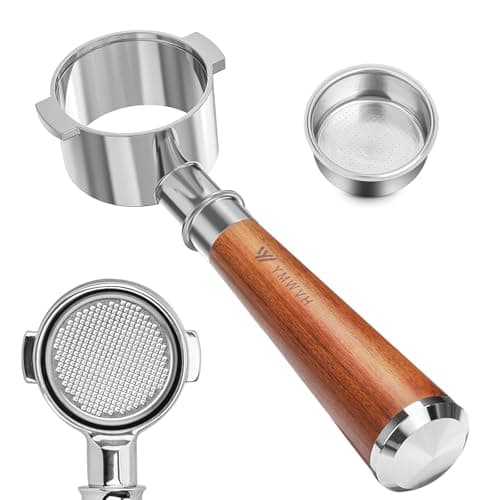
And there is one trap on this size that nobody warns first-time buyers about, so we will do it in the first three paragraphs. On the Dedica — the most popular 51mm machine — the stock portafilter has a plastic insert moulded into it, and a lot of aftermarket single-wall baskets simply will not seat in it. The standard route around this is to buy a 51mm bottomless portafilter and run your baskets in that. So on this size, more than any other, the portafilter body and the basket are one purchase, not two. Confirm your model first in the portafilter size chart by brand.
The 51mm problem nobody warns you about: the stock portafilter
Everything else on this page is straightforward. This part is not, and it is the reason 51mm upgrades go wrong. On De'Longhi's Dedica line the stock portafilter has a plastic insertmoulded into it that holds the pressurized dual-wall basket. It is not a removable adapter on most units, and a lot of aftermarket single-wall and precision baskets will not seat in it. So the sequence that reads logically — buy a better basket, drop it in — frequently ends in a return.
The route that works, in order:
- Check what your machine actually ships.The La Specialista Arte Evo comes with single and double baskets and tamping tools; the Stilosa is pressurized only with no single-wall option from De'Longhi; the Dedica sits in between.
- If your stock portafilter takes single-wall baskets, buy the basket. That is the cheapest path and it is the whole upgrade.
- If it does not, buy the bottomless portafilter and the basket together. That is the standard workaround, and it also hands you the best diagnostic tool in espresso.
Which machines this page covers
| Machine | Stock basket | What to expect |
|---|
| De'Longhi Dedica Deluxe (EC680 / EC685) | Pressurized dual-wall | Takes single-wall 51mm baskets, but the plastic insert usually means buying a bottomless portafilter to use them |
| De'Longhi La Specialista Arte Evo (EC9255) | Single and double baskets, tamping tools included | The easiest 51mm machine to upgrade — IMS lists baskets for it by name |
| De'Longhi Stilosa (EC260) | Pressurized only | No single-wall option from De'Longhi; a bottomless portafilter plus basket is the only way past the ceiling |
| De'Longhi EC155, ECP3420, BCO430 | Pressurized | 2-ear 51mm portafilter family — the bottomless above is cut for these |
| CASABREWS CM5418 and 3700 series | Pressurized dual-wall only | Own 3-ear lug pattern; buy the CASABREWS-specific bottomless portafilter, not the De'Longhi one |
What is worth buying at 51mm, and what is not
The honest ranking of impact on this size, from largest to smallest, is not the same as it is at 58mm:
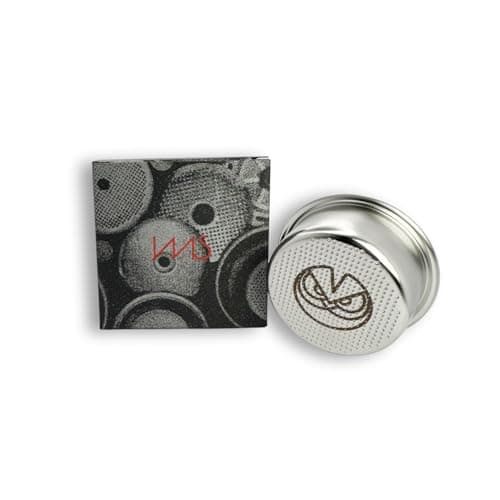
- Getting off the pressurized basket. Nothing else comes close. A dual-wall basket produces crema by forcing the shot through a pinhole, which caps what a better grinder or better beans can do for you. This is the whole game on 51mm.
- A grinder.Not on this page, but be honest with yourself: a single-wall 51mm basket with pre-ground coffee is worse than a pressurized basket. If you do not have a burr grinder, buy that before anything here — our best grinders under $200 is where that money goes furthest.
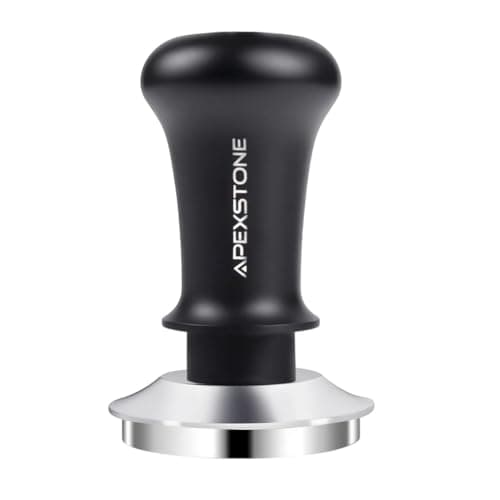
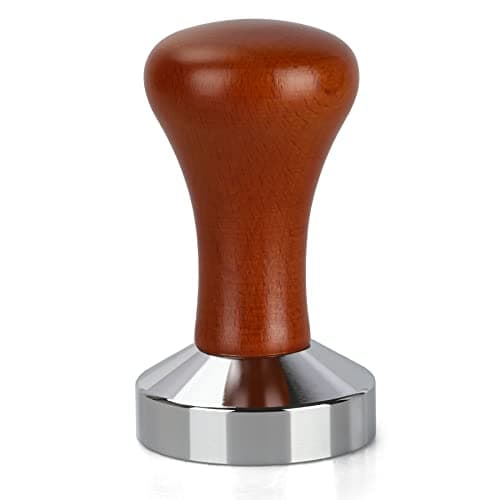
- A real tamper. These machines ship a plastic scoop-tamper that is usually narrower than the basket. Fixing that is cheap.
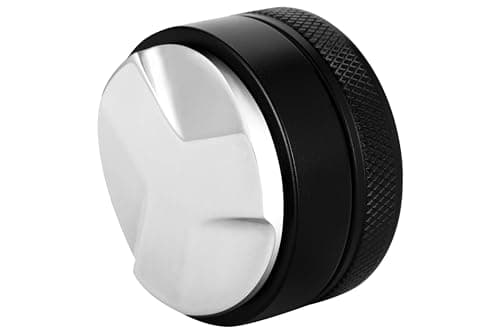
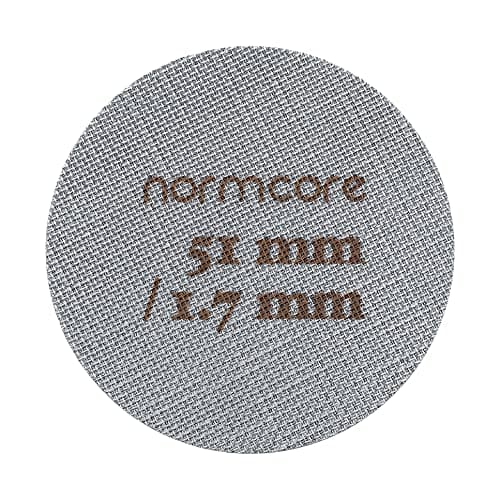
- WDT, then distribution, then a puck screen. Refinements, in that order, and all optional.
What to skip: replacement pressurized baskets (you are trying to leave them), and the five-piece “51mm barista kits” that bundle a weak tamper with three tools you will not use. At this size the money is better spent on one part that actually fits than on four that nearly do.
Where 51mm genuinely limits you — and where it does not
It does not limit the coffee. Grind, dose, distribution and tamp decide the shot, and a 51mm basket at 15-18g pulls a perfectly good double. What it limits is choice: one serious precision-basket line instead of a dozen, a handful of tampers instead of a wall of them, model-specific bottomless portafilters instead of a generic one that fits everything. It also limits dose— a 51mm basket physically holds less coffee than a 58mm one, so the 18-20g recipes written for prosumer machines need scaling down, usually to around 14-16g for a double. That is not a fault, it is a different recipe; how to dial in espresso covers adjusting the numbers to your basket.
If the accessory shelf is the thing that bothers you, that is a machine decision rather than an accessory one. Our best espresso machines with a portafilter roundup ranks by exactly this — the platform you are buying into — and the 54mm and 58mm pages show what a bigger shelf actually looks like.
How we picked
We did not lab-test this gear
Everyone in this category says they tested twenty machines. We have not pulled shots on every product here, and we say so. What we did instead: compiled the published specifications, cross-checked the manufacturer manuals, computed the running cost (wattage to energy, grams-per-shot to cost-per-cup), weighed aggregated owner reports, and scored each product against a published rubric. The scores are judgments from documented research — not measurements we took, because we do not have a test lab and we will not pretend we do. Where hands-on time would tell you more than a spec sheet, we flag it. Where a number came from someone else's work, we name them in Sources.