A dual boiler is the upgrade you buy after you have already learned to pull a decent shot on a good single-boiler machine — not before. The idea is simple and genuinely transformative once you feel it: one boiler holds brew water at a precise, PID-controlled temperature while a second, hotter boiler makes steam, so you can extract an espresso and texture milk at the same instant, every time, without waiting for a single boiler to swing up to steam temperature and back down again. Add a heated group head, low-pressure pre-infusion and commercial-size 58 mm hardware and you get the thing enthusiasts chase: temperature stability so steady the machine stops being the variable in your cup.
Here is the honest part, and we will say it before we sell you anything. Most people do not need to spend prosumer money. If you are still dialing in your first shots, a great machine under $1,000 paired with a serious espresso grinderwill make better coffee than a dual boiler fed by a weak grinder ever will — the grinder, not the boiler count, is where the flavor lives. A single boiler like the Rancilio Silvia or the Gaggia Classic Evo Pro teaches you everything you need to know, and if you only ever make one or two milk drinks in a row, the few seconds a single boiler spends switching to steam simply do not matter. Buy a dual boiler because you make milk drinks back to back, you want the temperature taken out of the equation, or you have decided this is the hobby — not because the internet told you more boilers are better.
If that is you, this page ranks six machines you can actually buy today, from the value-benchmark Breville Dual Boiler to a commercial-grade Rancilio and two Italian heat-exchanger machines. We include heat exchangers deliberately: an HX machinealso brews and steams simultaneously, usually costs less than a true dual boiler, and for a lot of people it is the smarter buy — more on that trade below. Every pick gets honest cons and a clear line on who it is not for, because at this price the wrong machine is an expensive mistake.
How we picked
Every machine here is a real, currently-purchasable prosumer machine that can brew and steam at the same time — the one capability that defines this tier — and we ranked them for the buyer who has decided they want that, rather than against a commercial cafe machine they will never own. Six things decided the order.
- Temperature stability. The entire reason to spend here is a shot temperature that does not drift. True dual boilers with independent PID hold it best; heat exchangers do it well but less surgically. We weighted this heavily because it is the thing your palate actually notices.
- Simultaneous brew and steam.A machine only belongs on this page if it can pull a shot and texture milk at once. That is why every pick is a true dual boiler or a heat exchanger — and why we left off single-thermoblock machines that merely switch between the two.
- Steam power. Back-to-back milk drinks are the point of a second boiler, so steam strength and recovery mattered. Commercial-style machines lead here; the Brevilles steam well and more quietly.
- Build and serviceability.At this money, longevity counts. All-metal, E61-and-commercial-parts machines you can rebuild scored above plastic-bodied machines built to be used rather than restored — though the latter often win on features per dollar.
- Ease and features. Some buyers want to do everything by hand; others want the machine to grind, tamp and steam for them. We rewarded machines for doing their chosen job well rather than forcing one philosophy.
- Value.Prosumer money is real money. The best value was not the cheapest machine but the one that delivers the most capability — sometimes including a grinder — for what you pay.
What we did not test
We did not run these machines through a lab. There is no measured temperature-stability chart here and no timed back-to-back steaming log — our scores come from published manufacturer and retailer specifications, the mechanics of how dual boilers and heat exchangers work, and aggregated owner feedback, exactly as our methodology explains. Treat the numbers as informed editorial judgment from an enthusiast, not as readings off an instrument. Every ASIN was resolved and verified in stock with a matching product title at the time of writing.
Do you actually need a dual boiler?
Be honest with yourself before you spend. A dual boiler earns its keep in three situations: you make milk drinks back to back and hate waiting for a single boiler to cycle to steam temperature; you have chased temperature consistency far enough to know the last variable is the machine; or you have simply decided espresso is your hobby and you want the good hardware. If none of those is true, you will get more cup quality from spending the difference on a better grinder and staying on a strong single boiler. A single-boiler machine like the Gaggia Classic Evo Pro or a sub-$1,000 machine makes excellent espresso; it just makes you wait a beat between brewing and steaming, and it holds temperature a little less tightly. For a one-or-two-drink morning, that is not a real problem.
Dual boiler vs heat exchanger vs single boiler
These are the three architectures, and the difference is worth understanding because two of them can steam and brew at once. A single boilerhas one tank that heats to brew temperature or steam temperature but not both, so you brew, then wait for it to climb to steam — fine for a couple of drinks, tedious for a crowd. A heat exchangerkeeps one boiler hot enough for steam and runs cool brew water through a pipe inside it on demand, so you can do both at once for less money than a dual boiler — the trade is that brew temperature is a touch less stable and often wants a quick cooling flush after the machine sits idle. A dual boiler simply uses two separate boilers, each PID-controlled to its own job, which gives the steadiest brew temperature and the most flexible steaming, at the highest price and complexity. Our single vs double boiler guide goes deeper if you want the full mechanism.
Semi-automatic vs automated: how much do you want to do?
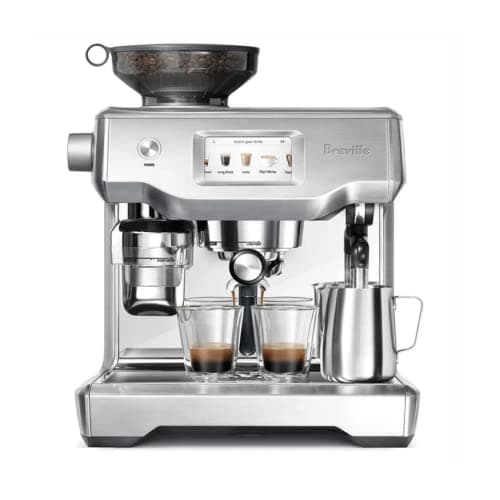
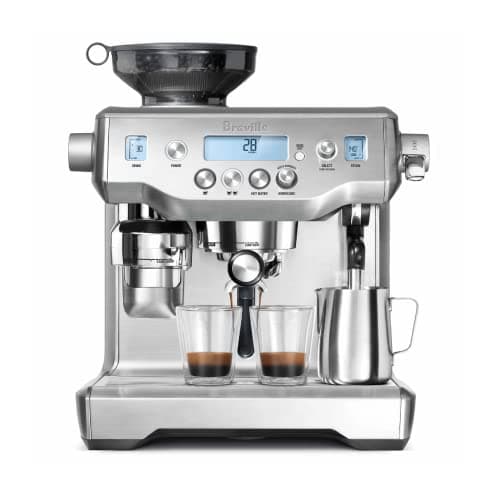
The other big fork on this page is not the boiler count but how much the machine does for you. The Breville Dual Boiler, the Rancilio and both Dilettas are semi-automatic: you grind, dose, tamp and steam yourself, which is the craft enthusiasts want. The Oracle Touch and the Oracle are automated— they grind, dose and tamp for you and can steam hands-free, trading the ritual for repeatability and speed. Neither is better; they suit different people. If you find dialing in and steaming milksatisfying, buy semi-automatic and put money into your skills and grinder. If you want cafe-grade drinks with no learning curve, the automated Oracles are worth the premium — and if you want to give up the portafilter entirely, a super-automatic takes that trade to its conclusion.
The grinder is not optional
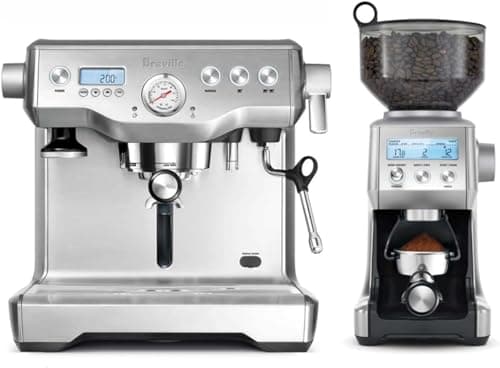
Spend the whole page's worth of attention on this: a dual boiler fed by a bad grinder will make worse coffee than a single boiler fed by a great one. Temperature stability only matters once the grind is right, and no boiler can fix a grinder that cannot hold a consistent espresso setting. The Breville Dynamic Duo package solves this by including the Smart Grinder Pro; the Rancilio and both Dilettas include no grinder at all, so you must budget for one on top. Before you finalize a machine, price a real espresso grinder alongside it — our best espresso grinders guide is the place to start, and it is the single upgrade most likely to improve your cup.
Which dual boiler fits you
- Want the most capability per dollar, grinder included?Breville Dynamic Duo Dual Boiler — a true dual boiler and a matched grinder for less than most machines cost bare.
- Want cafe drinks with no skill and no ritual?Breville Oracle Touch — it grinds, doses, tamps and steams for you on real dual-boiler hardware.
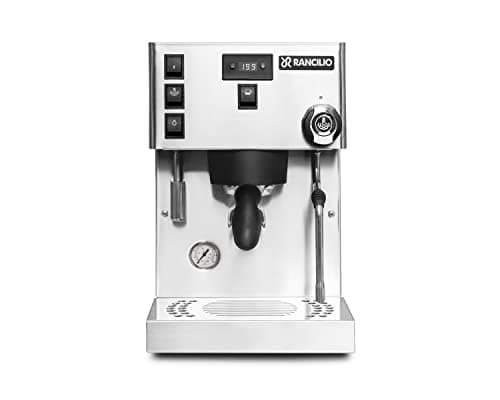
- Want the best-built, most serviceable machine and strongest steam?Rancilio Silvia Pro X — commercial bones for the enthusiast who brings the skill.
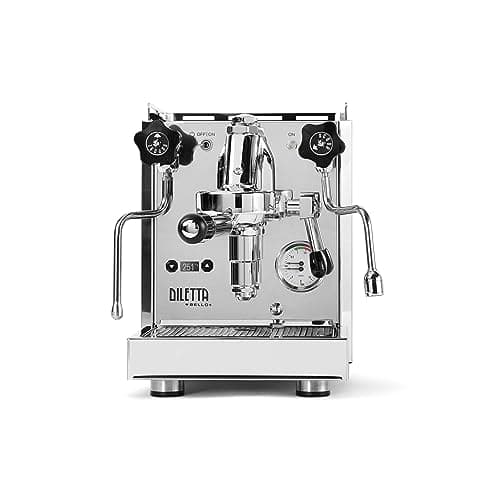
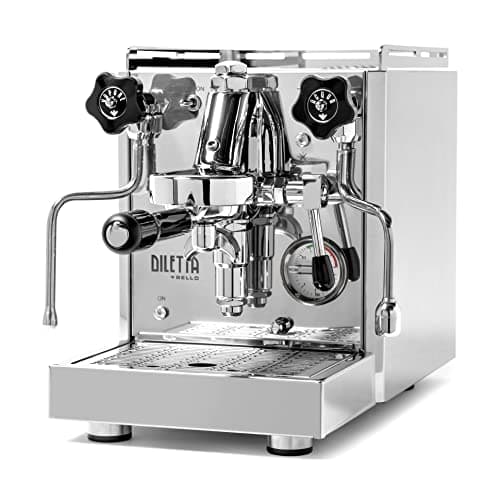
- Want the Italian E61 experience with a PID, for less than a dual boiler? Diletta Bello+ — a heat exchanger that adds the shot control a basic HX lacks.
- Want the automated Oracle experience with physical controls, cheaper? Breville Oracle (BES980XL) — the same idea as the Touch, dial-driven.
- Want simultaneous brew and steam on the smallest sensible budget?Diletta Bello — a real E61 heat exchanger, manual and rebuildable.
Whichever you choose, remember what you are buying and what you are not. A machine at this tier takes temperature and steam limits out of your coffee — but it does not put skill or a good grind into it. Match it to a serious grinder, learn to dial in, and any of these will make espresso as good as most cafes. If a countertop machine is more than you want to commit to right now, our portable espresso makers guide covers the other end of the spectrum entirely.