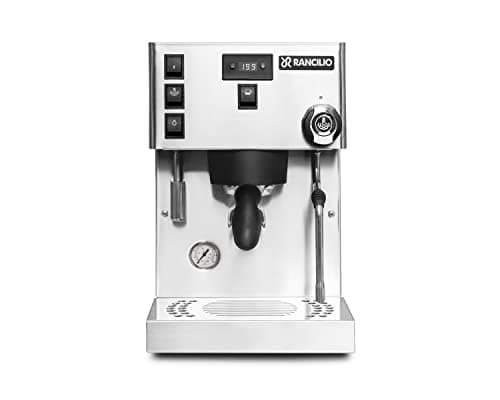
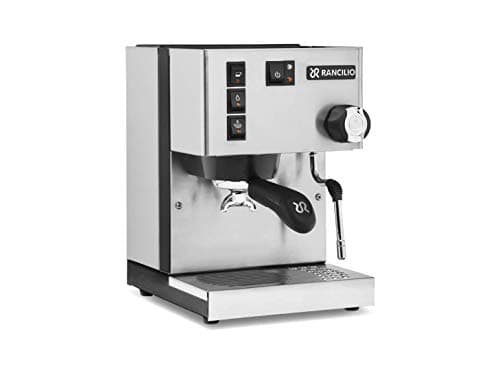
The Rancilio Silvia and the Silvia Pro X are the two ends of Rancilio's home line, and they share a surprising amount: both are bare, all-business machines built on a genuine 58mm commercial portafilter, both are sold without a grinder, and both expect you to bring real technique rather than press a button. What separates them is the boiler architecture, and it changes the daily experience completely. The classic Silvia is a single-boiler machine with no factory PID: one small brass boiler heats to brew temperature or steam temperature, but not both, and you hold the right brew range by feel. The Silvia Pro X is a genuine dual boiler with two independent, to-the-degree PIDs, a digital display and a large dedicated steam boiler. That is the whole upgrade in one sentence, and the rest of this page is what it means in the cup and on the counter.
Start with the honest limits of the single boiler, because they define what the Pro X is answering. Without a PID from the factory, the Silvia's thermostat lets the boiler swing through a band, so owners learn temperature surfing— watching the heat-ready light, waiting for it to cycle, and pulling in the predictable window that follows. Plenty of people brew superb espresso this way for years, and the machine is famously PID-friendly if you want to add one later. The single boiler also means a real wait between brewing and steaming: you pull the shot, flip to steam, let the boiler climb, then texture. For one or two drinks that rhythm is completely workable; for milk drinks back to back it is the Silvia's friction point. Our single vs double boiler guide explains exactly why a second boiler removes both problems at once.
The Pro X removes them by splitting the job across two boilers — a 300ml brew boiler and a 1-liter steam boiler, each on its own PID — so brew temperature is held to the degree automatically and steam is ready the instant you are, with true simultaneous brew and steam and no surfing. Add a digital display, adjustable low-pressure pre-infusion and steam authority closer to a commercial machine, and the Pro X is a noticeably easier and more capable machine to live with, for a noticeably higher price. Neither machine includes a grinder, and on machines this capable the grinder matters as much as the machine, so budget for a serious espresso grinder either way. This page walks through PID and temperature, steam and boilers, build and the grinder question, then tells you who each Rancilio is for.
PID and temperature: surfing vs held to the degree
This is the single biggest difference, so it is worth being precise. A PID is a controller that holds the boiler at a steady, chosen brew temperature. The classic Silvia ships without one, so its thermostat lets the boiler swing through a band and you manage the temperature yourself by temperature surfing— watching the heat-ready light, waiting for it to cycle, and pulling your shot in the predictable window that follows. It sounds fiddly, and for the first week it is; then it becomes muscle memory, and many owners brew excellent espresso this way for years. The Silvia is also famously PID-friendly, so you can add cafe-steady temperature later if surfing is not for you. The Silvia Pro X simply builds that in, and then some: its brew boiler is held to the degree by an independent PID with no surfing at all, and you set and see the temperature on a digital display. If you want precise, repeatable brew temperature out of the box and never want to touch a screwdriver, that alone can justify the step up. If you enjoy the ritual of surfing, or you like the idea of adding a PID as a project, the single boiler is honestly capable.
Steam and boilers: the wait, and how the Pro X ends it
The second real difference follows from the same architecture. The single-boiler Silvia has one small brass boiler that heats to brew temperature or steam temperature, so there is a genuine wait between the two: pull the espresso, flip to steam, let the boiler climb, then texture the milk. For one or two drinks that rhythm is completely workable and part of the charm; for milk drinks back to back it is the machine's friction point. The Pro X answers it with a true dual boiler— a 300ml brew boiler and a separate 1-liter steam boiler, each on its own PID — so you extract a shot and steam milk at the same instant, every time, with no switching and no waiting. That 1-liter dedicated steam boiler is also the headline for steam power: steam authority on the Pro X is closer to a commercial machine than to anything at this size, so it textures microfoam quickly and, crucially, recovers fast enough to make several milk drinks in a row without fading. Our single vs double boiler guide walks through why that second boiler changes the daily experience so completely.
What both machines share: 58mm brass, bare and serviceable
It is just as important to be clear about what does not change, because it is the reason people buy a Rancilio in the first place. Both machines are built on a genuine 58mm commercial portafilter, the diameter used behind most cafe counters, which unlocks the whole ecosystem of standard cafe-grade baskets, competition tampers, distribution tools and bottomless portafilters. Both are heavier, more metal and more serviceable than the plastic-bodied dual boilers from other brands — the kind of machine you maintain rather than replace, with parts and diagrams available and a long lineage in commercial cafe equipment. And both are sold bare, with no grinder and no automation, because Rancilio builds machines that expect a barista, not a button-presser. So the choice between them is not about brand character or build philosophy, which they share; it is purely about whether you want the single boiler's hands-on simplicity and lower price, or the Pro X's twin-PID convenience, stronger steam and higher price.
The grinder is not optional - on either machine
Whichever Rancilio you choose, budget for the grinder before you buy a single accessory, because it is the honest half of the setup that the bare machine price hides. A single boiler can only extract what the grind gives it, and a dual boiler this capable fed by a weak grinder makes worse coffee than a humble single boiler fed by a great one — temperature stability only matters once the grind is right. That is doubly true for the Pro X: paying for two PID-controlled boilers and then starving them with an inconsistent grind wastes exactly the thing you paid for. Start with our best grinders for espresso, price it in from the beginning, and treat it as part of the machine rather than an afterthought. If the total of a Rancilio plus a serious grinder is more than you want to spend, that is a useful signal in itself — our best espresso machines under $1,000 covers where most people should honestly start, and several of those dual boilers include a grinder in the box.
Which Rancilio fits you
- Buy the Silvia if you want the Rancilio 58mm brass experience for less, you make one or two drinks at a time, and you are happy to temperature-surf or add a PID yourself as a project. It is the benchmark single boiler and a genuine keep-for-a-decade machine.
- Buy the Silvia Pro X if you want brew temperature held to the degree with no surfing, true simultaneous brew and steam, and cafe-strength steam for back-to-back milk drinks. It is the natural step up once you have outgrown the single boiler, and it takes our build-and-steam crown in the dual boiler roundup.
- Reconsider both ifyou want convenience, a bundled grinder or any automation — neither machine includes a grinder or presses a button for you, and a friendlier tier in our under-$1,000 roundup is where most people should start.
What we did not test
We have not run either machine on a bench for months, and we will not pretend otherwise. This comparison compiles Rancilio's published specifications and retailer documentation for both the Silvia and the Silvia Pro X, cross-checks the manuals, and weighs aggregated owner reports and the long, well-documented Silvia modding record against our scoring rubric. The specs — the single insulated brass boiler and the lack of a factory PID on the Silvia, the 1-liter steam boiler and 300ml brew boiler with independent to-the-degree PIDs on the Pro X, the shared 58mm commercial portafilter, and the Pro X's adjustable low-pressure pre-infusion and display — come from Rancilio and retailer documentation, listed in Sources. Our scores are editorial judgments from that documented research, not measured numbers: there is no temperature-stability chart or timed back-to-back steaming log behind them, because we do not have a lab. Where hands-on time would genuinely tell you more than a spec sheet — exactly how forgiving the Silvia's surf window is day to day, or how the Pro X's steam recovery holds across a long milk session — we say so rather than invent a number, and we never quote a price from memory.