Skip to content
Portafilter Co

Machines · Espresso Machines

Gaggia Classic Evo Pro vs De'Longhi Stilosa: which budget espresso machine?

Two of the cheapest honest doors into real, non-pod espresso - but they sit a tier apart. One is a plastic-bodied starter that fakes crema; the other is an all-metal platform you service and keep for years. Here is how far each one actually takes you.

By Stephen V.Updated How we pick
#ad

We earn a commission when you buy through our Amazon links, at no extra cost to you. It never changes a verdict, and we say so when the cheaper product is the better buy. How this works.

The Gaggia Classic Evo Pro and the De'Longhi Stilosa are two of the cheapest honest ways into realespresso — a pump forcing hot water through ground coffee at brewing pressure, not a pod cartridge and not a steam-toy that never gets near the roughly nine bars a shot actually needs. Both pull a genuine espresso. But they are not two versions of the same machine at two prices. They sit a full tier apart, and the honest way to choose between them is to answer one question first: how far do you want to go?

The Stilosa is the rock-bottom floor of the category. It is a compact, mostly plastic body wrapped around a real 15-bar pump, a pressurized (dual-wall) basket and a panarello frothing wand, and it gets you pulling shots for the least money anyone reasonably can. Its whole appeal is that it lets you find out whether home espresso is a hobby you actually want before you spend real money on it. The Gaggia Classic Evo Pro costs meaningfully more, and for that money you are buying a different kindof object: a genuine 58mm commercial portafilter — the same diameter used behind cafe counters — bolted to a lead-free brass boiler in a single-piece stainless body that is designed to be opened, serviced, modified and kept for many years. One is a place to start; the other is a platform you grow into.

The thing to be clear-eyed about, and the crux of this whole comparison, is what each machine's basket is really doing. The Stilosa ships a pressurizedbasket that builds its own back-pressure behind a single pinhole, so it forces a thick, crema-topped shot out of almost any coffee — a supermarket bag, a cheap grinder, even a pod. That is genuinely forgiving, but the crema is partly manufactured by the basket, not proof of a well-extracted shot. The Gaggia takes standard, unpressurized 58mm baskets that make the coffee puck itself do the work, so it rewards a real grinder and real technique instead of hiding the lack of them. That single difference explains almost everything below — who each machine is for, where the Stilosa's ceiling sits, and why the Gaggia keeps being useful long after the cheaper machine has been outgrown. Both live in our best espresso machines under $200 field for context, though the Gaggia sits at the top of that bracket and the Stilosa anchors the very bottom.

The short answer

Quick picks

#ProductBest forScorePrice
01
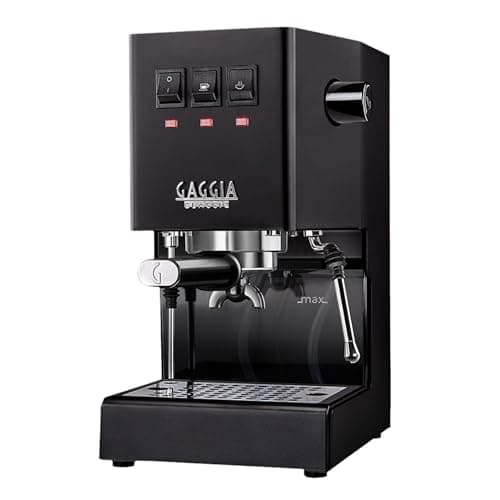
Gaggia Gaggia Classic Evo Pro
Gaggia Classic Evo Pro

The budget machine to buy if your honest answer to 'how far do you want to go?' is 'all the way.' Against the Stilosa the Gaggia costs meaningfully more, but you are buying a different class of thing: a genuine 58mm commercial portafilter, a lead-free brass boiler and a single-piece stainless body you service, mod and keep for years, backed by the largest parts-and-mods community in home espresso. It takes standard unpressurized 58mm baskets, so it rewards a real grinder and real technique rather than hiding them the way the Stilosa's pressurized basket does. The trade-offs are honest and worth stating plainly: no PID from the factory (you temperature-surf or fit one), no grinder in the box, a two-hole steam wand that demands practice, and a single boiler that makes you wait between brewing and steaming. But none of those is a hard ceiling the way the Stilosa's pressurized basket and fixed temperature are. Buy it to actually learn espresso and keep the machine, not just to taste it once.

Best to grow into
8.5
$501.21Amazon
02
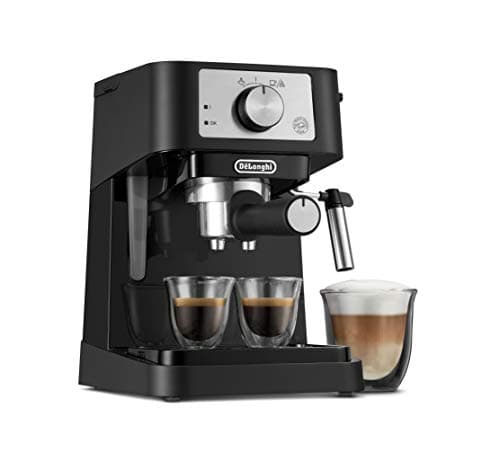
De'Longhi De'Longhi Stilosa (EC260)
De'Longhi Stilosa (EC260)

The one to buy if you just want the cheapest honest taste of espresso before you commit to anything. The Stilosa is a genuine 15-bar pump machine, not a pod or steam toy, and its pressurized basket is forgiving by design — it builds its own back-pressure, so even supermarket pre-ground pulls a drinkable, crema-topped shot without a good grinder. That makes it the lowest-risk way to find out whether home espresso is a hobby you actually want. The catch is that same forgiveness: the crema is partly manufactured by the basket rather than earned by the shot, there is no temperature control of any kind, and the panarello wand froths more than it textures, so the ceiling is low and there is nowhere on the machine to grow. Next to the Gaggia it is plainly a place to start, not a place to stay — which, for the right buyer, is exactly the point and exactly the right amount to spend.

Best rock-bottom entry
5.8
$149.95Amazon

#ad · Live prices from the Amazon Product API, as of Jul 30, 2026. Where we have no verified live price, we show none — a gap beats a number that has rotted.

In detail

The picks, in full

01
Gaggia Gaggia Classic Evo Pro

Best to grow into

Gaggia Classic Evo Pro

58mm commercial portafilterLead-free brass boiler1,425 W, 72 oz tank15-bar Ulka pump
8.5/10

The budget machine to buy if your honest answer to 'how far do you want to go?' is 'all the way.' Against the Stilosa the Gaggia costs meaningfully more, but you are buying a different class of thing: a genuine 58mm commercial portafilter, a lead-free brass boiler and a single-piece stainless body you service, mod and keep for years, backed by the largest parts-and-mods community in home espresso. It takes standard unpressurized 58mm baskets, so it rewards a real grinder and real technique rather than hiding them the way the Stilosa's pressurized basket does. The trade-offs are honest and worth stating plainly: no PID from the factory (you temperature-surf or fit one), no grinder in the box, a two-hole steam wand that demands practice, and a single boiler that makes you wait between brewing and steaming. But none of those is a hard ceiling the way the Stilosa's pressurized basket and fixed temperature are. Buy it to actually learn espresso and keep the machine, not just to taste it once.

Espresso capability
9
Build & serviceability
10
Steam & milk
7
Ease of use
6
Upgradeability & mod community
10
Value
9

Pros

  • Genuine 58mm commercial portafilter — the cheapest honest route to cafe-standard baskets and accessories
  • Lead-free brass boiler and single-piece 17-gauge stainless body built to be serviced, not binned
  • Huge parts and mod community: exploded diagrams, cheap spares and documented upgrades (PID, OPV, bottomless PF)
  • 15-bar Ulka pump and a commercial-style group give you real control over the shot as you improve
  • Holds its value and its usefulness for years — a platform you keep, not an appliance you replace

Cons

  • No PID from the factory — you temperature-surf by timing the heat light, or fit an aftermarket controller
  • No grinder in the box, and the grinder matters as much as the machine — budget separately
  • Two-hole commercial-style steam wand demands practice to texture milk well
  • Single small boiler means a wait between pulling a shot and steaming
  • Semi-automatic learning curve: dose, tamp and technique are on you, not the machine

Don't buy this if…

you only want to find out whether you like espresso before spending real money, or you want a drinkable, good-looking shot on day one with no grinder and no technique. That is the Stilosa's job — the Gaggia asks you to bring a grinder and learn the craft, and it is more machine, and more money, than a tentative first-timer needs.

$501.21View on Amazon

Price as of Jul 30, 2026. Prices change — Amazon's at checkout is the one that counts.

#ad · we may earn a commission from this link to Gaggia Classic Evo Pro

02
De'Longhi De'Longhi Stilosa (EC260)

Best rock-bottom entry

De'Longhi Stilosa (EC260)

15-bar pump, stainless steel boilerPressurized single & double baskets (+ ESE pods)Panarello-style manual steam wand33.8oz removable tank, ~1100W, compact
5.8/10

The one to buy if you just want the cheapest honest taste of espresso before you commit to anything. The Stilosa is a genuine 15-bar pump machine, not a pod or steam toy, and its pressurized basket is forgiving by design — it builds its own back-pressure, so even supermarket pre-ground pulls a drinkable, crema-topped shot without a good grinder. That makes it the lowest-risk way to find out whether home espresso is a hobby you actually want. The catch is that same forgiveness: the crema is partly manufactured by the basket rather than earned by the shot, there is no temperature control of any kind, and the panarello wand froths more than it textures, so the ceiling is low and there is nowhere on the machine to grow. Next to the Gaggia it is plainly a place to start, not a place to stay — which, for the right buyer, is exactly the point and exactly the right amount to spend.

Value
9
Espresso quality
5
Milk steaming
4
Ease of use
7
Build quality
6
Upgrade ceiling
4

Pros

  • The cheapest genuine 15-bar pump espresso machine worth buying — a real brewer, not a pod or steam toy
  • Pressurized baskets are forgiving: they pull a drinkable, crema-topped shot from pre-ground coffee or a modest grinder, so you can start without a good grinder
  • Simple all-manual controls and a small, light body make it a low-stakes, easy first machine on any counter
  • Stainless steel boiler and a metal portafilter under the budget plastics
  • Comes with the basics to start pulling shots — portafilter with single and double filters, tamper, and a two-level cup holder for taller cups
  • Cheap enough that outgrowing it does not sting

Cons

  • The pressurized (double-walled) basket manufactures crema with back-pressure, so it flatters any grind and hides extraction quality — the crema is not evidence of a good shot
  • No PID and no temperature control of any kind, with a small boiler, so brew temperature is neither stable nor adjustable — the real ceiling on shot quality
  • The panarello steam wand injects air for quick froth but gives you little control over microfoam, so latte art is effectively off the table
  • A lot of plastic in the body and a light chassis; it feels like the budget machine it is
  • Almost no upgrade path on the machine itself — you outgrow it by buying a different machine, not by improving this one
  • Small tank and single boiler mean you brew and then steam one at a time, with a wait in between

Don't buy this if…

you already know espresso is your thing, or you are willing to buy a real grinder to go with it — the pressurized basket and fixed brew temperature will cap what that grinder can show you, and you will be shopping for the Gaggia (or better) within a year. If you know you want to go the distance, spend a little more up front and start on the platform that grows with you.

$149.95View on Amazon

Price as of Jul 30, 2026. Prices change — Amazon's at checkout is the one that counts.

#ad · we may earn a commission from this link to De'Longhi Stilosa (EC260)

The real question: how far do you want to go?

Almost everyone comparing these two is really deciding one thing, and it is not price: whether they want to try espresso or learnit. The Stilosa is built for the first. It is the least you can spend and still pull a real pump shot, and its forgiving basket means you can be drinking a crema-topped espresso the day it arrives, with pre-ground coffee and no technique. If you are not yet sure home espresso is for you — if it might turn out to be a phase, or a gift for someone espresso-curious but unproven — that low-stakes, low-cost entry is exactly right, and paying for anything more would be paying for a ceiling you may never reach. The Gaggia is built for the second. It costs meaningfully more, asks you to buy a grinder, and hands you a learning curve; in exchange it keeps rewarding you for years and never becomes the thing holding your coffee back. If you already know you are the kind of person who reads the manual, watches the shot and enjoys fiddling, the cheaper machine will frustrate you within a season. Be honest with yourself about which buyer you are, because that answer — not the sticker — is the whole decision.

The baskets are the whole difference

If you take one thing from this page, make it this: these two machines treat the coffee completely differently, and it comes down to the basket. The Stilosa ships a pressurized (double-walled) basket that hides a single pinhole behind a second wall. Water pools behind that wall, builds pressure, and is forced out in a thin, aerated jet, so you get a thick layer of foam on top that lookslike crema no matter what coffee went in. For a beginner that is a genuine gift — a good-looking, drinkable shot from a supermarket bag on day one — but it is also a bit of a trick: that crema is produced by the basket's back-pressure, not by a well-extracted puck, so it tells you almost nothing about whether the shot underneath actually tastes good. The Gaggia takes standard unpressurized 58mm baskets, plain metal cups where the coffee puck itself creates the resistance. That means the Gaggia responds to your grind and your tamp instead of masking them: dial it in well and it tastes cafe-close; get it wrong and it gushes or chokes and tells you so. One machine flatters you; the other teaches you. Our pressurized vs unpressurized baskets guide walks through exactly what the double wall is doing and why it caps how far the Stilosa can go. And because the Gaggia's portafilter is a genuine 58mm commercial size, its upgrade path is cheap and endless — better baskets, distribution tools and a bottomless portafilter all just fit, where the Stilosa's pressurized basket is close to the end of its road.

Temperature, steam and staying power

Beyond the basket, the two machines diverge on the things that decide a shot over time. The Stilosa has no temperature control of any kind— no PID, no readout, no adjustment; the boiler heats to a fixed set point and you pull when the light says so. Brew temperature is one of the biggest levers on how espresso tastes, and on the Stilosa you simply do not have it. The Gaggia does not ship a PID either, but its design leaves the door open: out of the box you “temperature-surf” by timing the heat-ready light, and if that annoys you, a bolt-on PID kit — the single most popular mod in home espresso — gives you digital, cafe-steady control later. That is the difference in a sentence: the Stilosa takes the temperature it is given forever; the Gaggia lets you take control whenever you are ready. Milk tells the same story. The Stilosa's panarello wand sleeves the steam tip and pulls in air to froth milk quickly and forgivingly — fine for a foamy cappuccino, useless for latte art. The Gaggia's two-hole commercial-style wand does not froth for you; it hands you a jet of steam and asks you to texture the milk into glossy microfoam yourself, which is harder to learn but can actually pour a rosetta once it clicks. Both machines are single-boiler, so both make you wait between brewing and steaming — that is the one friction point they genuinely share. The deciding factor is staying power: the Stilosa is a machine you outgrow and replace, while the Gaggia is one you keep, service and improve, which is why it holds its usefulness and its resale value for years.

Both need a grinder — but it matters more for one

Neither machine comes with a grinder, and neither should be paired blindly. Here the pressurized basket flips the usual advice on its head. Because the Stilosa manufactures its own pressure, it runs happily on pre-ground or a modest grinder, so you can genuinely start it with no grinder at all — and, just as important, pairing it with an expensive grinder is largely wasted money, because the basket hides most of what a great grind would give you. The Gaggia is the opposite: on an unpressurized 58mm basket the grinder matters as much as the machine, because the shot can only ever be as good as the grind feeding it. Buy the Gaggia with a bad grinder and you will blame the machine for the grinder's faults. So budget honestly: with the Stilosa, put your money into the machine and keep the grinder cheap; with the Gaggia, plan to spend on a consistent, espresso-capable grinder up front — start with our best grinders for espresso before you buy either machine, because that decision changes what each one is worth. This is also the hidden cost that narrows the price gap between them: the Gaggia is not just a pricier machine, it is a pricier system, and the grinder is the reason.

Which should you buy

  • Buy the De'Longhi Stilosa ifyou want the cheapest genuine way to find out whether home espresso is for you, you are happy to start with pre-ground or a modest grinder, and a good-enough cappuccino from a simple machine is a win. It is the lowest-risk door into the hobby — and a fine gift for someone espresso-curious but unproven. Read the full De'Longhi Stilosa review for the complete picture.
  • Buy the Gaggia Classic Evo Pro ifyou already suspect espresso is your thing, you are willing to buy a real grinder, and you want a machine you can service, mod and keep for years rather than replace in a season. It is the one that grows with you — the Gaggia Classic Evo Pro review covers the 58mm platform, the PID path and the mod community in depth.
  • Start with the Stilosa and step up later ifyou genuinely do not know yet. It is cheap enough that using it for six months to learn whether you care, then moving to the Gaggia, is a perfectly good plan rather than wasted money — the Stilosa answers the “do I like this?” question and the Gaggia answers the “how good can I get?” one.
  • Skip straight to the Gaggia if your goal from day one is cafe-quality shots, real temperature control and latte art. Spending a little on the Stilosa first, only to replace it within a year, costs more in the end than starting on the platform that lasts. See where both land in our best espresso machines under $200 roundup.

What we did not test

We have not run either machine on a bench for months, and we do not claim to have. This comparison compiles the manufacturers' published specifications — Gaggia's for the Classic Evo Pro, De'Longhi's for the Stilosa (EC260) — cross-checks the component and materials claims against authorized-retailer documentation, and weighs aggregated owner reports and the long, well-documented Gaggia modding record against our scoring rubric. The 58mm portafilter, brass boiler, wattage, tank capacity and 15-bar pumps come from the makers' own materials, listed in Sources. Where hands-on time would tell you more than a spec sheet — exactly how forgiving the Gaggia's temperature-surf window feels day to day, how much the Stilosa's fixed brew temperature drifts across back-to-back shots — we say so rather than invent a number. What does not need a bench to confirm is the mechanism that drives this whole comparison: a pressurized basket manufactures crema and caps its machine's ceiling, while a standard 58mm unpressurized basket rewards a real grinder and a serviceable platform. Those two facts define the choice.
How we picked

We did not lab-test this gear

Everyone in this category says they tested twenty machines. We have not pulled shots on every product here, and we say so. What we did instead: compiled the published specifications, cross-checked the manufacturer manuals, computed the running cost (wattage to energy, grams-per-shot to cost-per-cup), weighed aggregated owner reports, and scored each product against a published rubric. The scores are judgments from documented research — not measurements we took, because we do not have a test lab and we will not pretend we do. Where hands-on time would tell you more than a spec sheet, we flag it. Where a number came from someone else's work, we name them in Sources.

Questions

Frequently asked

Is the Gaggia Classic Evo Pro worth the extra money over the De'Longhi Stilosa?
It depends entirely on how far you want to go. If you only want to find out whether you like home espresso, the Stilosa gives you a real pump shot for the least money and the extra Gaggia spend is a ceiling you may never use. If you already suspect espresso is a hobby you will stick with, the Gaggia is worth every bit more: a genuine 58mm commercial portafilter, a serviceable brass boiler and a machine you keep and improve for years instead of replacing in a season. Read the full Gaggia Classic Evo Pro review and De'Longhi Stilosa review to see which buyer you are.
Why does the cheaper Stilosa's crema look better than shots from a 'real' machine?
Because the Stilosa's crema is partly manufactured by the basket, not earned by the coffee. It uses a pressurized(double-walled) basket that forces water out through a single pinhole, aerating the shot into a thick foam regardless of your grind, dose or tamp. It looks like crema but is not evidence of a well-extracted shot. The Gaggia's standard unpressurized 58mm basket makes the puck do the work, so its crema actually reflects the coffee and the grind — which is harder to get right but far more meaningful. Our pressurized vs unpressurized baskets guide explains exactly what the double wall is doing.
Do I need a grinder for either machine?
You can start the Stilosa with no grinder at all — its pressurized basket runs fine on pre-ground coffee or ESE pods — and you should not pair it with an expensive grinder, because the basket hides most of what a great grind would give you. The Gaggia is the opposite: on its unpressurized 58mm basket the grinder matters as much as the machine, so a consistent, espresso-capable grinder is not optional. Whichever way you lean, read our best grinders for espresso before you buy, because the grinder decision changes what each machine is worth.
Can I make latte art on the Gaggia but not the Stilosa?
That is the practical difference in the milk department. The Stilosa uses a panarello wand that sleeves the steam tip and pulls in air to froth milk quickly and forgivingly — great for a foamy cappuccino, but it adds air on its own terms, so you get froth rather than the tight, glossy microfoam latte art needs. The Gaggia uses a two-hole commercial-style wand that does not froth for you; it hands you a jet of steam and lets you texture the milk into pourable microfoam yourself. That is harder to learn, but it is the wand that can actually pour a rosetta once the technique clicks. Both machines are single-boiler, so both make you wait between pulling a shot and steaming.
Should I buy the Stilosa now and upgrade to the Gaggia later, or just get the Gaggia?
If you honestly do not know whether espresso will stick, the Stilosa-first plan is sound: it is cheap enough that using it for a few months to learn whether you care, then moving to the Gaggia, is a perfectly good outcome rather than wasted money. But if you already know you want cafe-quality shots, temperature control and latte art, buying the Stilosa first only to replace it within a year costs more in the end than starting on the platform that lasts — in that case skip straight to the Gaggia. See where both sit in our best espresso machines under $200 roundup.

Keep reading

Receipts

Sources

We do not run a testing lab, and we do not pretend to. Where a measured number came from someone else's work, we name them and link them. Where we could not verify something, we say so on the page rather than quietly leaving it out. Read our full method.