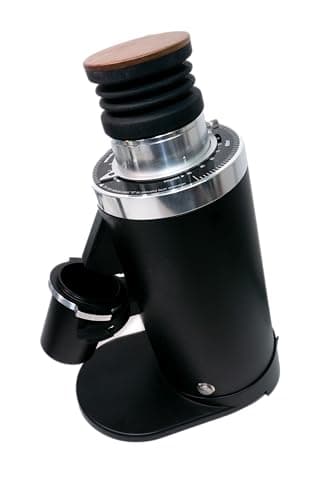
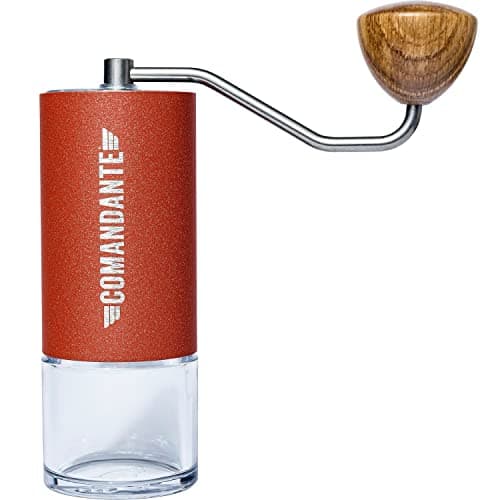
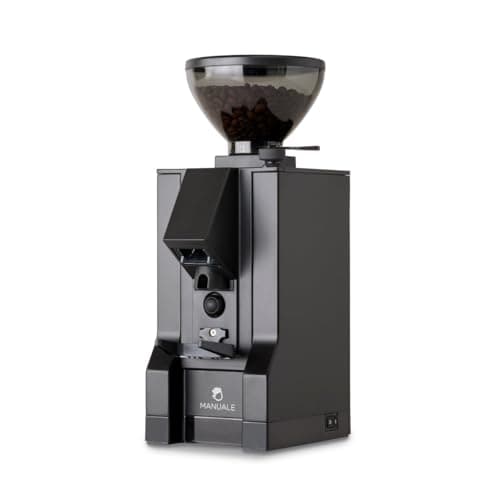
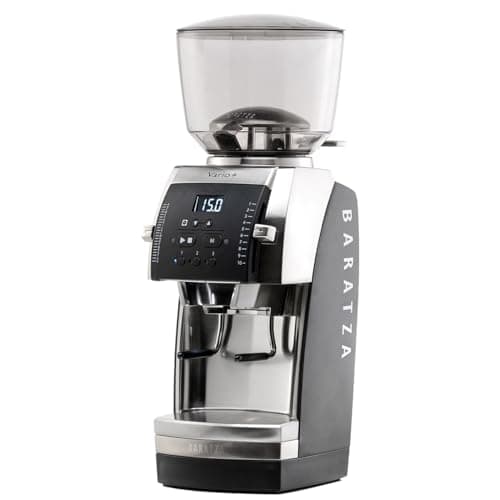
At the top of the range the best espresso grinder for most people is the Baratza Vario+ — 54mm flat ceramic burrs with a macro-and-micro adjustment system that gives roughly 220 repeatable settings, which is the thing you actually use every time you open a new bag. If you single dose, the DF64V Gen 3 is the one to buy instead: 64mm flat burrs and a variable-speed motor in a low-retention body. And the Eureka Mignon Notte is the budget pick at this tier — the cheapest grinder here with stepless adjustment and a flat burr set, for anyone who wants the geometry without the rest of the bill.
It is worth being precise about what you are buying when you move up from a $200 grinder, because the marketing is vague and the actual differences are narrow and specific. You are not buying a better cup by default — a Baratza Encore ESP fed good beans and dialed in carefully makes very good espresso. You are buying three things: larger and flatter burrs, which narrow the spread of particle sizes; finer and more repeatable adjustment, which makes dialing in converge instead of oscillate; and lower retention, which means the grind change you just made lands on this dose rather than the next one. Our best electric espresso grinders under $500 page is the bracket directly below this one, and for most people it is still the right page.
Burr diameter and geometry is the headline spec. A bigger burr set does less work per revolution, which means fewer fines produced by repeated crushing and a tighter particle distribution coming out. Flat burrs shear the coffee between two parallel rings and tend to produce a narrow, uniform grind that tastes clear and separated in the cup; conical burrs crush and shear at an angle and tend to produce a slightly wider spread that reads as heavier body and more forgiveness. Neither is objectively better and plenty of excellent cafes run both. What a 64mm flat set buys over a 40mm conical one is predictability. Best flat burr grinders goes deeper on the geometry.
Stepless or finely stepped adjustment is the spec you use daily.Espresso lives in a window a few tens of microns wide: the difference between a 25-second shot and a gusher is smaller than the thickness of a sheet of paper. A grinder with coarse steps leaves you jumping over the setting you want, and the usual workaround is to change the dose instead — which changes the drink. Stepless adjustment, or a macro-plus-micro arrangement like the Vario+'s, lets you make a change small enough to move shot time by a second or two. Our how to dial in espresso guide is the routine this spec exists to serve.
Retention decides whether a change takes effect now or later.Grounds left in the chute and the burr chamber come out in the next dose, which means a grinder with high retention mixes yesterday's setting into today's shot. At this tier most of the single-dose designs address it directly with short, steep chutes and bellows. The practical effect is that you can change one click and taste the result immediately instead of purging two doses first. Single dosing explained covers the workflow, and best single dose grinders ranks the field by that criterion specifically.
One honest warning before the picks. There is a real ceiling to what a grinder upgrade fixes. If your shots channel, if your basket is pressurized, or if you are not weighing dose and yield, a better grinder changes almost nothing — those are puck and process problems, and they are cheaper to solve. See how to fix channeling and best espresso accessories under $25 before spending at this level. The upgrade is worth it when your process is already tight and the remaining variable is the grind.
Who should actually spend at this tier. Three buyers: someone whose process is already tight and whose remaining variable is grind consistency; someone running several bags of coffee at once who needs grind changes to land immediately; and someone buying a grinder they intend to keep for a decade. If none of those describe you, the bracket below genuinely has better value in it — read best electric espresso grinders under $500 instead and spend the difference on coffee.
Flat or conical, settled honestly. Flat burrs shear between two parallel rings and tend toward a narrow particle distribution that reads as clarity and separation. Conical burrs crush at an angle and tend toward a slightly wider distribution that reads as body and forgiveness. Every grinder on this page except the Comandante is flat, because that is what this tier of the market has converged on for espresso — but the conical preference is a real taste position, not an error. Best flat burr grinders has the longer argument.
Hopper or single dose is a workflow decision, not a quality one. A hopper grinder is better if you drink one coffee and want to press a button; a single-dose grinder is better if you run several bags, change beans often, or want a grind adjustment to take effect on this shot. Neither grinds better than the other by virtue of the format. Single dosing explained is the detail, and best single dose grinders is the ranking by that criterion.
What to spend on instead, if the process is not tight yet. In order: a single-wall precision basket, a WDT tool, a scale you can read during the pour, and a bottomless portafilter so you can see what your distribution is actually doing. All four together cost a fraction of the cheapest grinder here and will change more shots. Best precision baskets and best bottomless portafilters are the starting points.
Matching the grinder to the machine. There is no point running a 64mm flat burr grinder into a machine with a pressurized basket, and there is limited point running one into a thermoblock machine with no temperature control — the grind will be more consistent than the brew water. If you are building both halves, our best espresso setup under $1,000 page balances them, and best espresso machines without a grinder is the machine-side page for grinder owners.
How we picked
We did not lab-test this gear
Everyone in this category says they tested twenty machines. We have not pulled shots on every product here, and we say so. What we did instead: compiled the published specifications, cross-checked the manufacturer manuals, computed the running cost (wattage to energy, grams-per-shot to cost-per-cup), weighed aggregated owner reports, and scored each product against a published rubric. The scores are judgments from documented research — not measurements we took, because we do not have a test lab and we will not pretend we do. Where hands-on time would tell you more than a spec sheet, we flag it. Where a number came from someone else's work, we name them in Sources.