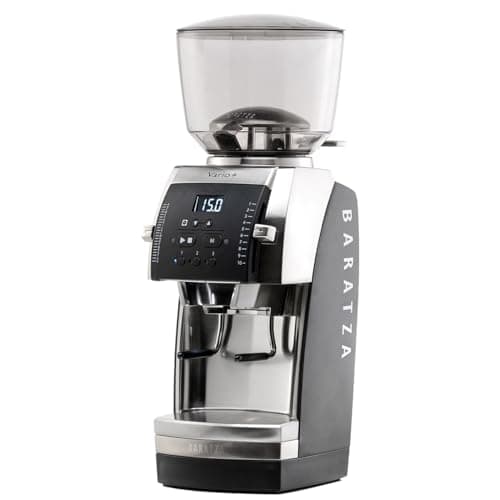
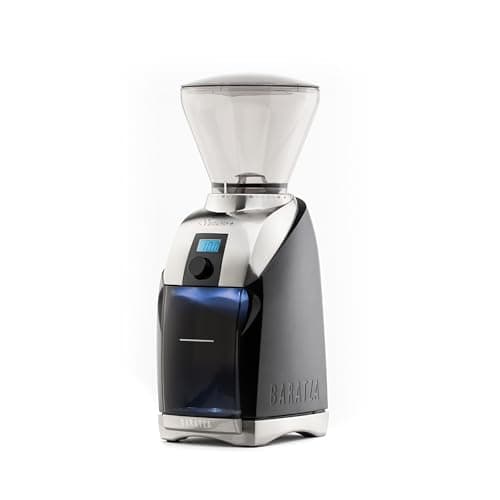
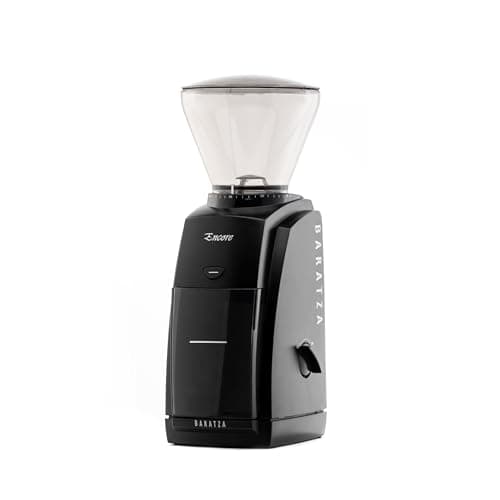
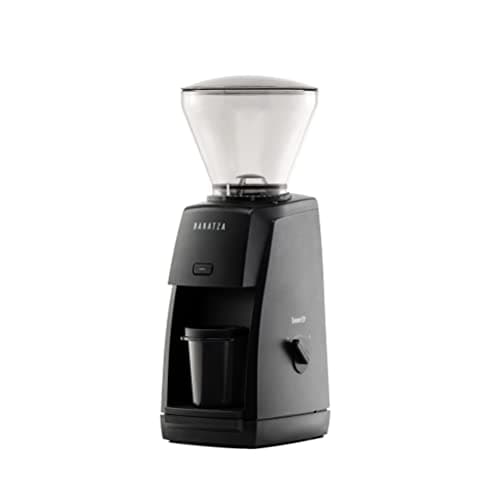
The best Baratza grinder for most people is the Encore ESP — the same 40mm conical burr set as the original Encore, re-geared so that its 40 steps land where espresso actually needs them, which makes it the cheapest Baratza that can genuinely dial in a shot. If you want the top of the line, the Vario+ moves to 54mm flat ceramic burrs and roughly 220 repeatable settings. And the budget pick is the original Baratza Encore, which is still the grinder we would hand to someone starting out with filter coffee.
Here is the thing worth knowing before you compare spec sheets, because it explains the whole range: three of these four grinders use the same 40mm conical steel burr set. The Encore, the Encore ESP and the Virtuoso+ are not three different grind qualities — they are one burr set with different gearing, different housings and different features bolted around it. That is unusually honest engineering and it makes the buying decision cleaner than most brands allow. You are not choosing how good the grind is. You are choosing where in the range the 40 steps fall, and what conveniences you want.
Gearing is the spec that decides espresso. A grinder with 40 stepped settings spread from coarse French press to fine espresso has very few usable steps inside the espresso window — and the espresso window is only a few tens of microns wide, so two adjacent steps can be the difference between a 20-second gusher and a stalled shot. The Encore ESP solves that by re-gearing the same burrs so that more of its 40 steps land in the fine range. That is the entire difference between it and the original Encore, and it is the reason the ESP costs more despite grinding identically at any given particle size. Our Baratza Encore vs Encore ESP comparison is the detailed version of this paragraph.
What the Virtuoso+ adds, and what it does not.The Virtuoso+ runs the same 40mm conical format in Baratza's M2 burr and adds a 40-second digital timer in tenth-of-a-second steps plus a heavier die-cast body. Those are genuine improvements to living with the grinder — repeatable dosing by time, less vibration, a quieter machine — but they are not improvements to espresso capability, because the gearing is filter-biased like the standard Encore's. If espresso is your main drink, the cheaper Encore ESP is the better grinder. Virtuoso+ vs Encore ESP is the head-to-head that surprises people.
Why Baratza, specifically. Two reasons that are not about grind quality. First, the company publishes repair documentation and sells individual replacement parts — burrs, gearboxes, PCBs, hoppers — which means a five-year-old Encore is a repairable appliance rather than landfill. Very little else in this market is. Second, the burr sets and the adjustment systems are shared across the line and across generations, so settings and advice transfer between models and the owner community is large and unusually useful. That is worth real money over a decade of ownership.
And the honest limit of the range. All four grinders below are hopper-fed, with enough retention that a grind change takes a purge dose to land fully. Baratza now sells one answer to that — the Encore ESP Pro ships with a 45g single-dose lid, a flow-control disc and an auto-stop, and independent reviewers measure its retention in tenths of a gram — but it arrived after this page was written and we have not worked through it properly yet, so we are not ranking it here. If you run several bags of coffee at once, or you want a one-click change to show up on this shot, the dedicated single-dose designs still do that better — see best single dose grinders and single dosing explained.
Choose by gearing first, features second. If you pull espresso, the choice is the Encore ESP or the Vario+ and nothing else in the line — the Encore and Virtuoso+ are geared for filter and will fight you. If you brew filter only, the choice is the Encore for value or the Virtuoso+ for the timer and the quieter body. If you do both seriously, the Vario+ is the only one that does not compromise.
The 40-step limitation, stated plainly.All three conical grinders here have 40 stepped positions. Across a filter range that is plenty — adjacent steps are distinguishable and a brew that is slightly off is easy to correct. Inside the espresso window it is tight even on the ESP's re-geared ring, which is why espresso owners at this level often adjust dose and yield alongside grind rather than relying on grind alone. How to dial in espresso covers working within a stepped grinder, and coffee-to-water ratio is the other lever.
Repairability is the quiet reason to buy this brand. Burrs wear out — not quickly, but they do, and a worn burr set produces more fines and a flatter cup. Baratza sells replacement burrs, gearboxes and electronics for current and discontinued models with published instructions, which means these grinders are serviceable rather than disposable. Factor a burr replacement into a ten-year ownership plan and the value picture changes. How to clean a coffee grinder covers the maintenance that delays it.
Where the range runs out. None of the four grinders ranked here is a single-doser, and Baratza does not build anything with 64mm flat burrs at all. The single-dose gap is the one it has started to close: the Encore ESP Pro, newer than this page, pairs the same 40mm conical burrs with a 45g single-dose lid and tenths-of-a-gram retention. The flat-burr gap it has not. So if you want the tightest particle distribution available at home — because you want the grind itself to change, not just the workflow — the brand still has no answer, and that is worth knowing before you commit. Our best high-end espresso grinders page covers what sits above, and best hand grinders covers the manual route to zero retention.
If the budget is tight, consider a hand grinder instead.At the Encore ESP's price a good manual grinder gives you finer adjustment and essentially zero retention, at the cost of about a minute of cranking per espresso dose. That is a real trade and for one or two drinks a day the manual often wins — hand vs electric grinders and best coffee grinders under $100 make the case.
How we picked
We did not lab-test this gear
Everyone in this category says they tested twenty machines. We have not pulled shots on every product here, and we say so. What we did instead: compiled the published specifications, cross-checked the manufacturer manuals, computed the running cost (wattage to energy, grams-per-shot to cost-per-cup), weighed aggregated owner reports, and scored each product against a published rubric. The scores are judgments from documented research — not measurements we took, because we do not have a test lab and we will not pretend we do. Where hands-on time would tell you more than a spec sheet, we flag it. Where a number came from someone else's work, we name them in Sources.