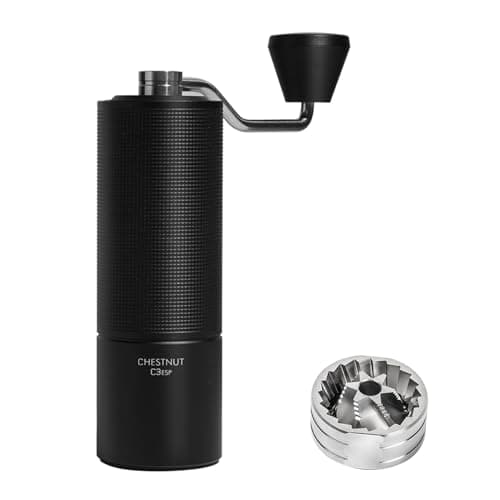
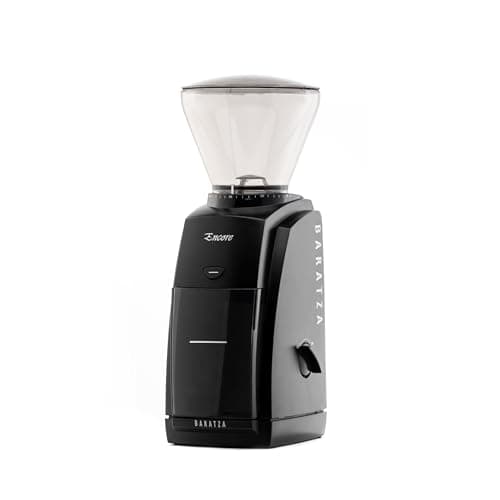
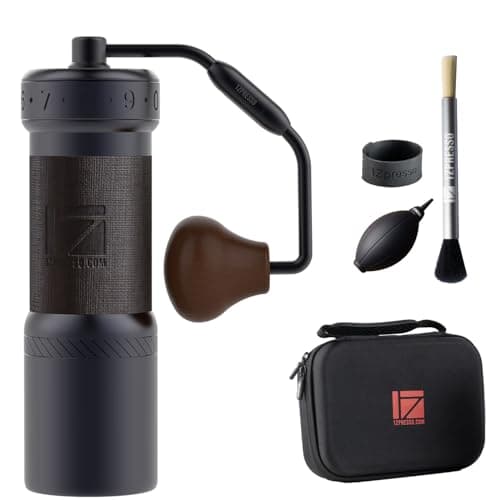
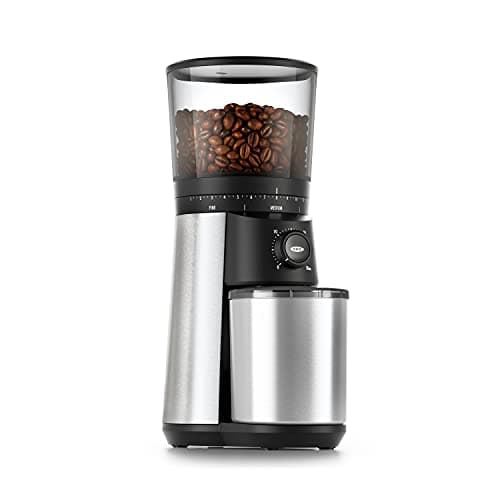
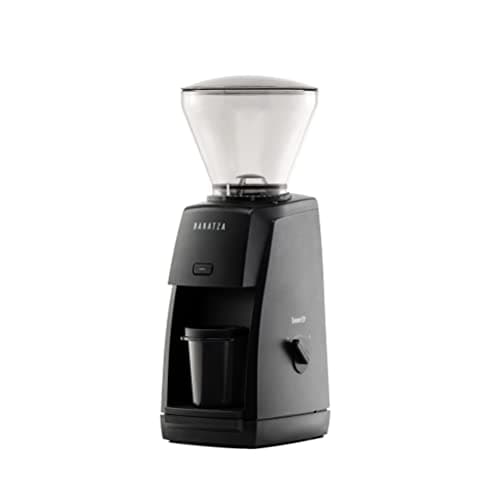
The best coffee grinder for a beginner is the Baratza Encore ESP— not because it has the biggest burrs, but because it has 40 clearly numbered steps that are geared to reach espresso, so you can write down "setting 9 for this bag" and return to it exactly. If the budget is tighter, the Timemore Chestnut C3 ESP does the same thing with an external numbered dial for a fraction of the price, at the cost of cranking. And the budget pick among the electrics is the OXO Brew Conical Burr Grinder, a one-touch machine for filter coffee with nothing to learn at all.
Almost every grinder recommendation you will read ranks on burr size, burr geometry and particle distribution — and for an experienced user those are the right criteria. For a first grinder they are close to irrelevant, because the thing that actually goes wrong at the start is not grind quality. It is navigation. You make a cup that tastes good, you change something, the next three cups are worse, and you cannot get back to where you were. So this page ranks on a different spec: how legible and recoverable the adjustment is. Our best coffee grinders under $100 page ranks the same category on price, and best espresso grinders ranks it on capability — this one is deliberately a different question.
Numbered beats stepless, for now.Stepless adjustment is more precise and is what enthusiasts want, because it lets you make a change finer than any click. It is also the worst possible interface for a beginner, because there is no reference: you cannot write a stepless setting down, and "a bit past where the mark was" is not recoverable at two in the afternoon when the shots stop working. Numbered steps are coarser and completely legible. Buy legible first and precise later.
External beats internal. On hand grinders especially, the adjustment is often hidden underneath the burr inside the body, where you set it by counting clicks from fully closed — and lose the count the first time you wash it. An external dial on the outside of the body, with numbers printed on it, is the single most beginner-friendly feature in this category and it costs the manufacturer almost nothing. Two of the picks below have one.
Burrs, not blades — the one non-negotiable. A blade grinder is a spice mill: it chops beans into a mixture of dust and boulders, and the dust over-extracts bitter while the boulders under-extract sour in the same cup. No brewing adjustment fixes that, and it is the single most common reason a beginner concludes they do not like good coffee. Everything on this page has conical burrs. Burr vs blade grinder has the mechanism.
Decide now whether espresso is in your future. This is the mistake that costs beginners the most money. A grinder geared for filter coffee runs out of adjustment before it reaches the fineness an espresso basket needs, so shots run fast and taste sour and there is no setting left to correct with — and the usual conclusion is that the machine is faulty. If there is any chance you will pull espresso, buy an espresso-capable grinder now; the premium is small and the alternative is buying twice. Our do you need a grinder for espresso guide covers why pre-ground is a dead end for shots specifically.
And be honest about volume before you buy manual. A hand grinder is outstanding value and genuinely out-grinds electrics at the same price, because there is no motor to pay for. But a fine espresso dose is close to a minute of hard cranking. For one or two drinks a day that is a pleasant ritual; for four milk drinks before work it is a chore you will abandon, at which point a bag of pre-ground appears on the counter and the whole setup gets worse. Hand vs electric grinders is the longer version of this paragraph.
Answer one question first: espresso or not. If yes, your shortlist is the Encore ESP, the Timemore C3 ESP or the K-Ultra, and nothing else on this page. If no, the Encore and the OXO Brew are both excellent and cheaper. Getting this wrong is the single most expensive beginner mistake in the category, because a filter grinder cannot be made espresso-capable later.
Then answer: electric or manual. Manual gives you better burrs per dollar and zero retention; electric gives you your arm back. The honest dividing line is volume — one or two drinks a day and manual is a pleasure, three or more and it becomes a chore you stop doing. Nothing else about the decision matters as much as that. Hand vs electric grinders has both cases.
Three habits that matter more than the grinder you pick. Write the setting on the bag, so a new coffee never costs you the old reference. Weigh the dose rather than scooping, because volume varies with grind and roast while weight does not. And change one thing at a time — grind, then dose, then yield — because changing two means you learn nothing from the result. How to dial in espresso and coffee-to-water ratio are the two pages to read alongside a first grinder, and a cheap scale with a timer is on best espresso accessories under $25.
What to spend on next, once the grinder is chosen. If you are making espresso: a single-wall precision basket if your machine shipped with a pressurized one, and a WDT tool. Those two fix the faults that make a beginner blame their grinder. If you are making pour over: a gooseneck kettle, which gives you control over the pour. See best precision baskets, best WDT tools and best gooseneck kettles.
And keep it clean from the start. Coffee oils build up on a burr set and change the grind before the grinder obviously looks dirty, which is a confusing fault to hit in your first month. All five picks here come apart far enough to brush out — how to clean a coffee grinder is the five-minute routine. If you are buying the brewer at the same time, our best coffee makers under $100 page is the companion.
How we picked
We did not lab-test this gear
Everyone in this category says they tested twenty machines. We have not pulled shots on every product here, and we say so. What we did instead: compiled the published specifications, cross-checked the manufacturer manuals, computed the running cost (wattage to energy, grams-per-shot to cost-per-cup), weighed aggregated owner reports, and scored each product against a published rubric. The scores are judgments from documented research — not measurements we took, because we do not have a test lab and we will not pretend we do. Where hands-on time would tell you more than a spec sheet, we flag it. Where a number came from someone else's work, we name them in Sources.