Skip to content
Portafilter Co

Makers & Brewers · Coffee Makers

The best coffee makers under $100

A hundred dollars buys an excellent coffee maker in almost every brew method, so the real question is not which brand — it is which method suits your morning.

By Stephen V.Updated How we pick
#ad

We earn a commission when you buy through our Amazon links, at no extra cost to you. It never changes a verdict, and we say so when the cheaper product is the better buy. How this works.

Under a hundred dollars the best coffee maker for most people is the AeroPress Original — it makes a genuinely excellent single cup in about two minutes, is almost impossible to break, and costs well under half the budget. If you need a pot rather than a cup, the Ninja 12-Cup Programmable is the automatic drip machine to buy at this money. And the budget pick is the Hario V60 plastic dripper, which costs a fraction of everything else here and makes coffee as good as the ceramic version does.

Here is the useful thing about this price bracket: it is not a compromise bracket. A hundred dollars buys the best AeroPress, the best V60, the canonical moka pot and a very good French press — the actual flagship products in four different brewing traditions, not cut-down versions of them. The only method where the money is genuinely limiting is automatic drip, because that is the one category where you are buying a heating element, a pump, a timer and a housing rather than a vessel and a filter. So the decision on this page is not about which maker is best in the abstract. It is about which morning you actually have.

Start with how many cups and how much attention. Two questions sort this whole page. First, are you making one or two drinks, or filling a pot for a household? A manual brewer makes one or two cups beautifully and gets tedious at four; an automatic drip machine does the opposite. Second, do you want to participate or do you want to press a button? Pour over and AeroPress reward attention and punish inattention; drip asks for nothing and gives back a reliable average.

Then understand what each method actually does to the coffee. These are not flavors of the same drink. Immersion brewing — French press, AeroPress, cold brew — steeps the grounds in all the water at once, which extracts evenly and produces a heavier, rounder cup. Percolation — pour over and drip — runs water through a bed of coffee and down through a filter, which produces a cleaner, brighter, more aromatic cup because the paper traps the oils and fines. A moka pot does something else again: it pushes water up through the bed under a couple of bars of steam pressure, which gives you something concentrated and syrupy that is not espresso but is the closest a stovetop gets. French press vs pour over and drip vs pour over compare the two families directly.

Budget for the grinder, not just the brewer. This is the single most important sentence on the page. If you have a hundred dollars for coffee equipment in total and you spend all of it on the brewer, you will be brewing pre-ground supermarket coffee, and every maker here will make a mediocre cup. Spend around a third of it on the brewer and the rest on a hand grinder and the same makers produce something you would pay cafe prices for. Coffee begins losing its volatile aromatics within minutes of grinding, and no brewer recovers them. Our best coffee grinders under $100 page is the companion to this one, and burr vs blade grinder explains why a cheap burr grinder beats an expensive brewer.

And check the grind the method needs. Each of these makers wants a different coarseness, and getting it wrong is the most common reason a good brewer makes bad coffee: coarse for French press and cold brew, medium for drip, medium-fine for pour over, fine-but-not-espresso-fine for a moka pot, and anywhere from fine to coarse for an AeroPress depending on the recipe. We have a grind-size page per method — French press, AeroPress and moka pot.

The short answer

Quick picks

#ProductBest forScorePrice
01
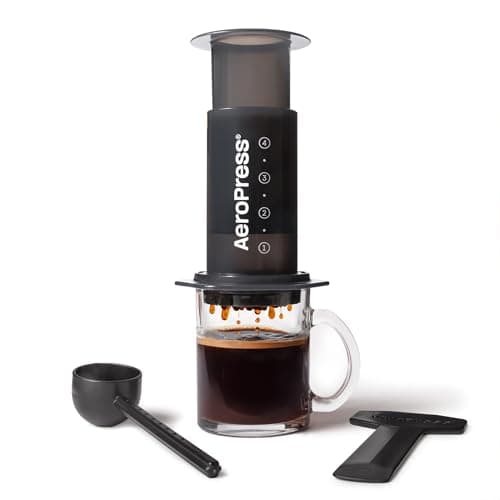
AeroPress AeroPress Original Coffee Press
AeroPress Original Coffee Press

The best coffee maker under $100 for most people, and the most forgiving brewer ever made. It is a plastic cylinder, a plunger and a paper microfilter: you steep ground coffee in hot water for a minute or two, then press it through the filter in about twenty seconds. The immersion stage extracts evenly, so it tolerates a wider grind range and a sloppier technique than pour over does, and the paper filter still gives you a clean cup with no sediment. It makes one strong cup at a time, cleans in ten seconds by ejecting the puck into a bin, and is essentially unbreakable — which is why it travels and camps better than anything else here.

Best overall, and best for one or two cups at a time
8.4
$29.96Amazon
02
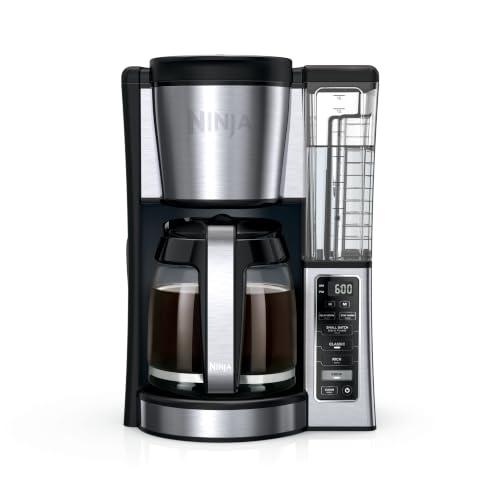
Ninja Ninja 12-Cup Programmable Coffee Maker
Ninja 12-Cup Programmable Coffee Maker

The automatic drip machine to buy if the household needs a pot rather than a cup. A 12-cup glass carafe, Classic and Rich brew settings, a small-batch option for one or two cups and a delay-brew timer so coffee is waiting when you get up. It is not a certified-precision brewer — the specialty-approved machines with tightly controlled brew temperature and bloom cycles start at several times this price — but it is the most capable automatic you can buy under a hundred dollars, and the small-batch setting solves the usual cheap-drip failure of brewing a weak single cup.

Best automatic — for a household and a programmed wake-up
8.2
$69.99Amazon
03
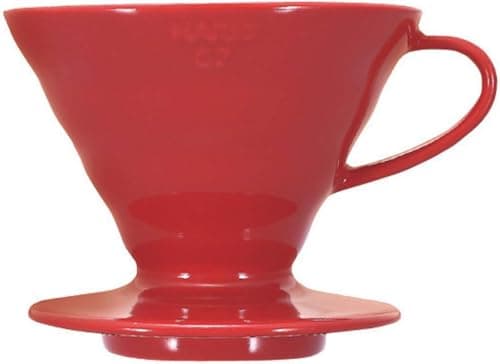
Hario Hario V60 Ceramic Coffee Dripper (Size 02)
Hario V60 Ceramic Coffee Dripper (Size 02)

The best cup on this page, if you are willing to pay attention for three minutes. The V60 is a 60-degree cone with spiral ribs and one large hole at the bottom, and that geometry is the whole design: the ribs hold the paper off the wall so air can escape, and the single large opening means the coffee bed — not the dripper — controls the flow rate. That gives you more control than any other brewer here and makes the coffee brighter and more aromatic, because the paper traps the oils and fines. It also means the result tracks your technique closely, for better and worse.

Best cup quality, and best for light and medium roasts
7.6
$30.50Amazon
04
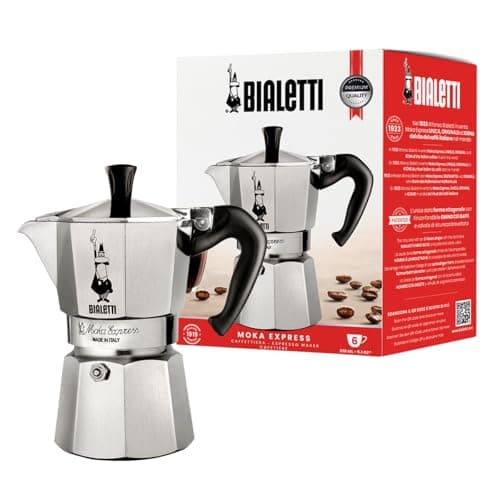
Bialetti Bialetti Moka Express (6-Cup)
Bialetti Moka Express (6-Cup)

The pick if what you actually want is strong, concentrated coffee with a syrupy body. The Moka Express has been in production since 1933 and the design has barely changed: water in the bottom chamber, fine ground coffee in the funnel basket, and steam pressure of roughly one to two bars pushing the water up through the bed and into the top. That is not espresso — espresso is nine bars — but it is far more concentrated than drip, and it is the traditional base for a lot of Italian coffee drinking. The 6-cup model makes about 9 oz, which is three small cups or one large milk drink.

Best for strong, espresso-style coffee without a machine
7.2
$48.22Amazon
05
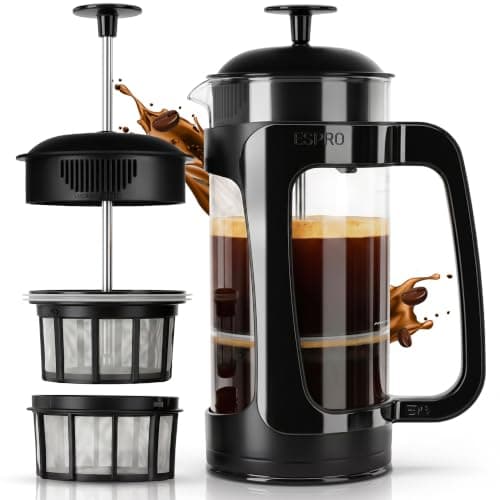
Espro Espro P3 French Press (32 oz)
Espro P3 French Press (32 oz)

The French press for anyone who likes the body of press coffee and not the silt. Espro's double micro-filter uses two nested stainless screens instead of one mesh, which traps the fines that slip through an ordinary press, so the cup is cleaner and less bitter — and because the filter seals as it descends, the coffee largely stops extracting once pressed instead of getting harsher in the carafe. At 32 oz it serves two or three people, and press brewing is the most hands-off manual method here: coarse grind, hot water, four minutes, press.

Best French press, and best for a heavier-bodied cup
7.6
$29.90Amazon
06
Hario Hario V60 Plastic Coffee Dripper (Size 02, Clear)
Hario V60 Plastic Coffee Dripper (Size 02, Clear)

The budget pick, and the cheapest route to genuinely excellent coffee on this page. It is the same 60-degree cone, the same spiral ribs and the same single large hole as the ceramic V60 above, moulded in plastic instead of fired in clay — and the brewing geometry is what makes a V60 work, so the cup is essentially the same. What you lose is thermal mass: plastic does not hold heat, so the brew cools slightly faster and preheating matters more. What you gain is that it costs a small fraction of everything else here and it does not break when you drop it.

Budget pick — the cheapest great cup of coffee on this page
7.4
$11.94Amazon

#ad · Live prices from the Amazon Product API, as of November 20, 2026. Where we have no verified live price, we show none — a gap beats a number that has rotted.

In detail

The picks, in full

01
AeroPress AeroPress Original Coffee Press

Best overall, and best for one or two cups at a time

AeroPress Original Coffee Press

Immersion plus pressure, paper microfilter~1-2 minute brew, ~20 second pressOne cup per brewUnbreakable polypropylene body
8.4/10

The best coffee maker under $100 for most people, and the most forgiving brewer ever made. It is a plastic cylinder, a plunger and a paper microfilter: you steep ground coffee in hot water for a minute or two, then press it through the filter in about twenty seconds. The immersion stage extracts evenly, so it tolerates a wider grind range and a sloppier technique than pour over does, and the paper filter still gives you a clean cup with no sediment. It makes one strong cup at a time, cleans in ten seconds by ejecting the puck into a bin, and is essentially unbreakable — which is why it travels and camps better than anything else here.

Cup quality
9
Forgiveness
10
Capacity
3
Cleanup
10
Value
10

Pros

  • The most forgiving brewer here — a rough grind or a loose timing still tastes good
  • Paper microfilter gives a clean cup with no sediment or oils
  • Cleans in about ten seconds by ejecting the puck
  • Essentially unbreakable, so it travels, camps and survives a kitchen
  • Takes any grind size, so it works with whatever grinder you already own

Cons

  • One cup at a time, so it is the wrong tool for a household
  • Paper filters are a small ongoing cost
  • Plastic body, which some people object to on principle
  • The pressing stage is physical, which matters if grip strength is an issue

Don't buy this if…

…you need to fill a carafe for several people. The AeroPress makes one excellent cup and the second cup means brewing again; buy the Ninja drip machine below instead.

The reason this sits at number one and not the V60 is forgiveness. Pour over makes a better cup at its best, but it has more ways to go wrong — pour rate, bloom, grind fineness, water temperature — and most people are making coffee before they are fully awake. The AeroPress's immersion stage does the extraction work before the press, so the variables matter less.

Which version to buy, and the travel and XL variants, is on best AeroPress. For how it compares with the other immersion brewer here, see AeroPress vs French press, and AeroPress vs pour over covers the comparison this paragraph is making.

$29.96View on Amazon

$39.9525% off

Price as of November 20, 2026. Prices change — Amazon's at checkout is the one that counts.

#ad · we may earn a commission from this link to AeroPress Original Coffee Press

02
Ninja Ninja 12-Cup Programmable Coffee Maker

Best automatic — for a household and a programmed wake-up

Ninja 12-Cup Programmable Coffee Maker

12-cup glass carafeClassic and Rich brew settingsSmall-batch setting for 1-2 cupsDelay-brew timer
8.2/10

The automatic drip machine to buy if the household needs a pot rather than a cup. A 12-cup glass carafe, Classic and Rich brew settings, a small-batch option for one or two cups and a delay-brew timer so coffee is waiting when you get up. It is not a certified-precision brewer — the specialty-approved machines with tightly controlled brew temperature and bloom cycles start at several times this price — but it is the most capable automatic you can buy under a hundred dollars, and the small-batch setting solves the usual cheap-drip failure of brewing a weak single cup.

Cup quality
6
Forgiveness
10
Capacity
10
Cleanup
6
Value
9

Pros

  • Big enough for a household or guests, which nothing else here manages
  • Small-batch setting makes a decent single cup instead of a weak one
  • Delay-brew means coffee is ready before you are
  • Nothing to learn — it is the only pick here that asks nothing of you

Cons

  • Brew temperature is not tightly controlled the way certified machines are
  • Glass carafe on a hotplate keeps cooking the coffee, so it tastes worse by cup three
  • Large footprint compared with everything else here
  • Plastic construction and a lot of parts that can eventually fail

Don't buy this if…

…you make one cup a day. A 12-cup machine making one cup is a worse cup than an AeroPress and a bigger thing on the counter; buy a manual brewer instead.

Two things to know about cheap automatic drip. First, the hotplate is the enemy: it keeps the brewed coffee at a simmer, which continues to break down the aromatics, so a pot tastes noticeably worse after twenty minutes. Decant into a thermos if you are not drinking it quickly. Second, the small-batch setting is the feature worth having, because most drip machines brew badly at low volumes — the water passes through too little coffee too quickly.

The full drip field, including the certified machines above this budget, is on best drip coffee makers, and best coffee makers with a grinder covers the grind-and-brew machines if you want both in one box.

$69.99View on Amazon

$89.9922% off

Price as of November 20, 2026. Prices change — Amazon's at checkout is the one that counts.

#ad · we may earn a commission from this link to Ninja 12-Cup Programmable Coffee Maker

03
Hario Hario V60 Ceramic Coffee Dripper (Size 02)

Best cup quality, and best for light and medium roasts

Hario V60 Ceramic Coffee Dripper (Size 02)

60-degree cone, spiral ribsSingle large drain holeSize 02 brews ~1-4 cupsCeramic — holds heat through the brew
7.6/10

The best cup on this page, if you are willing to pay attention for three minutes. The V60 is a 60-degree cone with spiral ribs and one large hole at the bottom, and that geometry is the whole design: the ribs hold the paper off the wall so air can escape, and the single large opening means the coffee bed — not the dripper — controls the flow rate. That gives you more control than any other brewer here and makes the coffee brighter and more aromatic, because the paper traps the oils and fines. It also means the result tracks your technique closely, for better and worse.

Cup quality
10
Forgiveness
5
Capacity
6
Cleanup
8
Value
9

Pros

  • The cleanest, most aromatic cup on this page by a clear margin
  • You control the flow rate, so you can correct a brew while it is happening
  • Ceramic mass keeps the brew temperature stable, unlike the plastic version
  • Filters and spares are available everywhere, forever

Cons

  • Rewards attention and punishes inattention — the least forgiving pick here
  • Really wants a gooseneck kettle and a scale to be at its best, which is more money
  • Ceramic chips and breaks if dropped
  • Needs preheating, which adds a step

Don't buy this if…

…you want to make coffee without thinking about it. The V60 is a technique brewer; the AeroPress gets you 90% of the cup for 20% of the attention.

The honest cost of this pick is the accessories. A V60 at its best wants a gooseneck kettle so you can control the pour and a scale so you can control the ratio, and those two together cost more than the dripper. If the hundred dollars is the total budget, buy the plastic V60 at the bottom of this page and put the difference into a grinder and a kettle — see best gooseneck kettles.

Full write-up: Hario V60 review. For the whole pour-over field including the Chemex and Kalita Wave, see best pour over coffee makers, and Chemex vs V60 is the comparison most pour-over buyers are weighing.

$30.50View on Amazon

$32.506% off

Price as of November 20, 2026. Prices change — Amazon's at checkout is the one that counts.

#ad · we may earn a commission from this link to Hario V60 Ceramic Coffee Dripper (Size 02)

04
Bialetti Bialetti Moka Express (6-Cup)

Best for strong, espresso-style coffee without a machine

Bialetti Moka Express (6-Cup)

Aluminum, 6-cup (~9 oz / 270 ml)~1-2 bar steam pressureStovetop, no electricityIn production since 1933
7.2/10

The pick if what you actually want is strong, concentrated coffee with a syrupy body. The Moka Express has been in production since 1933 and the design has barely changed: water in the bottom chamber, fine ground coffee in the funnel basket, and steam pressure of roughly one to two bars pushing the water up through the bed and into the top. That is not espresso — espresso is nine bars — but it is far more concentrated than drip, and it is the traditional base for a lot of Italian coffee drinking. The 6-cup model makes about 9 oz, which is three small cups or one large milk drink.

Cup quality
8
Forgiveness
6
Capacity
5
Cleanup
7
Value
10

Pros

  • Concentrated, syrupy coffee that no drip or pour-over brewer can produce
  • No electricity, no filters, no consumables of any kind
  • Essentially permanent — gaskets and funnels are cheap replaceable parts
  • Iconic for a reason: the design has not needed to change in ninety years

Cons

  • Not espresso, and anyone expecting espresso will be disappointed
  • Must be brewed at its rated size — both chambers are fixed volumes
  • Aluminum body is not dishwasher safe and should not be scrubbed
  • Bitter if you let it run too long or use too fine a grind

Don't buy this if…

…you want a long, mild cup of coffee. A moka pot makes a small, intense one. Also skip it for an induction hob unless you buy the induction-compatible model.

Two things people get wrong with a moka pot. First, the size on the box is a number of 2-ounce demitasse cups, not mugs, and you must fill it to its rated size because both chambers are fixed volumes — our moka pot sizes page has the whole chart. Second, the grind should be finer than drip but coarser than espresso; too fine and it stalls and turns bitter. See moka pot grind size.

Full review: Bialetti Moka Express review. The whole stovetop field, including the pressure-valve Brikka and the induction Venus, is on best moka pots, and moka pot vs espresso machine is honest about the gap.

$48.22View on Amazon

$59.9920% off

Price as of November 20, 2026. Prices change — Amazon's at checkout is the one that counts.

#ad · we may earn a commission from this link to Bialetti Moka Express (6-Cup)

05
Espro Espro P3 French Press (32 oz)

Best French press, and best for a heavier-bodied cup

Espro P3 French Press (32 oz)

32 oz capacityDouble stainless micro-filterThicker borosilicate glassFour-minute brew, no technique
7.6/10

The French press for anyone who likes the body of press coffee and not the silt. Espro's double micro-filter uses two nested stainless screens instead of one mesh, which traps the fines that slip through an ordinary press, so the cup is cleaner and less bitter — and because the filter seals as it descends, the coffee largely stops extracting once pressed instead of getting harsher in the carafe. At 32 oz it serves two or three people, and press brewing is the most hands-off manual method here: coarse grind, hot water, four minutes, press.

Cup quality
8
Forgiveness
9
Capacity
8
Cleanup
5
Value
8

Pros

  • Double filter removes most of the silt that puts people off French press
  • Seals as it presses, so the coffee stops over-extracting in the carafe
  • Heavier, rounder body than any filtered brewer here
  • No paper filters and almost no technique — just grind coarse and wait

Cons

  • Replacement filters are an ongoing cost
  • Glass carafe, so it breaks and loses heat
  • Pricier than a basic press, which is the whole point of it
  • Needs a coarse, even grind — a blade grinder makes a muddy cup here

Don't buy this if…

…you want the cleanest possible cup. Even with the double filter, press coffee carries oils that a paper filter removes; buy the V60 if clarity is the goal.

French press is the method most improved by a decent grinder, because the mesh filter only stops particles above its own size — all the dust a cheap grinder produces ends up in the cup as silt and bitterness. If you own a blade grinder, the AeroPress or the drip machine will treat you better than any press will. French press grind size has the target.

The whole press field, including the insulated stainless options, is on best French press, and moka pot vs French press compares the two non-electric picks on this page.

$29.90View on Amazon

$39.9425% off

Price as of November 20, 2026. Prices change — Amazon's at checkout is the one that counts.

#ad · we may earn a commission from this link to Espro P3 French Press (32 oz)

06
Hario Hario V60 Plastic Coffee Dripper (Size 02, Clear)

Budget pick — the cheapest great cup of coffee on this page

Hario V60 Plastic Coffee Dripper (Size 02, Clear)

Same 60-degree cone and rib geometry as the ceramicSingle large drain holeSize 02 brews ~1-4 cupsPlastic — light and unbreakable
7.4/10

The budget pick, and the cheapest route to genuinely excellent coffee on this page. It is the same 60-degree cone, the same spiral ribs and the same single large hole as the ceramic V60 above, moulded in plastic instead of fired in clay — and the brewing geometry is what makes a V60 work, so the cup is essentially the same. What you lose is thermal mass: plastic does not hold heat, so the brew cools slightly faster and preheating matters more. What you gain is that it costs a small fraction of everything else here and it does not break when you drop it.

Cup quality
9
Forgiveness
5
Capacity
6
Cleanup
8
Value
10

Pros

  • Costs a small fraction of anything else here and brews nearly the same cup
  • Unbreakable and light, so it travels and camps
  • Leaves most of a $100 budget for the grinder, which matters far more
  • Standard V60 filters, available everywhere

Cons

  • No thermal mass, so it loses heat faster than the ceramic version
  • Preheating is not optional with this one
  • Plastic will stain and scuff over the years
  • Same technique demands as the ceramic V60 — it is not a forgiving brewer

Don't buy this if…

…you brew every day and want an object you will enjoy owning. The ceramic version is nicer in the hand and more stable thermally, and it is not expensive.

This pick exists to make a point about where money belongs. If a hundred dollars is the whole coffee budget, the plastic V60 plus a good hand grinder will out-brew the ceramic V60 plus pre-ground supermarket coffee every single morning, by a wide margin. The brewer is the cheap part of good coffee; best coffee grinders under $100 is where the rest should go.

$11.94View on Amazon

$13.5012% off

Price as of November 20, 2026. Prices change — Amazon's at checkout is the one that counts.

#ad · we may earn a commission from this link to Hario V60 Plastic Coffee Dripper (Size 02, Clear)

How to choose, in one pass. One or two cups and you enjoy the ritual: V60. One or two cups and you want it easy: AeroPress. A pot for a household: the Ninja. Strong and concentrated: the moka pot. Heavier body, no technique: the Espro press. Smallest possible spend on the brewer so the grinder can be good: the plastic V60.

The accessories that are secretly part of the price. Pour over wants a gooseneck kettle and a scale; a moka pot wants nothing; an AeroPress wants paper filters; a French press wants a grinder that does not produce dust; a drip machine wants a thermos if you do not drink the pot quickly. Factor those in before you decide a method is affordable. See best gooseneck kettles and scales with timers.

Why there is no espresso machine on this page. Because there is not one worth recommending under a hundred dollars. Real espresso needs nine bars of pressure against a fine, evenly packed bed, and the machines that attempt it at this price ship with pressurized baskets that fake the crema and ignore your grind. The honest sub-$100 route to concentrated coffee is the moka pot above, or a hand-pumped brewer — our best espresso setup under $200 page is the cheapest point at which real espresso becomes possible, and best espresso machines under $200 ranks the machines themselves.

Decaf and beans. Whatever you brew, the coffee matters more than the brewer. Our best coffee beans for espresso page covers the concentrated end, best coffee for a moka pot covers grind-as-sold, and how to store coffee beans is the free improvement most people skip.

How we picked

We did not lab-test this gear

Everyone in this category says they tested twenty machines. We have not pulled shots on every product here, and we say so. What we did instead: compiled the published specifications, cross-checked the manufacturer manuals, computed the running cost (wattage to energy, grams-per-shot to cost-per-cup), weighed aggregated owner reports, and scored each product against a published rubric. The scores are judgments from documented research — not measurements we took, because we do not have a test lab and we will not pretend we do. Where hands-on time would tell you more than a spec sheet, we flag it. Where a number came from someone else's work, we name them in Sources.
Questions

Frequently asked

What is the best coffee maker under $100?
The AeroPress Original for most people — it makes an excellent single cup in about two minutes, forgives a rough grind, and costs well under half the budget. If you need a pot for a household, the Ninja 12-Cup Programmable is the automatic to buy. Live prices for all six picks are in the table above.
Can you get a good coffee maker for under $100?
Yes, and in most brew methods you can get the best one. The flagship AeroPress, the standard Hario V60, the original Bialetti Moka Express and a very good French press are all comfortably inside this budget — these are the actual reference products in their categories, not cut-down versions. Automatic drip is the one exception, where the specialty-certified machines start at several times this price.
Is it better to spend money on the coffee maker or the grinder?
The grinder, almost always. Coffee starts losing its aromatics within minutes of being ground, and an uneven grind produces dust that over-extracts bitter and boulders that under-extract sour in the same cup — a fault no brewer can correct. If $100 is the total budget, spend roughly a third on the brewer and the rest on a hand grinder. See best coffee grinders under $100.
Can you make espresso with a coffee maker under $100?
Not real espresso. Espresso is defined by roughly nine bars of pressure through a fine, evenly tamped bed, and nothing at this price delivers that honestly — the cheap machines that claim it use pressurized baskets that generate foam regardless of the coffee. A moka pot reaches about one to two bars and makes something concentrated and excellent that is not espresso. For the real thing, see best espresso setup under $200.
Which coffee maker is easiest to clean?
The AeroPress, comfortably — unscrew the cap, push the puck into a bin, rinse. The V60 is nearly as easy because the paper filter carries the grounds away. The moka pot needs a rinse and an occasional gasket check and must not be scrubbed or put in a dishwasher. The French press is the messiest, because wet grounds have to be scooped or rinsed out of the carafe. The drip machine needs periodic descaling.
Do cheap coffee makers brew at the right temperature?
Manual brewers do, because you control the water — boil it, wait about thirty seconds, pour. Cheap automatic drip machines are the ones to be suspicious of: brew temperature is not tightly controlled on them, which is exactly what the specialty certifications measure and why certified machines cost several times more. If precision matters to you, a manual brewer and a kettle gets you there for far less money. See best drip coffee makers.

Keep reading

Same gear, other pages

We cover this gear elsewhere too

Receipts

Sources

We do not run a testing lab, and we do not pretend to. Where a measured number came from someone else's work, we name them and link them. Where we could not verify something, we say so on the page rather than quietly leaving it out. Read our full method.