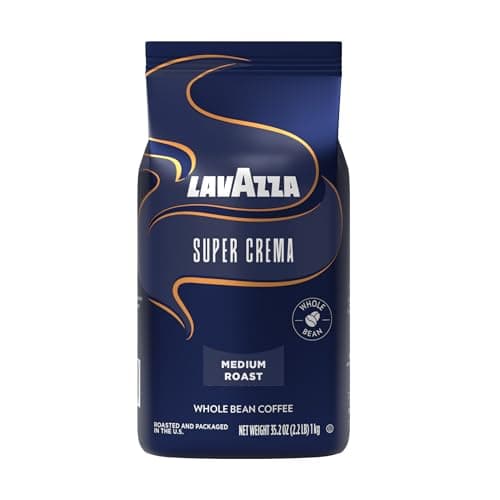
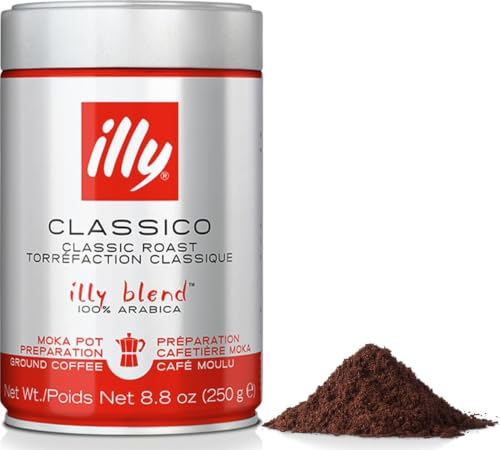
The best coffee for a moka pot is illy Ground Moka Classico — and the reason is not the blend. illy sells the identical Classico medium roast as three separate products: one ground for moka pots, one ground for espresso machines, and one ground for drip brewers. Same coffee, three grinds, three listings. That is the clearest evidence you will find anywhere that for a moka pot, the grind the coffee is sold at matters more than the coffee. Buy the one that says moka.
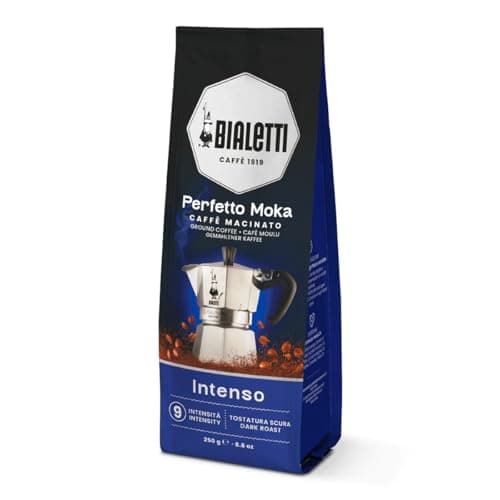
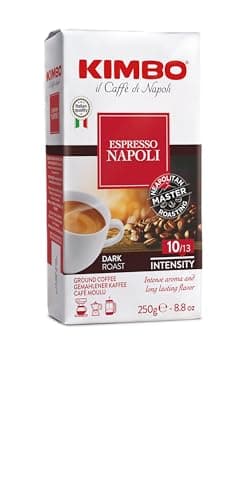
If you want a darker, more traditionally Italian cup, Bialetti Perfetto Moka Intenso is ground to the pot maker's own spec. For the best value, Kimbo Napoli is a proper Neapolitan dark roast at the lowest price here. If you grind your own, Lavazza Super Crema whole bean is the pick, and it is the right answer for anyone who already owns a burr grinder.
A word on why this page exists at all. Most "best coffee for moka" advice is about roast and origin, which are matters of taste and which we will not pretend to settle for you. The two things that are not matters of taste are grind size and freshness, and they are where almost every bad moka brew comes from. So that is how this page is organized.
What actually matters in moka coffee
The grind it is sold at — this is the whole decision.A moka pot wants a medium-fine grind: finer than drip, clearly coarser than espresso, roughly the texture of table salt. Coffee sold as "espresso ground" is finer than that, and in a moka pot it packs into the funnel basket, blocks flow, drives pressure up and gives you bitter coffee and a sputtering valve. Coffee sold as "drip ground" is coarser, and gives you a thin, sour brew that runs through too fast. Our moka pot grind size guide is the full mechanism. The practical consequence is simple: if a bag does not say what it is ground for, assume espresso-fine, because most Italian pre-ground is.
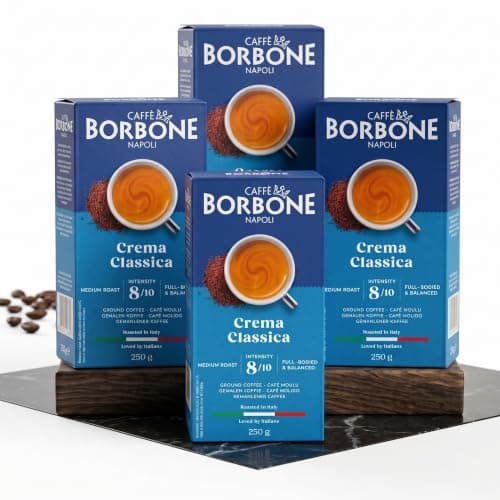
Packaging, because moka doses are small and daily. This is the spec that gets overlooked and it matters more for pre-ground than for whole bean, since ground coffee stales several times faster — all that surface area is exposed. A vacuum brick or a sealed tin that you open once and use within two or three weeks is good. A 20 oz resealable bag is convenient and cheap per ounce, and it will be noticeably flatter by the bottom of the bag. A four-pack of individually sealed 8.8 oz tins is the best of both: you open one at a time. See how to store coffee beans for the storage half of this.
Roast level, which is taste but with one real constraint. Moka extracts at lower pressure than espresso and at a high water temperature, which flatters medium and dark roasts and tends to make light, acidic single-origin coffees taste sharp and thin. The Italian convention of a medium-to-dark blend for a moka is not just tradition; it suits what the brewer does. If you love bright light roasts, a moka pot is probably not the brewer you want to showcase them in — a pour over is.
Robusta, which is not the villain it is treated as.Many Italian moka and espresso blends include robusta, which brings body, a thicker mouthfeel and more caffeine, at the cost of some of the aromatic complexity of pure arabica. In a moka pot that trade is often worth making, because body is what a moka does well. Pure-arabica blends like illy's Classico and Lavazza's ground Espresso are cleaner and sweeter; blends read as fuller and more bitter-forward. Both are legitimate. We have included both.
What does not matter:"espresso bean" marketing, fancy origin stories you will not taste at this extraction, and almost anything above the mid price bracket. There is no such thing as an espresso bean — we have written about that at length — and the same applies to moka. Spend the money on buying smaller amounts more often instead.
The six coffees compared
Roast, pack size and composition are the sellers' published descriptions for the exact listings above. Where a listing does not state a blend composition, the table says so rather than guessing. Prices come from the live price layer, with the "as of" date in the quick picks table.
| Coffee | Form | Ground for | Roast | Pack | Who it suits |
|---|
| illy Ground Moka Classico | Pre-ground | Moka pots | Medium, 100% arabica | 8.8 oz tin | Anyone who wants the grind settled |
| Bialetti Perfetto Moka Intenso | Pre-ground | Moka pots | Dark | 250 g valve bag | The heavy, dark Italian cup |
| Kimbo Napoli | Pre-ground | General Italian | Dark | 8.8 oz vacuum brick | Daily brewing on a budget |
| Caffè Borbone Crema Classica | Pre-ground | General Italian | Blend, composition not stated | 4 x 8.8 oz sealed | Stocking up without staling |
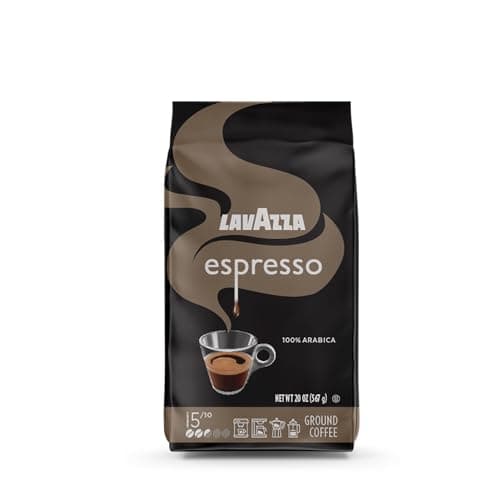
| Lavazza Espresso Ground | Pre-ground | Espresso machines | Medium, 100% arabica | 20 oz bag | Buying from a supermarket shelf |
| Lavazza Super Crema | Whole bean | You decide | Medium espresso, arabica + robusta | 2.2 lb bag | Anyone with a burr grinder |
Why "espresso ground" is the wrong coffee for a moka pot
This is the single most common cause of bad moka coffee, so it is worth the mechanism. An espresso machine drives about nine bar of pressure through a compressed puck. To make that take 25 to 30 seconds instead of five, the coffee has to be ground very fine — fine enough that the bed is almost a filter in its own right.
A moka pot has none of that. It builds roughly one to two bar of steam pressure, and the coffee is not tamped — you fill the funnel basket level and leave it. With a fraction of the pressure and none of the compression, the bed has to offer far less resistance. Put espresso-fine coffee in there and the water struggles through, pressure climbs past what the design expects, the brew comes out hot and over-extracted, and the pot starts pushing steam through the bed instead of water. That is the bitter, hissing, spluttering moka everyone recognizes.
You can partly compensate — lower the flame, pull the pot off the heat the moment the flow turns pale and gurgly, and accept a shorter brew. But you are managing a problem you could have avoided at the shelf. If a bag says moka, buy that one.
How much coffee each brew uses
Moka doses are measured by filling the funnel basket level, not by weight. For planning how long a pack lasts, a level basket is roughly 15 to 17 g on a 3-cup pot and 25 to 30 g on a 6-cup. That means an 8.8 oz pack is about fifteen brews on a 3-cup and about ten on a 6-cup, which is a useful sanity check on the freshness question: one 8.8 oz tin is roughly two to three weeks of daily coffee, which is exactly how long you want ground coffee to be open for.
Our moka pot sizes guide has the full dose table by pot size, and coffee-to-water ratio covers the relationship for brewers where you do weigh.
Should you grind your own instead?
Yes, if you will actually do it — and the reason is freshness, not snobbery. Ground coffee has enormously more surface area than whole beans, so it stales in weeks rather than months. Grinding fresh is the biggest single improvement available to a moka drinker who currently buys pre-ground, and it is bigger than switching between any two coffees on this page.
The catch is that it has to be a burr grinder. A blade grinder produces dust and boulders in the same scoop, and in a moka pot the dust packs the basket and blocks flow while the boulders contribute nothing — it is one of the brew methods where blade grinders fail most visibly. Our burr vs blade grinder guide explains why, and the good news is that moka does not demand an expensive grinder: the window is medium-fine and forgiving, so a budget hand grinder is genuinely enough. Best grinders for a moka pot ranks the field, and best grinders under $100 covers the bracket that matters here.
Dark, medium or light?
Medium to dark, and this is one of the few roast recommendations we will make without hedging. A moka pot brews at a high water temperature with modest pressure, which emphasizes body and bitterness and does comparatively little for delicate acidity. Light, bright single-origin coffees tend to read as thin and sharp out of a moka, which is a waste of what you paid for them.
Within medium-to-dark, it is taste. Pure arabica mediums like illy Classico and Lavazza's ground Espresso are sweeter and cleaner. Dark Neapolitan roasts like Kimbo Napoli are heavier, more bittersweet and closer to what an Italian bar tastes like. Blends containing robusta are fuller-bodied with more caffeine. None of those is wrong; try one 8.8 oz pack from each end before you commit to a big bag.