Skip to content
Portafilter Co

Makers & Brewers · Coffee Makers

Moka pot sizes, and how many cups you actually need

A moka "cup" is about two ounces, not eight — and a moka pot has to be brewed full, so the size on the box is a commitment rather than a maximum. Here is what each size really makes, with Bialetti's own published volumes.

By Stephen V.Updated How we pick
#ad

We earn a commission when you buy through our Amazon links, at no extra cost to you. It never changes a verdict, and we say so when the cheaper product is the better buy. How this works.

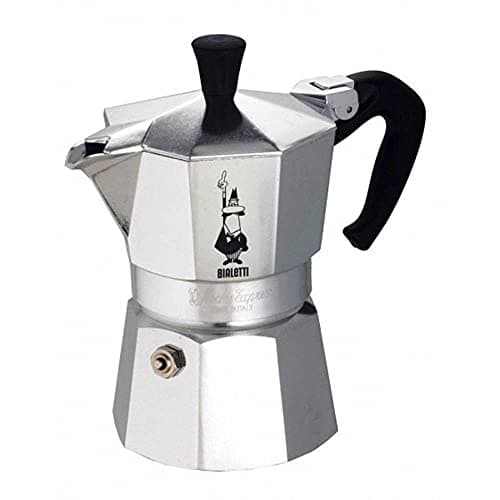
A moka pot "cup" is an Italian demitasse of roughly two ounces, not an eight-ounce mug. That one sentence explains almost every disappointed moka review ever written. A "6-cup" Bialetti Moka Express makes 9 oz of coffee in total — about one large mug, or two modest ones. A "3-cup" makes 4.3 oz, which is one small mug or two espresso-sized servings. If you bought a 3-cup expecting three mugs of coffee, the pot is not broken and you are not doing it wrong. You bought a different thing than you thought.

The second thing nobody tells you matters even more, because it decides which size you should own: a moka pot has to be brewed at its rated size. You cannot half-fill a big one. The water goes in the bottom chamber up to the safety valve and the coffee goes in the funnel basket, filled level. Both are fixed volumes built into the casting. Put less water in and the pressure curve changes and the pot sputters early; put less coffee in a part-full basket and the water punches straight through the shallow bed and you get thin, scorched coffee. So the number stamped on the box is not a ceiling you can brew under — it is the amount of coffee you are committing to make, every single time.

Those two facts together give you the only sizing rule that matters: buy the size that matches the smallest brew you will routinely want, and buy a second pot later if the household grows. A 3-cup for one person, a 6-cup for two, a 12-cup only if you genuinely serve a table. We go through the published volumes below, including the part where Bialetti's own "cup" is not the same size from one model to the next.

What a moka "cup" actually measures

The unit comes from the Italian tazzina— the small cup an espresso or a short Italian coffee is served in. Bialetti has been printing it on boxes since 1933, and because the company is Italian it has never meant anything else. The confusing part for American and British buyers is that a "cup" in a drip coffee maker is a different convention again, usually five or six ounces, and a mug is eight to twelve. Three different units, one word.

Helpfully, Bialetti prints the real volume right on the listing. Here are the figures from its own current product titles for the Moka Express, which is the pot the overwhelming majority of people are choosing between:

  • 1 cup — 2 oz / 60 ml
  • 3 cup — 4.3 oz / 130 ml
  • 6 cup — 9 oz / 270 ml
  • 12 cup — 22.6 oz / 670 ml
  • 18 cup — 27 oz / 810 ml

Run the division and something interesting falls out: the "cup" is not a constant even within one product line. It is 60 ml on the 1-cup, about 43 ml on the 3-cup, about 45 ml on the 6-cup and 18-cup, and about 56 ml on the 12-cup. So you cannot reliably scale by multiplying — a 6-cup is not twice a 3-cup, it is slightly more than twice; and the jump from 6 to 12 is not double either, it is nearly two and a half times. Read the ounces, not the cup count. That is the single most useful habit on this page.

It gets one step more awkward across model lines. Bialetti's stainless Venus in its 6-cup size is published at 7.9 oz, against the aluminum Moka Express 6-cup at 9 oz. Same brand, same stated cup count, meaningfully less coffee. And the Bialetti Brikka is sold by shots rather than cups — the current one is listed as 2 espresso shots, 3.4 oz / 100 ml. If you are comparing two pots, compare the milliliters.

The short answer

Quick picks

#ProductBest forScorePrice
01
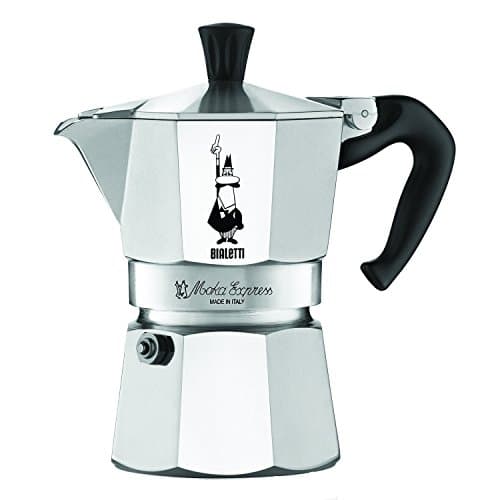
Bialetti Bialetti Moka Express (3-Cup)
Bialetti Moka Express (3-Cup)

The size most single-person households should buy, and the one we recommend by default. Bialetti publishes it at 4.3 oz / 130 ml, which is one small mug of strong coffee or two demitasse servings — the amount one person actually drinks in a sitting. Because a moka has to be brewed full, the 3-cup is the size that lets you have coffee without committing to a pot you will not finish, and it is the cheapest entry into the range.

One person, one coffee
7.6
$39.98Amazon
02
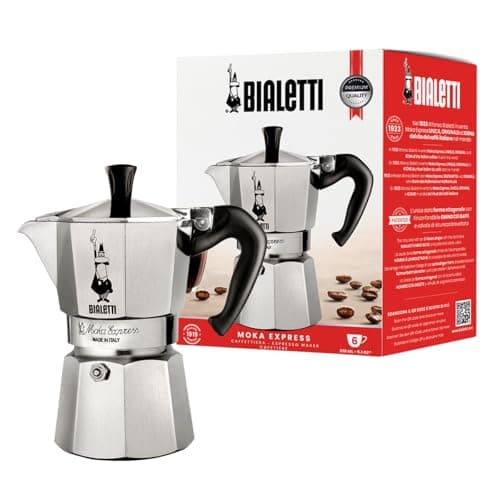
Bialetti Bialetti Moka Express (6-Cup)
Bialetti Moka Express (6-Cup)

The best-selling size, and the right one for two people or for one person who wants a mug rather than a demitasse. Published at 9 oz / 270 ml, which is one generous mug or two normal ones. It is the size the whole moka accessory world assumes — replacement gaskets, filter plates and induction adapters are easiest to find for the 6-cup — and it is the size most online recipes are written around.

Two people, or one mug-sized coffee
7.8
$48.22Amazon
03
Bialetti Bialetti Moka Express (1-Cup)
Bialetti Moka Express (1-Cup)

A genuine single-shot pot, published at 2 oz / 60 ml — and the one size most buyers should NOT start with, because 2 oz is an espresso, not a coffee. It earns its place for two specific jobs: a true espresso-sized serving to drink the Italian way, and travel, where it is small and light enough to pack with a camping burner. Note that it is the only size where the cup is a full 60 ml, so it is proportionally the most generous.

A single espresso-sized serving, or travel
6.6
$31.99Amazon
04
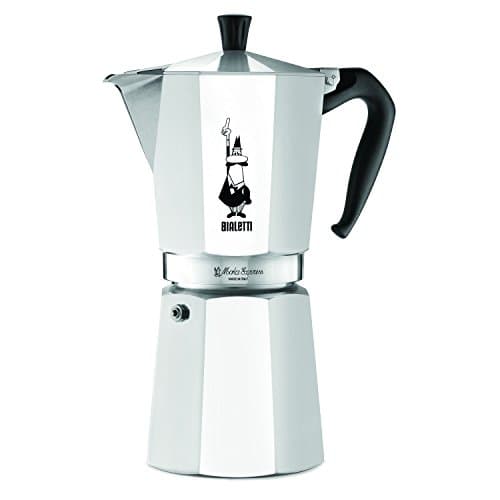
Bialetti Bialetti Moka Express (12-Cup)
Bialetti Moka Express (12-Cup)

The size for serving a table, published at 22.6 oz / 670 ml. That is nearly two and a half times the 6-cup, not twice it — the 12-cup has the most generous cup ratio of the larger pots at roughly 56 ml each. It is the right buy for a household of three or more, or for anyone who entertains, and the wrong buy for everyone else, because the no-half-filling rule bites hardest at this size.

Three or more people, or serving guests
6.2
$99.99Amazon
05
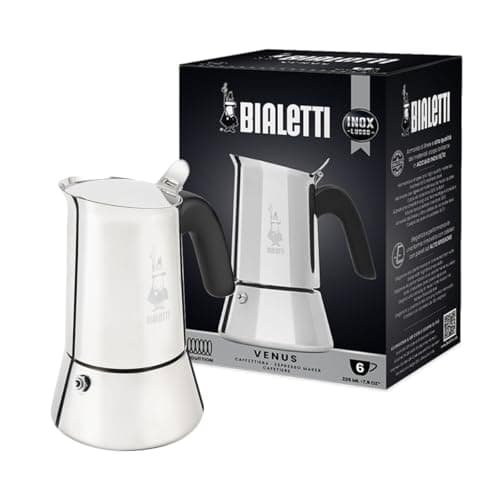
Bialetti Bialetti Venus Induction (6-Cup)
Bialetti Venus Induction (6-Cup)

Here because it is the clearest illustration of the sizing trap, and because it is the answer if your hob is induction. Bialetti publishes the Venus 6-cup at 7.9 oz — against 9 oz for the Moka Express 6-cup. Same brand, same stated cup count, about an ounce less coffee. It is stainless steel rather than aluminum, which is what makes it work on induction and also what makes it slower to heat and easier to clean.

Induction hobs, and stainless over aluminum
7.8
$50.00Amazon

#ad · Live prices from the Amazon Product API, as of November 20, 2026. Where we have no verified live price, we show none — a gap beats a number that has rotted.

In detail

The picks, in full

01
Bialetti Bialetti Moka Express (3-Cup)

One person, one coffee

Bialetti Moka Express (3-Cup)

4.3 oz / 130 ml published~43 ml per stated cupCast aluminum bodyGas and electric hobs, not induction
7.6/10

The size most single-person households should buy, and the one we recommend by default. Bialetti publishes it at 4.3 oz / 130 ml, which is one small mug of strong coffee or two demitasse servings — the amount one person actually drinks in a sitting. Because a moka has to be brewed full, the 3-cup is the size that lets you have coffee without committing to a pot you will not finish, and it is the cheapest entry into the range.

Fit for one person
10
Fit for two people
5
Speed to brew
9
Flexibility
5
Value
9

Pros

  • Matches the brew one person wants, so you never pour coffee away
  • Smallest practical size — the 1-cup is genuinely tiny by comparison
  • Heats fastest of the useful sizes, so it is the quickest morning pot here
  • Cheapest size in the range, and the most widely stocked
  • Gaskets and filter plates for this size are sold everywhere

Cons

  • 4.3 oz will not fill an American mug — top it with hot water if that is what you want
  • Cannot be brewed part-full, so it is no use on a day you want less
  • Aluminum is not induction-compatible without a separate adapter disc
  • Dose is small enough (roughly 15 to 17 g) that grind errors show up clearly

Don't buy this if…

…two of you drink coffee at the same time, or you want a mug-sized serving without adding water. Go to the 6-cup instead — the price difference is small and brewing the 6-cup half-full is not an option.

If you are buying your first moka pot and you drink coffee alone, this is the size. The reasoning is entirely about the no-half-filling rule: a 3-cup commits you to 4.3 oz, which is a reasonable single serving, whereas a 6-cup commits you to 9 oz whether you want it or not. People who buy the 6-cup "to have the option" discover there is no option.

One honest note on expectations. 4.3 oz is a small, intense cup — closer to a doubled espresso than to drip coffee. A lot of people drink it as an Americano, topping it with hot water in a bigger mug, which works perfectly and is what much of Italy does with a moka at home. For the grind, moka pot grind size is the window, and the best grinders for a moka pot is the hardware that hits it.

$39.98View on Amazon

$49.9920% off

Price as of November 20, 2026. Prices change — Amazon's at checkout is the one that counts.

#ad · we may earn a commission from this link to Bialetti Moka Express (3-Cup)

02
Bialetti Bialetti Moka Express (6-Cup)

Two people, or one mug-sized coffee

Bialetti Moka Express (6-Cup)

9 oz / 270 ml published~45 ml per stated cupCast aluminum bodyMost widely supported size for spares
7.8/10

The best-selling size, and the right one for two people or for one person who wants a mug rather than a demitasse. Published at 9 oz / 270 ml, which is one generous mug or two normal ones. It is the size the whole moka accessory world assumes — replacement gaskets, filter plates and induction adapters are easiest to find for the 6-cup — and it is the size most online recipes are written around.

Fit for one person
7
Fit for two people
10
Speed to brew
7
Flexibility
6
Value
9

Pros

  • 9 oz fills a real mug, which is what most buyers actually wanted
  • Serves two people from one brew without a second pot
  • The default size in recipes, videos and dose charts, so advice transfers
  • Spares and accessories are easiest to source in this size
  • Still small enough to heat quickly on a domestic hob

Cons

  • Commits you to 9 oz every brew — too much for one small coffee
  • Roughly 25 to 30 g of coffee per brew is two grinds on most hand grinders
  • Aluminum, so no induction without an adapter disc
  • Larger thermal mass means it is more sensitive to heat that is too high

Don't buy this if…

…you live alone and drink one small coffee. You will either waste half the pot or drink more than you meant to, and the 3-cup exists precisely for you.

The 6-cup is the size to buy if there are two of you, or if one of you wants a mug. It is also the size we would pick for a household that is not sure yet, for a practical rather than a romantic reason: because it is the most common size by a wide margin, everything is easiest for it — gaskets, filter plates, dose charts, induction discs, and the second-hand market.

The capacity consequence worth planning for is the grinder. A 6-cup brew is roughly 25 to 30 g of coffee, and most hand grinders in the budget bracket hold about 25 g, so a 6-cup pot is a two-grind job on a small manual. Our moka grinder roundup flags which picks have the capacity, and our Bialetti Moka Express review covers this pot in full.

$48.22View on Amazon

$59.9920% off

Price as of November 20, 2026. Prices change — Amazon's at checkout is the one that counts.

#ad · we may earn a commission from this link to Bialetti Moka Express (6-Cup)

03
Bialetti Bialetti Moka Express (1-Cup)

A single espresso-sized serving, or travel

Bialetti Moka Express (1-Cup)

2 oz / 60 ml published60 ml per stated cup — the largest ratio in the rangeCast aluminum bodySmallest and lightest size
6.6/10

A genuine single-shot pot, published at 2 oz / 60 ml — and the one size most buyers should NOT start with, because 2 oz is an espresso, not a coffee. It earns its place for two specific jobs: a true espresso-sized serving to drink the Italian way, and travel, where it is small and light enough to pack with a camping burner. Note that it is the only size where the cup is a full 60 ml, so it is proportionally the most generous.

Fit for one person
6
Fit for two people
2
Speed to brew
10
Portability
10
Value
5

Pros

  • Delivers a genuine espresso-sized serving rather than a scaled-down mug
  • Packs small enough for travel and camping setups
  • Lowest dose, so an expensive bag of beans lasts the longest
  • Heats in a fraction of the time of the bigger pots

Cons

  • 2 oz is one short serving — most people will immediately want a second
  • Tiny coffee dose makes grind and heat errors unusually unforgiving
  • Costs nearly as much as the 3-cup for a third of the output
  • The small basket is fiddly to fill level and to clean

Don't buy this if…

…you drink coffee from a mug, or you are buying your only moka pot. At this size the 3-cup is better value and far more useful, and we would send almost everyone there instead.

We include the 1-cup because people search for it and because it is the right answer to a narrow question — but we want to be plain that it is the wrong default. Two ounces is one espresso. If that is genuinely what you want, this is the pot that makes it on a stovetop, and the per-cup maths is in your favor.

If what you actually want is espresso rather than a small stovetop coffee, understand that a moka pot is not an espresso machine — it builds roughly one to two bar against an untamped bed, not nine bar through a tamped puck. Our moka pot vs espresso machine comparison is the honest version of that difference, and portable espresso makers covers the travel case if real pressure matters to you.

$31.99View on Amazon

Price as of November 20, 2026. Prices change — Amazon's at checkout is the one that counts.

#ad · we may earn a commission from this link to Bialetti Moka Express (1-Cup)

04
Bialetti Bialetti Moka Express (12-Cup)

Three or more people, or serving guests

Bialetti Moka Express (12-Cup)

22.6 oz / 670 ml published~56 ml per stated cupCast aluminum bodyLargest widely stocked size
6.2/10

The size for serving a table, published at 22.6 oz / 670 ml. That is nearly two and a half times the 6-cup, not twice it — the 12-cup has the most generous cup ratio of the larger pots at roughly 56 ml each. It is the right buy for a household of three or more, or for anyone who entertains, and the wrong buy for everyone else, because the no-half-filling rule bites hardest at this size.

Fit for a household
10
Fit for one person
2
Cost per ounce brewed
9
Flexibility
3
Value
7

Pros

  • 670 ml genuinely serves a table rather than a couple
  • Best cup-to-milliliter ratio of the larger sizes
  • One brew replaces two or three rounds on a 6-cup
  • Cheaper per ounce of coffee produced than any smaller size

Cons

  • Must be brewed full — an enormous commitment on an ordinary weekday
  • Needs roughly 50 g or more of coffee per brew, which is two or three hand grinds
  • Takes noticeably longer to come up to pressure, and punishes high heat
  • Heavy and tall; check it fits under your hob's extractor and on the burner

Don't buy this if…

…it is your only pot and most mornings are one or two people. You will brew it part-full, get thin scorched coffee, and conclude moka pots are bad. Buy the 6-cup for daily use and add this one for guests.

The 12-cup is a specialist, and the honest framing is that it is a second pot rather than a first one. Everything that makes a moka forgiving at 3 or 6 cups gets harder here: more thermal mass to heat evenly, a deeper bed of coffee, a longer run to pressure, and a much bigger dose to grind. Bialetti also publishes an 18-cup at 27 oz / 810 ml, which exists and which we would only suggest to someone brewing for a crowd regularly.

If you are buying at this size, lower your heat. The most common 12-cup complaint is bitter coffee, and the cause is almost always a big pot on a burner set as high as a small pot would tolerate. Our how to use a moka pot guide has the routine, and coffee-to-water ratio covers scaling the dose.

$99.99View on Amazon

Price as of November 20, 2026. Prices change — Amazon's at checkout is the one that counts.

#ad · we may earn a commission from this link to Bialetti Moka Express (12-Cup)

05
Bialetti Bialetti Venus Induction (6-Cup)

Induction hobs, and stainless over aluminum

Bialetti Venus Induction (6-Cup)

7.9 oz published at 6 cupsStainless steel bodyWorks on induction, gas, electric and ceramicDishwasher-friendly unlike raw aluminum
7.8/10

Here because it is the clearest illustration of the sizing trap, and because it is the answer if your hob is induction. Bialetti publishes the Venus 6-cup at 7.9 oz — against 9 oz for the Moka Express 6-cup. Same brand, same stated cup count, about an ounce less coffee. It is stainless steel rather than aluminum, which is what makes it work on induction and also what makes it slower to heat and easier to clean.

Induction compatibility
10
Ease of cleaning
9
Output for stated size
7
Speed to brew
6
Value
7

Pros

  • Works directly on induction with no adapter disc
  • Stainless steel does not need the careful hand-washing aluminum wants
  • Suits every hob type, so it survives a kitchen change
  • Flat-bottomed and stable on a glass or induction surface

Cons

  • A 6-cup Venus is about an ounce less coffee than a 6-cup Moka Express
  • Stainless heats more slowly, so brews take longer
  • Costs more than the aluminum pot of the same stated size
  • Does not develop the seasoned character aluminum fans prefer

Don't buy this if…

…your hob is gas or radiant electric and you want the most coffee per dollar. The aluminum Moka Express at the same stated size brews more, costs less, and is what the recipes assume.

Two reasons this pot is on a page about sizes. First, it is the proof that cup counts do not transfer between models — if you replace a 6-cup Moka Express with a 6-cup Venus expecting the same brew, you will be short. Second, induction is the one kitchen constraint that overrides the sizing conversation entirely, because aluminum does not work on it at all without an adapter.

Our moka pot on induction guide covers the adapter route and its trade-offs if you already own an aluminum pot, and best moka pots ranks the field across materials.

$50.00View on Amazon

$69.9929% off

Price as of November 20, 2026. Prices change — Amazon's at checkout is the one that counts.

#ad · we may earn a commission from this link to Bialetti Venus Induction (6-Cup)

Every Bialetti Moka Express size, with published volumes

Volumes are Bialetti's own published figures for the current listings. The "real mugs" column assumes an 8 oz mug and no added water, and the dose column is the approximate ground-coffee weight a level funnel basket takes at that size.

Stated sizePublished volumePer stated cupReal 8 oz mugsApprox. dose
1 cup2 oz / 60 ml60 mlQuarter of a mug~7 g
3 cup4.3 oz / 130 ml~43 mlHalf a mug~15-17 g
6 cup9 oz / 270 ml~45 mlOne generous mug~25-30 g
12 cup22.6 oz / 670 ml~56 mlTwo to three mugs~50-60 g
18 cup27 oz / 810 ml~45 mlThree to four mugs~65-75 g

Dose figures are approximate on purpose. A moka basket is measured by filling it level, not by weight — that is the whole point of the design and it is why moka is a forgiving brew method. The grams are there so you can check whether your grinder can produce one brew in one go. See how much coffee a basket holds for the equivalent question on an espresso machine, where the answer is much stricter.

Why you cannot just half-fill a bigger pot

This is the rule that converts "which size" from a nice-to-know into a real decision, so it is worth the mechanism. A moka pot works by heating water in a sealed bottom chamber until steam pressure pushes the water up through the coffee bed and out the central column. Three things in that sentence are fixed by the casting: the volume of the bottom chamber up to its safety valve, the depth of the funnel basket, and the diameter of the bed.

Under-fill the waterand there is less liquid to heat, so the chamber reaches pressure sooner and with a larger steam headspace. The brew comes through faster and hotter, and the pot starts sputtering steam through the bed earlier — which is exactly the condition that scorches coffee. You also risk the water level sitting below the safety valve's intended relationship with the bed, which is not what the valve was designed around.

Under-fill the coffee and it is worse. A part-full basket leaves a shallow bed with a gap above it, so the water does not have to pass evenly through a packed layer — it finds the path of least resistance and blasts through, under-extracting most of the grounds while over-extracting a channel. That is channeling, and it is the same failure that ruins espresso shots, for the same reason.

You can stretch a size by a little — most people's pots tolerate a few milliliters either way without anyone noticing. What you cannot do is brew a 12-cup as a 6-cup. If you need two volumes, you need two pots, and that is a completely normal thing for an Italian kitchen to own.

Which size should you buy?

You drink one coffee, alone. The 3-cup. It commits you to 4.3 oz, which is one small strong cup, and you can always lengthen it with hot water. The 1-cup is a genuinely single espresso and most people find it too little.

You want a mug, or there are two of you. The 6-cup. 9 oz fills a mug or splits into two, and it is the size everything else in the moka world is built around. This is the default recommendation if you are only buying one pot.

Three or more people, or you have guests over. The 12-cup, as a second pot rather than your only one. Daily life is easier on a 6-cup.

Your hob is induction. Size is the second question — material is the first. Aluminum will not work at all; you need a stainless pot like the Venus or an adapter disc. And remember the Venus 6-cup is a smaller brew than the Moka Express 6-cup.

You want espresso, not a small coffee. No moka size will get you there. One to two bar against an untamped bed is a different drink from nine bar through a tamped puck — see moka pot vs espresso machine before you spend anything.

Two sizing mistakes worth avoiding

Buying big "to have the option". It is the single most common moka regret and the no-half-filling rule is why. Optionality in a moka pot comes from owning two sizes, not from owning one large one.

Assuming spares and gaskets are universal. They are not — gaskets and filter plates are size-specific, and a 3-cup gasket will not seal a 6-cup. The rubber gasket is the part that wears and it is the part that causes a leak at the seam-style complaint on a moka. When you buy the pot, note the size for when you order the gasket set, because the listings are sold per size.

Does size change the grind or the technique?

The grind window does not move. Every size wants the same medium-fine, table-salt texture, because grind is set by pressure and bed geometry rather than by volume — our moka pot grind size guide covers the window and how to correct a bitter or thin brew.

Heat does change with size, and this is the practical consequence of buying a big pot. Bigger pots have more thermal mass and a longer run up to pressure, so the heat setting that works on a 3-cup will over-drive a 12-cup by the time the brew finishes. Larger pot, lower flame, more patience. Everything else — fill the funnel level, do not tamp, pull it off the heat when the flow turns pale and gurgly — is identical at every size.
How we picked

We did not lab-test this gear

Everyone in this category says they tested twenty machines. We have not pulled shots on every product here, and we say so. What we did instead: compiled the published specifications, cross-checked the manufacturer manuals, computed the running cost (wattage to energy, grams-per-shot to cost-per-cup), weighed aggregated owner reports, and scored each product against a published rubric. The scores are judgments from documented research — not measurements we took, because we do not have a test lab and we will not pretend we do. Where hands-on time would tell you more than a spec sheet, we flag it. Where a number came from someone else's work, we name them in Sources.

Questions

Frequently asked

How many cups does a moka pot actually make?
Fewer than the number on the box suggests, because a moka "cup" is a roughly 2 oz Italian demitasse rather than a mug. Bialetti publishes the Moka Express at 2 oz for the 1-cup, 4.3 oz for the 3-cup, 9 oz for the 6-cup, 22.6 oz for the 12-cup and 27 oz for the 18-cup. In 8 oz mugs that is roughly a quarter, a half, one, two to three, and three to four mugs respectively.
What is the best moka pot size for one person?
The 3-cup, at 4.3 oz. It makes one small strong coffee, which is the serving one person usually wants, and because a moka has to be brewed full you do not want to be committed to more. If you drink from a mug and do not want to add hot water, step up to the 6-cup at 9 oz instead.
Can you make less coffee in a moka pot than its full size?
Not really, and this is the most important thing on this page. Both the water chamber and the funnel basket are fixed volumes. Less water changes the pressure curve and makes the pot sputter early; a part-full basket leaves a shallow bed the water punches straight through, which under-extracts most of the coffee and scorches a channel through the rest. If you want two different volumes, own two pots.
Is a 6-cup moka pot the same size across brands?
No, and not even across one brand's own range. Bialetti publishes its aluminum Moka Express 6-cup at 9 oz and its stainless Venus 6-cup at 7.9 oz. Across other makers the spread is wider still. Compare the published milliliters or ounces rather than the cup count — that is the only figure that means the same thing on every listing.
How much coffee do you put in each moka pot size?
Fill the funnel basket level and do not tamp it — that is the measurement, and it is why moka is forgiving. For planning a grinder purchase, a level basket is roughly 7 g on a 1-cup, 15 to 17 g on a 3-cup, 25 to 30 g on a 6-cup and 50 g or more on a 12-cup. Most budget hand grinders hold about 25 g, so a 6-cup is a two-grind job and a 12-cup is three — see the best grinders for a moka pot.
Should I buy a bigger moka pot so I have the option?
No — this is the most common moka buying mistake. A moka pot cannot be brewed part-full, so a bigger pot does not give you the option of a smaller coffee; it just commits you to a bigger one. Buy the size matching the brew you will routinely want, and add a second pot later if you need another volume.
Does a larger moka pot need a different grind?
No. The grind window is the same medium-fine texture at every size, because it is set by pressure and bed geometry rather than by volume. What does change is heat: bigger pots have more thermal mass and a longer climb to pressure, so use a lower flame and expect a longer brew. The full window and the troubleshooting table are in moka pot grind size.

Keep reading

Same gear, other pages

We cover this gear elsewhere too

Receipts

Sources

We do not run a testing lab, and we do not pretend to. Where a measured number came from someone else's work, we name them and link them. Where we could not verify something, we say so on the page rather than quietly leaving it out. Read our full method.