Skip to content
Portafilter Co

Learn · Guides

Moka pot grind size

Medium-fine: table salt, not powdered sugar. A moka pot makes around 1 to 2 bar against an untamped bed, which is why an espresso grind chokes it and a drip grind runs straight through.

By Stephen V.Updated How we pick
#ad

We earn a commission when you buy through our Amazon links, at no extra cost to you. It never changes a verdict, and we say so when the cheaper product is the better buy. How this works.

Grind medium-finefor a moka pot: about the texture of table salt — finer than you would use for drip, clearly coarser than espresso. If your moka coffee is bitter, sputters violently or stalls, the grind is almost certainly too fine. Using an espresso grind in a moka pot is the single most common mistake with these brewers, and it is an easy one to make because the pot is often sold as a "stovetop espresso maker".

It is not an espresso maker, and understanding why tells you everything about the grind.

Why medium-fine, specifically

A moka pot makes roughly 1 to 2 bar, not 9. An espresso machine drives water through the coffee at around nine atmospheres with a pump. A moka pot builds pressure by heating water in a sealed lower chamber until steam pressure pushes it up through the basket, and that tops out in the region of one to two bar. That is a fraction of espresso pressure, which means the coffee bed has to offer a fraction of the resistance. A grind that is correct for nine bar presents a wall to two bar: the water cannot get through, the pressure keeps climbing, and what finally comes out is scorched and bitter — or the safety valve vents and you get almost nothing.

The basket is not tamped. This is the other half of it, and it is the part people miss. In espresso, resistance comes from a fine grind compressed into a puck. In a moka pot you fill the funnel, level it off, and that is all — you do not tamp. So all the resistance has to come from the particle size alone, with no compression helping. That shifts the correct grind coarser than espresso but still finer than drip, where a paper filter and gravity are doing the work instead.

Contact time is short and the water is hot. Brewing happens over perhaps thirty to sixty seconds of flow, with water arriving well above normal brew temperature because it is being driven by steam. Short contact argues for finer. Very hot water argues for coarser, because heat accelerates extraction of the bitter compounds. Medium-fine is where those two pressures balance.

How fine, in practical terms

Grinder setting numbers do not transfer between machines, so judge it by texture and by the brew.

The visual. Tip some onto a white plate and look at it in good light. You want something close to table salt: fine enough that individual particles are small and uniform, coarse enough that it is clearly granular and does not clump when you press it with a finger. Powdered sugar is too fine. Beach sand is too coarse.

The relationships. Moka pot sits between drip and espresso, closer to the espresso end than most people expect. Coarsest to finest: cold brew, French press, percolator, drip and pour over, moka pot, then espresso finest by a wide margin. On a grinder with 40 steps, moka typically lands a few steps coarser than your espresso setting if you have one.

The brew itself is the best gauge. A well-grounded moka pot produces a slow, steady, honey-coloured stream that gradually lightens and finishes with a brief gurgle. If it erupts and sputters immediately, too fine. If it runs out fast and pale, too coarse. That flow behaviour tells you more than any plate of grounds.

What to look for in a grinder for a moka pot

Two things, and the second rules out a lot of grinders.

Burrs, non-negotiably. A blade grinder cannot hit a narrow window like this. It produces dust and boulders together: the dust packs into the holes of the moka basket and chokes it, while the boulders pass water straight through. Both failure modes at once, in the same brew. This is the upgrade that makes moka brewing predictable.

A range that reaches medium-fine with usable resolution. This is the constraint that matters. Plenty of filter-geared grinders — including some good ones — put their 40 steps across the medium-to-coarse range and simply do not go finer than drip with any precision. On those grinders the moka setting is the last click or two, with no room to adjust. You want a grinder whose range extends into the espresso end, because moka sits just above it. In practice that means an espresso-capable grinder, used two or three steps coarser than you would for a shot.

You do not need a precise espresso grinder for this — the moka window is wider than the espresso window, and the pot forgives more than a 9-bar machine does. You just need one whose range includes the zone. These three do.

The short answer

Quick picks

#ProductBest forScorePrice
01
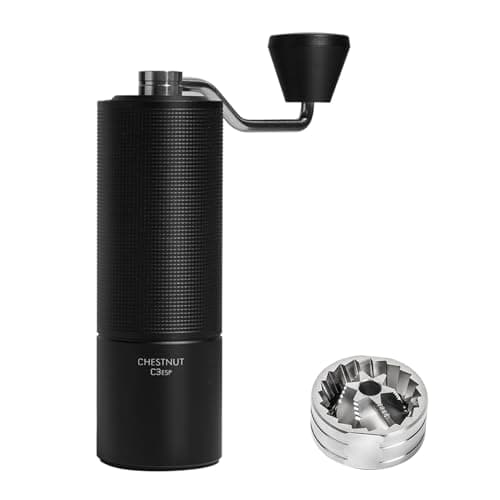
TIMEMORE TIMEMORE Chestnut C3 ESP
TIMEMORE Chestnut C3 ESP

The best-value way to grind properly for a moka pot. The C3 ESP is the espresso-geared version of Timemore's hand grinder: 38mm S2C stainless conical burrs with an external stepped dial at roughly 0.023mm per click and 30 clicks per rotation. Because its range reaches genuine espresso fineness, the medium-fine moka window sits comfortably inside it with plenty of adjustment either side — which is exactly what filter-geared grinders cannot offer. The external numbered dial means you can record 'moka: 10 clicks' and return to it.

Best overall for moka — range, resolution and price
8.4
$99.00Amazon
02
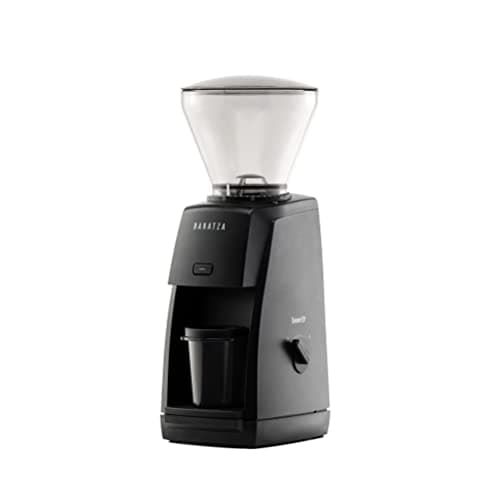
Baratza Baratza Encore ESP Coffee Grinder (ZCG495)
Baratza Encore ESP Coffee Grinder (ZCG495)

The electric answer, and the one to buy if you want a dose without cranking. Baratza re-geared the Encore's 40 stepped settings so they land inside the espresso range rather than clustering at the coarse end, which means the medium-fine moka zone has real resolution — several usable settings rather than one. Numbered steps you can record, a hopper you can scoop from, and Baratza's parts-and-repair support behind it. It also covers pour over and drip, so one grinder handles a household that brews more than one way.

Best electric — numbered settings and no cranking
8.2
$199.95Amazon
03
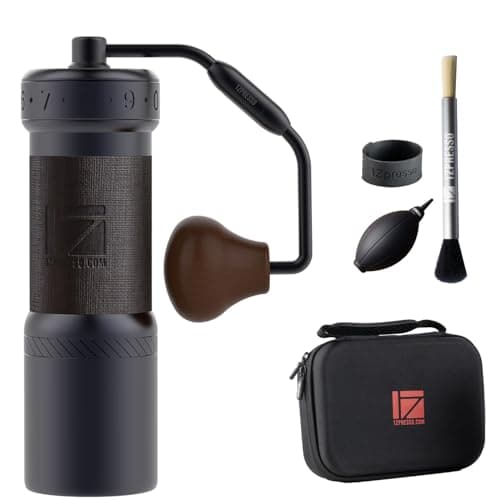
1Zpresso 1Zpresso K-Ultra Manual Coffee Grinder
1Zpresso K-Ultra Manual Coffee Grinder

The one to buy if a moka pot is one of several things you brew. Large 48mm stainless conical burrs grind noticeably faster than a smaller hand grinder, and the external numbered dial covers espresso, moka and filter with enough resolution to keep separate recorded settings for each. It folds down with a carrying case, which matters more than it sounds: a moka pot and this grinder travel together well. More expensive than it needs to be if moka is all you make.

Best for one grinder across moka, espresso and filter
8.2
$259.00Amazon

#ad · Live prices from the Amazon Product API, as of October 10, 2026. Where we have no verified live price, we show none — a gap beats a number that has rotted.

In detail

The picks, in full

01
TIMEMORE TIMEMORE Chestnut C3 ESP

Best overall for moka — range, resolution and price

TIMEMORE Chestnut C3 ESP

38mm S2C stainless conical burrsExternal stepped dial ~0.023mm/click30 clicks per rotationAll-metal body, espresso-capable
8.4/10

The best-value way to grind properly for a moka pot. The C3 ESP is the espresso-geared version of Timemore's hand grinder: 38mm S2C stainless conical burrs with an external stepped dial at roughly 0.023mm per click and 30 clicks per rotation. Because its range reaches genuine espresso fineness, the medium-fine moka window sits comfortably inside it with plenty of adjustment either side — which is exactly what filter-geared grinders cannot offer. The external numbered dial means you can record 'moka: 10 clicks' and return to it.

Medium-fine capability
9
Adjustment resolution
9
Grind quality
8
Convenience
6
Value
10

Pros

  • Range extends past moka into espresso, so the moka window has adjustment on both sides
  • External numbered dial lets you record a moka setting separately from a filter one
  • All-metal body keeps the burrs aligned, which is what keeps fines down
  • No retention, so a grind change lands on the next brew rather than the one after
  • Cheapest of the three by a wide margin

Cons

  • Manual — 30 to 45 seconds of cranking for a moka dose
  • 25g capacity, which is fine for a 3 or 6 cup pot but tight for larger
  • Stepped, so occasionally the setting you want sits between two clicks
  • Dial numbers are grinder-specific; you cannot copy someone else's moka setting

Don't buy this if…

…you make moka for a crowd in a 9 or 12 cup pot. Capacity and cranking time both bite at that scale — an electric with a hopper is the better tool.

A practical trick with this grinder and a moka pot: find your espresso setting first if you have a machine, then go three or four clicks coarser and brew. That lands you very close on the first attempt, and the external dial means you can move between the two settings reliably all week.

More on this grinder in our best coffee grinders under $100 page, and best hand grinders covers the wider manual field.

$99.00View on Amazon

Price as of October 10, 2026. Prices change — Amazon's at checkout is the one that counts.

#ad · we may earn a commission from this link to TIMEMORE Chestnut C3 ESP

02
Baratza Baratza Encore ESP Coffee Grinder (ZCG495)

Best electric — numbered settings and no cranking

Baratza Encore ESP Coffee Grinder (ZCG495)

40 mm conical steel burrs40 stepped settings, re-geared for espressoEspresso plus pour over / drip rangeBaratza parts + repair support
8.2/10

The electric answer, and the one to buy if you want a dose without cranking. Baratza re-geared the Encore's 40 stepped settings so they land inside the espresso range rather than clustering at the coarse end, which means the medium-fine moka zone has real resolution — several usable settings rather than one. Numbered steps you can record, a hopper you can scoop from, and Baratza's parts-and-repair support behind it. It also covers pour over and drip, so one grinder handles a household that brews more than one way.

Medium-fine capability
8
Adjustment resolution
8
Grind quality
8
Convenience
9
Value
8

Pros

  • Espresso re-gearing gives the moka window several usable steps instead of one
  • Numbered settings you can write down and return to exactly
  • No cranking, and a hopper that covers a large pot in one go
  • Also covers drip and pour over, so it suits a multi-method household
  • Parts sold, diagrams published and a repair program — a grinder you fix, not replace

Cons

  • Hopper retention means the first grams carry coffee ground at the previous setting
  • Considerably more expensive than the hand grinder above
  • Not quiet
  • 40mm conical burrs are the smallest of the three

Don't buy this if…

…moka is genuinely all you brew and budget matters. You are buying espresso gearing and electric convenience you only partly need — the C3 ESP covers the same window for far less.

The reason the ESP version matters rather than the plain Encore is exactly the point this page keeps making: the standard Baratza Encore spreads its 40 steps across the filter range and does not reach the moka window with useful precision. The ESP re-gearing is what puts medium-fine in the middle of the dial rather than at the edge.

Full write-up in our Baratza Encore ESP review.

$199.95View on Amazon

Price as of October 10, 2026. Prices change — Amazon's at checkout is the one that counts.

#ad · we may earn a commission from this link to Baratza Encore ESP Coffee Grinder (ZCG495)

03
1Zpresso 1Zpresso K-Ultra Manual Coffee Grinder

Best for one grinder across moka, espresso and filter

1Zpresso K-Ultra Manual Coffee Grinder

48mm stainless conical burrsExternal numbered adjustment dialFast grinding, foldable handleMagnetic catch cup + carrying case
8.2/10

The one to buy if a moka pot is one of several things you brew. Large 48mm stainless conical burrs grind noticeably faster than a smaller hand grinder, and the external numbered dial covers espresso, moka and filter with enough resolution to keep separate recorded settings for each. It folds down with a carrying case, which matters more than it sounds: a moka pot and this grinder travel together well. More expensive than it needs to be if moka is all you make.

Medium-fine capability
9
Adjustment resolution
9
Grind quality
9
Convenience
7
Value
7

Pros

  • External numbered dial with enough range to hold distinct moka, espresso and filter settings
  • 48mm burrs grind a moka dose quickly for a manual grinder
  • Genuinely capable across every method, not a specialist
  • Folding handle and case make it the best travel pairing for a moka pot
  • 1Zpresso burr quality and parts availability are a step above generic brands

Cons

  • Most expensive pick here, and overkill if moka is your only brewer
  • Catch cup is sized for single doses, not for a 9 or 12 cup pot
  • Still a hand grinder — cranking is cranking
  • Industrial rather than heirloom in feel

Don't buy this if…

…a moka pot is the only brewer you own. You are paying for espresso precision a 2-bar brewer does not need — the C3 ESP reaches the same window for a fraction of the money.

Worth saying plainly: for a moka pot alone this is more grinder than the brewer can use. It earns its place here because a lot of moka drinkers also own an espresso machine or a V60, and this is the hand grinder that handles all three with recorded, repeatable settings. Our 1Zpresso K-Ultra review covers it in full, and 1Zpresso J vs K-Ultra explains why the external dial is worth the premium over its cheaper stablemate.

$259.00View on Amazon

Price as of October 10, 2026. Prices change — Amazon's at checkout is the one that counts.

#ad · we may earn a commission from this link to 1Zpresso K-Ultra Manual Coffee Grinder

Where moka sits, relative to everything else

Coarsest first. Use this to place moka on your own grinder rather than copying a setting number, which will not transfer between machines.

MethodGrindLooks likePressure
French pressCoarseRaw sugarNone — full immersion
Drip and pour overMediumBeach sandGravity only
Moka potMedium-fineTable saltRoughly 1-2 bar, untamped bed
AeroPress (short steep)Medium-fineTable saltHand pressure, well under 1 bar
EspressoFinePowdered sugarAbout 9 bar, tamped puck

Diagnosing a moka pot by the brew

Erupts, sputters and spits from the start; tastes burnt and bitter. Too fine. Pressure built against a bed it could not get through, then broke past in a rush. Go two or three steps coarser. This is the failure of the espresso-grind mistake.

Nothing comes out, or the safety valve vents. Much too fine, or the basket is over-filled and compacted. Never tamp a moka basket — fill, level with a finger, and leave it.

Runs out fast and pale; weak, thin, sour. Too coarse. The water found no resistance and went through before extracting anything. Go finer in small steps.

Good body but harsh at the finish. Usually heat rather than grind. Take the pot off the heat as soon as the stream lightens and starts to gurgle, and run the base under cold water to stop extraction. Many people also start with pre-heated water in the lower chamber specifically to reduce the time the grounds spend heating up.

Inconsistent brew to brew with the same setting. That is the grinder. A blade grinder or an unsupported burr shaft gives a different particle distribution every time, and a 2-bar brewer has no headroom to absorb that.

The variables around grind

Fill the basket level, never tamped. Fill the funnel, tap it once to settle, level the top with a finger. Tamping a moka basket adds resistance the pressure cannot overcome and is the fastest way to a vented safety valve.

Fill water to just below the valve. Not over it. The safety valve needs air above the water line to function as designed.

Medium heat, and take it off early. High heat drives the water up too fast and too hot. Medium, lid open so you can watch, and off the heat the moment the stream pales and gurgles.

Grind immediately before brewing.Medium-fine coffee stales faster than coarse because of the extra surface area. Pre-ground supermarket "espresso" coffee is both too fine and too old for a moka pot, which is why so many pots underperform out of the box.

Our how to use a moka pot guide has the full procedure, and coffee-to-water ratio covers the dose side — though a moka pot is largely self-measuring, since the basket and the lower chamber define the ratio for you.

Does the pot material change the grind?

Not the grind, but it does change the heat behaviour that interacts with it. Aluminium pots like the classic Bialetti Moka Express conduct heat quickly and run hotter; heavy stainless pots have more thermal mass and heat more evenly, which generally makes the brew a little more forgiving. Pressure-valve designs such as the Bialetti Brikka hold back the brew until a higher pressure is reached, which shifts the ideal grind slightly finer than a standard pot.

If you are choosing a pot, our best moka pots roundup covers the field, Bialetti Brikka review covers the pressure-valve version, and moka pot on induction matters if you have an induction hob, because the classic aluminium pots will not work on one at all.

And if you came here hoping a moka pot would replace an espresso machine, read moka pot vs espresso machine first. It makes a wonderful, thick, intense coffee. It does not make espresso, and the pressure figures on this page are the reason.
How we picked

We did not lab-test this gear

Everyone in this category says they tested twenty machines. We have not pulled shots on every product here, and we say so. What we did instead: compiled the published specifications, cross-checked the manufacturer manuals, computed the running cost (wattage to energy, grams-per-shot to cost-per-cup), weighed aggregated owner reports, and scored each product against a published rubric. The scores are judgments from documented research — not measurements we took, because we do not have a test lab and we will not pretend we do. Where hands-on time would tell you more than a spec sheet, we flag it. Where a number came from someone else's work, we name them in Sources.

Questions

Frequently asked

What grind size is best for a moka pot?
Medium-fine — about the texture of table salt. Finer than drip, clearly coarser than espresso. A moka pot builds only around 1 to 2 bar against an untamped bed, so an espresso grind presents more resistance than it can push through.
Can I use espresso grind in a moka pot?
You can, and it is the most common mistake with these brewers. Espresso grind is correct for about nine bar through a tamped puck; a moka pot makes a fraction of that pressure against grounds you do not tamp. The result is a brew that stalls, sputters and tastes burnt — or a vented safety valve. See moka pot vs espresso machine for why the two are not the same brewer.
Why is my moka pot coffee bitter?
Usually too fine a grind, too much heat, or leaving it on the hob after the brew finishes. Go a few steps coarser, use medium heat with the lid open, and take the pot off the moment the stream pales and gurgles — running the base under cold water stops extraction immediately.
Should I tamp the coffee in a moka pot?
No. Fill the funnel, tap once to settle it, and level the top with a finger. Tamping adds resistance that 1 to 2 bar cannot overcome, which stalls the brew or vents the safety valve. All the resistance in moka brewing is supposed to come from grind size alone.
Is moka grind the same as AeroPress grind?
They overlap. A short-steep AeroPress recipe wants a similar medium-fine grind, which is why the two methods share a setting on most grinders. Longer AeroPress steeps go coarser. See best AeroPress for the brewer, and AeroPress vs moka pot for how the two cups differ.
Can I use pre-ground supermarket espresso coffee in a moka pot?
It will brew, but it is working against you twice: pre-ground coffee labelled for espresso is usually too fine for a moka pot, and it has been staling since it was packed. Grinding medium-fine immediately before brewing is the biggest single improvement available to a moka drinker.
Do I need an espresso grinder for a moka pot?
You need a grinder whose range reaches medium-fine, which in practice means an espresso-capable one used a few steps coarser. Many filter-geared grinders spread their settings across the medium-to-coarse range and only reach the moka window at the very last click, leaving you no room to adjust. You do not need espresso-grade precision, because the moka window is wider than the espresso one.

Keep reading

Same gear, other pages

We cover this gear elsewhere too

Receipts

Sources

We do not run a testing lab, and we do not pretend to. Where a measured number came from someone else's work, we name them and link them. Where we could not verify something, we say so on the page rather than quietly leaving it out. Read our full method.