Grind coarse for a French press: particles the size of raw sugar or coarse sea salt, visibly chunky, nothing like the sand you would use for drip. On most grinders that is near the top of the range. If your press tastes muddy, bitter and leaves silt in the bottom of the cup, the grind is too fine — and that is the problem nine times out of ten, before you touch the ratio or the steep time.
A French press is an immersion brewer. The coffee sits in the full volume of water for the whole brew, and the only thing separating grounds from drink at the end is a metal mesh with holes measured in hundreds of microns. Both of those facts push in the same direction: coarse.
Why coarse, specifically
Extraction is time times surface area. Grinding finer multiplies the surface area of the same dose enormously, and in a brewer where every particle is submerged for four minutes there is no flow rate to slow things down. A fine grind in a press over-extracts — the bitter, drying, astringent compounds that come out last come out in quantity. Coarse particles have less exposed surface, so four minutes lands in the sweet part of the extraction curve instead of past it.
The mesh cannot hold fines. A French press screen is typically a woven or perforated mesh in the region of 200 to 300 microns. Anything smaller passes straight through into the cup. Those fines keep extracting in your mug after the plunge, which is why a press that tasted fine at the first sip tastes harsh at the last, and they are the silt you find at the bottom. A coarse grind produces fewer fines in the first place.
Immersion forgives everything except grind. This is the useful part. Pour over punishes a bad pour, espresso punishes a bad tamp, and a press punishes neither — there is no pour technique and no puck. Water temperature matters a little, the ratio matters a little, steep time matters a little. Grind size matters a lot. Which means if your press is disappointing, you have one dial to turn and you should turn that one first.
How coarse, in practical terms
Grinder setting numbers do not transfer between machines — burr alignment and bean density both move the answer, which is why a review telling you "setting 28" is useless on your grinder. What transfers is the visual and the relationships.
The visual. Tip a spoonful onto a white plate. You want distinct, roughly even chunks you could count, close to raw cane sugar or coarse sea salt, with very little dust visible. If it looks like beach sand, it is too fine. If it looks like cracked pepper with whole bean fragments, it is too coarse and your coffee will be thin and sour.
The relationships. French press is the coarsest common brew method apart from cold brew. Relative to everything else: cold brew is coarsest, French press just below it, then percolator, then drip and pour over in the middle, then moka pot finer again, then espresso finest by a very wide margin. On a grinder with 40 steps, a press typically sits in the top quarter of the range.
The adjustment. Change one thing at a time, in small steps, and taste. Too bitter, dry or silty: go coarser. Thin, sour and watery with a four-minute steep: go finer. Then leave it alone — once you have the setting for your grinder and your usual beans, write it down.
What to look for in a grinder for a press
Three things, and only one of them is about coarseness.
Burrs, non-negotiably. A blade grinder cannot produce a coarse grind at all — it produces a mixture of boulders and dust no matter how briefly you run it, and in a press the dust goes straight through the mesh into your cup. This is the single most consequential upgrade a press drinker can make, and it matters more here than in drip because there is no paper filter catching the fines.
A clean coarse setting with few fines. Every grinder produces some fines; good ones produce fewer at the coarse end. This is largely a function of burr geometry and alignment, and it is where a purpose-built filter grinder earns its money over a cheap espresso-geared one.
Capacity that matches your press. A 34 oz / 1 litre press at a standard ratio wants around 55 to 60 grams of coffee. A single-dose grinder sized for an 18-gram shot means three grinds for one brew, which on a hand grinder is genuinely tedious. Match the hopper or catch cup to how much you brew at once.
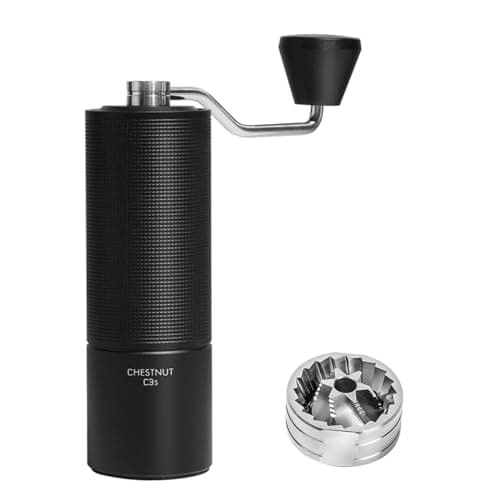
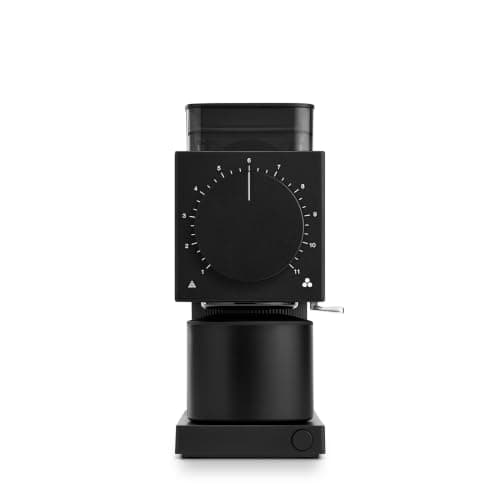
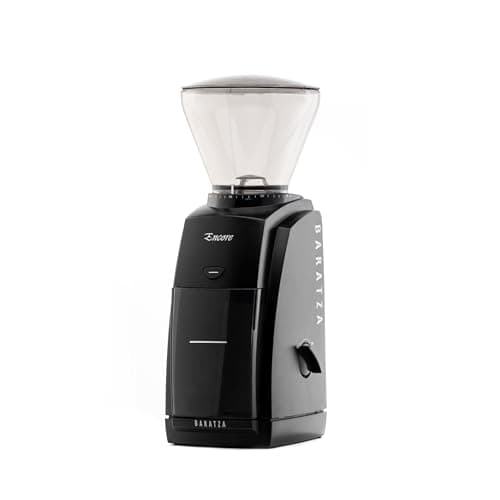
With that established, these are the three grinders in our registry we would actually buy for a press, in order.
Grind size by brew method
Relative coarseness, coarsest first. Use this to position a press on your own grinder rather than copying a setting number from a review, which will not transfer.
| Method | Grind | Looks like | Why |
|---|
| Cold brew | Extra coarse | Cracked peppercorns | 12-24 hour steep, so the least surface area possible |
| French press | Coarse | Raw sugar, coarse sea salt | 4-minute full immersion, metal mesh that passes fines |
| Percolator | Coarse | Raw sugar | Water cycles through the bed repeatedly |
| Drip and pour over | Medium | Beach sand | Paper filter catches fines; 2-4 minute flow |
| Moka pot | Medium-fine | Table salt | Pressure-driven, short contact, but no tamp |
| Espresso | Fine | Powdered sugar | 9 bar through a packed puck in 25-30 seconds |
Diagnosing a bad press by taste
Muddy, bitter, drying, silt in the cup. Grind coarser. This is over-extraction plus fines passing the mesh, and it is the overwhelmingly common failure. Go two or three steps coarser and taste again before changing anything else.
Thin, sour, watery, no body. Grind finer — but check your ratio first, because under-dosing produces the same symptoms and is more common than a too-coarse grind. Our coffee-to-water ratio guide has the numbers; a press at 1:15 to 1:17 by weight is the usual window.
Good first sip, harsh by the end of the mug. Classic fines problem. Those particles keep extracting in your cup after the plunge. Grind coarser, and decant the press into a carafe or your mugs immediately rather than leaving it sitting on the grounds.
Inconsistent cup to cup with the same recipe. That is usually the grinder, not the technique — an unsupported burr shaft wandering under load produces a different particle distribution each time. It is the strongest argument for the picks above over a blade grinder or a plastic-bodied burr grinder.
The variables that matter after grind
Ratio. 1:15 to 1:17 coffee to water by weight for a press — roughly 55 to 65 grams for a 1 litre brew. Weigh it; volume scoops vary enormously with bean density and roast level.
Water temperature. Just off the boil, around 200°F / 93°C, is the standard target. Boiling water is not the disaster the internet claims in an immersion brew, but it pushes extraction further, so if you are already borderline bitter it will not help.
Steep time. Four minutes is the convention and it is a good one. Longer pushes extraction further; shorter leaves it thin. If you want to change something, change grind rather than time — grind has a much larger effect per unit of adjustment.
Plunge technique. Press slowly and stop at the surface of the grounds rather than compressing the bed. Forcing the plunger to the bottom pushes fines through the mesh, which undoes the coarse grind you just dialled in. And do not stir after plunging.
Freshness. Ground coffee stales within minutes and whole beans within weeks. Grind immediately before brewing, and store beans properly — how to store coffee beans covers it, and best coffee canisters covers the containers.
Press design changes how much grind matters
Not all presses filter the same. A single-mesh screen passes more fines than a double or triple filter, and some presses add a secondary fine-mesh layer specifically to address this. The practical consequence: on a basic single-screen press, grind size is doing almost all the work, and you should err coarse. On a press with a tighter multi-layer filter you have a little more latitude.
Our best French press roundup covers which designs filter more tightly, and French press vs pour over explains what the paper filter in a pour over does that no metal mesh can. If you keep chasing silt and losing, that comparison is the honest place to end up.