Skip to content
Portafilter Co

Makers & Brewers · Coffee Makers

AeroPress alternatives

Most people looking for an AeroPress alternative are not unhappy with the coffee. They want the same quick, forgiving, one-or-two-cup brew in stainless, ceramic or glass instead of molded plastic - so that is what these six picks are ranked on.

By Stephen V.Updated How we pick
#ad

We earn a commission when you buy through our Amazon links, at no extra cost to you. It never changes a verdict, and we say so when the cheaper product is the better buy. How this works.

Start by naming what you are replacing, because the AeroPress is a good brewer and the people shopping for an alternative are usually objecting to one specific thing about it. If the objection is the plastic chamber— and judging by what people actually search, it usually is — the pick is the Kalita Wave 185 in stainless steel, which brews the same one-to-two cups by hand in polished metal. If it is the paper filters, a stovetop moka pot uses none at all. If it is the one-cup scale, the Chemex brews a carafe. If it is the pouring, an immersion press does the work for you. And if your objection is really that you want the cleanest possible cup, the ceramic Hario V60 is both the best of these and the cheapest.

One honest aside first, because it is a common search and this page cannot help with it: if what you want is an alternative to AeroPress filter papersrather than to the brewer, that is a different question. Reusable stainless mesh discs for the AeroPress exist and are cheap, they let you stop buying papers, and they change the cup — more body and oils, slightly more sediment, which some people prefer and some do not. We do not rank those, we have no measured view on which brand is best, and nothing on this page is about them. Everything below is a different brewer.

What the AeroPress actually gets right, stated fairly. It steeps coffee in a sealed chamber and then pushes it through a paper microfilter with hand pressure, which gives you a clean, full-bodied cup in roughly one to three minutes. Its real genius is twofold: cleanup takes about ten seconds, because the spent puck ejects into the bin and the chamber rinses clear, and it is unusually forgiving of grind, so it makes decent coffee even from supermarket pre-ground. It needs no electricity, there is nothing to descale, and it is almost indestructible. Any alternative has to give up some of that, and the sections below are honest about which. Best AeroPress models ranks the family itself if you have not ruled it out.

Route one: the same brew, in metal or ceramic.The closest substitute for a one-mug AeroPress is a single-serve dripper, and two here are made of nothing but metal or ceramic: the stainless Kalita Wave and the ceramic Hario V60. You trade the sealed chamber for a cone, which means you control extraction with your pour rather than with a plunger — more control, less forgiveness. Both still use paper, both still want a kettle you can pour with accurately, and both clean up as fast as an AeroPress does. Best pour over coffee makers is the wider field, and AeroPress vs pour over is the head-to-head.

Route two: immersion, so there is nothing to pour.If what you liked about the AeroPress was that it brews while you do something else, the answer is a French press: coffee and water sit together for four minutes and a plunger separates them. It is the most forgiving brewing there is, and in stainless steel it is completely plastic-free. The honest costs are a slightly heavier, more sediment-y cup than a paper filter gives, and a cleanup that is genuinely worse than the AeroPress's — wet grounds have to come out of the bottom of a jug. AeroPress vs French press compares the cups directly, and best French presses ranks the category.

Route three: no paper at all, and real pressure. A stovetop moka pot builds roughly one to two bar of steam pressure and pushes it through an untamped bed of medium-fine coffee. There are no filters to buy ever, the body is metal, and the drink is small, thick and intense in a way no dripper can match. It is not espresso and it is not an AeroPress; it is the pick if your actual complaint is consumables. AeroPress vs moka pot is the direct comparison, and moka pot sizesexplains why a moka "cup" is a two-ounce demitasse rather than a mug.

Route four: more than one cup.An AeroPress makes one drink at a time — the XL stretches that, but the standard brewer does not. If the reason you are looking is that two people want coffee at the same time, stop looking at single-serve brewers: the Chemex brews and serves a 30 oz carafe from one vessel in glass and wood, and a stainless press does the same job with less technique.

One thing every pick here has in common.They are all manual brewers, so they all want water you control and coffee ground reasonably fresh. Four of the six are noticeably less forgiving of grind than the AeroPress, which is the quiet cost of switching — best grinders for drip and pour over covers the grinder, and best gooseneck kettles covers the kettle the two drippers really want. Budget for both before deciding this is the cheap route.

The short answer

Quick picks

#ProductBest forScorePrice
01
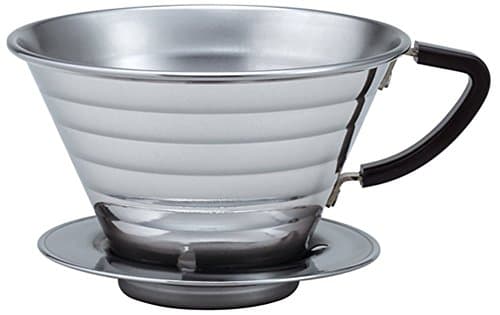
Kalita Kalita Wave 185 Stainless Steel Dripper
Kalita Wave 185 Stainless Steel Dripper

Our overall pick, because it is the closest thing to an AeroPress that contains no plastic at all. A flat brewing bed, three small holes and a fluted wave filter spread the water and slow the drawdown, so an average pour lands much closer to an even extraction than a cone does - which matters a great deal if you are leaving the most forgiving brewer on the market. The size 185 brews two to four cups, the polished stainless survives a backpack in a way ceramic and glass do not, and cleanup is as quick as the AeroPress's: lift the filter out, rinse the cone. You still buy paper, the wave filters are a specific shape rather than a generic cone, and it wants a kettle you can pour with some control.

Best overall - the same hand-brewed cup with no plastic in it
8.8
$39.80Amazon
02
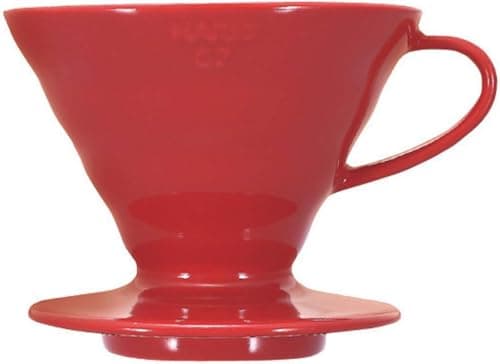
Hario Hario V60 Ceramic Coffee Dripper (Size 02)
Hario V60 Ceramic Coffee Dripper (Size 02)

The budget pick and the best cup on this page, in that order. The steep cone, spiral ribs and single large aperture let you steer extraction entirely with your pour, so a good coffee's acidity and aroma come through with a clarity the AeroPress's paper-and-pressure method mutes slightly. It is ceramic, so there is no plastic and no flavor carryover, and it costs less than every other pick here. The trade is the honest one for any cone: the cup is only as good as your pour and your grind, so it is the most technique-sensitive brewer on this page and does its best work with a gooseneck kettle. Ceramic also means it is breakable, and it needs preheating.

Budget pick - cheapest way out of plastic, and the cleanest cup here
8.7
$30.50Amazon
03
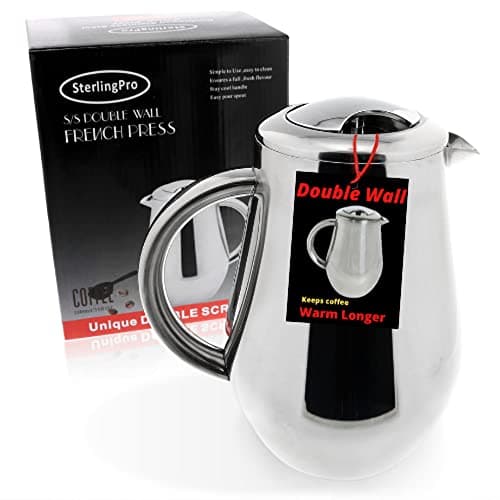
SterlingPro SterlingPro Double-Wall Stainless Steel French Press (34 oz)
SterlingPro Double-Wall Stainless Steel French Press (34 oz)

The pick if your objection is plastic and your priority is not having to pour carefully. Immersion brewing is the most forgiving method there is - coffee and water sit together for four minutes and the plunger separates them - and this press is 304 stainless throughout, so nothing plastic touches the coffee. The double wall holds heat for a second cup, a double-screen filter keeps sediment lower than a single mesh, and SterlingPro includes two spare screens. Two honest costs: being metal, it is opaque, so you cannot watch the brew; and cleanup is the worst on this page, because wet grounds have to come out of the bottom of a jug rather than ejecting as a puck.

Best plastic-free immersion - no pouring technique required
8.2
$53.00Amazon
04
Chemex Chemex Classic Series Pour-Over Coffeemaker (6-Cup)
Chemex Classic Series Pour-Over Coffeemaker (6-Cup)

The pick when one cup is not the problem - two cups is. The Chemex's thick bonded filters trap more oils and fine sediment than any paper here, so the cup is exceptionally clean, bright and free of grit, and it brews straight into a 30 oz borosilicate carafe you serve from: glass and wood, no plastic. The honest catch is baked into that same filter. It is proprietary, so you commit to buying Chemex papers, and it is thick enough to slow the drawdown, which means the brewer rewards a patient, even pour and really wants a gooseneck kettle and a medium-coarse grind. Get those right and little else makes a cleaner carafe. Rush it, or grind too fine, and it stalls.

Best for more than one cup, and the cleanest carafe here
8.1
$47.03Amazon
05
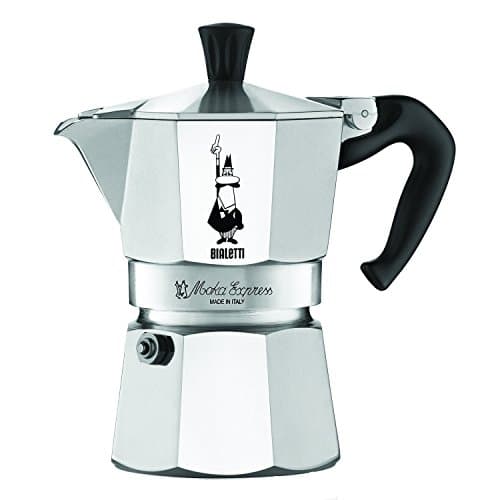
Bialetti Bialetti Moka Express (3-Cup)
Bialetti Moka Express (3-Cup)

The pick if what you want is to stop buying filters entirely, and the only brewer here that uses pressure rather than gravity. A moka pot builds roughly one to two bar of steam pressure and pushes it up through an untamped bed of medium-fine coffee, which gives you a small, thick, intense drink - not espresso, but the closest thing on a stovetop. The 3-cup size is the right one for a single drinker: roughly 15 to 17 grams of coffee for a few ounces of strong coffee. There is no electricity, no paper, nothing to run out of, and the design has not needed changing since 1933. It is aluminum, so it will not work on induction, and it is hand-wash only.

Best for no consumables at all, and the strongest cup here
8.0
$39.98Amazon
06
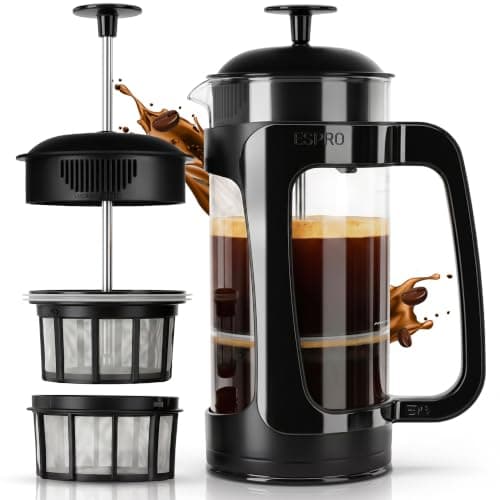
Espro Espro P3 French Press (32 oz)
Espro P3 French Press (32 oz)

The closest cup to an AeroPress on this page, as long as plastic was not your reason for leaving. Espro's double micro-filter uses two nested stainless screens to trap the fines that slip past an ordinary mesh, so the cup is noticeably cleaner and less bitter than standard press coffee, and pressing largely halts extraction so what is left in the pot turns bitter more slowly. That combination - immersion body with a filtered, low-sediment cup - is the AeroPress's signature, reached a different way. It is pricier than a basic press, the replacement filters cost extra, and its frame is a BPA and BPS-free plastic rather than bare metal, which matters if you came here for materials.

Closest cup to an AeroPress, if materials are not your objection
7.5
$29.90Amazon

#ad · Live prices from the Amazon Product API, as of November 20, 2026. Where we have no verified live price, we show none — a gap beats a number that has rotted.

In detail

The picks, in full

01
Kalita Kalita Wave 185 Stainless Steel Dripper

Best overall - the same hand-brewed cup with no plastic in it

Kalita Wave 185 Stainless Steel Dripper

Size 185 / 2-4 cupsPolished stainless steelFlat bottom, three holesFluted wave filter
8.8/10

Our overall pick, because it is the closest thing to an AeroPress that contains no plastic at all. A flat brewing bed, three small holes and a fluted wave filter spread the water and slow the drawdown, so an average pour lands much closer to an even extraction than a cone does - which matters a great deal if you are leaving the most forgiving brewer on the market. The size 185 brews two to four cups, the polished stainless survives a backpack in a way ceramic and glass do not, and cleanup is as quick as the AeroPress's: lift the filter out, rinse the cone. You still buy paper, the wave filters are a specific shape rather than a generic cone, and it wants a kettle you can pour with some control.

Replaces the AeroPress job
9
Cup quality
8.5
Cleanup
9
Build material
9.5
Value
8

Pros

  • Entirely stainless steel - no plastic anywhere in the brew path
  • Flat bed, three holes and a wave filter even out an imperfect pour
  • More consistent cup-to-cup for most home brewers than a single-hole cone
  • Survives travel and a dropped bag, which the ceramic and glass picks do not
  • Cleanup is about as fast as an AeroPress: lift the paper, rinse the metal

Cons

  • Still uses paper filters, and the wave shape is specific rather than generic
  • Less forgiving of a bad grind than the AeroPress is
  • Really wants a gooseneck kettle to pour accurately
  • Metal cone sheds heat faster than ceramic, so preheat it

Don't buy this if…

…you want to stop buying filter papers. That points at the moka pot or a stainless press below, both of which need no consumables at all.

It is also a pick on best pour over coffee makers, where it is ranked against the cones rather than against the AeroPress, and best camping coffee makers covers the travel case the stainless build is so good at.

$39.80View on Amazon

$44.0010% off

Price as of November 20, 2026. Prices change — Amazon's at checkout is the one that counts.

#ad · we may earn a commission from this link to Kalita Wave 185 Stainless Steel Dripper

02
Hario Hario V60 Ceramic Coffee Dripper (Size 02)

Budget pick - cheapest way out of plastic, and the cleanest cup here

Hario V60 Ceramic Coffee Dripper (Size 02)

Cone percolation, size 02Ceramic body, paper filterOne to a few cupsRewards a gooseneck kettle
8.7/10

The budget pick and the best cup on this page, in that order. The steep cone, spiral ribs and single large aperture let you steer extraction entirely with your pour, so a good coffee's acidity and aroma come through with a clarity the AeroPress's paper-and-pressure method mutes slightly. It is ceramic, so there is no plastic and no flavor carryover, and it costs less than every other pick here. The trade is the honest one for any cone: the cup is only as good as your pour and your grind, so it is the most technique-sensitive brewer on this page and does its best work with a gooseneck kettle. Ceramic also means it is breakable, and it needs preheating.

Replaces the AeroPress job
7.5
Cup quality
9
Cleanup
9
Build material
9.5
Value
8.5

Pros

  • The cheapest pick on this page by a clear margin
  • Ceramic: no plastic, no retained flavors, easy to keep clean
  • The clearest, brightest cup here when you brew it well
  • Total control over extraction through pour rate, grind and water temperature
  • V60 papers are the most widely available filter in specialty coffee

Cons

  • The least forgiving brewer here - a rushed pour shows up immediately
  • Really needs a gooseneck kettle, which is a second purchase
  • Ceramic is breakable, and cold ceramic needs a preheat
  • Still a paper-filter brewer, so the consumable does not go away
  • One drink at a time at size 02 in practice

Don't buy this if…

…the thing you valued about the AeroPress was that it tolerated a careless grind and a kettle straight off the boil. This brewer notices both - the stainless press below forgives them.

Our Hario V60 review covers the cone and the technique, and Chemex vs V60 is the comparison worth reading before you choose between the two glass-and-ceramic picks here.

$30.50View on Amazon

$32.506% off

Price as of November 20, 2026. Prices change — Amazon's at checkout is the one that counts.

#ad · we may earn a commission from this link to Hario V60 Ceramic Coffee Dripper (Size 02)

03
SterlingPro SterlingPro Double-Wall Stainless Steel French Press (34 oz)

Best plastic-free immersion - no pouring technique required

SterlingPro Double-Wall Stainless Steel French Press (34 oz)

34 oz / 8-cup304 stainless, plastic-freeDouble-wall insulatedDouble-screen filter plus two spares
8.2/10

The pick if your objection is plastic and your priority is not having to pour carefully. Immersion brewing is the most forgiving method there is - coffee and water sit together for four minutes and the plunger separates them - and this press is 304 stainless throughout, so nothing plastic touches the coffee. The double wall holds heat for a second cup, a double-screen filter keeps sediment lower than a single mesh, and SterlingPro includes two spare screens. Two honest costs: being metal, it is opaque, so you cannot watch the brew; and cleanup is the worst on this page, because wet grounds have to come out of the bottom of a jug rather than ejecting as a puck.

Replaces the AeroPress job
8.5
Cup quality
7.5
Cleanup
6.5
Build material
10
Value
8.5

Pros

  • 304 stainless with no plastic touching the coffee anywhere
  • Immersion brewing is the most forgiving method here - no pour control needed
  • Double wall holds heat, so a second cup is still hot
  • Double-screen filter keeps sediment lower than a single mesh does
  • No paper filters to buy, ever

Cons

  • Cleanup is the worst here: wet grounds out of a jug, not an ejected puck
  • Heavier body and more sediment in the cup than a paper filter gives
  • Opaque, so you cannot see the brew or the water level
  • Needs a coarse grind, and a cheap grinder makes muddy press coffee
  • Bigger than you need if you only ever make one cup

Don't buy this if…

…ten-second cleanup was the reason you bought an AeroPress in the first place. Nothing about a press is quick to clean - the two drippers above are.

It is ranked against the glass and insulated presses on best French presses, and French press grind size is the one thing that decides whether the cup is clean or muddy.

$53.00View on Amazon

Price as of November 20, 2026. Prices change — Amazon's at checkout is the one that counts.

#ad · we may earn a commission from this link to SterlingPro Double-Wall Stainless Steel French Press (34 oz)

04
Chemex Chemex Classic Series Pour-Over Coffeemaker (6-Cup)

Best for more than one cup, and the cleanest carafe here

Chemex Classic Series Pour-Over Coffeemaker (6-Cup)

30 oz / 6-cupBorosilicate glass with wood collarThick bonded Chemex filtersBrews and serves from one vessel
8.1/10

The pick when one cup is not the problem - two cups is. The Chemex's thick bonded filters trap more oils and fine sediment than any paper here, so the cup is exceptionally clean, bright and free of grit, and it brews straight into a 30 oz borosilicate carafe you serve from: glass and wood, no plastic. The honest catch is baked into that same filter. It is proprietary, so you commit to buying Chemex papers, and it is thick enough to slow the drawdown, which means the brewer rewards a patient, even pour and really wants a gooseneck kettle and a medium-coarse grind. Get those right and little else makes a cleaner carafe. Rush it, or grind too fine, and it stalls.

Replaces the AeroPress job
6.5
Cup quality
9.5
Cleanup
7.5
Build material
9.5
Value
7.5

Pros

  • Thick bonded filters strip out oils and fine sediment for an exceptionally clean cup
  • Brews and serves from one 30 oz borosilicate carafe - glass and wood only
  • Scales to two or three people, which no single-serve brewer here does
  • An object worth leaving on the counter, which is part of why people buy it
  • Dead simple: no moving parts, nothing to wear out but the collar tie

Cons

  • Proprietary filters, so you are committed to buying Chemex papers
  • Thick papers slow the drawdown and punish an impatient pour
  • Wants a gooseneck kettle and a medium-coarse grind to work properly
  • Glass carafe is the most breakable thing on this page
  • Overkill, and slightly awkward, for a single mug

Don't buy this if…

…you brew one mug and want it fast. The Chemex is a carafe brewer that takes four or five minutes of attention - the Kalita or V60 above are the single-serve answers.

Our Chemex review covers the bonded filters and the technique in full, and coffee to water ratio has the figures for a 30 oz brew, which is where most first Chemex attempts go wrong.

$47.03View on Amazon

Price as of November 20, 2026. Prices change — Amazon's at checkout is the one that counts.

#ad · we may earn a commission from this link to Chemex Classic Series Pour-Over Coffeemaker (6-Cup)

05
Bialetti Bialetti Moka Express (3-Cup)

Best for no consumables at all, and the strongest cup here

Bialetti Moka Express (3-Cup)

3-cup size, roughly 15-17 g dose1-2 bar steam pressureCast aluminum, stovetopNo paper filters needed
8.0/10

The pick if what you want is to stop buying filters entirely, and the only brewer here that uses pressure rather than gravity. A moka pot builds roughly one to two bar of steam pressure and pushes it up through an untamped bed of medium-fine coffee, which gives you a small, thick, intense drink - not espresso, but the closest thing on a stovetop. The 3-cup size is the right one for a single drinker: roughly 15 to 17 grams of coffee for a few ounces of strong coffee. There is no electricity, no paper, nothing to run out of, and the design has not needed changing since 1933. It is aluminum, so it will not work on induction, and it is hand-wash only.

Replaces the AeroPress job
7
Cup quality
7.5
Cleanup
6.5
Build material
9.5
Value
9.5

Pros

  • No consumables at all - no papers, no pods, nothing to run out of
  • Makes a genuinely strong, thick cup that no filter method matches
  • All metal, and repairable indefinitely with cheap gaskets
  • Costs little and lasts decades
  • Packs well and works on any gas or electric hob, or a camp stove

Cons

  • Aluminum body does not work on induction cooktops
  • Hand-wash only; a dishwasher dulls and pits aluminum
  • Three parts to disassemble and dry, so cleanup is slower than an AeroPress
  • No crema and only mild pressure - it is not espresso
  • Must be brewed at its rated size, because both chambers are fixed volumes

Don't buy this if…

…you want a clean, bright, filtered cup. A moka pot is the opposite of that by design - the V60 or Chemex above are where clarity lives.

Our Bialetti Moka Express review covers the sizing and the gasket routine, moka pot grind size is the thing people get wrong first, and moka pot on induction matters if your hob is induction.

$39.98View on Amazon

$49.9920% off

Price as of November 20, 2026. Prices change — Amazon's at checkout is the one that counts.

#ad · we may earn a commission from this link to Bialetti Moka Express (3-Cup)

06
Espro Espro P3 French Press (32 oz)

Closest cup to an AeroPress, if materials are not your objection

Espro P3 French Press (32 oz)

32 oz capacityThicker borosilicate glassDouble micro-filterBPA/BPS-free frame
7.5/10

The closest cup to an AeroPress on this page, as long as plastic was not your reason for leaving. Espro's double micro-filter uses two nested stainless screens to trap the fines that slip past an ordinary mesh, so the cup is noticeably cleaner and less bitter than standard press coffee, and pressing largely halts extraction so what is left in the pot turns bitter more slowly. That combination - immersion body with a filtered, low-sediment cup - is the AeroPress's signature, reached a different way. It is pricier than a basic press, the replacement filters cost extra, and its frame is a BPA and BPS-free plastic rather than bare metal, which matters if you came here for materials.

Replaces the AeroPress job
8.5
Cup quality
8.5
Cleanup
6.5
Build material
6.5
Value
7.5

Pros

  • Double micro-filter traps fine grounds for a noticeably cleaner, less bitter cup
  • Pressing largely halts extraction, so coffee left in the pot turns bitter more slowly
  • Immersion brewing, so no pour technique is required
  • Thicker borosilicate glass than most glass presses
  • The nearest thing here to the AeroPress's clean-but-full-bodied character

Cons

  • Frame is BPA/BPS-free plastic, not bare metal, which defeats a plastic-free brief
  • Replacement micro-filters are a recurring cost
  • Pricier than a basic glass press
  • Cleanup is press cleanup: wet grounds out of a jug
  • Glass body is breakable

Don't buy this if…

…you came to this page specifically to get away from plastic. The stainless SterlingPro above is the plastic-free immersion answer, and the Kalita is the plastic-free single-serve one.

It leads best French presses on cup cleanliness, and AeroPress vs French press is the comparison that explains why its double filter closes most of the gap.

$29.90View on Amazon

$39.9425% off

Price as of November 20, 2026. Prices change — Amazon's at checkout is the one that counts.

#ad · we may earn a commission from this link to Espro P3 French Press (32 oz)

The plastic question, answered properly

The AeroPress chamber is molded plastic, and that is the single most common reason people go looking for an alternative. It is worth being precise about what you are and are not avoiding. AeroPress states its brewers are BPA and phthalate free, and the brewing contact time is short and nowhere near boiling by the time you press. If your objection is a specific chemical risk, the honest answer is that this is contested ground and we are not going to pretend to settle it. If your objection is simpler — you would rather brew in glass, ceramic or steel, or you dislike that plastic scuffs, stains and eventually looks tired — then it is a preference you do not have to justify, and three picks here are plastic-free end to end: the stainless Kalita Wave, the ceramic V60 and the 304 stainless SterlingPro. The Chemex is glass and wood apart from its collar tie. The moka pot is aluminum.

What you give up, in one list

Ten-second cleanup.This is the AeroPress's best trick and almost nothing matches it. The two drippers come close — lift the paper, rinse the cone — but both presses here are genuinely slower, and the moka pot is three parts to separate and dry. If cleanup speed is why you own an AeroPress, buy the Kalita or the V60 and nothing else on this page.

Forgiveness about grind.The AeroPress makes acceptable coffee from whatever is in the bag. The V60 and the Chemex do not: both notice grind and pour immediately, and a press needs a genuinely coarse, even grind or the cup turns muddy. This is the hidden cost of the switch, and it is a grinder cost rather than a brewer cost — best grinders for drip and pour over is the relevant bracket, and the cheapest picks there are well under a hundred dollars.

Pressure.Only the moka pot replaces it, and it does so differently — steam pressure through an untamped bed rather than hand pressure through a tamped one. If what you actually want is espresso rather than a strong cup, that is a different page: Nespresso alternatives ranks the machines people buy when they want real shots, and best espresso grinders under $300 is the grinder half of that purchase.

If travel is the reason

The AeroPress Go is a very good travel brewer, so an alternative has to beat it on something specific. The stainless Kalita Wave is the pick here: it is flat, it does not care about being dropped, and it needs nothing but a filter and hot water. A small moka pot is the other real travel answer, because it brings its own pressure and needs no papers, which matters on a long trip. Everything glass or ceramic on this page is a bad traveler, and we would not pretend otherwise. Best camping coffee makers is the page built for that constraint.

Where to go next

Best AeroPress modelsis worth a look before you leave the format entirely — the Clear is the same brewer in Tritan if looks were the issue, and the XL solves the one-cup limit. Best pour over coffee makers and best French presses rank the two categories this page draws from, on their own terms. AeroPress grind size explains the forgiveness you are giving up, and Keurig alternatives is the same exercise for anyone leaving pods rather than plastic.
How we picked

We did not lab-test this gear

Everyone in this category says they tested twenty machines. We have not pulled shots on every product here, and we say so. What we did instead: compiled the published specifications, cross-checked the manufacturer manuals, computed the running cost (wattage to energy, grams-per-shot to cost-per-cup), weighed aggregated owner reports, and scored each product against a published rubric. The scores are judgments from documented research — not measurements we took, because we do not have a test lab and we will not pretend we do. Where hands-on time would tell you more than a spec sheet, we flag it. Where a number came from someone else's work, we name them in Sources.

Questions

Frequently asked

What is the best AeroPress alternative with no plastic?
The Kalita Wave 185 in stainless steel for a single-serve brew, or the SterlingPro 304 stainless French press if you would rather not pour. Both are metal end to end. The ceramic Hario V60 is the cheapest plastic-free option of all, with the caveat that it is the least forgiving brewer here and really wants a gooseneck kettle.
Is there an AeroPress alternative that does not use paper filters?
Two: the Bialetti Moka Express, which uses steam pressure through a metal basket and needs no consumables at all, and the SterlingPro stainless press, which filters through a double metal screen. Both give you a heavier cup with more body than a paper filter does, which is the trade. If you only want to stop buying papers for the AeroPress you already own, a reusable stainless mesh disc does that for a few dollars - we do not rank them, but they are the direct answer to that question.
What makes coffee most like an AeroPress?
A filtered immersion brewer, which is why the Espro P3 is the closest cup here: the coffee steeps as it does in an AeroPress, then goes through two nested stainless screens that catch the fines an ordinary mesh lets past, so the cup is clean and full-bodied at the same time. The reason it is ranked last rather than first is that its frame is plastic, and for most people on this page that is the whole point.
Is there an AeroPress Go alternative for travel?
The stainless Kalita Wave is the pick: flat, light, unbreakable, and it needs nothing but a filter and hot water. A small moka pot is the other honest answer, because it carries its own pressure and needs no papers on a long trip. Anything ceramic or glass here is a poor traveler. Best camping coffee makers ranks the field on exactly that constraint.
Will any of these make better coffee than an AeroPress?
On clarity, yes - the Chemex and a well-poured V60 both produce a cleaner, brighter cup than an AeroPress does, because a thick paper filter traps more oils and fine sediment than a thin AeroPress microfilter. On consistency, no: the AeroPress is the most forgiving brewer in this group and will beat all of them on an average morning with an average grind. Which of those two things you are optimizing for is the whole decision.
Do I need a gooseneck kettle for these?
For the V60 and the Chemex, effectively yes - both are pour-controlled brewers and a wide kettle spout makes an even pour very hard. The Kalita Wave's flat bed is far more tolerant, and the two presses and the moka pot do not need one at all. Best gooseneck kettles has the picks, including the cheapest stovetop option.

Keep reading

Same gear, other pages

We cover this gear elsewhere too

Receipts

Sources

We do not run a testing lab, and we do not pretend to. Where a measured number came from someone else's work, we name them and link them. Where we could not verify something, we say so on the page rather than quietly leaving it out. Read our full method.