Yes.Any whole coffee bean can be used for espresso, and the bag labelled "espresso" in the supermarket is not a different plant, a different species or a different grade — it is a roast style, usually darker, chosen because it dissolves easily under pressure and tastes familiar as a short shot. If you own whole beans and a grinder that can go fine enough, you can pull espresso with them today. The three things that actually decide whether the shot is good are freshness, roast level and grind— in that order — and the word on the bag is not one of them.
The confusion is understandable, because "espresso" is used for three different things on a coffee shelf. It describes a drink (a short, pressurised extraction), a grind size (very fine, roughly the texture of table salt going on powdered sugar), and a roast style(generally darker, often with some robusta in a blend for crema and body). Only the first two are technical requirements. The roast style is a preference, and plenty of the best espresso served anywhere is pulled with beans sold as "filter" or with no designation at all.
What genuinely matters, in order. Freshness first:coffee degasses after roasting, and espresso is the brew method most sensitive to it. Beans roasted more than about a month ago lose the carbon dioxide that creates crema and pull flat and thin, which is why a fresh "filter" bag beats a stale "espresso" bag every time. Roast level second: darker roasts are more soluble and far more forgiving of an imperfect grind or a wobbly dose, so they are easier to dial in; light roasts are harder, need finer grinding and higher brew temperatures, and reward a better grinder. Grind third: this is the real gate. If your grinder cannot reach a true espresso fineness and adjust in small steps, no bean will save the shot.
The one thing that genuinely does not work is pre-ground coffeesold for drip or French press. It is ground far too coarse for nine bars of pressure — water runs straight through, you get a pale, sour, watery shot in eight seconds, and there is no fix except grinding finer, which you cannot do to coffee that is already ground. Pre-ground coffee labelled specifically for espresso can work in a pressurized dual-wall basket; it will never work well in a single-wall one. If this is your situation, the answer is a grinder, not a different bag: see do you need a grinder for espresso.
Three practical adjustments when you take a "regular" bag to espresso. Expect to grind finer than the bag suggests— most roasters write grind advice for filter. Expect a longer ratio on light roasts: where a dark espresso blend likes 18g in and 36g out, a light roast often tastes better at 18g in and 40-45g out, because it needs more water to dissolve. And expect to use fewer days-old beans than you would for filter: espresso wants beans rested about 7-21 days after roast, not three months. The dial-in loop is the same either way, and it is in how to dial in espresso.
The short answer
Quick picks
| # | Product | Best for | Score | Price |
|---|
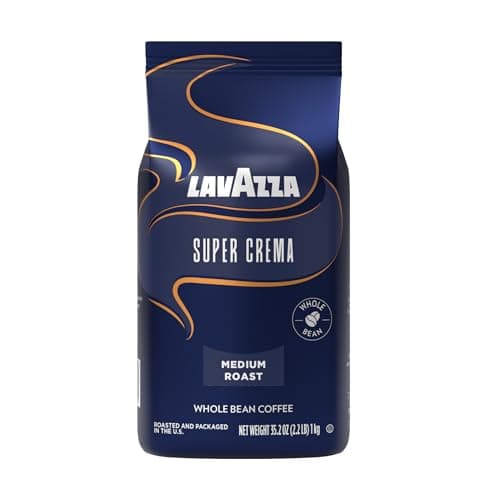
| 01 | Lavazza Super Crema Whole BeanThe easiest bag to learn on, and the reason to not overthink this question. A medium espresso-style arabica/robusta blend built for crema and body: it is soluble enough to forgive a grind that is slightly off, it produces thick crema that makes a beginner's shot look right, and it is cheap and available everywhere. If you are dialling in a new machine, start here and move to specialty coffee once your technique is stable. | Easiest to dial in | | $26.99·Amazon |
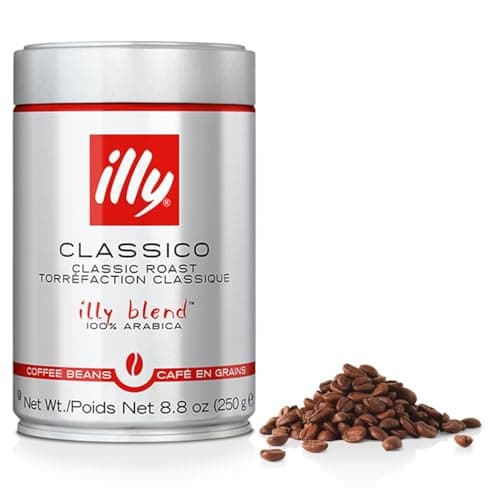
| 02 | Illy Classico Whole BeanThe consistency answer: 100% arabica, medium roast, and blended to taste the same bag after bag, which is genuinely useful when you are trying to learn whether a change you made helped. Less crema than a robusta blend and a cleaner, more balanced cup. If you want one bean to dial against while you learn, pick a consistent one — that is this. | Most consistent to learn with | | $12.81·Amazon |
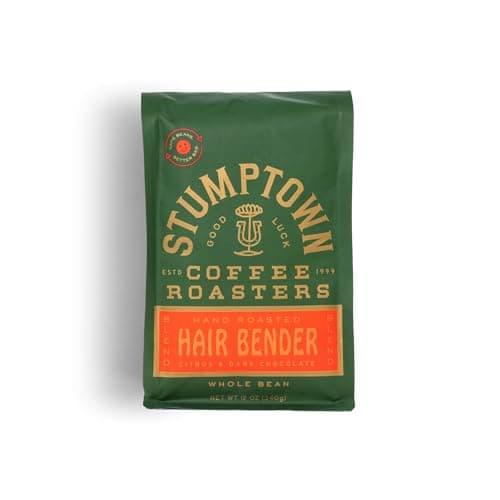
| 03 | Stumptown Hair Bender Whole BeanThe proof of the whole argument on this page: a specialty blend sold for both filter and espresso, not labelled as an 'espresso bean', that makes excellent espresso. Brighter and more complex than either bag above, and correspondingly less forgiving — it wants a grinder with fine adjustment and a dose you actually weigh. This is where to go once your technique no longer needs a crutch. | Best once your technique is solid | | $13.99·Amazon |
#ad · Live prices from the Amazon Product API, as of October 5, 2026. Where we have no verified live price, we show none — a gap beats a number that has rotted.
In detail
The picks, in full
Easiest to dial in
Lavazza Super Crema Whole Bean
Whole beanMedium espresso roastArabica/Robusta blendCrema-forward
The easiest bag to learn on, and the reason to not overthink this question. A medium espresso-style arabica/robusta blend built for crema and body: it is soluble enough to forgive a grind that is slightly off, it produces thick crema that makes a beginner's shot look right, and it is cheap and available everywhere. If you are dialling in a new machine, start here and move to specialty coffee once your technique is stable.
- Ease of dial-in
- 9
- Crema
- 9
- Flavour complexity
- 6
- Availability
- 10
- Value
- 9
Pros
- +Forgiving: a slightly coarse or uneven grind still gives a drinkable shot
- +Robusta in the blend gives the thick crema beginners are looking for
- +Widely stocked and inexpensive, so you can waste some learning
- +Works in milk drinks as well as straight
Cons
- −Supermarket bags are often months past roast — check the date, not the label
- −Less interesting than specialty coffee once your technique is good
- −Robusta adds body but also a woody edge some palates dislike
Don't buy this if…
…you want fruit and acidity in the cup. This blend is built for crema and comfort, not clarity.
A honest word about dates: the single biggest quality variable for a bag like this is how long it has been on the shelf, and that is not something anyone can promise you from a listing. Check the roast or best-before date when it arrives; if it is already several months old, the crema and sweetness you are reading about are not going to be there. Our best espresso beans roundup ranks this and the rest of the field.
Most consistent to learn with
Illy Classico Whole Bean
Whole beanMedium roast100% ArabicaSmooth & balanced
The consistency answer: 100% arabica, medium roast, and blended to taste the same bag after bag, which is genuinely useful when you are trying to learn whether a change you made helped. Less crema than a robusta blend and a cleaner, more balanced cup. If you want one bean to dial against while you learn, pick a consistent one — that is this.
- Ease of dial-in
- 8
- Crema
- 7
- Flavour complexity
- 7
- Availability
- 9
- Value
- 7
Pros
- +Highly consistent between bags — useful when you are isolating variables
- +100% arabica: cleaner, less woody than robusta blends
- +Medium roast is still forgiving to grind for
- +Widely available in whole bean
Cons
- −Thinner crema than a robusta-containing blend
- −Premium price for a supermarket-tier coffee
- −Deliberately unexciting — that is the point and also the limitation
Don't buy this if…
…you want the thickest possible crema on an entry machine. A blend with robusta will give you more of it.
Consistency is underrated while you are learning. If the bean changes every time the bag does, you cannot tell whether your new WDT routine helped or whether this roast is just different. A deliberately uniform blend removes that noise.
Best once your technique is solid
Stumptown Hair Bender Whole Bean
Whole beanMedium roastSpecialty-gradeBright & complex
The proof of the whole argument on this page: a specialty blend sold for both filter and espresso, not labelled as an 'espresso bean', that makes excellent espresso. Brighter and more complex than either bag above, and correspondingly less forgiving — it wants a grinder with fine adjustment and a dose you actually weigh. This is where to go once your technique no longer needs a crutch.
- Ease of dial-in
- 6
- Crema
- 7
- Flavour complexity
- 9
- Availability
- 7
- Value
- 7
Pros
- +Specialty-grade coffee with real flavour clarity in espresso
- +Roasted to order far more often than supermarket bags, so it arrives fresher
- +Works as filter coffee too — the same bag, two methods
- +Demonstrates what a good grinder is actually for
Cons
- −Less forgiving: an imprecise grind shows up immediately as sourness
- −Costs more per bag than the blends above
- −Thinner crema than a robusta blend, which can read as 'wrong' to beginners
Don't buy this if…
…you are still on a pressurized dual-wall basket or a budget grinder with coarse steps. Save it until you can grind for it.
Light and medium specialty roasts are the clearest demonstration that grinder quality matters: the same bag that tastes like stone fruit through a well-aligned burr set tastes like sour lemon through a coarse-stepped one. If you are not there yet, the blends above are not a lesser choice — they are the right choice for now.
What "espresso roast" actually means
Nothing legally, and little technically. There is no botanical espresso bean and no certification behind the word. In practice, a bag marked "espresso" usually means one or more of three things: a darker roast (more soluble, more forgiving under pressure), some robusta in the blend (more crema, more body, more caffeine, less acidity), and a roast profile developed with a short, pressurised extraction in mind. All three are preferences. None is a requirement.
| What the bag says | What it actually tells you | Can you pull espresso with it? |
|---|
| "Espresso roast", whole bean | Usually darker, often a blend, built for crema | Yes — and it is the most forgiving option |
| "Filter" or unlabelled, whole bean | A roast developed for drip; often lighter | Yes — grind finer, consider a longer ratio |
| Single origin, light roast, whole bean | Maximum clarity, minimum forgiveness | Yes, if your grinder has fine adjustment |
| Decaf, whole bean | Decaffeinated beans are more brittle, grind finer faster | Yes — expect to go a step or two coarser than usual |
| Pre-ground for drip or French press | Ground far too coarse for 9 bars | No — it will gush, sour and thin |
| Pre-ground "for espresso" | Fine-ish, already stale, uncontrollable | Only in a pressurized dual-wall basket |
Freshness beats labelling, every time
Coffee releases carbon dioxide for weeks after roasting, and that gas is what builds crema when hot water hits the puck. A bag roasted within the last two to three weeks behaves predictably; a bag that has been in a warehouse since spring pulls thin and flat no matter what it says on the front. For espresso specifically, the usable window is roughly 7-21 days after roast: too fresh and the shot sputters and tastes gassy, too old and it loses body and sweetness. Supermarket bags rarely carry a roast date at all, which is the single best reason to buy from a roaster. Storage matters too — how to store coffee beans covers what actually helps (an airtight, opaque container at room temperature) and what does not (the freezer door, the fridge).
How to adjust when you switch from "espresso" to "regular" beans
Three changes, made one at a time. Grind finer— a lighter or filter-intended roast is denser and less soluble, so it needs more resistance to extract properly. Extend the ratio— try 18g in, 40-45g out for a light roast instead of the classic 1:2. And raise the brew temperature if your machine lets you, because light roasts extract reluctantly at the temperatures that suit dark ones. If the shot tastes sour and runs fast, grind finer; if it tastes harsh and runs slow, grind coarser. That is the entire loop, and it is the same loop for every bean: why is my espresso sour or bitter walks through the diagnosis, and espresso grind size gives the starting point.
The one hard requirement: a grinder that can go fine
Everything above assumes you can grind to espresso fineness in small steps. A blade grinder cannot — it chops unevenly, so some of your dose is powder and some is gravel, and the water takes the easy route through the gravel. A budget burr grinder with three coarse steps across the espresso range cannot either, because the setting you need sits between two of them. This is why every page on this site puts the grinder ahead of the machine in the spending order; our best espresso grinders page ranks the field, and best grinders under $200 covers the entry point.
What about using espresso beans in a drip machine?
That works too, and it is the same answer in reverse: grind coarser and expect a heavier, lower-acidity cup, because dark espresso-style roasts are more soluble and less bright. It is not a mistake, just a different flavour profile. Coffee vs espresso explains why the same bean tastes so different through the two methods, and the coffee-to-water ratio guide gives the numbers for both.
How we picked
We did not lab-test this gear
Everyone in this category says they tested twenty machines. We have not pulled shots on every product here, and we say so. What we did instead: compiled the published specifications, cross-checked the manufacturer manuals, computed the running cost (wattage to energy, grams-per-shot to cost-per-cup), weighed aggregated owner reports, and scored each product against a published rubric. The scores are judgments from documented research — not measurements we took, because we do not have a test lab and we will not pretend we do. Where hands-on time would tell you more than a spec sheet, we flag it. Where a number came from someone else's work, we name them in Sources.
Questions
Frequently asked
Can you use regular coffee beans for espresso?+
Yes. Any whole coffee bean can be used for espresso — there is no separate espresso bean. Grind it fine enough, dose it accurately, and adjust until the shot runs in about 25-30 seconds. Darker roasts are more forgiving; lighter roasts need finer grinding and often a longer ratio.
Is there a difference between espresso beans and coffee beans?+
Only roast style and sometimes blend composition. 'Espresso' on a bag typically signals a darker roast, often with robusta for crema and body, developed with pressurised extraction in mind. It is the same species of plant and the same raw coffee.
Can I use pre-ground coffee in an espresso machine?+
Not well. Coffee pre-ground for drip or French press is far too coarse for nine bars of pressure and will gush through in seconds, tasting sour and watery. Pre-ground labelled for espresso can work in a pressurized dual-wall basket but never in a single-wall one — see
pressurized vs unpressurized baskets.
Do light roast beans work for espresso?+
Yes, and some of the best espresso in the world is pulled with them — but they are the hardest case. Light roasts are dense and less soluble, so they need a finer grind, a higher brew temperature and often a longer ratio (18g in, 40-45g out). A grinder with fine, repeatable adjustment matters much more here than with a dark blend.
How fresh do beans need to be for espresso?+
Roughly 7-21 days past roast is the sweet spot. Younger than that and the shot can sputter and taste gassy from excess CO2; much older than a month or two and you lose crema, body and sweetness. Espresso is the brew method most sensitive to staleness, which is why a fresh filter bag beats a stale espresso bag.
Does robusta matter for crema?+
It helps. Robusta contributes more crema, more body and more caffeine with less acidity, which is why traditional Italian espresso blends include it. It is not required — 100% arabica makes excellent espresso with slightly thinner crema and more clarity.
Receipts
Sources
We do not run a testing lab, and we do not pretend to. Where a measured number came from someone else's work, we name them and link them. Where we could not verify something, we say so on the page rather than quietly leaving it out. Read our full method.