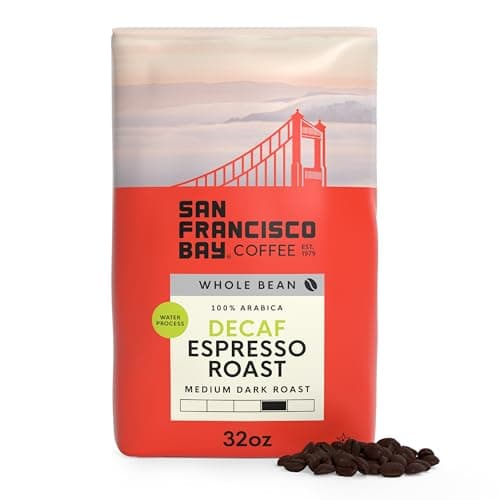
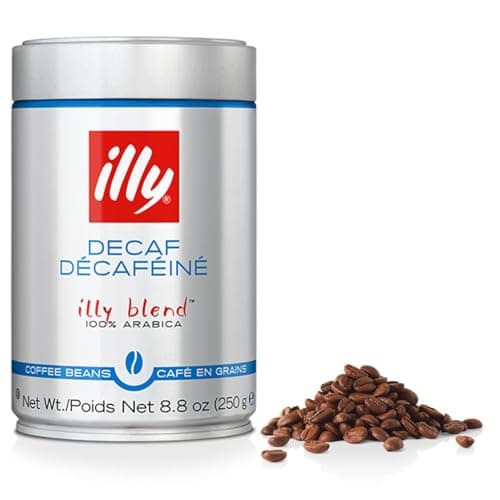
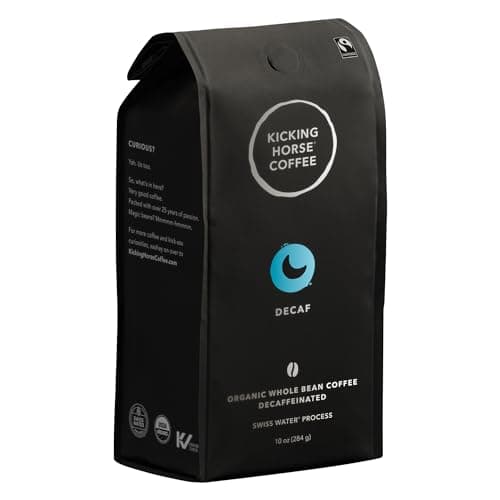
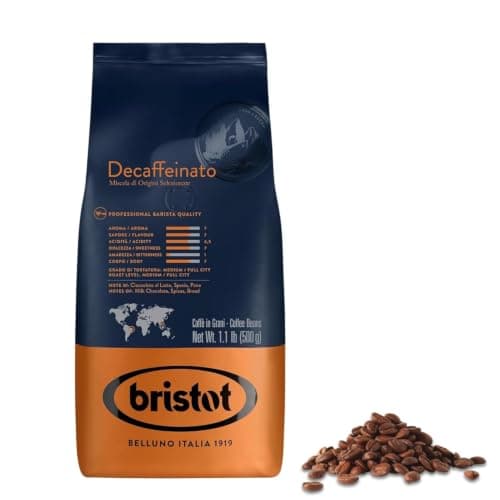
Decaf has a reputation for making bad espresso, and the reputation is half earned. The bean that reaches your grinder has already been soaked, steamed or solvent-rinsed and dried again, and it does not behave on a machine quite the way its caffeinated twin does. But most of the disappointment people blame on decaf is a dial-in problem rather than a bean problem — the same dose, grind and temperature that worked yesterday will not work on decaf, and nobody tells you that when you buy the bag. Get the settings right and good decaf espresso is unremarkable, in the best sense.
So this list ranks on four things, in this order. The decaffeination process, because it is the one variable unique to decaf and the only one where a roaster's disclosure tells you something real. Roast level and blend, because body and crema are what a decaf shot most often lacks and Robusta in the blend is the cheapest fix for both. Bag size, because freshness beats pedigree for espresso and a two-pound bag is only an advantage if there are several of you. And whether the coffee is sold whole bean— pre-ground decaf is a wasted purchase on any espresso machine, for the same reason pre-ground anything is.
A note on how we work: we have not cupped these coffees and we do not score flavor on a scale we invented. The process, origin, roast and format claims below come from each product's own listing and from the references named in Sources; the rankings are editorial judgments about blend composition, roast level and freshness, which is what our methodology page says we do. If a roaster does not publish its decaffeination method, we say so rather than assuming one.
What “decaf” legally means, and what it leaves in the cup
Decaf is not caffeine-free anywhere in the world. In the United States the standard is a caffeine reduction of at least 97%; the European standard is stricter at 99.9% caffeine-free by mass, and Canadian regulations cap decaf coffee at less than 0.1% caffeine. That is the label. What actually ends up in a cup is messier: a 2006 Florida State University study of decaf drinks found typical residual caffeine at 1–2% of the original and occasionally as high as 20%, with 473ml servings measuring 8.6 to 13.9mg of caffeine, and a separate survey of popular decaf brands found a range from 3 to 32mg.
Why this matters when you are buying beans for espresso rather than for drip: an espresso serving is small, so the absolute caffeine is small, but if you are drinking decaf for medical reasons the variation between brands is wider than the label suggests. Nobody is required to print the residual figure. If it matters to you, a European-market coffee is held to the tighter standard.
The three processes, and why Swiss Water is the one roasters advertise
Every decaffeination method does the same job — dissolve caffeine out of green, unroasted beans and leave the flavor compounds behind — and they differ in what does the dissolving.
Water process (Swiss Water). Green beans are soaked in hot water; the water is then passed through activated carbon that strips out caffeine, leaving a green coffee extract that still holds everything else. Fresh beans go into that caffeine-lean extract, so caffeine migrates out of them while the other soluble compounds stay put, because the surrounding liquid is already saturated with those. It is a batch process taking eight to ten hours, and Swiss Water states it never uses chlorinated solvents or esters. That is why it is the method that gets printed on bags: it is the one with a marketing advantage.
Supercritical CO2.Steamed beans go into a high-pressure vessel where water and carbon dioxide circulate at around 300 atmospheres and 65°C, conditions under which CO2 becomes a supercritical fluid that dissolves caffeine while leaving most flavor compounds alone. The caffeine is then scrubbed out of the CO2 with water and the CO2 is recirculated. Expensive, gentle, and mostly used at commercial scale.
Solvent methods.Steamed green beans are rinsed directly with a solvent — ethyl acetate or dichloromethane — typically eight to twelve times, or the solvent is used indirectly to pull caffeine out of the soaking water. Benzene was the original solvent and was abandoned once recognized as a carcinogen. Solvent decaf is legal, common and much cheaper, and it is what you are probably drinking when the bag says nothing about process at all.
Our position: process disclosure is a quality signal more than a safety one. A roaster who names Swiss Water is a roaster making a claim you can hold them to, and that correlates with the rest of the care that goes into a bag. Silence on process is not evidence of anything bad — two of the best decaf espresso blends in the world say nothing about it — but given two otherwise-equal bags, buy the one that tells you.
How to dial in decaf espresso when your usual settings stop working
This is the section that matters more than the ranking. Almost everyone who decides they hate decaf espresso has pulled it on settings tuned for caffeinated coffee and judged the result. The adjustments below come from barista-community practice rather than from our bench, and they are a starting point to taste from, not a recipe.
| What to change | Which way | Why |
|---|
| Dose | Up by roughly 0.5–1.5 g | Rebuilds the body and resistance the processing took out |
| Shot time | Shorter, around 21–23 seconds | Decaf gives up its solubles faster, so a long shot over-extracts |
| Grind | Not your finest setting; a touch coarser than instinct says | Going too fine over-extracts rather than fixing a fast shot |
| Temperature | Slightly cooler, if your machine allows it | Reduces the harsh, ashy edge dark decaf picks up easily |
| Pre-infusion | Use it if you have it | Lets a slightly coarser grind still build even resistance |
The counter-intuitive one is grind. The instinct when a decaf shot runs fast and tastes thin is to grind finer and finer; community practice is the opposite — stay off the finest setting, add dose, shorten the shot and lean on pre-infusion. Our dial-in guide covers the general method and why espresso tastes sour or bitter covers reading the cup, which is the skill this all rests on.
One more diagnostic that is worth more than any number: look at the puck after you pull the shot. Water should have moved through it evenly, with no dry patches and no craters. If it has not, the problem is distribution rather than grind, and a WDT tool fixes it faster than any setting will. Our channeling guide is the full version.
Roast level is doing more work than you think
If you only change one thing when buying decaf rather than caffeinated beans, change the roast level you reach for. Decaf shots most commonly fail by being thin and papery, and roast development is the most direct lever available on body. That is why four of the six picks here are medium-dark or dark, and why a bright light-roast decaf — which can be a lovely filter coffee — is a difficult espresso.
The limit is at the other end. Dark decaf is the fussiest combination there is: owner reports on dark decaf espresso describe weeks of chasing sour, thin and burnt across many grind settings, and one account found a particular dark decaf worked on a conical burr grinder but not a flat one, which is a reminder that your grinder is part of this equation. The safe target for most people is medium-dark: enough roast for body, not enough to be brittle and ashy.
Why Robusta is the cheat code for decaf crema
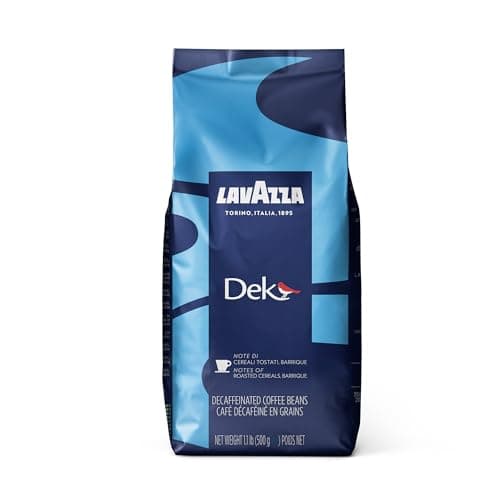
Crema is the first thing people miss in a decaf shot and the easiest to get back. Robusta produces more of it than Arabica does, which is exactly why traditional Italian espresso blends include it and why the Lavazza DEK leads this list despite publishing less about its process than the Swiss Water picks do.
The trade is real and worth stating: Robusta brings body, crema and a heavier, woodier, sometimes rubbery character, and takes away the brightness and fruit that 100% Arabica blends keep. If you drink your decaf as a cappuccino or a latte, the Robusta blend wins easily — milk flattens brightness anyway and rewards body. If you drink straight espresso and like what you taste in a good single-origin, go Arabica and accept thinner crema. Our best coffee beans for espresso page makes the same argument on the caffeinated side, and our crema guide explains what the foam actually is and why it is a worse quality signal than people think.
Bag size is a freshness decision, not a budget one
The cheapest coffee per pound on this page is a 2 lb bag and the most expensive is 8.8 oz, and for a single espresso drinker the expensive one is usually the better buy. Espresso is brutally sensitive to stale coffee: the shot goes thin, the crema goes pale and sparse, and no grind adjustment brings it back.
Our standing rule is the same for decaf as for anything else — buy what you will finish in two to four weeks, keep it whole bean, and grind immediately before you brew. A double shot is roughly 18 g, so a 10 oz bag is about 15 doubles and a 2 lb bag is about 50. Two a day makes the small bag a week and the big bag the best part of a month, which is exactly the line. If you are buying the big bag anyway, decant a week at a time into an airtight coffee canister and leave the rest sealed; our bean storage guide covers what actually helps and what is folklore.
What we did not test
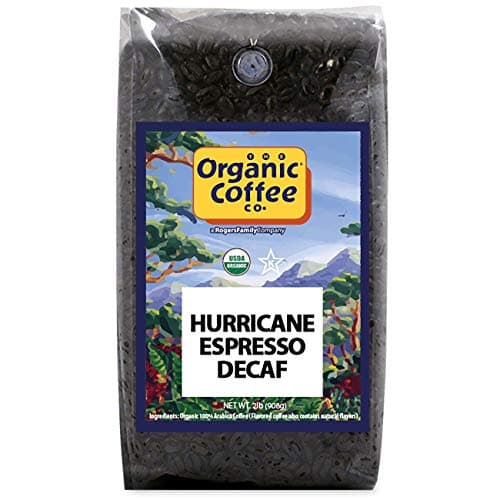
We have not cupped or pulled shots with these coffees, and the scores above are editorial judgments about blend composition, roast level, format and process disclosure rather than taste measurements. Every process, origin, roast-level and bag-size claim is taken from that specific product's own listing: the Swiss Water statements on the San Francisco Bay, Kicking Horse and Organic Coffee Co. bags are theirs, and where Lavazza, illy and Bristot do not publish a decaffeination method we have said so rather than inferring one. The regulatory thresholds, the process descriptions and the residual-caffeine figures are cited in Sources. The dial-in guidance is barista-community practice, not our measurement, and no figure here is a laboratory result — we do not have a lab.