The best coffee maker with a built-in grinder is the Breville BDC650BSS Grind Control — a burr-grinder machine with adjustable grind size and strength and a thermal carafe, which is the combination that lets you actually dial the coffee in rather than accept whatever the machine decides. If you want third-party proof the brewer itself is good, the Café Specialty Grind and Brew is SCA certified with a built-in burr grinder and six grind settings. For the best value with real burrs, the Kenmore Elite Grind and Brew.
Before any of that, the thing to understand about this entire category: one spec decides it, and it is printed on the listing. A grind-and-brew machine either has a burr grinder or a blade grinder, and the gap between them is not subtle. Cuisinart makes the argument for us by selling both — its DGB-800 is marketed as "Burr Grind & Brew" and its DGB-400NAS listing says, in its own words, "built-in blade grinder". The blade model costs roughly a third as much. That price gap is the whole story of this page, and it is worth paying.
The second thing to know is less flattering to the category as a whole: a built-in grinder is a convenience feature, not a quality feature. A separate good drip grinder plus a good drip brewer will beat any machine on this page at the same total price, because neither half is compromised to fit in one housing and because you can clean and replace them independently. What you buy here is one appliance, one footprint, one button, and beans that go in whole. If that convenience is the reason you are shopping, these are the machines that deliver it without wrecking the coffee.
What actually matters in a grind-and-brew machine
Burrs, not blades. This is the whole decision.A burr grinder crushes beans between two surfaces at a set distance, so the particles come out a consistent size. A blade grinder chops at random with a spinning propeller, producing dust and boulders in the same batch. In a drip brewer the dust over-extracts into bitterness while the boulders under-extract into sourness, and because they are in the same basket you taste both at once — which is the muddy, harsh flavor people describe when they say a cheap grind-and-brew "tastes burnt". Our burr vs blade grinder guide has the full mechanism. If the listing does not say burr, assume blade.
Whether the brewer itself is any good, independent of the grinder. It is entirely possible to put a decent burr grinder on a mediocre brewer. The useful shortcut here is SCA certification — the Specialty Coffee Association tests machines against a published standard for brew temperature, contact time and extraction, and a machine either passes or it does not. Two picks on this page are SCA certified and say so on the listing. It is the only third-party verification available in this category.
What happens to the grounds between the grinder and the basket. This is the ownership cost nobody mentions in reviews and the number one reason grind-and-brew machines get abandoned in cupboards. The grinder has to transfer ground coffee down a chute into the brew basket, and ground coffee is sticky, oily and static-prone. Chutes clog. Oily dark roasts clog them faster. Every machine here needs the chute and grinder cleaned regularly, which is more work than wiping out a carafe, and a clogged chute shows up as a weak brew rather than as an error light. Budget ten minutes a month for it — our how to clean a coffee grinder guide applies directly.
Thermal carafe or glass-and-hotplate. A hotplate keeps stewing the coffee it is keeping warm, and after thirty minutes you can taste it. An insulated thermal carafe holds temperature without continuing to cook, which matters more here than on a basic brewer because a machine with a grinder is pitched at people who care. Four of the six picks here are thermal or single-serve; two use glass.
Grind settings you can actually use."Adjustable grind" ranges from a genuine range of settings down to a coarse/medium/fine switch. Six settings is plenty for drip, where the window is narrower than espresso. What you want is the ability to go coarser when the brew tastes bitter and finer when it tastes thin — coffee-to-water ratio is the other lever.
What does not matter: WiFi, app control, voice assistants, and the number of programmable presets. None of them changes what is in the cup. They are not reasons to avoid a machine either — one of our picks has WiFi and is excellent — but do not pay extra for them while accepting a blade grinder.
The short answer
Quick picks
| # | Product | Best for | Score | Price |
|---|
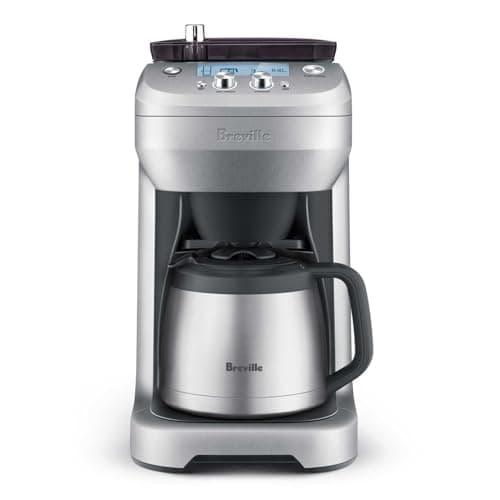
| 01 | Breville BDC650BSS Grind ControlThe machine to buy if you want to control the coffee rather than press a button and hope. Breville's listing specifies a built-in grinder with adjustable grind and strength settings and a thermal carafe, which is the full set of levers: grind coarser or finer when the brew tastes wrong, stronger or weaker independently of that, and no hotplate stewing the result. It has been the reference machine in this category for years and the price reflects that — this is the top of the mainstream bracket. | Best overall, and most control | | $399.95·Amazon |
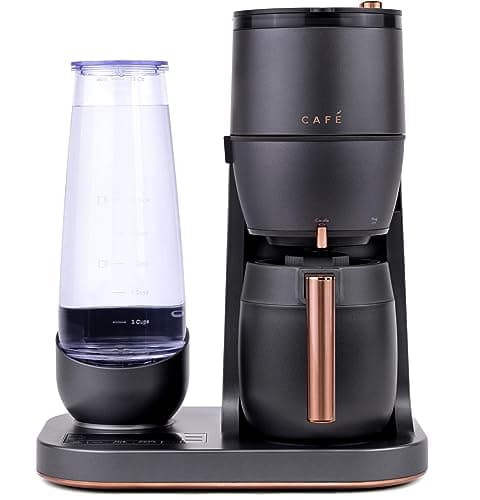
| 02 | Café Specialty Grind and Brew (10-Cup Thermal)The pick if you want independent proof the brewer is good. The listing states SCA certification, a built-in burr grinder with six grind settings, a 10-cup thermal carafe, single-serve through to full carafe, and a removable 75 oz reservoir. SCA certification is a real third-party test of brew temperature and extraction, and it is the only objective quality signal in this category — this machine has it and costs less than the Breville. WiFi is included and is the least interesting thing about it. | Best SCA-certified pick | | $328.00·Amazon |
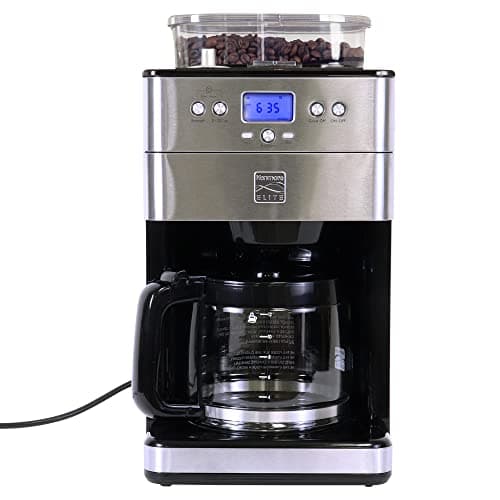
| 03 | Kenmore Elite Grind and Brew (12-Cup)The value pick, and the one we would point most people to if the Breville's price is the problem. The listing specifies a burr grinder, 12-cup capacity, a programmable timer, an air-tight bean hopper, and separate grind size and brew strength selectors — which is a genuinely complete feature set for well under the Breville. The compromise is the carafe: this is a glass-and-hotplate machine, so the coffee keeps cooking after it is brewed. | Best value with real burrs | | $271.99·Amazon |
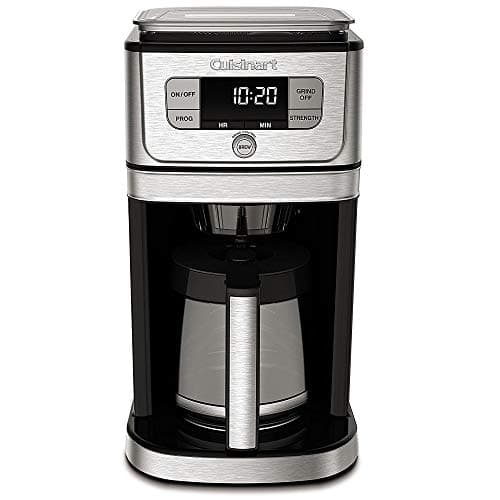
| 04 | Cuisinart DGB-800 Burr Grind & Brew (12-Cup)Cuisinart's fully automatic burr machine, 12-cup glass carafe, and the direct counterpart to its own blade-grinder DGB-400NAS further down this page — the two together are the clearest illustration of what burrs cost and what they buy. The DGB-800 is a solid, conventional machine from a brand with a real service network and the widest spare-parts availability in the category. It is the safe, unexciting choice, and that has value. | Best supported, and widest spares availability | | $240.20·Amazon |
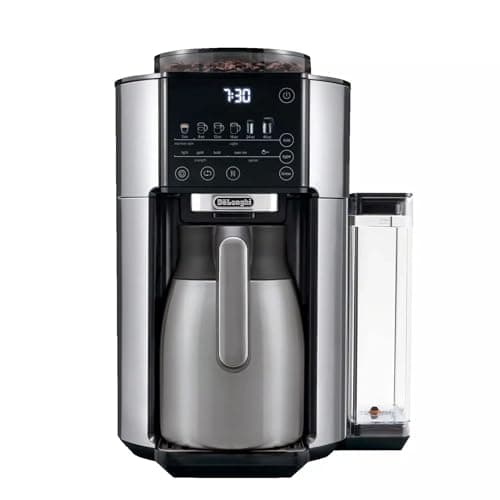
| 05 | De'Longhi TrueBrew CAM51035MThe one here built around single cups rather than a carafe. The listing specifies a built-in grinder, 8 oz to 24 oz brew sizes, hot or iced coffee, and a 40 oz carafe included — so it brews straight into a travel mug on a weekday and fills a carafe at the weekend. That dual nature is genuinely useful and almost unique in this category, and it is why it is here despite being the most expensive machine on the page. | Best for single cups and travel mugs | | $469.99·Amazon |
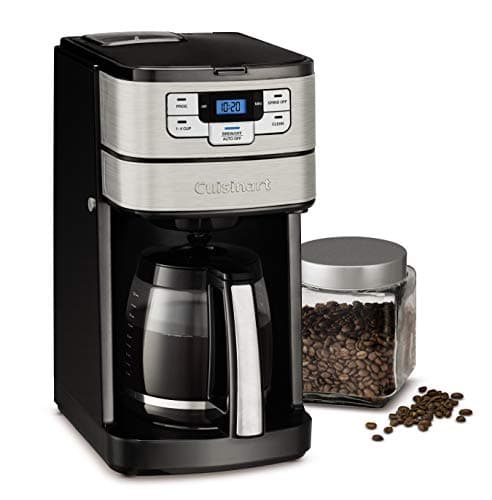
| 06 | Cuisinart Grind & Brew DGB-400NAS (12-Cup)Included deliberately, ranked last deliberately, and the most useful entry on this page for one reason: its own listing says "built-in blade grinder". It is the cheapest way into grind-and-brew by a wide margin, it is a competent 12-cup programmable drip machine, and the blade grinder will make your coffee worse than buying good pre-ground would. If your budget genuinely stops here, we would rather you bought a plain drip brewer and ground your own beans. | Cheapest grind-and-brew, with the trade-off stated plainly | | Check price → |
#ad · Live prices from the Amazon Product API, as of November 20, 2026. Where we have no verified live price, we show none — a gap beats a number that has rotted.
In detail
The picks, in full
Best overall, and most control
Breville BDC650BSS Grind Control
Built-in grinder, adjustable grind sizeIndependent strength controlThermal carafe, no hotplateSingle cup through to full carafe
The machine to buy if you want to control the coffee rather than press a button and hope. Breville's listing specifies a built-in grinder with adjustable grind and strength settings and a thermal carafe, which is the full set of levers: grind coarser or finer when the brew tastes wrong, stronger or weaker independently of that, and no hotplate stewing the result. It has been the reference machine in this category for years and the price reflects that — this is the top of the mainstream bracket.
- Grinder quality
- 9
- Brew control
- 10
- Carafe
- 9
- Ease of cleaning
- 6
- Value
- 6
Pros
- +Grind size and brew strength are separate controls, which almost nothing else offers
- +Thermal carafe means the last cup is not stewed
- +Brews straight into a single mug as well as the carafe
- +Long-established model, so spares and support are easy to find
- +Steel burrs rather than a blade
Cons
- −Most expensive pick here, and by a clear margin over the Kenmore
- −Grinder and chute need regular cleaning or the brew weakens
- −Grinder is loud — genuinely loud, not appliance-loud
- −Not SCA certified, unlike two cheaper machines on this page
- −Large footprint and tall; check cupboard clearance
Don't buy this if…
…you want a machine you never think about. The reason to buy this one is that it gives you controls, and if you are not going to use them the Kenmore does the same job for considerably less.
What earns this the top spot is the separation of grind and strength. On most grind-and-brew machines "strength" just means grinding more beans, which changes the dose and the extraction at the same time and makes troubleshooting impossible. Being able to move grind size on its own means you can fix a bitter brew by going coarser without also making it weaker, which is how you would dial in a brew manually.
Be realistic about the cleaning. A machine that grinds into its own basket is a machine with a chute full of coffee oils, and if you brew oily dark roasts it will need attention more often than the manual suggests. If that sounds like a chore you will not do, a separate grinder and brewer is genuinely the better purchase — best grinders for drip and pour over covers that route.
Best SCA-certified pick
Café Specialty Grind and Brew (10-Cup Thermal)
SCA certifiedBuilt-in burr grinder, 6 grind settings10-cup thermal carafe, single serve to 10 cupRemovable 75 oz reservoir
The pick if you want independent proof the brewer is good. The listing states SCA certification, a built-in burr grinder with six grind settings, a 10-cup thermal carafe, single-serve through to full carafe, and a removable 75 oz reservoir. SCA certification is a real third-party test of brew temperature and extraction, and it is the only objective quality signal in this category — this machine has it and costs less than the Breville. WiFi is included and is the least interesting thing about it.
- Grinder quality
- 9
- Brew quality (SCA certified)
- 10
- Carafe
- 9
- Ease of cleaning
- 7
- Value
- 8
Pros
- +SCA certification is independent verification of brew temperature and extraction
- +Six real grind settings is plenty of range for drip
- +Removable reservoir makes filling far easier than a fixed tank
- +Single serve through to 10 cups without changing anything
- +Thermal carafe and a burr grinder for less than the Breville
Cons
- −Six settings is fewer adjustment points than the Breville offers
- −Grind strength and size are less independently controllable
- −WiFi and app setup is an extra step you cannot entirely skip
- −Sold in several near-identical color variants at different prices — check which you are ordering
- −Same chute-cleaning burden as every machine here
Don't buy this if…
…you want the finest control over grind and strength as separate dials, or you actively do not want a connected appliance in your kitchen. The Breville and the Cuisinart DGB-800 are both less networked.
The SCA certification is the reason to take this machine seriously, and it is worth explaining why it matters more here than on a basic brewer. A grind-and-brew machine is two appliances in one housing, and manufacturers have historically spent the budget on the grinder — which is the visible, marketable half — and economized on the brew head. Certification means someone independent measured the water temperature and the extraction and found them within standard.
One ordering note, because it has caught people out: this model is listed under several nearly identical titles that differ only by finish, and the prices are not the same across them. Check the color and the price on the listing you are actually buying. If you want the same certification without the connected features, our best drip coffee makers roundup covers certified brewers you pair with your own grinder.
Best value with real burrs
Kenmore Elite Grind and Brew (12-Cup)
Burr grinderGrind size and brew strength selectors12-cup capacity, programmable timerAir-tight bean hopper
The value pick, and the one we would point most people to if the Breville's price is the problem. The listing specifies a burr grinder, 12-cup capacity, a programmable timer, an air-tight bean hopper, and separate grind size and brew strength selectors — which is a genuinely complete feature set for well under the Breville. The compromise is the carafe: this is a glass-and-hotplate machine, so the coffee keeps cooking after it is brewed.
- Grinder quality
- 8
- Brew control
- 8
- Carafe
- 5
- Ease of cleaning
- 7
- Value
- 10
Pros
- +Real burrs at the lowest price of any burr machine here
- +Separate grind and strength selectors, like the much pricier Breville
- +Air-tight hopper slows staling for beans left in the machine
- +12 cups and a timer suits a household that wants coffee ready at 7am
Cons
- −Glass carafe on a hotplate, so coffee stews after about half an hour
- −Not SCA certified
- −Kenmore's parts and service network is thinner than Breville's or Cuisinart's
- −Beans left in a hopper still stale, air-tight or not
- −Same chute-cleaning burden as the rest
Don't buy this if…
…you drink the carafe slowly over the morning. The hotplate will have cooked it by cup three, and a thermal machine like the Café or the Breville is the fix.
This is the pick that makes the burr-versus-blade argument affordable. The honest comparison is not against the Breville — it is against the cheap blade machines, because that is the real decision most buyers are making. For meaningfully less than the Breville you get the spec that matters, and you give up the thermal carafe.
On the hopper: "air-tight" helps, but no hopper preserves beans the way a sealed bag or canister does. If you leave a week of beans in any grind-and-brew machine, the last day will taste flatter than the first. Load a couple of days at a time and keep the rest sealed — see how to store coffee beans.
Best supported, and widest spares availability
Cuisinart DGB-800 Burr Grind & Brew (12-Cup)
Burr grinderFully automatic grind-to-brew12-cup glass carafeCuisinart parts and service network
Cuisinart's fully automatic burr machine, 12-cup glass carafe, and the direct counterpart to its own blade-grinder DGB-400NAS further down this page — the two together are the clearest illustration of what burrs cost and what they buy. The DGB-800 is a solid, conventional machine from a brand with a real service network and the widest spare-parts availability in the category. It is the safe, unexciting choice, and that has value.
- Grinder quality
- 8
- Brew control
- 6
- Carafe
- 5
- Support and spares
- 10
- Value
- 7
Pros
- +Burr grinder from a brand whose spares are genuinely easy to buy
- +Fully automatic operation — beans in, coffee out, no steps
- +Largest installed base of any burr machine here, so troubleshooting advice is everywhere
- +12-cup capacity for a household
Cons
- −Glass carafe and hotplate, so coffee stews
- −Fewer adjustment points than the Breville or the Kenmore
- −Not SCA certified
- −Stock on this exact listing was limited when we last checked
- −Known for needing the grind chute cleaned more often than most
Don't buy this if…
…you want a thermal carafe or fine grind control. The Café is certified and thermal for less, and the Kenmore gives you both selectors for less again.
We have ranked this fourth rather than higher because two cheaper machines offer more — certification and a thermal carafe in the Café's case, both selectors in the Kenmore's. What the Cuisinart offers instead is boring reliability of supply: if something breaks in three years, this is the machine whose carafe, basket and burr assembly you can still buy.
Its real value on this page is as the control in an experiment. Cuisinart sells this burr machine and a blade machine in the same range, same brand, same basic shape, at roughly a three-to-one price ratio. If you ever wondered what the grinder is worth in a grind-and-brew, that ratio is the answer.
Best for single cups and travel mugs
De'Longhi TrueBrew CAM51035M
Built-in grinder8 oz to 24 oz brew sizesHot or iced coffee settings40 oz carafe included
The one here built around single cups rather than a carafe. The listing specifies a built-in grinder, 8 oz to 24 oz brew sizes, hot or iced coffee, and a 40 oz carafe included — so it brews straight into a travel mug on a weekday and fills a carafe at the weekend. That dual nature is genuinely useful and almost unique in this category, and it is why it is here despite being the most expensive machine on the page.
- Grinder quality
- 8
- Single-cup brewing
- 10
- Versatility
- 9
- Brew control
- 6
- Value
- 5
Pros
- +Brews a single mug properly instead of a short carafe batch
- +8 oz to 24 oz range covers a small cup and a large travel mug
- +Dedicated iced setting brews stronger to survive dilution, rather than just chilling
- +Carafe included, so it covers the weekend too
- +De'Longhi's build quality and service are well established
Cons
- −The most expensive machine on this page
- −Fewer grind adjustment points than the Breville or Kenmore
- −Not SCA certified
- −Sold in several variants at very different prices — confirm the model code
- −Single-serve brewing means the grinder runs several times a day, so chute cleaning comes round faster
Don't buy this if…
…you brew a full carafe most mornings. You are paying a premium for single-serve flexibility you will not use, and the Café does carafes better for less.
Most grind-and-brew machines treat a single cup as a small carafe brew, which is why they tend to do it badly — the basket geometry and the shower head are designed around a full batch. The TrueBrew is built the other way round, which is the right design for the increasingly common household where one person wants one large coffee and nobody wants a pot.
Two cautions. Confirm the model code before ordering, because De'Longhi lists several TrueBrew configurations with and without the carafe at prices that differ substantially. And if a single mug is genuinely all you ever want, a smaller single-cup brewer plus a separate grinder is cheaper — our best coffee makers for one person roundup covers that case properly.
Cheapest grind-and-brew, with the trade-off stated plainly
Cuisinart Grind & Brew DGB-400NAS (12-Cup)
Blade grinder, not burrs12-cup glass carafe24-hour programmable timerLowest price in this category
Included deliberately, ranked last deliberately, and the most useful entry on this page for one reason: its own listing says "built-in blade grinder". It is the cheapest way into grind-and-brew by a wide margin, it is a competent 12-cup programmable drip machine, and the blade grinder will make your coffee worse than buying good pre-ground would. If your budget genuinely stops here, we would rather you bought a plain drip brewer and ground your own beans.
- Grinder quality
- 3
- Brew control
- 4
- Carafe
- 5
- Convenience
- 8
- Value
- 5
Pros
- +By far the cheapest route to beans-in, coffee-out convenience
- +Competent and reliable as a plain 12-cup programmable drip machine
- +24-hour timer works as advertised
- +Cuisinart spares and service, same as the DGB-800
Cons
- −Blade grinder produces dust and boulders together, which tastes muddy and harsh
- −No meaningful grind adjustment — a blade grinder has no setting, only a run time
- −Glass carafe and hotplate, so coffee stews on top of everything else
- −Blade grinders are messier in the chute, not cleaner
- −You will likely replace it, and the replacement is a burr machine
Don't buy this if…
…you care how the coffee tastes. That is blunt, but it is the honest position: at this price a plain drip brewer plus a budget burr grinder makes better coffee, costs about the same in total, and lets you replace either half. Our burr vs blade guide below is the reasoning.
We have scored this lowest on the page and we still think it belongs here, because thousands of people buy it every month believing a built-in grinder is a built-in grinder. It is not. Cuisinart is admirably direct about it — the words "built-in blade grinder" are in the listing title — but the word "grinder" does the heavy lifting in a search result and the word "blade" does not register.
If this is your budget, here is the alternative we would actually recommend: a plain programmable drip machine from our best drip coffee makers roundup plus a budget burr grinder from best grinders under $100. Two appliances instead of one, slightly more counter space, and noticeably better coffee for similar money — plus you can upgrade either half later.
The six machines compared
Specs below are the manufacturers' published descriptions for the exact listings above. Prices come from the live price layer, with the "as of" date in the quick picks table.
| Machine | Grinder | SCA certified | Carafe | Capacity | Who it suits |
|---|
| Breville Grind Control | Burr, adjustable | No | Thermal | Single cup to carafe | Wanting real control over the brew |
| Café Specialty Grind and Brew | Burr, 6 settings | Yes | Thermal | Single serve to 10 cup | Wanting verified brew quality |
| Kenmore Elite Grind and Brew | Burr, with strength selector | No | Glass | 12 cup | Best burr machine on a budget |
| Cuisinart DGB-800 | Burr | No | Glass | 12 cup | Wanting easy spares and support |
| De'Longhi TrueBrew CAM51035M | Burr | No | Glass carafe + single serve | 8 to 24 oz, plus 40 oz carafe | One large mug on a weekday |
| Cuisinart DGB-400NAS | Blade | No | Glass | 12 cup | Lowest price, at a real cost in the cup |
Burr vs blade, and why the price gap is worth it
A burr grinder has two abrasive surfaces set a fixed distance apart. Beans pass between them and are crushed to roughly that distance, so the output is reasonably uniform and you can change the size by changing the gap. A blade grinder has a propeller that chops whatever it hits for as long as the motor runs. There is no size setting, only a duration, and the output contains everything from powder to chunks.
In a drip brewer that matters because extraction is a race against time. Fine dust gives up its soluble compounds almost immediately and then keeps giving, extracting the bitter compounds that come out last. Coarse boulders barely extract at all in the four to six minutes a drip brew takes, contributing sourness and thinness. A blade grinder puts both in the same basket, so you taste bitter and sour simultaneously — which is why the result is usually described as harsh or muddy rather than as simply too strong or too weak. No brew setting fixes it, because the problem is in the grounds. The full explanation is in burr vs blade grinder.
Cuisinart's own line-up prices that difference for you: its burr machine and its blade machine sit roughly three to one apart. We think that gap is the best-value upgrade in the whole category, and if the burr machine is out of reach, buying good pre-ground coffee for a plain brewer beats a blade grinder.
The honest case against buying one at all
We would be doing you a disservice not to say this plainly. For the same total money, a separate grinder and a separate brewer make better coffee than any all-in-one. Three reasons, all structural:
Neither half is compromised to fit. A standalone grinder can have bigger burrs, a proper motor and a real adjustment mechanism, because it does not have to share a housing with a water tank and a heating element.
You can clean them properly. A built-in grinder empties into a sealed chute you cannot easily see or reach. A standalone grinder comes apart.
When one dies, you replace one. On a grind-and-brew machine, a failed grinder motor means a new coffee maker — the two are one appliance with one warranty.
The counter-argument is real too, and it is why this page exists: one appliance, one footprint, one button, and whole beans that do not go stale in a bag of grounds. If convenience is the reason you are buying, buy a burr machine from this page and do not feel bad about it. If it is not, see best grinders for drip and pour over and best drip coffee makers instead.
Cleaning a grind-and-brew machine
This is the part of ownership that reviews skip and owners complain about, so plan for it. The grind chute accumulates coffee oils and fines, and because the machine still runs when the chute is partly blocked, the symptom is a gradually weaker brew rather than a fault. People conclude the machine has "gone bad" after a year when it needs ten minutes of attention.
Three habits cover it. Run the grinder empty for a few seconds after the last brew of the day so the chute is clear rather than packed. Brush the chute and the burr chamber out once a month, more often if you brew oily dark roasts, which clog faster than medium roasts. And descale on the manufacturer's schedule, because these machines have the same water path as any drip brewer — cleaning vs descaling explains why those are two different jobs. Our how to clean a coffee grinder guide covers the burr side.
What about one with a milk frother?
"Coffee maker with grinder and frother" is a common search, and the honest answer is that combining all three into a drip machine is rare and usually done badly — the frother ends up a token wand on a brewer that was not designed for milk. The two routes that actually work are an espresso machine with a built-in grinder and a steam wand, or a grind-and-brew machine from this page plus a separate standalone frother, which is the cheaper and better of the two. See best espresso machines with a built-in grinder for the first route and best milk frothers for the second.
How we picked
We did not lab-test this gear
Everyone in this category says they tested twenty machines. We have not pulled shots on every product here, and we say so. What we did instead: compiled the published specifications, cross-checked the manufacturer manuals, computed the running cost (wattage to energy, grams-per-shot to cost-per-cup), weighed aggregated owner reports, and scored each product against a published rubric. The scores are judgments from documented research — not measurements we took, because we do not have a test lab and we will not pretend we do. Where hands-on time would tell you more than a spec sheet, we flag it. Where a number came from someone else's work, we name them in Sources.
Questions
Frequently asked
What is the best coffee maker with a built-in grinder?+
The Breville BDC650BSS Grind Control, because it is the only machine here with independent grind-size and brew-strength controls plus a thermal carafe. If you want third-party verification of brew quality, the Café Specialty Grind and Brew is SCA certified and costs less. For the best value with real burrs, the Kenmore Elite. Live prices are in the table above.
Does a built-in grinder need to be a burr grinder?+
Yes, and it is the one spec worth insisting on. A blade grinder has no size setting and produces dust and boulders together, so the brew tastes bitter and sour at once and no brew setting fixes it. Cuisinart sells both a burr and a blade grind-and-brew machine at roughly a three-to-one price difference — that gap is the best-value upgrade in the category. See
burr vs blade grinder.
Is a coffee maker with a built-in grinder worth it?+
It is worth it for convenience, not for coffee quality. At the same total price a separate grinder and brewer make better coffee, because neither half is compromised to share a housing, you can clean both properly, and when one fails you replace one rather than the whole appliance. What you buy with an all-in-one is a single footprint and a single button, which is a legitimate thing to want.
What does SCA certified mean on a coffee maker?+
It means the Specialty Coffee Association tested the machine against its published brewing standard — brew water temperature, contact time and extraction — and it passed. It is the only independent quality signal available in this category, and it tells you about the brewer rather than the grinder. Two machines on this page state it on their listings.
Do grind-and-brew coffee makers clog?+
The grind chute does, and it is the main ownership complaint. Ground coffee is oily and static-prone, so it builds up between the grinder and the basket, and because the machine keeps working when the chute is partly blocked the symptom is a slowly weakening brew rather than an error. Run the grinder empty for a few seconds after your last brew, and brush the chute out monthly — more often with dark oily roasts. See
how to clean a coffee grinder.
Can you use pre-ground coffee in a grind-and-brew machine?+
Almost all of them allow it — there is usually a bypass setting or a separate basket position that skips the grinder. It is worth knowing about for two reasons: it lets you use decaf or a flavored coffee without putting oily beans through the burrs, and it gives you a working machine if the grinder ever fails. Check that the model you are buying has the bypass if that matters to you.
Should I get a thermal carafe or a glass one?+
Thermal, if the machine you want offers it. A glass carafe sits on a hotplate that keeps cooking the coffee, and after about half an hour you can taste it. An insulated thermal carafe holds temperature without continuing to extract. Four of the six picks here are thermal or single-serve; the two glass machines are the Kenmore and the Cuisinart DGB-800, both of which are otherwise good buys if you drink the pot quickly.
Same gear, other pages
We cover this gear elsewhere too
Receipts
Sources
- Breville — BDC650BSS Grind Control listing: built-in grinder, adjustable grind and strength settings, thermal carafe
- Café — Specialty Grind and Brew listing: SCA certified, built-in burr grinder, 6 grind settings, 10-cup thermal carafe, removable 75 oz reservoir
- Kenmore — Elite Grind and Brew listing: burr grinder, 12 cup, programmable timer, air-tight bean hopper, grind size and brew strength selectors
- Cuisinart — DGB-800 listing: fully automatic Burr Grind & Brew, 12-cup glass
- Cuisinart — DGB-400NAS listing: "built-in blade grinder", 24-hour programmable timer, glass carafe, 12-cup (the basis for the burr-vs-blade price comparison above)
- De'Longhi — TrueBrew CAM51035M listing: built-in grinder, 8 oz to 24 oz, hot or iced, 40 oz carafe
- Specialty Coffee Association — certified home brewer program and brewing standards, the basis for the SCA certification points above
We do not run a testing lab, and we do not pretend to. Where a measured number came from someone else's work, we name them and link them. Where we could not verify something, we say so on the page rather than quietly leaving it out. Read our full method.