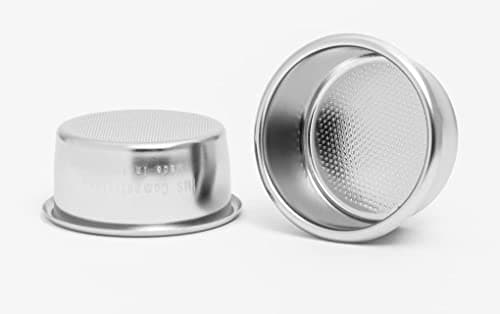
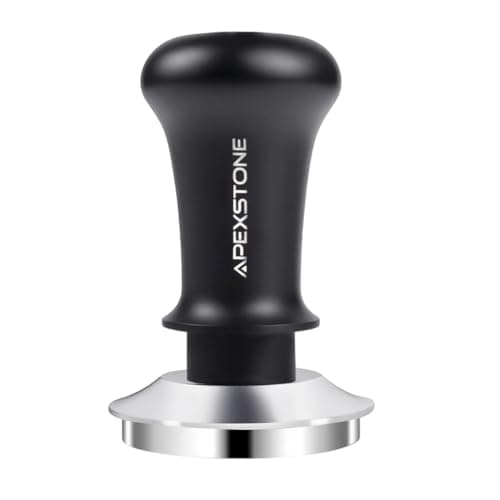
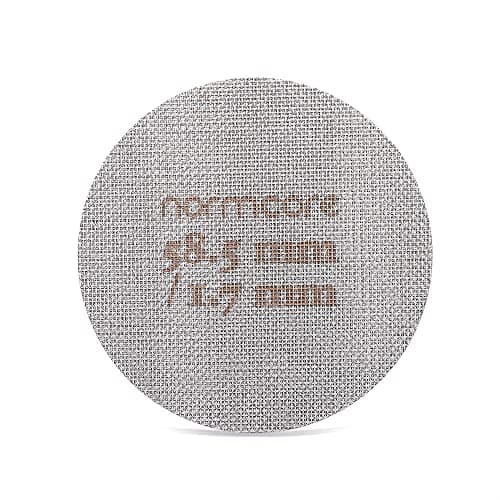
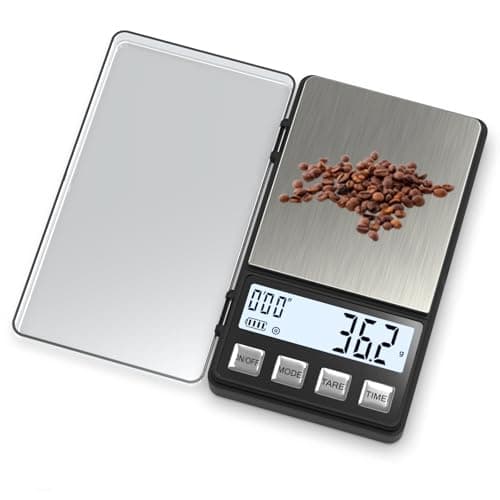
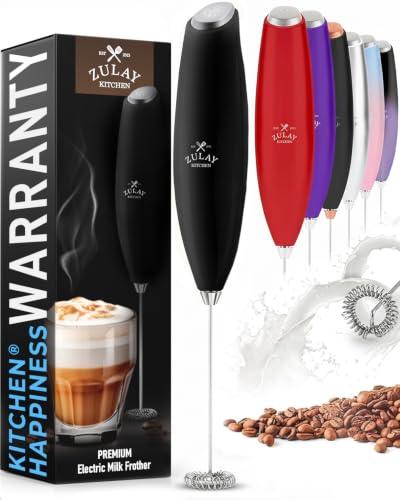
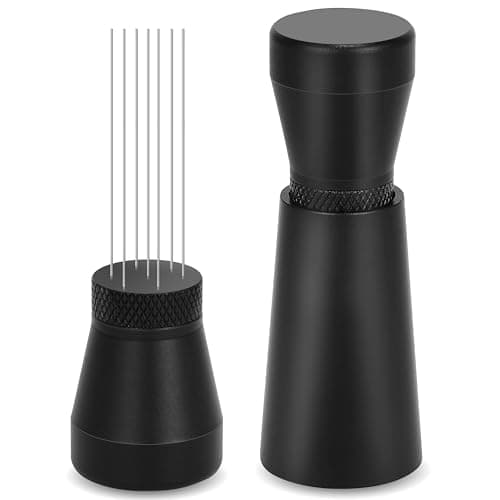
Under twenty-five dollars, the accessory that changes your espresso the most is a WDT tool — the Apexstone with a stand is the one to buy, and it fixes channeling, which is the single most common fault on every machine under a thousand dollars. After that, in order of effect per dollar: a single-wall precision basket, a calibrated tamper and a puck screen. The budget pick is the Zulay handheld milk frother, the cheapest thing on this page and the only one that adds a drink you could not otherwise make.
This page exists because the cheap shelf is badly served. Accessory roundups tend to rank within a category — the best tampers, the best scales — which is useful once you know what you need, and useless when the real question is "I have twenty-five dollars, what should it be?" The answer is not obvious, because the items are not equally important: one of them removes a fault that ruins shots outright, and another is a convenience you would never miss. So this page ranks across categories, by how much each purchase moves the coffee.
Why a WDT tool comes first. Ground coffee leaves every grinder in clumps — static and the shearing action of the burrs make that unavoidable. A clump inside the basket is a dense spot, and water under nine bars of pressure does not push through a dense spot, it goes around it. That is channeling, and the symptoms are instantly recognizable: the shot sprays sideways out of the basket, runs faster than it should, and tastes thin and sour and harsh at the same time. No grind adjustment fixes it, because the grind is not the problem — the distribution is. Stirring the dry grounds with fine needles before you tamp breaks the clumps and is, per dollar, the largest single improvement available anywhere in home espresso. How to fix channeling has the full diagnosis.
Why a precision basket comes second. The basket that shipped with your machine is probably stamped rather than laser-drilled, which means the holes vary in size and are unevenly distributed — and on cheaper machines it may be pressurized, with a single fixed orifice behind a second wall. A pressurized basket makes foam from any coffee, which sounds generous and is actually the problem: it sets the resistance itself, so your grind setting barely changes the shot. A single-wall precision basket with consistent hole geometry hands that control back to you. Pressurized vs unpressurized baskets explains the mechanism, and best precision baskets ranks the whole field including the ones above this budget.
Check your portafilter diameter before you buy any of this.Baskets, tampers, puck screens and dosing funnels are all diameter-specific, and the fit is exact — a 54mm part does not go into a 58mm portafilter, and a 53.3mm basket and a 54mm basket are different parts. The three common sizes are 58mm (the commercial standard, used by Gaggia, Rancilio, Lelit and most prosumer machines), 54mm (Breville) and 51mm (most budget De'Longhi and CASABREWS machines). Our portafilter size by brand chart lists what fits what, and there is a shopping page per diameter: 58mm, 54mm and 51mm. Every pick below exists in all three sizes; we have listed the specific one we would buy and noted its diameter in the specs.
What is deliberately not here. No cups, no canisters, no coffee and no gifts. Those are all fine purchases and the hub has pages for them — this page is only the tools that sit between the grinder and the cup. If you are shopping for someone else, our best coffee gifts under $50 page is built for that instead and shares none of these picks.
The order to buy in, if you are buying one at a time. WDT tool, then a single-wall precision basket, then a calibrated tamper, then a scale. The first two fix faults; the second two remove variables. A puck screen and a frother are refinements and can wait indefinitely without anything being wrong.
Two of these are not independent. A precision basket and a WDT tool work together, because a precision basket reports the puck you gave it honestly — including a bad one. If you can only buy one this week, buy the WDT tool, which improves a stamped basket as well as a precision one. If your current basket is pressurized, buy the basket first, because until it is gone nothing else you do to the puck changes the shot.
Diameter, every time. The most common wasted purchase in this category is the right part in the wrong size. Measure the inside of your portafilter or look the machine up on our portafilter size by brand chart before ordering anything that sits inside it. Note also that Breville machines are described as 54mm but take 53.3mm baskets, which is a real distinction and not a rounding error.
What is worth more than $25, and when. Three things on the hub reward spending past this page: a bottomless portafilter, because seeing the underside of the puck is the only direct feedback on your distribution; a faster scale, because response time matters more than resolution once you are weighing a live pour; and a dosing cup, if you single dose. See best bottomless portafilters and best dosing cups. If you want a complete starting kit rather than individual parts, our espresso starter kit page assembles one.
And the cheap purchase that is not on this page. Descaling and cleaning products belong in any accessory budget, but they are maintenance rather than improvement, so they are ranked separately on best espresso cleaning kits and best descaling solutions. If your machine is running slow or tasting flat and none of the tools above help, cleaning vs descaling is the page to read.