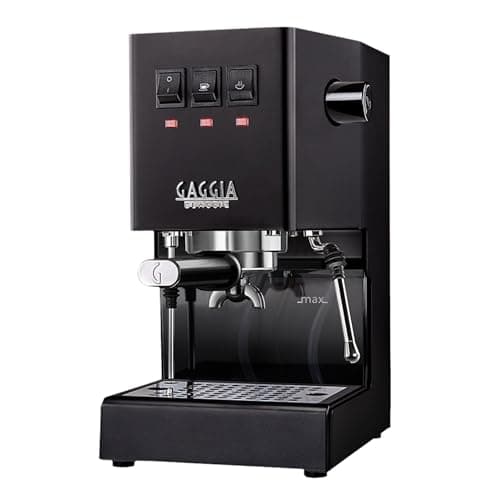
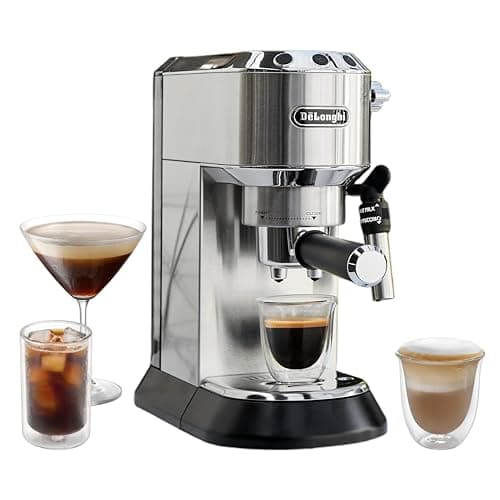
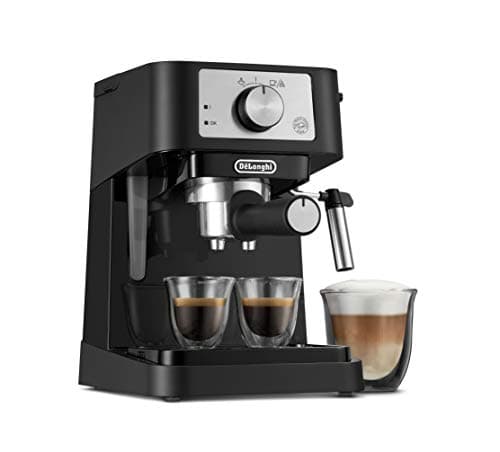
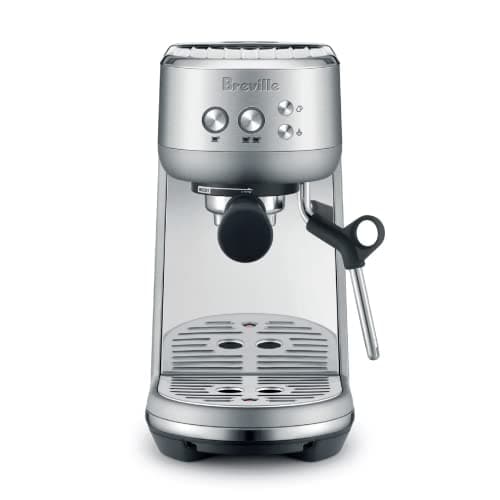
If you already own a grinder, the best espresso machine without one is the Breville Bambino (BES450) — a 54mm machine with a ThermoJet heater that is ready to brew in about three seconds, which is the single most useful thing a grinder-free machine can give you. If you want 58mm commercial-size parts and a platform you can modify for a decade, the Gaggia Classic Evo Pro is the one to buy. And the De'Longhi Stilosa (EC260) is the budget pick: the cheapest machine here that will pull a real shot from coffee you ground yourself.
There is a reason this is a category and not a compromise. A bean-to-cup or grinder-in-the-side machine has to fit a burr set, a motor, a hopper and a dosing chute inside the same chassis as the boiler and the pump, at the same price. Something gives, and what gives is almost always the grinder: the burrs are small, the adjustment is coarse, the retention is high, and you cannot replace it without replacing the machine. Our best espresso machines with a grinder page makes the case for the other side honestly, because for a buyer starting from nothing on one counter it is often the right call. This page is for the other buyer — the one who already has a grinder that out-grinds anything a combo machine would have included.
What to look for when the grinder is not part of the purchase. Taking the grinder out of the equation changes what matters, and it changes it in a useful direction: every dollar of the price is now spent on heating, pressure and steam.
How fast it is ready, and how stable it stays. A thermoblock or thermocoil heats water on demand and is ready in seconds; a small aluminum or brass boiler takes minutes to come up and then minutes more to settle. Neither is wrong, but they suit different mornings. If you pull one or two shots on a weekday, heat-up time is the spec you will feel every single day. If you pull four back to back on a Sunday, boiler mass is what keeps shot three tasting like shot one.
Portafilter diameter, because it decides what you can buy later.58mm is the commercial standard, so a 58mm machine opens the entire aftermarket — precision baskets, bottomless portafilters, puck screens, every tamper on the shelf. 54mm is Breville's size and is well supported but narrower. 51mm is the budget size and the accessory shelf is thin. Our portafilter size by brand chart lists what fits what, and 58mm portafilter accessories shows the difference in practice.
Whether the basket is pressurized. A pressurized (dual-wall) basket creates artificial back-pressure so that stale, badly ground coffee still produces foam. That is exactly the crutch you do not need if you own a grinder — and on some cheap machines it is the only basket in the box. Every machine on this page either ships with a single-wall basket or accepts one, which is the whole point of owning the grinder. Pressurized vs unpressurized baskets explains why the distinction matters more than the price difference.
The steam wand, if you drink milk. A panarello-style frothing aid injects air through a sleeve and produces warm, bubbly milk; a bare wand produces the dense, paint-like microfoam that latte art is made from and that tastes sweeter. Most machines here have a bare wand, or can be converted to one by pulling the sleeve off.
One honest note on where the money should go. If you have a fixed budget and you are weighing a $500 machine paired with your existing grinder against a $500 machine with a built-in grinder, the first option wins almost every time — you are buying a better boiler, a better pump and a better wand with the same money. The exception is counter space, which is a real constraint and the one argument the combo machines genuinely win.
How to split a budget when the grinder is already bought. With the grinder out of the equation the money divides cleanly into three things: how fast the machine is ready, how stable it stays across shots, and how well it steams. Those are the three columns worth arguing about, and the ranking above is essentially an ordering of how much of each you get per dollar.
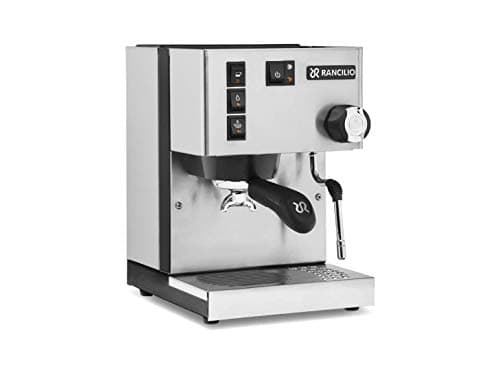
Thermoblock or boiler is a lifestyle choice, not a quality one. A thermoblock (Bambino, Dedica, Stilosa) heats a small volume of water as it passes through, so it is ready in seconds and cools just as fast. A boiler (Gaggia Classic, Silvia) heats a reservoir of water and the brass around it, so it takes minutes to be ready and then holds that temperature through several shots. If you make one drink on a weekday morning the thermoblock is strictly better for you; if you make four on a weekend, the boiler is. Single boiler vs double boiler goes further up the ladder.
Budget for a single-wall basket on the cheap machines. The Dedica and the Stilosa both ship with pressurized dual-wall baskets. Those exist to make supermarket pre-ground coffee produce foam, and they work by restricting flow at a fixed orifice rather than letting the coffee bed set the resistance. That means your grinder setting barely matters — which defeats the entire reason you are on this page. A single-wall 51mm basket costs very little and is the difference between the machine responding to your grind and ignoring it.
Check the portafilter size before you buy accessories. 58mm, 54mm and 51mm are not interchangeable and the fit is exact. Our portafilter size by brand chart is the reference, and there is a shopping page per diameter: 58mm, 54mm and 51mm.
What a grinder-free machine does not fix. If your shots run fast and taste sour, or slow and taste harsh, the machine is rarely the cause — grind, dose and distribution are. How to dial in espresso is the routine, and how to fix channeling covers the single most common fault on every machine on this page.