Conical is the default. Almost every grinder sold under about $300 uses a cone spinning inside a ring, and the overwhelming majority of hand grinders at consumer prices are conical too. So the useful question is almost never "should I buy conical or flat" — our best flat burr grinders page settles that one. The useful question is which conical, and the answer turns on something most spec sheets bury: not how many grind settings a grinder has, but where those settings land.
Here is the mechanism, briefly, because the rest of this page depends on it. A conical burr set is a cone turning inside a matched ring. Beans fall into the gap under gravity and are crushed progressively as they travel down a narrowing channel, which is a gentler, slower process than a flat burr's centrifugal shear. That gentleness is why conicals run cooler and quieter at the same motor speed, why they clear a dose without much help, and why they tend toward a slightly wider particle spread — more body, more blended sweetness, a more forgiving shot. It is also why they produce a noticeable share of very fine particles at espresso settings, which is the failure mode to watch for: too many fines and the puck chokes or channels instead of flowing.
Now the part that actually decides your purchase.A grinder's adjustment range is finite, and manufacturers choose where to spend it. Baratza sells the clearest demonstration of this on the market: the Encore and the Encore ESPshare a body, a motor and a count of 40 stepped settings. The Encore spends those 40 steps across roughly 250 to 1200 microns — Baratza's own published range, which is drip and pour-over territory. The ESP uses a re-engineered burr that concentrates its steps down in the espresso region instead. Same number of clicks. Completely different grinder. Buy the Encore for espresso and you will run out of adjustment before you run out of patience.
That is the lens for this whole ranking. When you read "60 settings" on a box, ask where they are, not how many there are — and if the manufacturer will not say, treat the silence as information. The OXO Brew further down this page is a case study in exactly that problem.
One more thing worth saying before the picks. The best-value conical burrs in the world are attached to handles. A hand grinder has no motor to pay for, no housing to cool and no chute to retain grounds, so the same money buys a bigger, better-finished burr set and genuinely zero retention. If you grind one or two doses a day and do not mind the minute of work, the manual picks here out-grind the electrics above them on price. If you grind for a household every morning, that minute becomes four and the electrics win on nothing but convenience — which turns out to be the thing people actually buy. Both answers are on this page. Hand vs electric grinders has the long version.
The short answer
Quick picks
| # | Product | Best for | Score | Price |
|---|
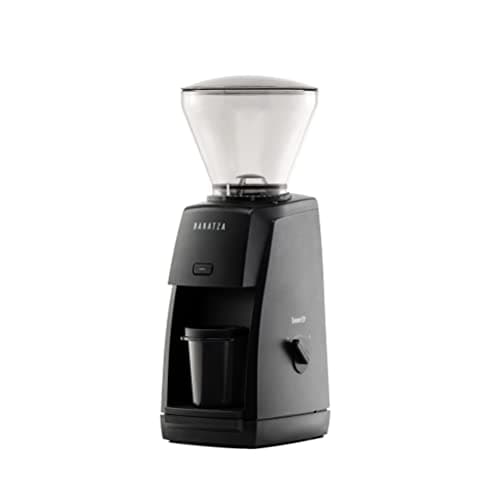
| 01 | Baratza Encore ESPThe conical grinder we would hand almost anyone who owns an espresso machine, and our overall pick. It is the standard Encore chassis with a re-engineered 40mm conical burr whose 40 stepped settings are concentrated where espresso actually lives, plus a macro adjustment ring that swings the whole range over to filter when you want a pour over instead. That re-tune is the entire product, and it is the right one: an espresso-capable conical at this price normally means a grinder that reaches fine but leaves you four usable clicks to work with. It also inherits Baratza's parts and repair program, which is the best in the category and the reason these grinders stay in service for a decade. | Best overall — the conical to buy if you pull espresso and also brew filter | | $199.95·Amazon |
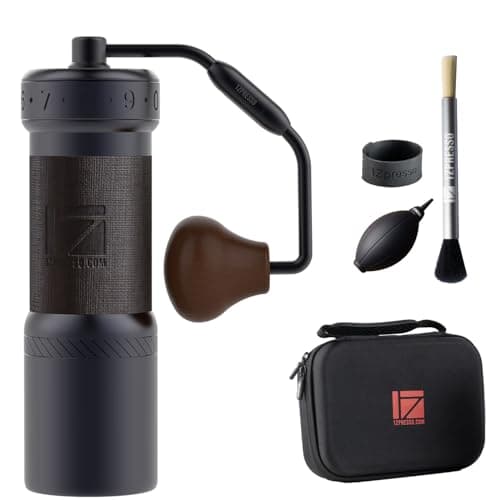
| 02 | 1Zpresso K-Ultra Manual Coffee GrinderThe best conical burr set you can buy for this money, and it is attached to a handle. 48mm heptagonal stainless conical burrs are larger and better finished than anything in the electrics above, and the external numbered dial — 100 clicks to a rotation, read off the body rather than counted blind inside it — makes moving between espresso and pour over a repeatable, written-down operation instead of a guess. Retention is effectively zero because there is no chute for grounds to hide in. What you give up is a motor: an 18g espresso dose is real work, and a household's morning is several minutes of it. | Best grind quality per dollar, and the best conical for one or two doses a day | | $207.20·Amazon |
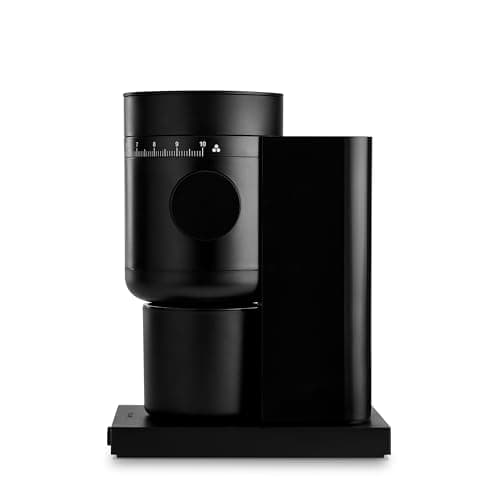
| 03 | Fellow Opus 2 Conical Burr GrinderThe conical to buy if you want a single-dose workflow without leaving conical burrs behind. 48mm stainless conical burrs — the same diameter as the K-Ultra's, driven by a 300W motor instead of your arm — with a stepless external dial marked at 48 positions, a 100g load bin and a 30g dosing cup that drops into 54mm and 58mm portafilters. The ionizer keeps static down, and reported retention is low enough that a grind change shows up on the next shot rather than the one after. It is fast, it is tidy, and it is the only electric here that is stepless. | Best single-dose conical — stepless adjustment and a portafilter dosing cup | | $159.95·Amazon |
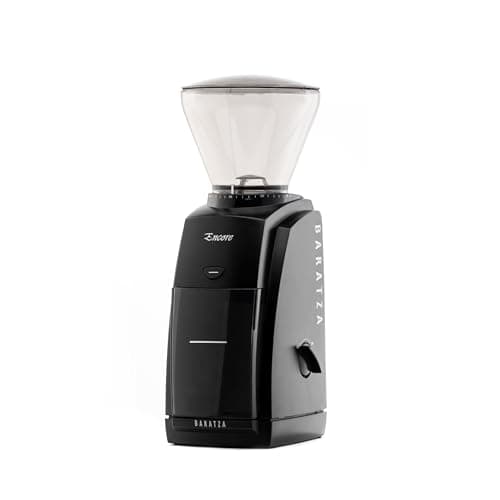
| 04 | Baratza Encore Coffee GrinderThe default answer for filter coffee, and it has been for a decade. Baratza puts the Encore's 40 stepped settings across a published 250 to 1200 micron range, which is precisely where drip, pour over and French press live, so the steps are closely spaced in the part of the range you will actually use. Gear and electronic speed reduction hold the burrs to 550 RPM, which keeps grounds cool and the noise down. One switch and a pulse button: there is nothing to configure and nothing to learn. Buy it for filter and it is close to unimprovable at the price; buy it for espresso and you have bought the wrong Baratza. | Best for drip, pour over and French press | | $149.95·Amazon |
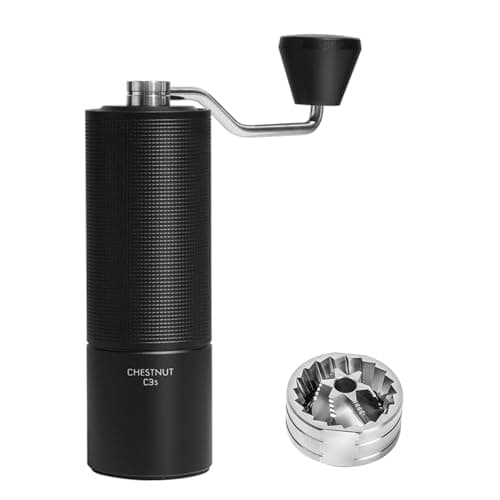
| 05 | Timemore Chestnut C3SThe budget pick, and the cheapest conical on this page worth owning. Timemore's S2C steel conical burrs sit in an all-metal body with the classic internal dial, which moves about 0.0833mm — roughly 83 microns — per click across twelve clicks to a rotation. Those are filter-sized steps, and the C3S is a filter grinder: it will not give you a workable espresso window, and Timemore sells a separate ESP version with a much finer dial for exactly that reason. At around 530 grams it packs for a trip, and for pour over and French press the grind is better than the price has any business being. | Budget pick — the cheapest conical here that grinds like a real grinder | | $63.16·Amazon |
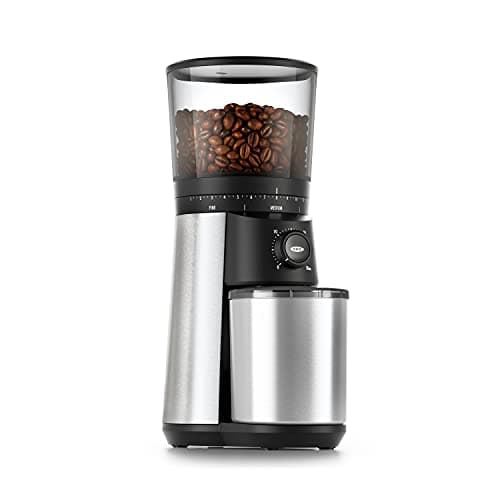
| 06 | OXO Brew Conical Burr Coffee GrinderThe easiest grinder on this page to live with on a weekday morning, and the one to buy if you brew a full carafe for a household. A one-touch timer remembers the last setting, so the same dose lands every day without a scale, and the UV-blocking hopper holds enough beans for a week of drip. It ranks last here for one reason and it is a fair one: the published specification for this grinder contradicts itself across sources — settings counts of 15, 38 and 43 all appear, and OXO publishes no burr diameter at all — so nobody can tell you where its adjustment steps land, which is the exact question this page is built around. For drip that does not matter. For espresso it decides everything, and the fines it produces at the fine end are why we do not recommend it there. | Best for a household grinding a full carafe every morning | | $82.49·Amazon |
#ad · Live prices from the Amazon Product API, as of November 20, 2026. Where we have no verified live price, we show none — a gap beats a number that has rotted.
In detail
The picks, in full
Best overall — the conical to buy if you pull espresso and also brew filter
Baratza Encore ESP
40mm conical burrs, espresso-tuned40 stepped settingsMacro adjust ring for filterElectric, Baratza parts support
The conical grinder we would hand almost anyone who owns an espresso machine, and our overall pick. It is the standard Encore chassis with a re-engineered 40mm conical burr whose 40 stepped settings are concentrated where espresso actually lives, plus a macro adjustment ring that swings the whole range over to filter when you want a pour over instead. That re-tune is the entire product, and it is the right one: an espresso-capable conical at this price normally means a grinder that reaches fine but leaves you four usable clicks to work with. It also inherits Baratza's parts and repair program, which is the best in the category and the reason these grinders stay in service for a decade.
- Grind quality
- 8.5
- Adjustment at espresso
- 9
- Workflow
- 9
- Build
- 8
- Value
- 9.5
Pros
- +Its 40 steps are spent in the espresso range rather than across the filter range, which is the whole point
- +Macro ring moves the usable window out to drip and pour over without changing grinders
- +Baratza's spare-parts and repair support is the strongest of any brand here
- +Costs little enough to leave budget for the machine, the basket and the beans
- +Shares a huge owner base with the Encore, so starting settings are easy to find
Cons
- −Stepped, not stepless — there will be shots where the setting you want sits between two clicks
- −Plastic hopper and chassis panels feel ordinary beside the metal hand grinders here
- −Retention is real: a grind change wants a purge before it lands cleanly
- −Noticeably louder than a hand grinder
Don't buy this if…
…you only ever brew filter coffee. The espresso tune is the product, and you would be paying for range you never use — buy the standard Encore below and spend the difference on beans.
Full review: Baratza Encore ESP review. If you are weighing it against the grinder it is derived from, Baratza Encore vs Encore ESP is the head-to-head, and best grinders for beginners places it against the rest of the entry field.
Best grind quality per dollar, and the best conical for one or two doses a day
1Zpresso K-Ultra Manual Coffee Grinder
48mm heptagonal stainless conical burrsExternal numbered dial100 clicks per rotationManual, carry case included
The best conical burr set you can buy for this money, and it is attached to a handle. 48mm heptagonal stainless conical burrs are larger and better finished than anything in the electrics above, and the external numbered dial — 100 clicks to a rotation, read off the body rather than counted blind inside it — makes moving between espresso and pour over a repeatable, written-down operation instead of a guess. Retention is effectively zero because there is no chute for grounds to hide in. What you give up is a motor: an 18g espresso dose is real work, and a household's morning is several minutes of it.
- Grind quality
- 9.5
- Adjustment at espresso
- 9.5
- Workflow
- 7
- Build
- 9.5
- Value
- 8.5
Pros
- +Larger, better-finished burrs than any electric at this price
- +External numbered dial means a setting is read and written down, never counted blind
- +Effectively zero retention — a grind change lands on the very next dose
- +No motor noise at all, which matters more at 6am than the spec sheet suggests
- +All-metal build with a case, and it travels without complaint
Cons
- −Grinding an espresso dose by hand is genuinely effortful, every single time
- −Hopeless for a household: four doses is a workout, not a routine
- −Costs more than most of the electrics here, which reads badly until you use it
- −Capacity is one dose at a time by design
Don't buy this if…
…you grind for more than two people, or you want to press a button while you steam milk. The grind is better than the electrics above; the workflow is not.
Full review: 1Zpresso K-Ultra review. For the rest of the manual field see best hand grinders, and 1Zpresso J vs K-Ultracovers the internal-ring versus external-dial decision inside 1Zpresso's own range.
Best single-dose conical — stepless adjustment and a portafilter dosing cup
Fellow Opus 2 Conical Burr Grinder
48mm stainless conical burrsStepless dial, 48 marked positions100g bin + 30g espresso cup300W, ionizer anti-static
The conical to buy if you want a single-dose workflow without leaving conical burrs behind. 48mm stainless conical burrs — the same diameter as the K-Ultra's, driven by a 300W motor instead of your arm — with a stepless external dial marked at 48 positions, a 100g load bin and a 30g dosing cup that drops into 54mm and 58mm portafilters. The ionizer keeps static down, and reported retention is low enough that a grind change shows up on the next shot rather than the one after. It is fast, it is tidy, and it is the only electric here that is stepless.
- Grind quality
- 8.5
- Adjustment at espresso
- 8.5
- Workflow
- 9
- Build
- 7.5
- Value
- 8
Pros
- +Stepless adjustment, which none of the other electrics on this page offer
- +48mm burrs driven by a motor — hand-grinder burr size, hands-free
- +Dosing cup drops straight into a 54mm or 58mm portafilter, so nothing is transferred twice
- +Ionizer and a short path keep static and retention genuinely low
- +Fast: an espresso dose is a matter of seconds, not a minute
Cons
- −Plastic grind chamber on a grinder at this price, which nobody leads with
- −Reviewers rate its filter and pour-over results as adequate rather than excellent
- −Stepless with marks rather than detents — settings are approximate unless you note them carefully
- −Louder than the gear-reduced Baratzas
Don't buy this if…
…filter coffee is your main brew. It is tuned for the fine end, and the Encore below produces better pour over for less money.
Full review: Fellow Opus 2 review. Against our overall pick it is Fellow Opus 2 vs Baratza Encore ESP — stepless single dosing against numbered settings and a repair program — and best single dose grinders places it in the wider single-dose field.
Best for drip, pour over and French press
Baratza Encore Coffee Grinder
40mm conical burrs40 stepped settings, 250-1200 microns550 RPM gear-reduced motorElectric, fully serviceable
The default answer for filter coffee, and it has been for a decade. Baratza puts the Encore's 40 stepped settings across a published 250 to 1200 micron range, which is precisely where drip, pour over and French press live, so the steps are closely spaced in the part of the range you will actually use. Gear and electronic speed reduction hold the burrs to 550 RPM, which keeps grounds cool and the noise down. One switch and a pulse button: there is nothing to configure and nothing to learn. Buy it for filter and it is close to unimprovable at the price; buy it for espresso and you have bought the wrong Baratza.
- Grind quality
- 8
- Adjustment at espresso
- 6
- Workflow
- 8.5
- Build
- 8
- Value
- 9
Pros
- +40 steps spread across the filter range, so medium adjustments are genuinely fine-grained
- +550 RPM gear reduction keeps the grounds cool and the grinder quiet for an electric
- +Every part is available and replaceable — this is a grinder you repair, not replace
- +One switch, one pulse button, no menus
- +The most documented grinder in home coffee: a starting point exists for every brewer
Cons
- −Not an espresso grinder — the adjustment runs out before the fine end does
- −Stepped adjustment with no micro-adjustment between clicks
- −Plastic hopper and body panels
- −Retention means a setting change needs a purge dose
Don't buy this if…
…espresso is anywhere in your plans. Spend the extra on the Encore ESP at the top of this page instead — it is the same grinder with its steps moved to where you need them.
Full review: Baratza Encore review. See best grinders for drip and pour over for the field it leads, and best Baratza grinders for how it sits against the Virtuoso+ and the Vario+.
Budget pick — the cheapest conical here that grinds like a real grinder
Timemore Chestnut C3S
S2C steel conical burrsInternal stepped dial, 0.0833mm per click12 clicks per rotationAll-metal body, ~530g
The budget pick, and the cheapest conical on this page worth owning. Timemore's S2C steel conical burrs sit in an all-metal body with the classic internal dial, which moves about 0.0833mm — roughly 83 microns — per click across twelve clicks to a rotation. Those are filter-sized steps, and the C3S is a filter grinder: it will not give you a workable espresso window, and Timemore sells a separate ESP version with a much finer dial for exactly that reason. At around 530 grams it packs for a trip, and for pour over and French press the grind is better than the price has any business being.
- Grind quality
- 8
- Adjustment at espresso
- 6
- Workflow
- 7
- Build
- 8.5
- Value
- 9.5
Pros
- +Grind quality for pour over and French press well beyond what the price suggests
- +All-metal construction with no plastic in the grind path
- +Light and compact enough to travel with properly
- +Zero retention and nothing to service
- +Cheapest genuine conical burr grinder we would actually recommend
Cons
- −The classic dial's ~83 micron steps are far too coarse for espresso
- −Internal dial — adjusting means counting clicks blind, not reading a number
- −Small capacity, one dose at a time
- −Hand-powered, so a household morning is out of the question
Don't buy this if…
…you want espresso. Buy Timemore's C3 ESP instead, which is the same grinder with the espresso dial — the one spec that separates them.
Full review: Timemore Chestnut C3S review, and Timemore C3 ESP review is the espresso-dial sibling. For the rest of the sub-$100 field see best coffee grinders under $100.
Best for a household grinding a full carafe every morning
OXO Brew Conical Burr Coffee Grinder
Stainless steel conical burrs15 settings plus micro settings12 oz UV-blocking hopperOne-touch timer, DC motor
The easiest grinder on this page to live with on a weekday morning, and the one to buy if you brew a full carafe for a household. A one-touch timer remembers the last setting, so the same dose lands every day without a scale, and the UV-blocking hopper holds enough beans for a week of drip. It ranks last here for one reason and it is a fair one: the published specification for this grinder contradicts itself across sources — settings counts of 15, 38 and 43 all appear, and OXO publishes no burr diameter at all — so nobody can tell you where its adjustment steps land, which is the exact question this page is built around. For drip that does not matter. For espresso it decides everything, and the fines it produces at the fine end are why we do not recommend it there.
- Grind quality
- 7.5
- Adjustment at espresso
- 6
- Workflow
- 8.5
- Build
- 7.5
- Value
- 8.5
Pros
- +One-touch timer repeats yesterday's dose with no weighing and no thought
- +Hopper capacity and UV blocking suit a household brewing a carafe a day
- +DC motor grinds without overheating, and the footprint fits under a cabinet
- +Covers coarse cold brew through to fine, with micro settings between the detents
- +By far the cheapest electric on this page
Cons
- −Published specs contradict each other across sources, including the settings count and the burr size
- −Produces enough fines at espresso settings to cause choking and channeling
- −The advertised settings count is far larger than the number of real detents
- −Hopper-fed, so retention and bean staleness both apply
Don't buy this if…
…you pull espresso. It reaches fine, but the fines it makes at that end are the problem — the Encore ESP at the top of this page is the right spend.
Full review: OXO Brew conical burr grinder review, which prints every contradictory published figure with its attribution rather than picking one. See also best quiet coffee grinders — and if the carafe in question replaced a pod machine, Keurig alternatives covers the brewer half of that decision.
Read the range, not the settings count.This is the whole buying decision on a conical grinder and almost nobody states it plainly. Forty steps across a filter range and forty steps across an espresso range are different products with identical spec lines. Before you buy, find the manufacturer's published micron range or its stated intended brew methods. If a maker publishes neither — and several on this page do not — assume the grinder was tuned for whatever brewer appears in its marketing photographs, because it almost always was.
Fines are the conical's tax, and they get charged at the fine end. Crushing beans down a narrowing channel always produces a tail of very small particles alongside the target size. At pour-over settings that tail is a minor matter and arguably adds body. At espresso settings it migrates through the puck, packs into the base and strangles flow — which the brewer experiences as a shot that chokes, or a shot that gushes through a channel that opened up to relieve the pressure. A better conical makes fewer fines; a cheap one at espresso fineness makes a great many. This is the real reason entry conicals struggle with espresso, and it is why pressurized baskets exist. If you are fighting it, how to dial in espresso and how to fix channeling are the two pages to read.
Stepped or stepless matters less than being able to return to a setting. Stepless adjustment sounds obviously better and sometimes is — it is the reason the Opus 2 ranks where it does. But a stepless dial you cannot read is worse in daily use than a stepped dial you can, because dialing in is a process of moving, tasting and moving back. An external numbered dial like the K-Ultra's is the best of both: you write down "4.2 for the Ethiopian" and it is still 4.2 next week. An internal dial you count blind, like the C3S's, is the worst of the three, and it is the single biggest usability gap between cheap and expensive hand grinders.
Burr diameter is not a quality ranking.Bigger conical burrs grind a dose faster and generate less heat doing it, which is why cafe grinders are large. They do not automatically grind more evenly. Alignment — how concentrically the cone sits in the ring — matters at least as much, and it is not a number anyone publishes. A well-built 40mm conical beats a sloppy 60mm one. Treat diameter as a throughput spec, and judge grind quality on owner reports and on the brand's track record instead.
Retention decides how a grind change feels. Every electric here holds back some grounds in the chute. Change a setting and the next dose is partly the old setting, which is why you purge. Hand grinders have no chute and no retention at all, which is why the manual picks on this page dial in faster than the electrics despite costing less. Single dosing explained covers the workflow either way.
What sits above and below this page. Below it, best coffee grinders under $100 and best grinders for beginners cover the entry field in more detail. Above it, the money goes flat: best high-end espresso grinders and best flat burr grinders are where the upgrade path leads, and Niche Zero alternatives is the page for people who have decided they want a large conical specifically.
How we picked
We did not lab-test this gear
Everyone in this category says they tested twenty machines. We have not pulled shots on every product here, and we say so. What we did instead: compiled the published specifications, cross-checked the manufacturer manuals, computed the running cost (wattage to energy, grams-per-shot to cost-per-cup), weighed aggregated owner reports, and scored each product against a published rubric. The scores are judgments from documented research — not measurements we took, because we do not have a test lab and we will not pretend we do. Where hands-on time would tell you more than a spec sheet, we flag it. Where a number came from someone else's work, we name them in Sources.
Questions
Frequently asked
Are conical burrs better than flat burrs?+
Neither is better; they fail differently. Conicals tend toward a slightly wider particle spread, which reads in the cup as body, blended sweetness and forgiveness — and they cost less at every size. Flat burrs tend toward a narrower spread, which reads as clarity and separation, and they cost more to build and align. Milk drinkers and dark-roast drinkers often prefer the conical result; black-coffee and light-roast drinkers more often prefer the flat one.
Best flat burr grinders has the other side of this argument in full.
What is the best conical burr grinder for espresso?+
The
Baratza Encore ESP, for the specific reason that its 40 stepped settings are concentrated in the espresso range rather than spread across the filter range. If you will grind by hand, the
1Zpresso K-Ultra gives you a larger, better-finished burr set and an external numbered dial for a little more money. Avoid buying a filter-tuned conical and hoping — the adjustment runs out before the shot comes right. See
best grinders for espresso.
What is the best conical burr grinder under $100?+
The
Timemore Chestnut C3S if you brew filter and do not mind grinding by hand, and the
OXO Brewif you want an electric with a hopper and a timer. Neither is an espresso grinder. If espresso is the goal under $100, Timemore's C3 ESP — the same body with the finer espresso dial — is the honest answer, and
best coffee grinders under $100 ranks the whole bracket.
Why does my conical grinder make espresso that chokes the machine?+
Fines. A conical burr set produces a tail of very fine particles alongside the target size, and at espresso fineness that tail migrates down through the puck and blocks flow. Going coarser is the immediate fix; a better burr set is the real one. Check your basket too — a
precision basket and proper
puck prep change more shots than most grinder upgrades do.
Do I need a bigger burr?+
Probably not. Burr diameter is mostly a throughput and heat spec: a bigger conical grinds a dose faster and cooler, which matters in a cafe and rarely at home. Grind quality depends more on burr finish, alignment and adjustment resolution, none of which scale automatically with size. A well-built 40mm conical will beat a poorly aligned 60mm one, and the bigger grinder will take up more counter.
Is a hand grinder really as good as an electric?+
On grind quality at the same price, usually better — there is no motor, housing or chute to pay for, so the budget goes into the burrs, and retention is zero. On workflow it is not close: an 18g espresso dose is a real minute of effort and a household morning is several. One or two doses a day, buy the hand grinder. More than that, buy the electric and accept the grind you get.
Hand vs electric grinders covers the trade properly.
Same gear, other pages
We cover this gear elsewhere too
- 1Zpresso K-Ultra review: the hand grinder for people who brew more than one wayThe 1Zpresso K-Ultra is the most complete hand grinder for someone who brews more than one way: 48mm heptagonal burrs grind a full dose fast and evenly, and an external numbered dial makes switching from espresso to filter a repeatable few clicks. It leans filter, and it sits at the premium end — but as an all-rounder little else touches it.
- Baratza Encore ESP review: the starter espresso grinder, done rightThe Baratza Encore ESP is the natural first electric espresso grinder: 40mm conical steel burrs re-geared so its 40 steps land in the espresso range, wrapped in Baratza's famous repair-forever support — with the honest limits of a stepped grinder.
- Baratza Encore review: the right answer to the wrong questionThe Baratza Encore remains the default first real grinder: 40mm conical steel burrs, 40 stepped settings from 250 to 1200 microns, genuinely uniform grounds for filter brewing, and a repair program nobody else matches. It is not an espresso grinder, and this review explains exactly where the ceiling is.
- Fellow Opus 2 review: a better espresso grinder than an all-rounderThe Fellow Opus 2 upgrades to 48mm conical burrs, a stepless dial and a 30g espresso dosing cup that fits 54mm and 58mm portafilters — a fast, tidy, genuinely good espresso grinder at its price, with filter results that reviewers rate as merely adequate and a plastic grind chamber worth knowing about.
- OXO Brew conical burr grinder review: where electric burr grinders startThe OXO Brew conical burr grinder is the entry point to electric burr grinding: conical metal burrs, a roughly 12 oz hopper, and a one-touch timer that remembers your last dose so a repeat is a single press. Reviewers count 15 real detents behind OXO's 43-setting marketing figure, and every hands-on account agrees it is a filter grinder — coarse adjustment steps and excess fines rule out espresso.
- Timemore Chestnut C3S review: the filter half of a two-grinder familyThe Timemore Chestnut C3S is the filter-geared member of the Chestnut C3 family: the same Ø38mm S2C660 stainless burr as its siblings, an all-metal body at around 530 g, 25 g of capacity, and an internal stepped dial moving 0.0833mm — about 83 microns — per click across 12 clicks a rotation. That step size is ideal for pour over and French press and far too coarse to dial espresso with.
Receipts
Sources
- Baratza — Encore ESP product page: espresso-tuned 40mm conical burr set, 40 stepped settings and the macro adjustment ring, plus Baratza's parts and repair program
- Baratza — Encore product page: 40 grind settings, the published 250-1200 micron range and the gear-reduced 550 RPM motor used for every Encore claim above
- 1Zpresso — K-Ultra product page: 48mm heptagonal stainless conical burrs, external numbered adjustment dial and 100 clicks per rotation
- Fellow — Opus 2 Conical Burr Grinder product page: 48mm stainless conical burrs, stepless dial with 48 marked positions, 100g single-dose bin, 30g espresso dosing cup for 54mm and 58mm portafilters, integrated ionizer and 300W motor
- Timemore — Chestnut C-series page: S2C steel conical burrs and the internal STEPPED dial at 0.0833mm per click, twelve clicks to a rotation (the C3S is not stepless, despite several retailer listings saying so)
- OXO — Brew Conical Burr Coffee Grinder listing: stainless conical burrs, 15 settings plus micro settings, 12 oz UV-blocking hopper and one-touch timer. OXO publishes no burr diameter, and third-party settings counts disagree — our review prints the full set of contradictions
- Specialty Coffee Association — brewing standards, the basis for the particle distribution and extraction reasoning on this page
We do not run a testing lab, and we do not pretend to. Where a measured number came from someone else's work, we name them and link them. Where we could not verify something, we say so on the page rather than quietly leaving it out. Read our full method.