Cold brew is the least fussy coffee there is: coarsely ground beans steeped in cold or room-temperature water for twelve to twenty-four hours, then filtered out. No heat, no timing a pour, no skill — just time. Because the water never gets hot, it pulls far less of the sharp, acidic and bitter compounds that hot brewing draws out, which is exactly why cold brew tastes so smooth and low-acid. What you are usually left with is a concentrate: a strong, dark coffee you keep in the fridge for days and dilute a cup at a time with water, milk or ice.
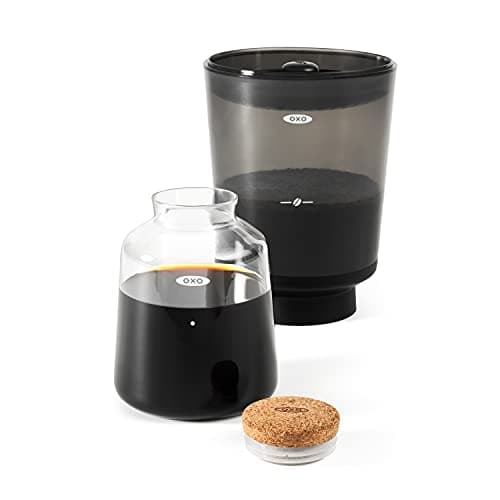
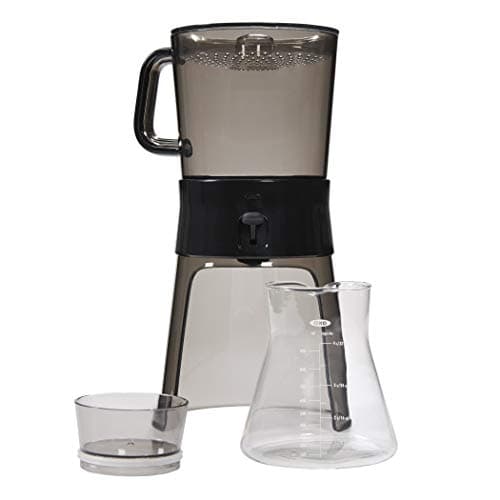
So if time does most of the work, what is the maker actually for? Two things. The first is filtration — getting the spent grounds cleanly out of the coffee. A fine stainless mesh keeps it simple and lets a little body and sediment through; a paper filter, or a paper option laid over the mesh, gives you a cleaner, clearer cup. The second is convenience: whether you brew and store in one vessel, or steep in a brewer and then drain into a separate carafe. A brew-and-store pitcher or bottle means fewer parts to wash; a two-piece brewer with a flip-to-drain lid, like OXO's, trades a little counter space for a hands-free, very clean pour.
Here is the part no maker can fix for you: grind. Cold brew is full-immersion, so every particle sits in the water for the entire steep, and that demands a coarse, even grind. Too fine and you get a muddy, over-extracted, silty cup that no filter fully rescues — which is why a coarse-capable burr grinder for drip and press (or a good hand grinder) matters more than which maker you buy. And do not confuse cold brew with iced coffee: iced coffee is simply hot-brewed coffee cooled and poured over ice, so it keeps hot coffee's brightness and acidity, while cold brew is never heated at all. Different drink, different flavor.
If you are brewing for yourself alone, a one-litre jar is the batch size that actually gets finished — our best coffee makers for one person page ranks that option against the hot single-cup brewers.
How we picked
Every maker here is a real, currently-purchasable cold brew maker you can buy in the US, and every specification below is taken from the maker's own listing. We ranked on five things, in this order.
- Cup quality.The whole point of cold brew is a smooth, low-acid cup, so we weighed how clean, consistent and well-extracted each maker's brew tends to be — which comes down to how evenly the grounds saturate and how well the design keeps sediment out.
- Filtration. How cleanly the spent grounds come out of the coffee. A fine stainless mesh keeps things simple but passes a little body and silt; a paper option or a finer laser-cut filter gives a clearer cup. Finer, cleaner filtration scores higher.
- Ease of use. Filling, brewing, draining and — the part everyone forgets — cleaning. A one-vessel brew-and-store maker is less to wash; a multi-part brewer with a flip-to-drain lid is cleaner to pour but has more pieces.
- Capacity and size. How much you get per batch, weighed against how much fridge and counter space the maker eats. A big-batch jar and a slim door-shelf bottle are solving different problems.
- Value. Cold brew makers are cheap as a category, so value is less about the lowest price than about what you get for it — filtration, capacity, materials — versus what you actually need.
We did not lab-test these makers; we do not run a lab. The scores are editorial judgments built from published manufacturer specs and aggregated owner reports, and our methodology pagespells out exactly how. Specifications come from the makers' own product pages, listed in Sources.
Concentrate vs ready-to-drink
Most of these makers are designed to brew a concentrate: you use more coffee relative to the water, steep it long, and end up with a strong, dark base you keep in the fridge and dilute one glass at a time. Roughly equal parts concentrate and water (or milk) is the usual starting point, and you adjust from there to taste — heavier for iced lattes, lighter for a tall black glass over ice. The advantage is storage: a concentrate takes up less fridge space and stays good longer than a jug of ready-to-drink coffee, and one brew stretches across a week.
A few makers, and the way a lot of people use a simple jar or bottle, brew closer to ready-to-drink strength — less coffee, more water, poured straight without diluting. That is more convenient in the moment but takes up more room and gives you fewer servings per batch. Neither is right or wrong; it is a question of whether you would rather keep a small, strong base and mix each glass, or a big jug you pour and go. If you like the idea of stashing a concentrate, the OXO makers and a mason jar suit it best; if you want to pour and drink, the Takeya and Hario are the easiest.
Filtration: mesh vs paper
This is the single decision that most changes what is in your cup. A stainless mesh filter— what most of these makers use — lets the coffee's oils and a little fine sediment through, which gives cold brew a heavier, rounder body and, at the bottom of the glass, a touch of silt. It is also nothing to buy or replace; you just rinse it. A paper filter, or a paper liner laid over the mesh like OXO's optional one, traps those oils and fines and hands you a distinctly cleaner, clearer, tea-like cup — at the cost of a consumable you keep restocking and a slightly slower drain. In this sense cold brew is an immersion cousin of the French press: both steep grounds loose and filter with metal mesh, which is exactly why both give you body and a little sediment rather than a paper-clean cup. If you love that full body, a mesh maker is perfect; if you want clarity, choose one that takes paper.
The grind matters more than the maker
You can spend on the nicest maker here and still make mediocre cold brew if the grind is wrong, because grind — not gear — is what decides the cup. Cold brew is full-immersion, so every particle sits in the water for the whole twelve-to-twenty-four-hour steep, and that needs a coarse, even grind, coarser than you would use for drip. Grind too fine and you over-extract into a muddy, bitter, silty brew that no filter fully cleans up; grind unevenly and you get harsh and weak at once. That is why a coarse-capable burr grinder for drip and press, or a good hand grinder if you are on a budget, does more for your cold brew than trading up makers ever will. Start with fresh, quality beans too — the same quality whole beans that make good espresso make excellent cold brew.
What we would skip
Nitro rigs and mini-kegs, for a first maker. Nitrogen-charged cold brew is fun, but the kegerators, canisters and pressurized dispensers are a lot of money and plumbing for a drink you have not yet decided you make every day — get the habit with a jar or a brewer first, then chase nitro if you still want it. Single-serve cold brew pods and machines. They defeat the entire point: cold brew is cheap because it is just grounds, water and time, and a pod system trades that simplicity and cost for locked-in consumables and, usually, a weaker cup. And skip treating any maker as a fix for a bad grind. A fine filter tidies up the edges; it does not turn dusty, uneven pre-ground coffee into a smooth brew, and no maker rescues stale beans.
Which cold brew maker fits you
- Want the cleanest, most repeatable cold brew? OXO Good Grips (32 oz), with its even-saturation lid, paper-capable mesh and hands-free drain.
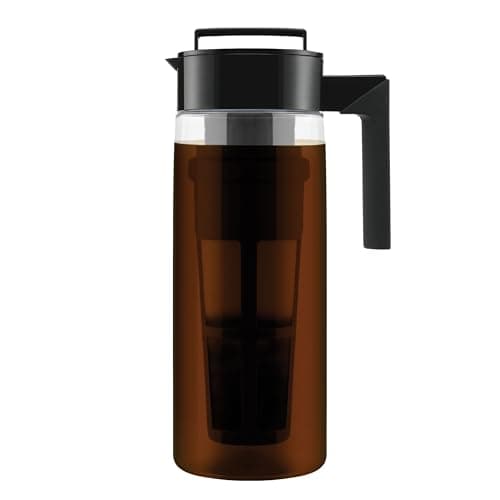
- Want a batch that lives in the fridge door and pours straight? Takeya Deluxe — airtight, leakproof, brew-and-serve from one shatterproof pitcher.
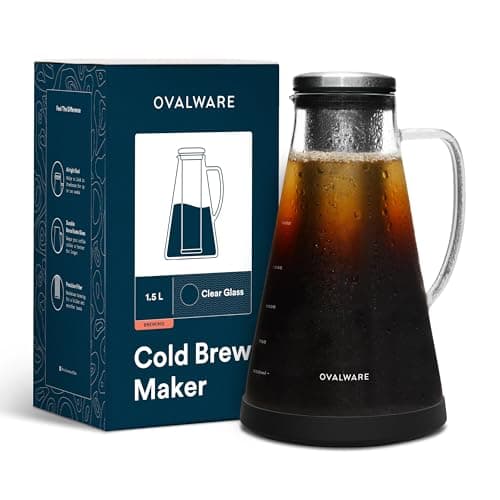
- Want something clean that looks good on the counter? OVALWARE, with its glass carafe and fine laser-cut filter.
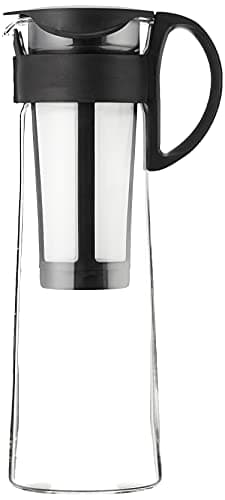
- Just want the simplest, cheapest way in? Hario Mizudashi — one bottle, few parts, fits the fridge door.
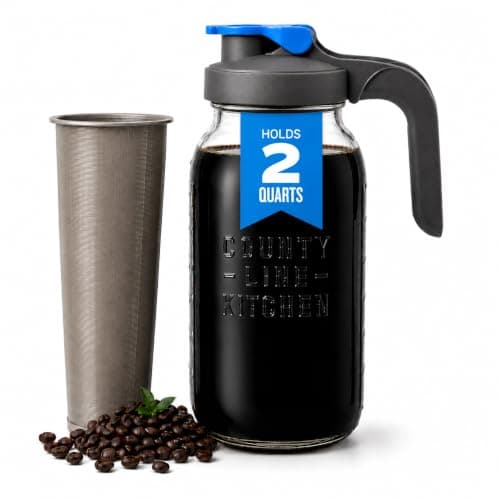
- Making a lot for a household? County Line Kitchen 64 oz mason jar — a big single batch for very little money.
- Short on kitchen space but want the OXO trick? OXO Brew Compact — the same clean concentrate in a smaller footprint.
Whichever you land on, remember the order of operations: the maker finishes the job, it does not do it. Sort a coarse, even grind and fresh beans first, then let the maker keep a clean, low-acid batch waiting in the fridge for the week.