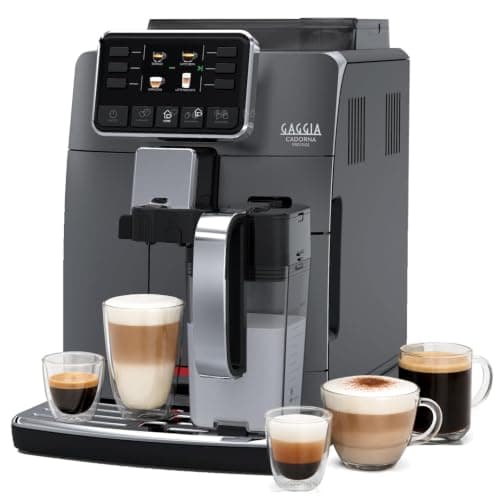
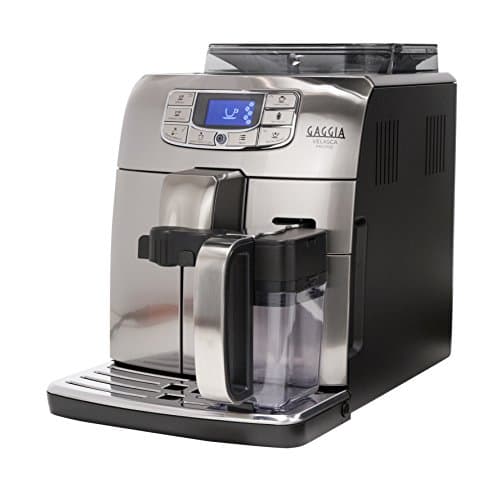
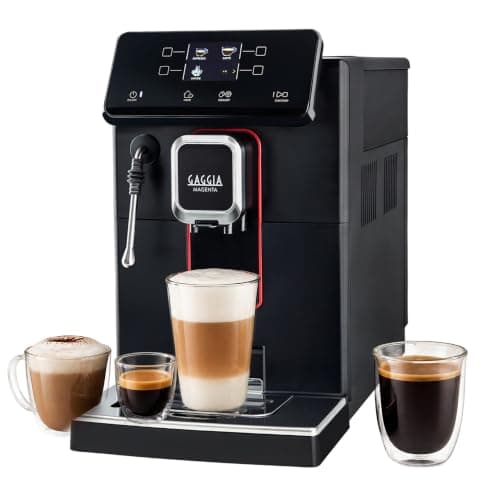
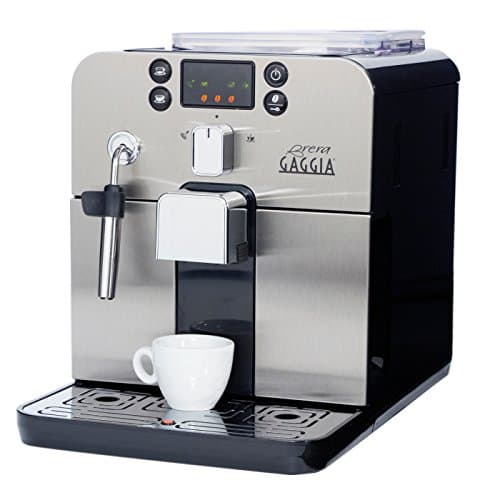
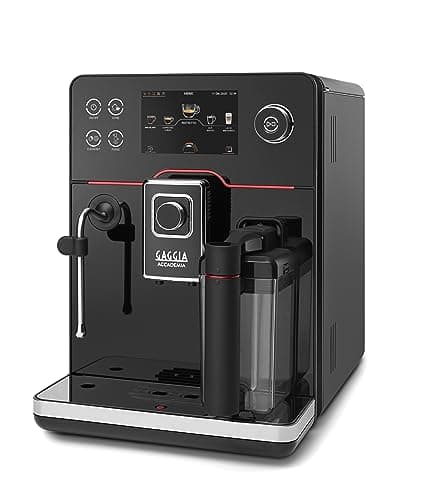
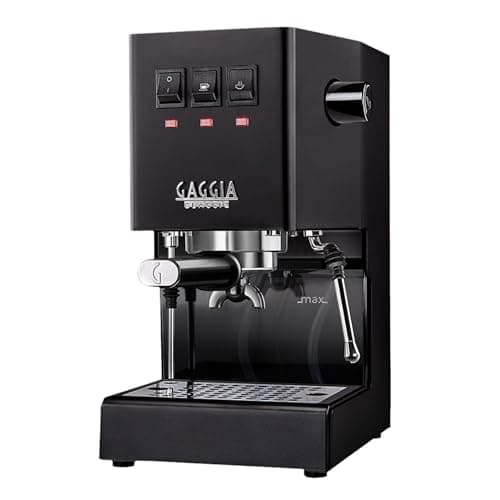
Gaggia is really two companies sharing one badge, and almost every bad Gaggia purchase comes from not knowing which one you are buying from. On one side sits the Classic — a single-boiler, 58mm, brass-and-stainless machine that has been the enthusiast's way into real espresso for three decades and is designed to be opened, serviced and modified. On the other sits a range of bean-to-cup super-automatics— Brera, Velasca, Magenta, Cadorna, Anima, Accademia — that grind, dose, tamp and brew behind a door you never open, and that have far more in common with each other than the marketing suggests. Both are legitimate. They are not remotely the same product, and no amount of reading spec sheets side by side will tell you that, because the spec sheets use the same words.
So here is the honest frame for this roundup, stated before any ranking: exactly one machine on this page has a portafilter.The Classic Evo Pro takes a genuine 58mm commercial basket, which means every precision basket, tamper, distribution tool and bottomless portafilter on the market fits it. The other five have no portafilter at all — beans go in the top, a drink comes out the front, and there is nothing to dose or tamp. If you have not settled which of those two things you actually want, settle it with our semi-automatic vs super-automatic guide first. Everything below assumes you have.
The second thing worth knowing, and the reason this brand is worth a page of its own: among the super-autos, Gaggia's brew unit comes out of the machine. Gaggia's own maintenance documentation walks you through removing it and washing it by hand. That sounds like a footnote until you compare it with a Jura, whose brewing unit is sealed in and can only be cleaned chemically with the manufacturer's own tablets, forever. It is the strongest argument for buying a Gaggia bean-to-cup over a more fashionable one, and it is the single spec the brand under-sells hardest.
The third thing is less flattering. Across the super-automatic range, the differences between models are mostly about milk— carafe, steam wand, or neither — along with drink count, grind resolution and how much water and coffee the machine holds. The brew platform underneath is broadly shared: a flat ceramic burr set, an automatic rinse cycle and that removable brew unit. That is good news for your wallet, because it means the cheapest machine here is not making dramatically worse coffee than the most expensive one. It is bad news for anyone hoping that spending twice as much buys twice the espresso. It does not. It buys a milk system, a bigger menu and a nicer screen.
How we picked
We do not lab-test machines and we will not pretend otherwise — our methodologypage says so in those words. Every specification on this page comes from Gaggia North America's own product pages, and every piece of hands-on criticism is attributed to a named independent review. The ranking is a judgment about buyer fit built from four criteria, applied in this order:
- What you actually want to do with milk. This is the real fork in the Gaggia range and it decides more of your money than anything else. A carafe (Velasca, Cadorna, Accademia) makes the drink for you. A steam wand (Classic, Magenta Plus, Accademia) makes you make it. A Pannarello (Brera) splits the difference and makes foam rather than microfoam.
- Grind resolution.Espresso lives in a narrow window, and a grinder with too few steps hops straight over it. Gaggia's super-autos split cleanly into five-step machines (Brera, Magenta Plus) and ten-step machines (Velasca Prestige, Cadorna Prestige), with the Accademia at eight. That gap is not marketing; it is the difference between being able to correct a fast shot and having to live with it.
- Capacity against how often you want to touch it. Water tanks here run from 1.2 L to 1.8 L, hoppers from 8.8 oz to 12.3 oz, and dreg drawers from 8 to 15 pucks. In a two-coffee household that difference is invisible. In a four-coffee household it is the whole experience.
- Whether the machine can be maintained. Every Gaggia super-auto on this page has a brew unit you can take out and wash. We weight that heavily, because it is the difference between a machine you can look after and a machine that eventually becomes a service appointment.
What we deliberately did notweight: drink counts as a headline number, screen size, or the words “professional” and “barista” printed on a front panel. A nineteen-drink menu is nineteen ways to dispense from the same brew group.
Decoding the Gaggia names
Gaggia's naming is the single biggest source of confusion for buyers, and it works on two axes at once. The model name (Brera, Velasca, Magenta, Cadorna, Anima, Accademia) tells you roughly the size and generation of the chassis. The suffix tells you the milk system and the menu, and it is the suffix that usually decides the price:
- No suffix(Velasca, Anima) — the base machine, typically with a manual frothing wand rather than a carafe.
- Plus(Magenta Plus) — a step up in chassis and display, but still a manual steam wand. This trips people up constantly: Plus does not mean a milk carafe.
- Prestige(Velasca Prestige, Magenta Prestige, Cadorna Prestige, Anima Prestige) — the integrated, automatic milk carafe, and usually a longer one-touch drink menu with it.
- Milk / Barista Plus / Style(Cadorna Milk, Cadorna Barista Plus, Cadorna Style) — intermediate trims of the same chassis, mostly varying the milk hardware and the drink list.
The Classic line has its own tangle. Gaggia North America currently sells the manual machine as the Classic Pro E24, and publishes a single manual covering the Classic Pro, Classic Evo Pro and E24 together — they are revisions of one machine, with the current page specifying a lead-free brass boiler, a 58mm stainless portafilter, a 15-bar Ulka pump calibrated to 9 bar, a 72 oz tank and a 1425 W draw. Sitting above it is the Classic GT, described by Gaggia as its first-ever dual-boiler machine, at roughly three times the money. If a listing says Classic, Classic Pro, Classic Evo Pro or E24, you are looking at the same 58mm platform; check the model number and the finish, and buy whichever colorway is cheapest on the day.
The removable brew unit, and why it matters more than the drink count
A bean-to-cup machine grinds coffee, compresses it into a puck inside a sealed chamber, forces water through it and then ejects the puck. That chamber — the brew unit, or brew group — is where coffee oils accumulate, and stale oil is the most common cause of a machine that used to make good coffee and now makes bitter coffee. On a Jura, that unit is sealed into the machine and can only be cleaned chemically, with the manufacturer's own tablets, for the life of the machine. On every Gaggia super-automatic on this page, Gaggia's own maintenance documentation tells you to take the unit out and wash it by hand, then relubricate the rails.
That is not a small convenience. It is the difference between a maintenance routine you own and one you rent, and it is why a Gaggia bean-to-cup tends to age better than its price bracket suggests. It is also the reason we score every machine here at least 7 on cleaning despite the small trays: the part that actually gets dirty is the part you can reach. If you want the wider comparison, our best super-automatic espresso machines roundup puts these against the De'Longhi, Philips and Jura bean-to-cups people cross-shop.
The uncomfortable truth about the super-automatic range
Read the six picks above and one pattern is hard to miss: the espresso coming out of a Brera and the espresso coming out of an Accademia are made the same way, by the same kind of flat ceramic burr set feeding the same kind of removable brew unit. The Accademia grinds finer-resolution, holds more beans, and gives you a flow dial — real advantages — but nobody should expect the gap in the cup to track the gap in the price. It does not.
What the extra money reliably buys is milk automation and menu breadth. If you drink black coffee, the honest advice is to buy at the bottom of the range and stop, or to skip the range entirely and buy the Classic with a real espresso grinder, which will out-shoot every bean-to-cup here for less than the flagship costs. If you drink two milk drinks a day and do not want to learn to steam, the carafe machines are worth every penny of their premium, because a milk system you enjoy using is a machine you keep using. That is the whole calculation, and it has nothing to do with drink counts.
One more thing, reported consistently enough to state plainly: Coffeeness's hands-on coverage of the brand notes that Gaggia's automatic machines produce drinks that “aren't hot enough”. All of these machines have adjustable temperature levels, and turning that up is the first thing to do out of the box. Warming the cup first is the second. Neither is a fix for a machine that runs cool by design, but together they close most of the gap, and it is a fair criticism to know about before you buy rather than after.
Which Gaggia should you buy?
- Want to actually make espresso? The Classic Evo Pro— the only machine here with a portafilter, and the cheapest honest route to the 58mm commercial standard.
- Mixed household, everyone drinks something different? The Cadorna Prestige— fifteen drinks, four saved profiles and the widest grind adjustment in the range.
- Want one-touch cappuccinos for as little as possible? The Velasca Prestige— the cheapest Gaggia with a real automatic milk carafe, provided your cups fit under 4.5 inches.
- Automated coffee, but you want to steam the milk yourself? The Magenta Plus— a real steam wand, the biggest tank here, and a deliberately short drink menu.
- Smallest budget, smallest space? The Brera— three drinks, a forgiving Pannarello and the same removable brew unit as everything above it.
- Want the nicest one and know what it costs? The Accademia— a carafe and an articulated wand in the same machine, plus the mid-shot flow dial nothing else in the range has.
Cross-shopping outside the brand? Our best Breville, best De'Longhi and best Jura brand roundups cover the three makers people put against Gaggia most often, and the head-to-heads that come up most are Breville Bambino vs Gaggia Classic and Rancilio Silvia vs Gaggia Classic. And whichever way you go, put the money you save into the grinder and some fresh beans— that is where the cup is actually won.
One more thing if the Classic is the Gaggia you land on: it ships without a grinder, and that purchase matters more than which Gaggia you chose. Our best grinders for the Gaggia Classic page works through it against the machine's own specifics — the 58mm basket, the 18-20g dose and the missing PID that makes fine grind adjustment matter so much here.