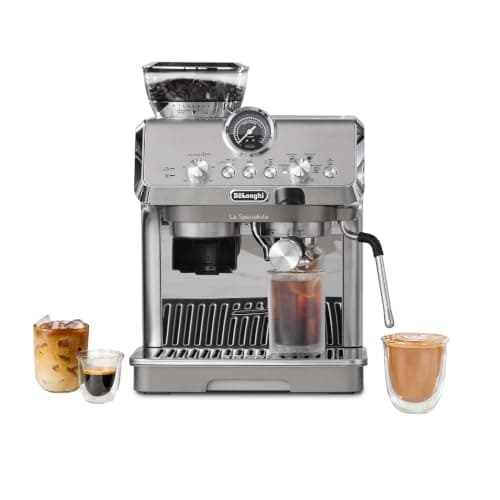
De'Longhi makes more home espresso machines than almost anyone, at more price points, in more shapes — which is exactly why "the best De'Longhi espresso machine" has no single answer. The right one depends on one fork in the road: do you want to make espresso, locking a portafilter into a group head and learning the shot, or do you want the machine to make it for youat the push of a button? De'Longhi is one of the few brands that competes seriously at both ends, and the machine that is perfect for the first buyer is wasted on the second. This roundup ranks five De'Longhi machines by who each one is for— not by a raw score, and not by price, because the machine most people should buy is neither the cheapest nor the most expensive.
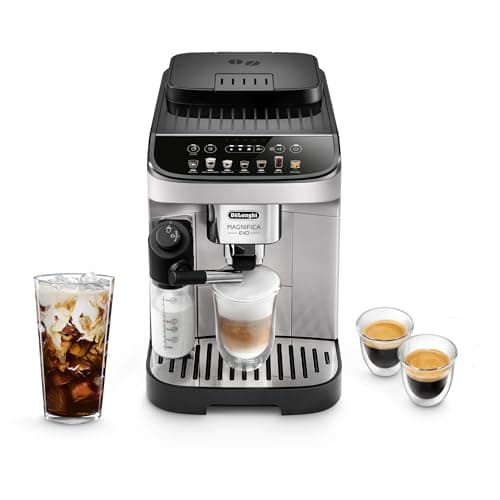
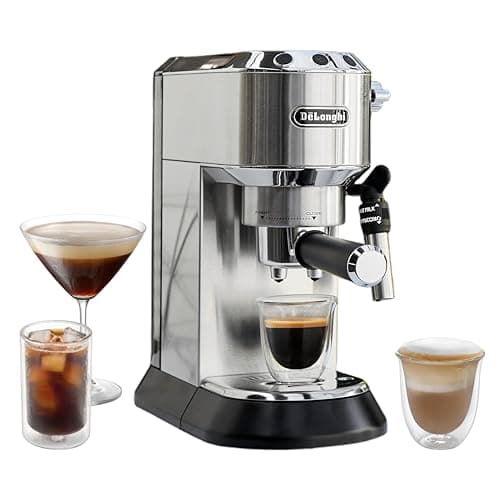
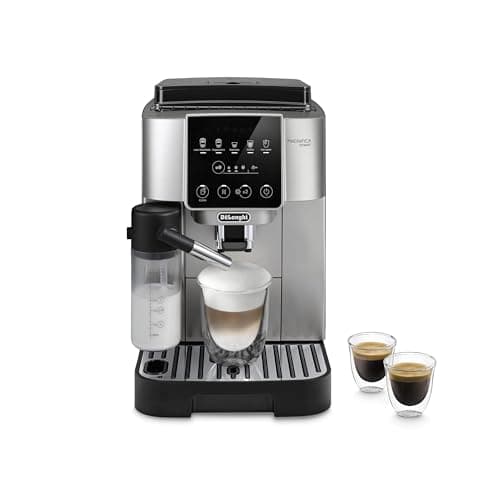
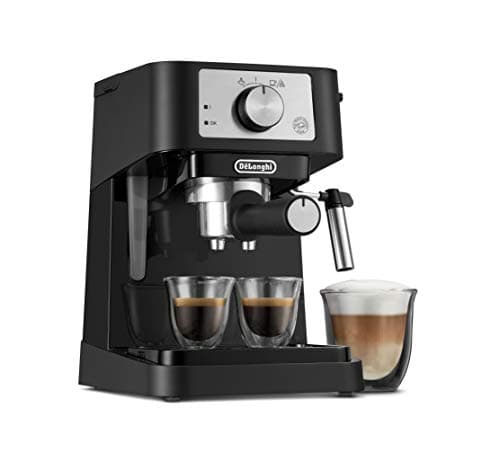
The lineup splits cleanly into two families. The pump machines— the Stilosa, the slim Dedica and the grinder-equipped La Specialista Arte Evo — are "real" espresso machines with a portafilter you fill, tamp and lock in yourself; they reward technique and a good grinder, and they are where you learn. The bean-to-cup super-autos— the Magnifica Start and the milk-focused Magnifica Evo — hide the whole process behind a grinder and a button: whole beans in one end, a latte out the other, no dialing in and no separate grinder to buy. Both families are legitimate; they answer different questions. If you are still deciding which side you are on, our semi-automatic vs super-automatic guide is the place to settle it before you read another spec.
One honest thread runs through the whole range, and it is the same thread that runs through this entire site: on a De'Longhi pump machine, the grinder matters more than the machine, and on a super-auto, the built-in grinder is the ceiling you cannot raise. A Stilosa or a Dedica paired with a real burr grinderwill out-shoot a pricier machine fed pre-ground coffee, every time — so if your budget is fixed, buy less machine and put the difference into the grind. Read do you need a grinder for espresso before you spend a dollar. And if you have narrowed it to the two brands everyone cross-shops, our Breville vs De'Longhi comparison settles that fight directly.
How the De'Longhi lineup actually breaks down
Ignore the model names for a moment and the range is simple. There are two families. The pump machines— Stilosa, Dedica and La Specialista Arte Evo — are "real" espresso machines: you grind, dose and tamp coffee into a portafilter and lock it into the group head yourself. They reward technique, they take a separate grinder (except the La Specialista, which has one built in), and they are how you actually learn to make espresso. The bean-to-cup super-autos— Magnifica Start and Magnifica Evo — put a grinder and a milk system inside the machine and do the whole thing at a button press: no portafilter, no dialing in, a drink in ninety seconds. Deciding which family you belong to is the single most important choice on this page, and our semi-automatic vs super-automatic guide walks through it in full.
The grinder matters more than the machine
This is the core thesis of the whole site, and it applies twice over to De'Longhi. On the pump machines(Stilosa, Dedica), there is no grinder in the box, and the grinder decides more of your cup than the machine does — a modest machine plus a real burr grinder beats a pricier machine fed pre-ground coffee, reliably and by a wide margin, because espresso needs a fine, uniform grind so water meets even resistance across the puck. So if your total budget is fixed, buy the cheaper machine and put the savings into the grind. Start with our best grinders for espresso, or the best grinders under $200 if budget is tight, and read do you need a grinder for espresso for the full case. On the super-autos(Magnifica Start and Evo) the grinder is built in — convenient, but it is also the ceiling, because you cannot swap it for something better later. That is the honest trade of the whole super-auto idea.
The 51mm portafilter, and why it limits every pump De'Longhi here
Every pump machine in this roundup — Stilosa, Dedica and La Specialista — uses a 51mm portafilter, and that one number quietly shapes how far the machine can grow. Breville standardizes on 54mm and prosumer machines on 58mm, and both of those sizes have a vastly larger world of bottomless portafilters, precision baskets, tampers and puck screens than 51mm does. It does not make the coffee worse — a well-pulled 51mm shot is a fine shot — but it means fewer aftermarket upgrades and a smaller accessory habit to grow into. If you know you want to tinker, that ceiling matters; if you just want good espresso without a drawer of tools, it does not. Our portafilter sizes explained guide covers exactly what each size does and does not get you.
Pressurized baskets and the upgrade path
The cheapest pump machines here ship with pressurized (dual-wall) baskets, which hide a second wall with a single tiny exit to manufacture crema regardless of grind — forgiving for a beginner, but a ceiling on quality because the crema comes from the hardware, not the coffee. The Stilosa is pressurized-only, so its ceiling is fixed. The Dedica ships pressurized too, but its portafilter can accept non-pressurized (single-wall) baskets, so once you have a real grinder it starts rewarding good coffee and reflecting your technique — a genuine upgrade path the Stilosa does not have. If that distinction is new to you, it is the most important thing to understand before buying a budget machine; our pressurized vs unpressurized baskets guide lays out the whole mechanism.
How we picked
Every machine here is a real, currently-purchasable De'Longhi you can buy in the US today, and every spec is taken from De'Longhi's own listings and manuals. We did not lab-test them; we do not run a lab. The scores are editorial judgments built from published specifications and aggregated owner reports, scored against a published methodology, and each machine's scores here are kept identical to its full individual review so the two never disagree. Where a maker advertises a headline marketing figure, we treat it as marketing rather than a quality metric, and where hands-on time would tell you more than a spec sheet — how much a thermoblock drifts over a session, how the plastic parts age — we say so instead of inventing a number. Prices are never quoted from memory: the live price on each pick renders from our pipeline with the date it was checked, and if it goes stale the number disappears rather than misleads you.
Which De'Longhi is right for you
- Want to actually make espresso, with everything in one box? The La Specialista Arte Evo — grinder, tamping tools and a real steam wand included, and our overall pick. It also ranks in our best machines with a built-in grinder roundup.
- Want lattes with zero technique? The Magnifica Evo with LatteCrema — one-touch milk drinks and a fridge-storable carafe.
- Tight on counter space or budget? The Dedica Deluxe— the slimmest here, and the one budget pump machine with a real upgrade path.
- Want a one-touch machine without the milk carafe? The Magnifica Start— the stripped-back, simplest super-auto.
- Spending as little as possible on a real machine? The Stilosa— the cheapest honest way in from a trusted brand.
Whichever you land on, remember the order of operations, because it is what actually makes the coffee better: sort the grinder and fresh beans first (on the pump machines especially), keep the machine spend sensible, and treat the machine as the starting line rather than the finish. Cross-shopping the other brand everyone considers? Our Breville vs De'Longhi comparison settles it, and if this is your very first machine, the best espresso machines for beginners roundup puts these De'Longhis up against the wider field.
One honest caveat on scope: De'Longhi's US range is considerably wider than these five, and the machines ranked above are the ones home buyers actually cross-shop rather than the complete catalog. De'Longhi also sells the Dinamica and Dinamica Plus bean-to-cups, the hot-and-cold Eletta Explore, the high-end PrimaDonna line, and the touchscreen La Specialista Touch. Those sit above or beside the five here and are not ranked on this page.