Skip to content
Portafilter Co

Machines · Espresso Machines

The best espresso machines under $300

Around three hundred dollars is the sweet spot where a real, temperature-controlled machine like the Breville Bambino becomes affordable — but most of this band still ships pressurized baskets, so the smartest money goes on a burr grinder, not the machine.

By Stephen V.Updated How we pick
#ad

We earn a commission when you buy through our Amazon links, at no extra cost to you. It never changes a verdict, and we say so when the cheaper product is the better buy. How this works.

Around three hundred dollars is the most important line in home espresso, because it is where the machines stop being uniform. Below it, almost everything is a pressurized-basket entry pump that flatters a cheap grinder and caps how good the coffee can get. At the top of this band, though, one machine changes the maths: the Breville Bambino brings digital temperature control, low-pressure pre-infusion and — crucially — real single-wall baskets into reach, which is a genuine capability jump rather than a cosmetic one. So this is not a flat list of near-identical machines. It is a ladder, and the honest job of the page is to show you where each rung sits and what you actually gain by climbing it.

Before you weigh any of them, hear the single most useful thing a buyer at this price can be told: the grinder matters more than the machine. Espresso lives or dies on grind consistency, and no pump, no matter how many bars it advertises, can rescue coffee that was ground unevenly. If your total budget is fixed, buy a little less machine than you planned and put the difference into a burr grinder — a modest machine with a good grinder beats a fancier machine fed by a cheap blade grinder every single time. That is not a slogan; it is the mechanism, because a consistent grind is what lets water pass through the whole puck evenly, and even flow is what separates a sweet, balanced shot from a sour, gushing one. Before you spend a dollar on a machine, read do you need a grinder for espresso and skim our best grinders for espresso — that is where the money you save here should go.

The other idea that underpins the whole page is the difference between pressurized and non-pressurized baskets, because it explains why the Bambino sits alone at the top. A pressurized (dual-wall) basket manufactures crema behind a single tiny exit, so almost any grind produces a passable-looking shot — forgiving for beginners, but a ceiling on quality. A non-pressurized (single-wall) basket demands a good grind and rewards it with real, extracted espresso. Most machines here ship pressurized-only; the Bambino ships with real single-wall baskets too, and the slim De'Longhi Dedica can at least accept them. If you want the full mechanism, our pressurized vs unpressurized baskets guide lays it out, and if your budget can stretch past this band, the machines on our best under $500 list open the door wider. For around three hundred dollars, though, the six below are the ones worth your attention.

The short answer

Quick picks

#ProductBest forScorePrice
01
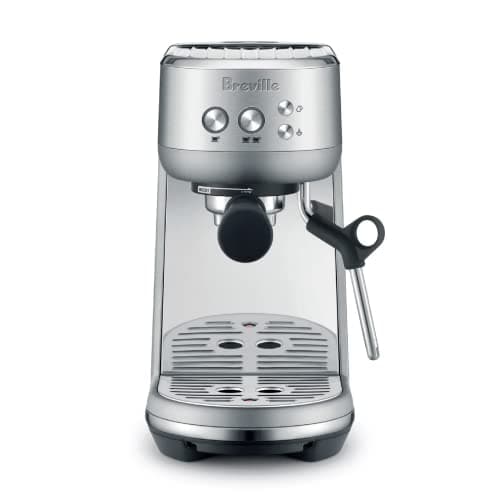
Breville Breville Bambino (BES450)
Breville Bambino (BES450)

The best espresso machine you can buy for around three hundred dollars, and the one we steer most people toward. Breville's ThermoJet system reaches brew temperature in about three seconds, the digital temperature control and pre-infusion give you consistent, repeatable shots, and — crucially at this price — it ships with real single-wall (non-pressurized) baskets alongside the forgiving pressurized ones, so it can grow past the ceiling that traps the rest of this band. The honest trade-offs are a single boiler that needs a brief purge between brewing and steaming, a 54mm basket with a smaller accessory world than the 58mm standard, and no grinder in the box — so budget for one on top.

Best overall under $300
8.4
$299.95Amazon
02
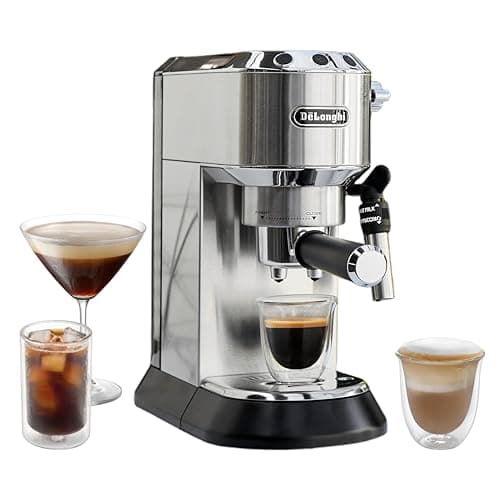
De'Longhi De'Longhi Dedica Deluxe (EC685)
De'Longhi Dedica Deluxe (EC685)

The smart slim-and-value pick, and the one budget machine here with a genuine upgrade path. At just under six inches wide it is one of the slimmest real espresso machines you can buy, it heats fast, and it costs less than the Bambino. It ships with pressurized baskets like the rest of the budget field, but — unlike sealed budget machines — its 51mm portafilter accepts aftermarket non-pressurized (single-wall) baskets, so you can chase proper extraction once your grind is ready. The catches are a weaker steam wand, a plastic-heavy build, and a 51mm ecosystem smaller than Breville's 54mm.

Best slim pick with an upgrade path
7.2
$229.99Amazon
03
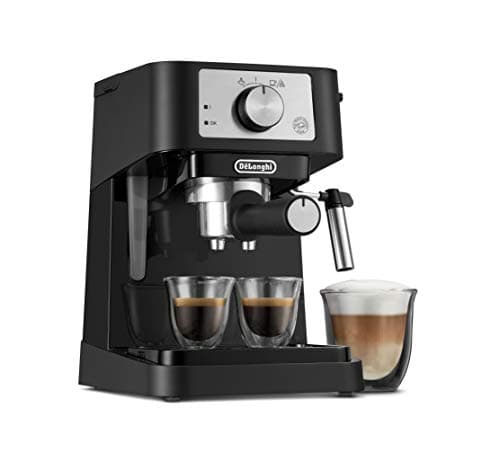
De'Longhi De'Longhi Stilosa (EC260)
De'Longhi Stilosa (EC260)

The cheapest way into real espresso from a maker with a long entry-level track record. The Stilosa is a simple, manual 15-bar pump in a compact body, and paired with a decent grinder it pulls a genuinely respectable shot for the least money of any trusted brand here. It is honest about what it is: the steam is a manual panarello wand that froths rather than textures, the baskets are pressurized only, and the build leans plasticky. But nothing on this page carries less risk for the money, which is exactly why it earns its place.

Best from a trusted brand on a tight budget
6.6
$149.95Amazon
04
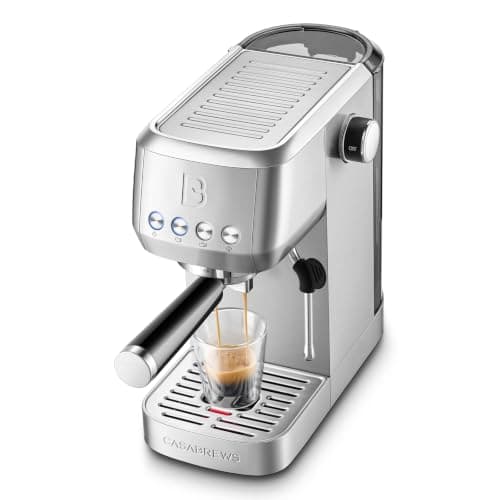
CASABREWS CASABREWS 3700 Essential Espresso Machine
CASABREWS 3700 Essential Espresso Machine

The best budget machine here with a real steam wand, and the model that shows why CASABREWS has quietly taken over the cheap end of the shelf. It pairs an all-stainless look with a genuine, if basic, steam wand and a 20-bar pump for less than almost anything else that steams milk at all. The catches are a small boiler that makes you wait between pulling a shot and steaming, a pressurized basket like the rest of the budget field, and a newer brand whose long-term durability is simply less proven than De'Longhi's.

Best budget machine with a real steam wand
6.4
$98.99Amazon
05
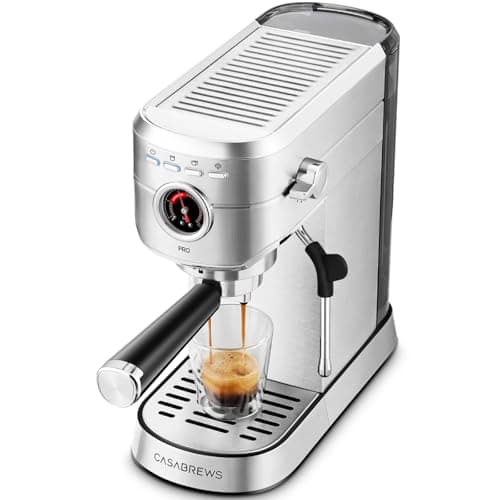
CASABREWS CASABREWS 5418 PRO Espresso Machine
CASABREWS 5418 PRO Espresso Machine

A small step up inside the CASABREWS range for people who hate waiting. Its headline is a fast-heating system that reaches brew temperature quicker than the cheaper models, wrapped in the same stainless styling and 20-bar pump. It is still a pressurized-basket entry machine, though, so you pay more for faster heat-up and a little polish rather than a fundamentally better shot — and the same newer-brand caveat applies to how long it will last.

Best fast-heating step-up
6.2
$161.99Amazon
06
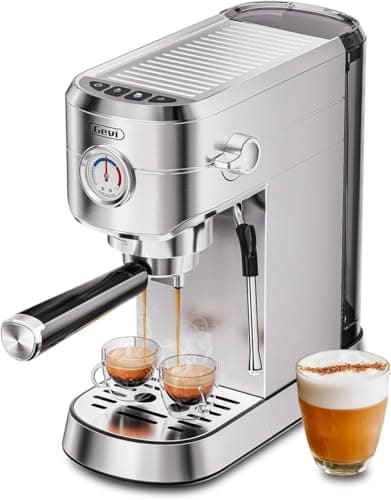
Gevi Gevi 20-Bar Compact Espresso Machine
Gevi 20-Bar Compact Espresso Machine

The budget pick aimed squarely at cappuccino and latte drinkers. Gevi builds this one around a steam wand and milk frothing rather than pure shot quality, in a compact, inexpensive package that suits a small kitchen. Be realistic about the steam, though: it is weak next to a proper machine, the basket is pressurized, and the build is light — this is a cheerful entry into milk drinks, not a latte-art machine, and it sits at the bottom of this band for a reason.

Best budget pick for milk drinks
6.0
$118.99Amazon

#ad · Live prices from the Amazon Product API, as of Jul 30, 2026. Where we have no verified live price, we show none — a gap beats a number that has rotted.

In detail

The picks, in full

01
Breville Breville Bambino (BES450)

Best overall under $300

Breville Bambino (BES450)

ThermoJet: ~3-second heat-up54mm portafilter, 15-bar pumpShips with single-wall + pressurized basketsManual steam wand
8.4/10

The best espresso machine you can buy for around three hundred dollars, and the one we steer most people toward. Breville's ThermoJet system reaches brew temperature in about three seconds, the digital temperature control and pre-infusion give you consistent, repeatable shots, and — crucially at this price — it ships with real single-wall (non-pressurized) baskets alongside the forgiving pressurized ones, so it can grow past the ceiling that traps the rest of this band. The honest trade-offs are a single boiler that needs a brief purge between brewing and steaming, a 54mm basket with a smaller accessory world than the 58mm standard, and no grinder in the box — so budget for one on top.

Shot quality
8
Temp control
8
Steam power
8
Ease of use
9
Value
9

Pros

  • Near-instant ThermoJet heat-up — ready before you finish grinding
  • Digital temperature control and pre-infusion for consistent, repeatable shots
  • Ships with real single-wall baskets, so it grows past the pressurized ceiling
  • Strong steam wand for the size — textures milk properly with a little practice
  • Small footprint that still leaves budget for a proper grinder

Cons

  • Single boiler means a short purge between pulling a shot and steaming
  • 54mm basket has a smaller accessory ecosystem than the 58mm standard
  • No built-in grinder, so a separate burr grinder is an extra purchase
  • Sits near the top of this budget, leaving little room for extras

Don't buy this if…

you want the machine to grind and froth for you at one touch — a bean-to-cup super-automatic is the hands-off answer, not a manual machine like this.

$299.95View on Amazon

Price as of Jul 30, 2026. Prices change — Amazon's at checkout is the one that counts.

#ad · we may earn a commission from this link to Breville Bambino (BES450)

02
De'Longhi De'Longhi Dedica Deluxe (EC685)

Best slim pick with an upgrade path

De'Longhi Dedica Deluxe (EC685)

About 5.9 in wide51mm portafilter (non-pressurized baskets available)Fast heat-upThree-button operation
7.2/10

The smart slim-and-value pick, and the one budget machine here with a genuine upgrade path. At just under six inches wide it is one of the slimmest real espresso machines you can buy, it heats fast, and it costs less than the Bambino. It ships with pressurized baskets like the rest of the budget field, but — unlike sealed budget machines — its 51mm portafilter accepts aftermarket non-pressurized (single-wall) baskets, so you can chase proper extraction once your grind is ready. The catches are a weaker steam wand, a plastic-heavy build, and a 51mm ecosystem smaller than Breville's 54mm.

Shot quality
7
Temp control
7
Steam power
6
Ease of use
8
Value
8

Pros

  • One of the slimmest real espresso machines you can buy
  • Accepts aftermarket non-pressurized baskets — a real upgrade path
  • Fast heat-up and simple three-button operation
  • Cheaper than the Bambino, leaving more budget for a grinder

Cons

  • Ships with pressurized baskets; single-wall ones are an extra purchase
  • Weaker steam wand than the Bambino — milk texturing is harder
  • 51mm size limits accessories versus 54mm and 58mm
  • Plastic-heavy build

Don't buy this if…

you want the strongest steam and the widest accessory ecosystem — the Bambino's 54mm world and stronger wand grow with you further.

$229.99View on Amazon

$249.008% off

Price as of Jul 30, 2026. Prices change — Amazon's at checkout is the one that counts.

#ad · we may earn a commission from this link to De'Longhi Dedica Deluxe (EC685)

03
De'Longhi De'Longhi Stilosa (EC260)

Best from a trusted brand on a tight budget

De'Longhi Stilosa (EC260)

15-bar pumpManual panarello wandPressurized baskets onlyTamper included
6.6/10

The cheapest way into real espresso from a maker with a long entry-level track record. The Stilosa is a simple, manual 15-bar pump in a compact body, and paired with a decent grinder it pulls a genuinely respectable shot for the least money of any trusted brand here. It is honest about what it is: the steam is a manual panarello wand that froths rather than textures, the baskets are pressurized only, and the build leans plasticky. But nothing on this page carries less risk for the money, which is exactly why it earns its place.

Shot quality
6
Temp control
5
Steam power
5
Ease of use
8
Value
9

Pros

  • The lowest-cost entry to real espresso from an established maker
  • Simple, manual operation that is easy to understand and live with
  • Leaves almost all of your budget for a good grinder
  • Compact body fits nearly any counter

Cons

  • Pressurized baskets only, with no single-wall upgrade path
  • Manual panarello wand froths milk crudely rather than texturing it
  • Plastic-heavy build and modest temperature stability
  • Most buyers outgrow it within a year or two

Don't buy this if…

you already know you are serious about espresso — the Bambino's temperature control and single-wall baskets will save you an upgrade within a year.

$149.95View on Amazon

Price as of Jul 30, 2026. Prices change — Amazon's at checkout is the one that counts.

#ad · we may earn a commission from this link to De'Longhi Stilosa (EC260)

04
CASABREWS CASABREWS 3700 Essential Espresso Machine

Best budget machine with a real steam wand

CASABREWS 3700 Essential Espresso Machine

20-bar pumpReal (basic) steam wandStainless steel bodySingle small boiler
6.4/10

The best budget machine here with a real steam wand, and the model that shows why CASABREWS has quietly taken over the cheap end of the shelf. It pairs an all-stainless look with a genuine, if basic, steam wand and a 20-bar pump for less than almost anything else that steams milk at all. The catches are a small boiler that makes you wait between pulling a shot and steaming, a pressurized basket like the rest of the budget field, and a newer brand whose long-term durability is simply less proven than De'Longhi's.

Shot quality
6
Temp control
5
Steam power
6
Ease of use
7
Value
8

Pros

  • A real steam wand near the bottom of the price band, not just a frothing aid
  • All-stainless exterior looks a class above its cost
  • One of the most popular budget sellers, so help and spares are easy to find
  • Remarkable value for a machine that genuinely steams milk

Cons

  • Pressurized basket masks grind quality and caps the ceiling
  • Small boiler means a wait between brewing and steaming
  • Newer brand with a shorter durability track record

Don't buy this if…

you want a maker with a decade-long reputation behind it, or a real single-wall upgrade path — the De'Longhi options trade a little value for a longer track record.

$98.99View on Amazon

$109.9910% off

Price as of Jul 30, 2026. Prices change — Amazon's at checkout is the one that counts.

#ad · we may earn a commission from this link to CASABREWS 3700 Essential Espresso Machine

05
CASABREWS CASABREWS 5418 PRO Espresso Machine

Best fast-heating step-up

CASABREWS 5418 PRO Espresso Machine

20-bar pumpFast-heating systemStainless steel bodySteam wand
6.2/10

A small step up inside the CASABREWS range for people who hate waiting. Its headline is a fast-heating system that reaches brew temperature quicker than the cheaper models, wrapped in the same stainless styling and 20-bar pump. It is still a pressurized-basket entry machine, though, so you pay more for faster heat-up and a little polish rather than a fundamentally better shot — and the same newer-brand caveat applies to how long it will last.

Shot quality
6
Temp control
6
Steam power
6
Ease of use
7
Value
6

Pros

  • Fast-heating system gets you to a shot with less waiting
  • Same clean stainless look as the rest of the CASABREWS line
  • Steam wand included for milk drinks
  • A sensible step up without leaving the budget band

Cons

  • Still a pressurized-basket machine — the quality ceiling is unchanged
  • You pay more for faster heat-up than for better coffee
  • Newer brand, so longevity is less proven than the De'Longhi options

Don't buy this if…

heat-up speed is not a dealbreaker and your budget is tight — the cheaper CASABREWS 3700 Essential makes very similar coffee for less.

$161.99View on Amazon

$199.9919% off

Price as of Jul 30, 2026. Prices change — Amazon's at checkout is the one that counts.

#ad · we may earn a commission from this link to CASABREWS 5418 PRO Espresso Machine

06
Gevi Gevi 20-Bar Compact Espresso Machine

Best budget pick for milk drinks

Gevi 20-Bar Compact Espresso Machine

20-bar pumpSteam wand for milkCompact footprintPressurized basket
6.0/10

The budget pick aimed squarely at cappuccino and latte drinkers. Gevi builds this one around a steam wand and milk frothing rather than pure shot quality, in a compact, inexpensive package that suits a small kitchen. Be realistic about the steam, though: it is weak next to a proper machine, the basket is pressurized, and the build is light — this is a cheerful entry into milk drinks, not a latte-art machine, and it sits at the bottom of this band for a reason.

Shot quality
6
Temp control
5
Steam power
5
Ease of use
7
Value
7

Pros

  • Designed around milk drinks — cappuccino and latte are the target
  • Small footprint fits a cramped counter
  • Among the cheapest ways to get a steam wand at all
  • Straightforward to operate as a first machine

Cons

  • Steam is weak compared with a real espresso machine
  • Pressurized basket forgives grind but caps shot quality
  • Light build that feels its price

Don't buy this if…

you care most about the espresso itself rather than the milk on top — the Stilosa or the CASABREWS 3700 put a little more into the shot.

$118.99View on Amazon

$139.9915% off

Price as of Jul 30, 2026. Prices change — Amazon's at checkout is the one that counts.

#ad · we may earn a commission from this link to Gevi 20-Bar Compact Espresso Machine

How we picked

Every machine here is a real, currently-purchasable espresso machine you can buy in the US for around or under three hundred dollars, and every spec below is taken from the maker's own listing. Because this band spans a genuine capability jump rather than a flat field, we ranked on five things, in this order.

  1. Shot quality. How good the espresso can actually be — weighing the fundamentals of pump, basket type and temperature stability over marketing numbers. The one machine here that ships with real single-wall baskets earns a clear edge, because it is the only one that can grow past the pressurized ceiling out of the box.
  2. Temperature control. Whether the machine reaches a stable brew temperature and holds it. This is the single biggest thing extra dollars buy in this band, and it is why a PID-controlled machine sits above a simple thermostat pump.
  3. Steam power. Whether the wand can texture milk for a cappuccino or only froth it into stiff bubbles. Real, usable steam is still uneven at this price, so a proper wand scored above a panarello or a plastic frothing aid.
  4. Ease of use. How quickly it heats, how simple the controls are, and how forgiving it is for someone still learning to dose and tamp.
  5. Value. Not the lowest sticker price, but what you get for it — temperature control, a real steam wand, an upgrade path, a trusted brand — versus what you actually need.

We did not lab-test these machines; we do not run a lab. The scores are editorial judgments built from published manufacturer specs and aggregated owner reports, and our methodology pagespells out exactly how. Where a maker advertises a headline figure like "20 bar," we treat it as marketing, not a quality metric — more on that below.

What around three hundred dollars actually buys

The honest framing is that this band buys you a choice, not a single tier. At the top, the extra money over a bare budget machine goes almost entirely into two things: stable, digital temperature control, and — on the Bambino specifically — the real single-wall baskets that let the machine make cafe-adjacent espresso once your grind is dialed in. That is a meaningful jump, and it is why our top pick is a capability upgrade rather than just a nicer-looking box. At the bottom, the budget machines from CASABREWS, Gevi and the entry De'Longhi share the same basic recipe as the sub-two-hundred field: a working pump, a small boiler, a pressurized basket and an entry-grade wand. They are not bad — plenty of people make coffee they enjoy every morning on exactly this gear — but the espresso is entry-level by design. Deciding where on the ladder to land comes down to one question: do you want to learn on a forgiving machine and keep costs down, or spend a little more now and skip the upgrade you will otherwise want in a year? Both answers are on this page.

The grinder matters more than the machine

This is the core thesis of the whole site, and it matters as much here as anywhere. On a fixed budget, a modest machine paired with a real burr grinder will out-brew a fancier machine fed by a cheap blade grinder or pre-ground coffee — reliably, and by a wide margin. The reason is mechanical, not aesthetic: espresso needs a fine, uniform grind so that water meets even resistance across the whole puck. A burr grinder crushes beans to a consistent size between two abrasive surfaces; a blade grinder chops them into a random mix of dust and boulders that water races around and channels through. No pump pressure, and certainly no advertised bar rating, fixes that. So if you are choosing between a nicer machine on this list and a cheaper one plus a grinder, take the grinder. Start with our best grinders for espresso, or the best grinders under $200 if budget is tight, and read do you need a grinder for espresso for the full case.

The pressurized-basket ceiling

This is the single most important thing to understand before you buy, because it separates the top of this band from the bottom. The basket is the little metal cup inside the portafilter that holds the coffee. A non-pressurized (single-wall) basket has hundreds of fine holes and lets the coffee itself create the resistance the pump pushes against; it demands a good grind and rewards one with genuine, textured espresso. A pressurized (dual-wall) basket hides a second wall with a single tiny exit, artificially generating the back-pressure that produces crema, so almost any grind — even cheap pre-ground coffee — yields a shot that looks respectable. The catch is that the crema is manufactured by the hardware rather than extracted from the coffee, so the flavor plateaus quickly. Most machines on this page ship pressurized-only. The Bambino is the exception that includes real single-wall baskets, and the slim Dedica can at least accept aftermarket ones — which is precisely why those two rank where they do. If you want the full mechanism, our pressurized vs unpressurized baskets guide covers it, and a decent grinder is what lets you actually escape the pressurized basket.

Which machine fits you

  • Want the best machine your budget can reach? Breville Bambino (BES450) — the only one here with temperature control and real single-wall baskets, and our top pick.
  • Short on counter space but want an upgrade path?De'Longhi Dedica Deluxe — the slimmest here, and it accepts non-pressurized baskets for later.
  • Want the lowest risk from a trusted brand?De'Longhi Stilosa — the cheapest honest way in from an established maker.
  • Spending as little as possible while still steaming milk? CASABREWS 3700 Essential — a real steam wand near the bottom of the band.
  • Hate waiting for the machine to heat up? CASABREWS 5418 PRO — the same recipe with a faster-heating system.
  • Mostly making cappuccinos and lattes on a budget? Gevi 20-Bar — built around milk drinks, just keep expectations for the steam realistic.

Whichever you land on, remember the order of operations, because it is what actually makes the coffee better: sort the grinder and fresh beans first, keep the machine spend sensible, and treat everything on this page as a starting line rather than a finish. When you are ready to move further, our best under $500 and best for beginners roundups are the natural next step.
How we picked

We did not lab-test this gear

Everyone in this category says they tested twenty machines. We have not pulled shots on every product here, and we say so. What we did instead: compiled the published specifications, cross-checked the manufacturer manuals, computed the running cost (wattage to energy, grams-per-shot to cost-per-cup), weighed aggregated owner reports, and scored each product against a published rubric. The scores are judgments from documented research — not measurements we took, because we do not have a test lab and we will not pretend we do. Where hands-on time would tell you more than a spec sheet, we flag it. Where a number came from someone else's work, we name them in Sources.

Questions

Frequently asked

What is the best espresso machine under $300?
For most people, the Breville Bambino. It is the one machine in this band with digital temperature control, low-pressure pre-infusion and real single-wall (non-pressurized) baskets, so it makes cafe-adjacent espresso and can grow with you rather than hitting the pressurized ceiling. It has no grinder, though, so pair it with a real burr grinder — that matters more to the cup than any spec on the machine. Our full Breville Bambino review covers it in depth.
Can you make good espresso for around three hundred dollars?
Yes — genuinely good espresso is very achievable in this band, with one caveat. The machine is only half the setup. Pair the Bambino, or even one of the budget machines here, with a real burr grinder and fresh beans and the results will surprise you; pair it with pre-ground coffee and even the best machine will disappoint. The honest limit is that most machines at this price still use a pressurized basket that caps quality, so the biggest lever you control is the grind. Read do you need a grinder for espresso before you decide how to split your budget.
Is the Breville Bambino worth more than the cheaper De'Longhi and CASABREWS machines?
For most people who want to keep improving, yes. The extra money buys stable digital temperature control, low-pressure pre-infusion, a stronger steam wand, and — the biggest difference — real single-wall baskets that let you make properly extracted espresso instead of manufactured crema. The budget De'Longhi, CASABREWS and Gevi machines are cheaper and forgiving, but they ship pressurized-only and cap what the coffee can become. If you just want to dip a toe in, a budget machine is lower risk; if you know you want to grow, the Bambino saves you an upgrade.
Do I still need a separate grinder at this price?
Yes, and it is the most important part of the setup. None of these machines includes a grinder, and pre-ground coffee is too stale and too inconsistent for espresso — it is the number-one reason budget shots disappoint. A burr grinder, not a blade grinder, gives you the consistent fine grind espresso needs, and it does more for the cup than any machine upgrade in this band. Start with the best grinders under $200 and the case in do you need a grinder for espresso.
Which of these can take non-pressurized baskets?
The Breville Bambino ships with real single-wall (non-pressurized) baskets in the box alongside the pressurized ones, so it is ready for proper extraction the moment your grind is dialed in. The De'Longhi Dedica ships with pressurized baskets but, unlike sealed budget machines, its 51mm portafilter accepts aftermarket non-pressurized baskets, giving it a modest upgrade path. The CASABREWS and Gevi machines are pressurized-only. If you want to understand why that distinction decides so much, read pressurized vs unpressurized baskets.

Keep reading

Receipts

Sources

We do not run a testing lab, and we do not pretend to. Where a measured number came from someone else's work, we name them and link them. Where we could not verify something, we say so on the page rather than quietly leaving it out. Read our full method.