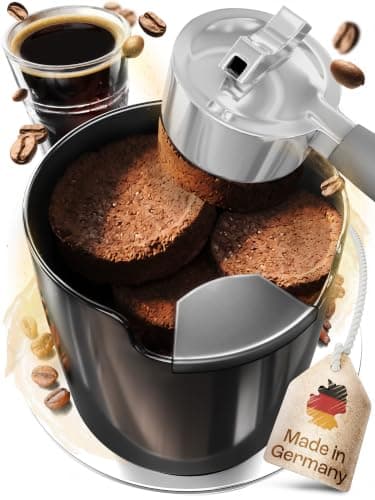
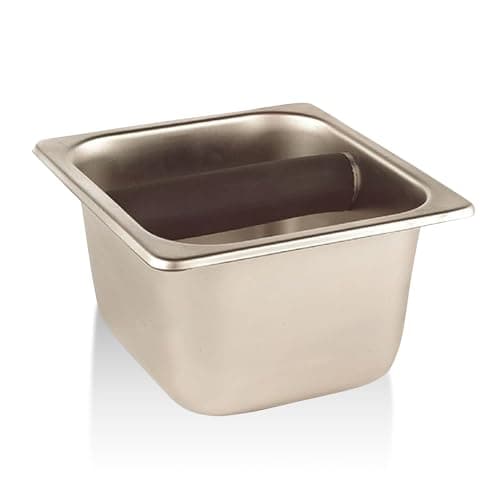
A knock box is the least glamorous thing on your espresso counter and one of the first you will wish you had bought. It is a small container with a padded bar across the middle: after you pull a shot, you strike the portafilter against that bar and the spent puck drops out in one piece. The alternative most beginners default to is banging the portafilter on the rim of the trash can, which slowly bends the basket, loosens the handle, and — if you knock into the sink instead — packs your plumbing with grounds until it drains slowly.
Here is the honest part: this is a low-stakes purchase. A knock box never touches your coffee, so no model here will make your espresso taste better, and the differences between them are about living with the thing rather than using it. The real decisions are material — stainless steel that will outlast the machine versus plastic that costs less and shrugs off drops — plus capacity, and whether the knock bar lifts out for cleaning or is welded in place. None of that is worth agonizing over, but it is worth getting right once.
The last question is where it goes. A tall commercial box lives on the counter and swallows a week of pucks; a low, wide one is built to sit in a drawer under the machine. Match it to your space, and ideally to your portafilter size, before you match it to a brand. If you are still assembling the basics, our accessories starter kit puts the knock box in context, and if you are choosing the machine it sits next to, start with the best machines for beginners.
How we picked
Every box here is a real, currently-purchasable knock box, and because none of them touches your coffee, we ranked on how well each one lives on a counter rather than on any effect on the cup. Five things decided the order.
- Build quality and durability. A knock box gets struck hundreds of times a month. Heavy-gauge stainless with a solid base takes that indefinitely; thinner metal and plastic take it too, but you feel the difference. This carried the most weight.
- Capacity, and how often you empty.A 1 L commercial box swallows a week of pucks; a ten-puck home box wants emptying most days. Neither is wrong — it depends on how much you brew — but we rewarded honest, usable capacity for the box's intended user.
- Stability under a real knock. The whole point is to strike it firmly, so a non-slip base and enough weight to stay put matter more than they sound. A box that skates across the counter is a box you come to resent.
- Cleaning and the knock bar. A bar that lifts out makes the box easy to empty and rinse; a welded bar is one less part to lose but harder to clean around. We treated dishwasher-safe bodies and removable bars as real advantages.
- Fit and footprint. Countertop height versus drawer-friendly width, and whether the inner opening clears your portafilter, decide whether the box actually works in your kitchen.
We did not lab-test these boxes — there is not much to lab-test on a container you hit — so our scores come from published manufacturer and retailer specifications and aggregated owner feedback, exactly as our methodology describes. Nothing here is a measured drop-test.
Stainless vs plastic, removable vs welded bar
Two material questions cover most of the decision. Stainless steel is the default for good reason: it never stains from coffee oils, it shrugs off years of knocking, and a weighted stainless box stays planted. It costs more and it can dent if you drop it. Plastic — the food-grade ABS of the homeffect — costs far less, survives being dropped where metal would dent, and cleans easily; it just looks and sounds cheaper, and it is light enough to need a steadying hand. There is no wrong answer here, only a trade between feel and price.
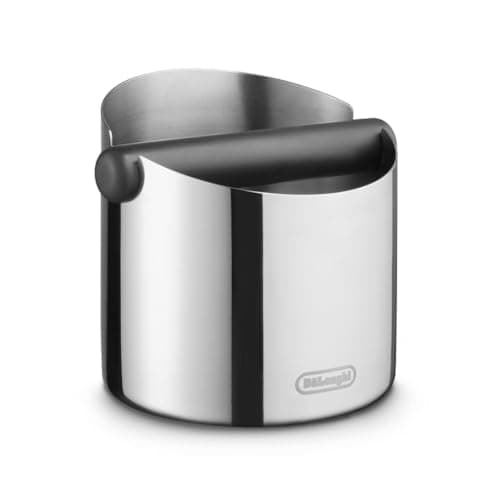
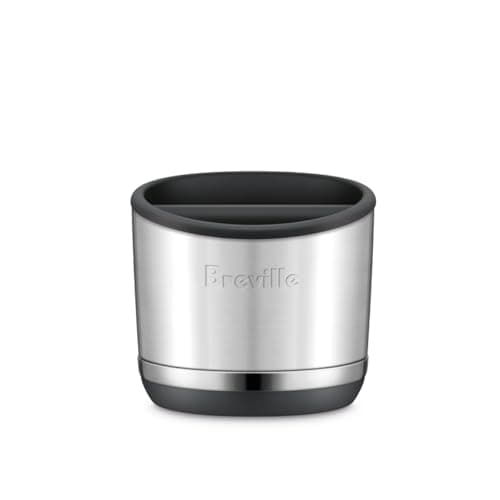
The bar is the other question. A removable knock bar — the De'Longhi, Breville, Update and homeffect all have one — lifts out so you can tip the box clean and rinse it properly. A welded bar, like the Rattleware's, never comes loose or gets lost, and the rubber sleeve over it is itself replaceable when it wears — but you clean around it rather than removing it. For most people the removable bar is the small daily convenience worth having; for a high-use box that lives on the counter for a decade, the welded bar's durability wins.
Countertop vs drawer, and matching your machine
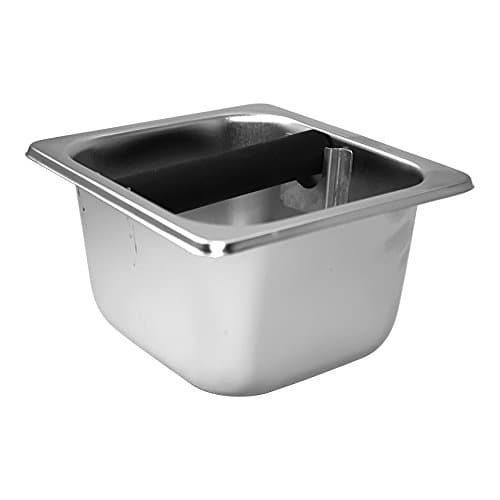
Where the box lives shapes which one to buy. Tall commercial boxes like the Rattleware and the Update KB-164 are countertop tools: they hold a lot and they are built to be left out. The compact Breville and De'Longhi boxes are low and small enough to sit in a drawer under the machine or on a crowded counter, at the cost of capacity. Measure the spot before you buy — a big box in a small kitchen is a daily annoyance.
Then match your portafilter. A knock box needs an inner opening wide enough to clear your portafilter basket, and most espresso machines use a 58mm, a 54mm (Breville) or a 51mm (some De'Longhi) portafilter. Every box here clears the common sizes — the homeffect quotes an ~11.9cm inner diameter that takes a full 58mm — but it is worth a glance before ordering. Finally, the brand-matched boxes exist for a reason: the De'Longhi DLSC072 and Breville Knock Box 10 are styled to match those machines' finishes, so if you want the setup to look deliberate rather than assembled, buy the box that matches. If you do not care, a plain commercial box does exactly the same job for less. Our what you actually need guide and the tamper roundup both sort accessories by basket size so you do not buy the wrong fit.
What we would skip
Skip the knock bar built into a machine's drip tray or bundled free with the box of a new machine — those trays are shallow, they clog, and they turn one job into two when you have to clean the tray afterwards. Skip novelty capacity you will never use: a giant commercial box is pointless if you pull two shots a day and empty it daily anyway. And skip paying a big premium purely for looks unless the looks genuinely matter to you — a knock box is the definition of a low-stakes accessory, and the money is better spent on a tamper that actually changes the shot. Buy one solid box and move on.
Which knock box fits you
- Want one box you buy once and forget? Rattleware — commercial stainless, welded bar, done.
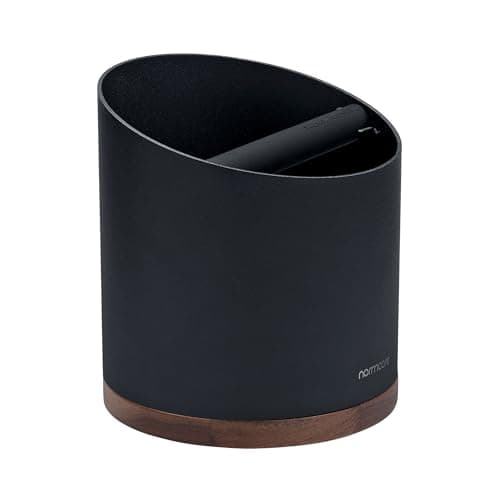
- Want it to look as good as your machine? Normcore, stainless and walnut, if you will leave it on display.
- Own a De'Longhi? The DLSC072, brand-matched with a removable bar.
- Own a Breville and short on counter space? The Knock Box 10, small and matched to the machine.
- Want the most box for the least money? Update International KB-164, plain commercial stainless.
- On a tight budget, or worried about drops? homeffect — plastic, cheap and near-indestructible.
Whichever you choose, it is one of the cheapest upgrades in espresso and one of the first that makes the daily routine tidier. Pair it with the rest of the starter kit and you have a workflow instead of a mess on the counter.