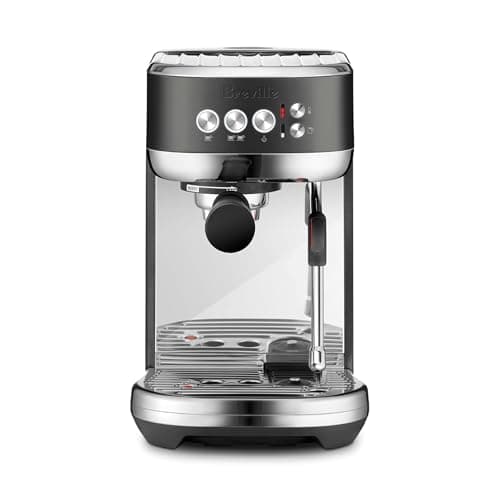
If your morning is a latte, a cappuccino or a flat white, the most important part of the machine is not the shot — it is the milk system. Every machine on this page pulls a perfectly good espresso; where they genuinely differ, and where your daily happiness actually lives, is how they turn cold milk into warm, silky microfoam. That is why this guide is built around the milk, not the bars of pressure printed on the box. Get the milk system right for how you drink and how much you want to learn, and everything else falls into place.
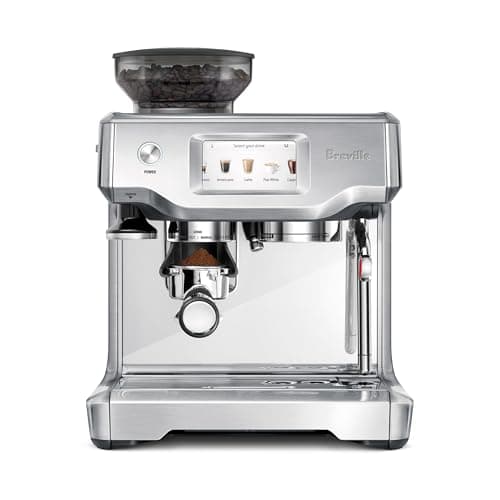
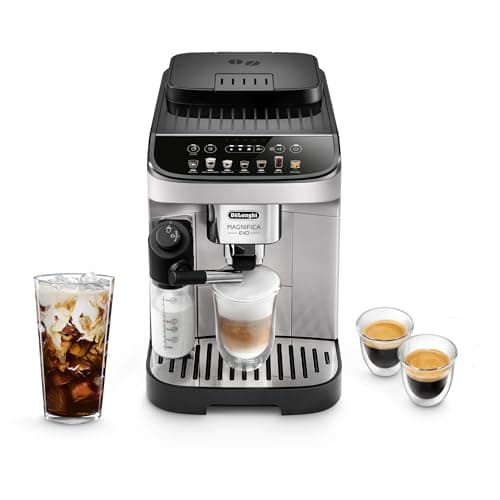
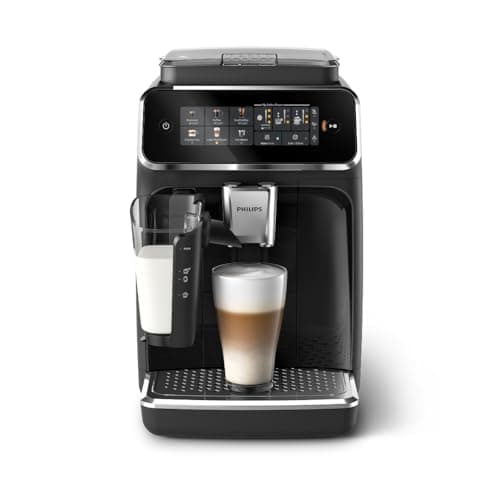
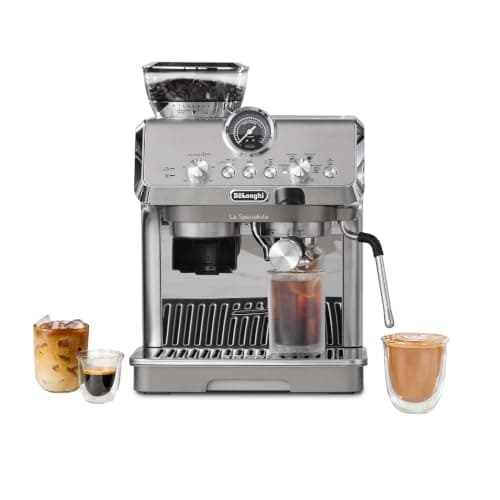
There are three ways a home machine can make milk, and picking between them is the whole decision. An automatic steam wand, like the one on the Breville Bambino Plus and the Barista Touch, heats and textures the milk hands-free to a temperature and froth level you set — you drop the wand in the pitcher and walk away, which makes it the friendliest option for a beginner. A manual steam wand, like the one on the De'Longhi La Specialista Arte Evo, hands you the pitcher and asks you to spin and stretch the milk yourself; it is a skill, but it is the only route to the textured microfoam you need to actually pour latte art, and our guide to how to steam milk walks through the technique. A super-automatic milk carafe— De'Longhi's LatteCrema and Philips' LatteGo — draws milk from a jug and froths it straight into the cup on one button, fully hands-free, but it cannot free-pour art and the carafe is one more thing to keep clean.
So the honest steer is simple. If you want a good milk drink every morning with the least effort, buy automatic — an automatic wand if you still want to hold the pitcher, a carafe machine if you want it truly hands-off. If part of the appeal is making the coffee, and you want to pour a rosetta into your own flat white, buy a manual wand and accept the learning curve. Two smaller factors decide the rest: steam power, which is how fast and dry the steam is and therefore how good your foam can get, and the single-boiler wait— most machines at this level use one heater, so you brew the shot, then wait a few seconds for it to switch over to steam before you can froth. None of that is a dealbreaker; it is just the rhythm of a single-boiler machine. New to all of this? Our best machines for beginners roundup is the gentler starting point, and the milk-first De'Longhi Magnifica Evo review digs into the carafe route in detail.
Automatic wand, manual wand or milk carafe?
This is the choice that should drive your whole purchase, so it is worth slowing down on. An automatic steam wandis the middle path: you still hold the pitcher and the wand does the texturing, but a temperature probe and a froth setting mean you cannot over- or under-steam it, and you never have to learn to read the milk by ear. It is the most beginner-proof way to get genuinely good microfoam, and on the Bambino Plus it comes in the smallest body Breville makes. Its ceiling is control — the machine hands you one consistent texture rather than the fine command a free-pour artist wants.
A manual steam wandis the enthusiast's tool. You judge the temperature by hand and ear, angle the wand to spin the milk into a whirlpool, and stretch it to exactly the texture you want. It is the only one of the three systems that can produce true latte-art microfoam, because you and not a preset are shaping it — which is why the De'Longhi La Specialista Arte Evo is the pick for anyone who wants to learn. Expect a real learning curve; our how to steam milk and how to make a latte guides exist precisely because this step takes practice. A good milk pitcher helps more than most people expect.
A super-automatic milk carafe — LatteCrema on the Magnifica Evo, LatteGo on the Philips 3300 — removes the pitcher entirely. Milk goes in a jug, the machine draws it up, froths it and pours it straight into the cup on one touch. It is the most hands-free milk you can buy and the easiest for a busy household, and both handle plant milks. The two honest costs: the froth is poured for you, so you cannot pour art, and the carafe is an extra part to clean every day — which is exactly where LatteGo's tube-free two-piece design earns its keep over a tube-fed carafe.
Steam power and the single-boiler wait
Two mechanical details separate a machine that steams milk well from one that struggles. The first is steam power: dry, forceful steam stretches and polishes milk into fine microfoam quickly, while weak, wet steam produces big soapy bubbles that no amount of technique fully fixes. A machine with a commercial-style manual wand, like the Arte Evo, generally gives you more usable steam than a basic frother, which is part of why it rewards practice; an automatic wand is tuned to hit a good texture reliably rather than to be pushed. The second detail is the single-boiler wait. Almost every machine in this range uses one heater for both brewing and steaming, so the normal rhythm is: pull the shot, press the steam button, wait a few seconds for the heater to climb to steam temperature, then froth. It is not a flaw — it is simply how a single boiler works, and for one or two drinks you will barely notice. A true dual-boiler machine steams and brews at once with no wait, but that is a different, pricier class; at this level, plan on the short switchover and steam your milk right after you brew.
Cleaning the milk system — the part people underestimate
The milk system is also the part you clean every single day, and it is where good machines quietly separate from frustrating ones. A manual or automatic steam wand needs a quick purge and a wipe right after you steam, before the milk dries on — skip it and the wand clogs and sours. It is a ten-second habit once it is a habit. A milk carafeis more convenient in the moment but more to clean overall: the milk travels through the carafe's milk path, which has to be flushed or rinsed so it does not turn. This is the single biggest reason to prefer Philips' tube-free LatteGo, whose two clip-apart parts rinse in seconds with no internal channel at all, over any tube-fed carafe you have to run a cleaning cycle through. The tube-fed LatteCrema carafe on the Magnifica Evoanswers it differently: it lifts into the fridge between drinks and runs its own clean cycle. Whatever system you choose, the machine you still use six months from now is the one whose milk cleanup you do not dread — weigh that as heavily as the shot.
Which machine fits your milk drink
- Want great milk drinks with the least fuss and the smallest footprint? Breville Bambino Plus — automatic, hands-free microfoam in the most compact body here, our best value pick for milk.
- Want the whole drink guided from a touchscreen? Breville Barista Touch — automatic milk plus a built-in grinder and a screen that walks you through every latte.
- Want a latte on one button with no pitcher at all? De'Longhi Magnifica Evo — the LatteCrema carafe does the milk hands-free and stores in the fridge.
- Want that same hands-free milk for less, with the easiest cleanup? Philips 3300 LatteGo — the tube-free carafe is the value pick for bean-to-cup milk drinks.
- Want to learn to pour real latte art?De'Longhi La Specialista Arte Evo — the only manual wand here, and the one that rewards practice.
- Completely new to espresso? Start with our best machines for beginners before you commit to a milk system.
How we picked
We did not lab-test this gear
Everyone in this category says they tested twenty machines. We have not pulled shots on every product here, and we say so. What we did instead: compiled the published specifications, cross-checked the manufacturer manuals, computed the running cost (wattage to energy, grams-per-shot to cost-per-cup), weighed aggregated owner reports, and scored each product against a published rubric. The scores are judgments from documented research — not measurements we took, because we do not have a test lab and we will not pretend we do. Where hands-on time would tell you more than a spec sheet, we flag it. Where a number came from someone else's work, we name them in Sources.