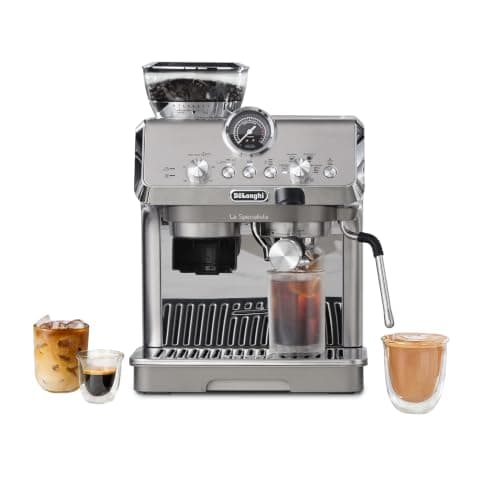
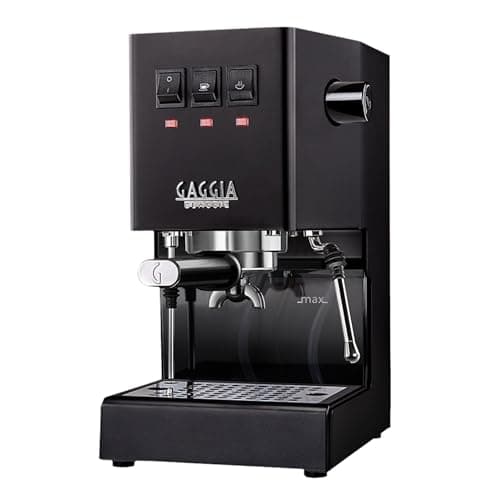
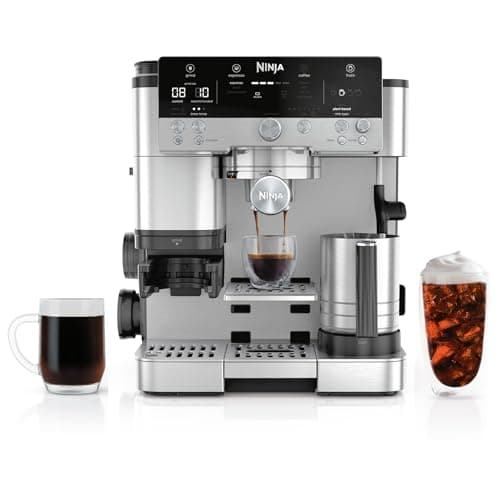
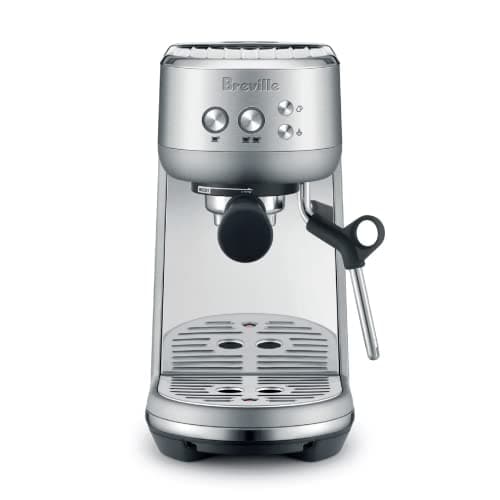
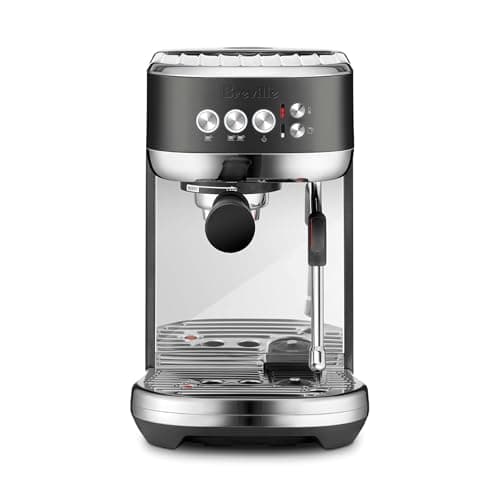
The best Breville Barista Express alternative for most people is the Breville Bambino Plus — roughly the same money, no built-in grinder, and in exchange a ThermoJet heater that is ready in about three seconds plus an automatic steam wand with temperature and froth control. It is for anyone who already owns a grinder or is willing to buy one. If you want to keep the one-box format, the De'Longhi La Specialista Arte Evo is the closest thing to it with a built-in grinder. And the cheaper alternative is the Breville Bambino, which gives you the same 54mm Breville shot quality for well under the Express's price once you accept grinding separately.
Start with why the Barista Express is as popular as it is, because an alternative has to replace something specific. It is a single box containing an integrated conical burr grinder with 16 settings, a ThermoCoil heater with PID control, a 54mm portafilter, 9-bar extraction and a manual steam wand. One purchase, one footprint, one thing to learn. That is a genuinely good proposition and it is why the machine has sold for years — this page is not an argument that it is a bad machine. It is a page for the three different people who search for an alternative to it.
Reason one: you already own a grinder.This is the most common and the easiest to answer. If you have a decent standalone grinder, the Express's built-in one is money spent twice — and worse, it is money spent on the compromised half, because a grinder squeezed into a machine chassis has small burrs and coarse adjustment compared with a standalone at the same price. Drop the grinder and the same budget buys a better heater, a better wand, or both. That is exactly what the Bambino Plus does. Our best espresso machines without a grinder page is built around this reason.
Reason two: you want more control, or a 58mm upgrade path. The Express is a 54mm machine and a sealed appliance — a good one, but not a platform. If you want a pressure gauge, a brass group with real thermal mass, a three-way solenoid that dries the puck, and access to the entire commercial 58mm accessory market, that is a different kind of machine and the Gaggia Classic Evo Pro is the obvious one at this money. You trade instant readiness for a ceiling you can keep climbing.
Reason three: it costs more than you want to spend. The honest answer here is to separate the two halves and buy them at different times. A Bambino plus a good hand grinder costs materially less than the Express and makes better espresso, because the standalone grinder out-grinds the built-in one. The catch is cranking, and the catch is real — a fine espresso dose is close to a minute of work. Our best espresso setup under $500 page splits a budget this way deliberately.
What no alternative gives you. If the appeal of the Express is that it is one box on one plug with one manual, every pick on this page except the La Specialista and the Ninja asks you to own a second appliance. That is a real cost in counter space and in mornings, and it is the one argument the Express wins outright against most of this list. Be honest with yourself about whether a second machine will actually get used. Best espresso machines with a grinder is the page to read if the answer is no.
Pick by reason, not by price. Already own a grinder: Bambino Plus. Want one box: La Specialista Arte Evo. Want control and 58mm: Gaggia Classic Evo Pro. Want espresso plus drip and cold brew: Ninja Luxe Café. Want the same shot for less: Bambino plus a grinder. Those are five different buyers and only one of them is choosing on price.
Portafilter diameter is the hidden cost of switching. The Express is 54mm. If you already own 54mm baskets, tampers and puck screens, the Bambino and Bambino Plus carry them straight over; the Gaggia (58mm), La Specialista (51mm) and Ninja (53mm) all do not. That is a real cost on top of the machine. Our portafilter size by brand chart lists every machine, and there is a shopping page per diameter: 58mm, 54mm and 51mm.
The grinder arithmetic, stated once.A grinder built into a machine shares the chassis budget with the boiler and the pump, so it gets small burrs and coarse adjustment. A standalone grinder at the same money gets large burrs and fine adjustment, because that is all it has to pay for. This is why "cheaper machine, better grinder" beats the reverse at almost every budget — and it is the real reason most alternatives to the Express are machines without grinders. Do you need a grinder for espresso is the longer argument.
If you are keeping the Express instead. That is a perfectly good decision, and two cheap purchases improve it more than any of these machines would: a single-wall 54mm precision basket and a WDT tool. Together they cost a tiny fraction of a new machine and they fix the two faults that actually show up in the cup. See best espresso accessories under $25 and our Barista Express review.
Or go up rather than sideways.Within Breville's own line the Barista Pro adds a ThermoJet heater to the all-in-one format and the Barista Express Impress adds an assisted tamping system. Both keep the one-box proposition and cost more — best Breville espresso machines ranks the whole ladder, and Barista Express vs Impress covers the nearest step up.
How we picked
We did not lab-test this gear
Everyone in this category says they tested twenty machines. We have not pulled shots on every product here, and we say so. What we did instead: compiled the published specifications, cross-checked the manufacturer manuals, computed the running cost (wattage to energy, grams-per-shot to cost-per-cup), weighed aggregated owner reports, and scored each product against a published rubric. The scores are judgments from documented research — not measurements we took, because we do not have a test lab and we will not pretend we do. Where hands-on time would tell you more than a spec sheet, we flag it. Where a number came from someone else's work, we name them in Sources.