Skip to content
Portafilter Co

Machines · Espresso Machines

Ninja Luxe Café vs Breville Barista Express

Both grind, dose and brew in one chassis for similar money. One automates the two steps beginners fail at; the other hands you a pressure gauge, a manual wand and a portafilter the whole aftermarket is built around. The right answer depends on one question about yourself.

By Stephen V.Updated How we pick
#ad

We earn a commission when you buy through our Amazon links, at no extra cost to you. It never changes a verdict, and we say so when the cheaper product is the better buy. How this works.

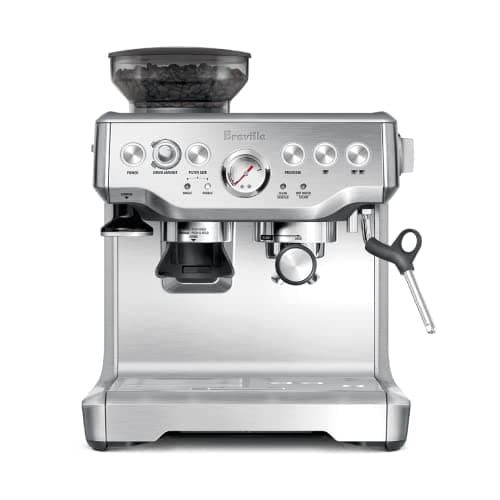
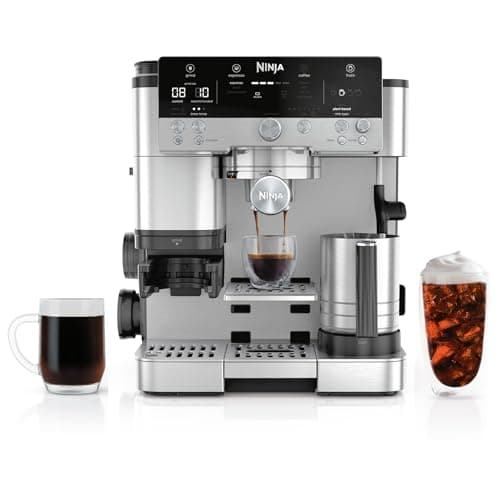
Buy the Breville Barista Express if you want to end up making good espresso. It uses a 54mm portafilter— the size the home-espresso aftermarket is built around — holds brew water at a PID-controlled temperature, shows you what the puck is doing through an analog pressure gauge, and gives you a manual steam wand you can learn latte art on. Buy the Ninja Luxe Café Premier if one appliance has to cover espresso and the drip coffee your household actually drinks, or if you want the machine to weigh the dose and tamp the puck for you. It is the more capable appliance. The Breville is the better espresso machine.

That is the whole decision, and almost nobody frames it that way when they start shopping. These two get compared because they land in the same price bracket (check the live prices on the cards below — they refresh daily) and because both promise cafe drinks from one box with no separate grinder. But they spend their engineering budgets in opposite directions. Ninja spent it on removing steps: a built-in scale doses by weight, an assisted tamper packs the puck, Barista Assist suggests a grind, and the wand froths hands-free. Breville spent it on the brew path: temperature control, pre-infusion, standard parts and a gauge that tells you the truth about your grind.

How we work: this is a desk comparison built from the manufacturers' published specifications, the retailer listings and aggregated owner reports, all named in Sources. We have not bench-tested either machine and we do not have a lab — our methodology page says so plainly. Where the published figures disagree with each other, we print the disagreement instead of picking the tidier number.

The specifications that actually decide it

 Ninja Luxe Café Premier (ES601)Breville Barista Express (BES870)
Portafilter53mm (Ninja's own size)54mm stainless steel
GrinderIntegrated conical burr, 25 settingsIntegrated conical burr, 16 settings, dose control
DosingBuilt-in scale, dosed by weightTimed dose + Razor dose-trimming tool
TampingAssisted tamper built inBy hand, integrated tamper in the base
TemperatureNot publishedThermoCoil with PID control, water at 200°F
Pressure9 bar in the spec table; marketed as a “19-bar pressure system”15-bar pump, 9-bar extraction after low-pressure pre-infusion
MilkDual Froth: hands-free hot or cold microfoam, plus manual steamingManual steam wand only
Also makesDrip coffee and rapid cold brewEspresso drinks only
Water tank2.1 L (70 oz)Not published on Breville's page
Footprint (W x D x H)12.99 x 13.39 x 14.57 in, 25.73 lb15.9 x 13.1 x 12.4 in

Two rows in that table are worth more than the rest put together, and they are not the ones the marketing leads with.

Row one: 53mm versus 54mm, which is really a question about year three

The Ninja uses a 53mm portafilter. Breville uses 54mm, and the prosumer world uses 58mm. Those three numbers are not interchangeable, and the practical consequence is that every third-party part you will eventually want — a precision basket, a puck screen, a bottomless portafilter, a leveling distributor — is made for 54mm or 58mm machines, because that is where the installed base is. Ninja's 53mm size has no third-party ecosystem of its own and Ninja does not publish cross-compatibility with anyone else's baskets, so the honest planning assumption is that your accessories come from Ninja or not at all.

On the Breville side, the 54mm portafilter opens onto a genuinely deep parts shelf. Our 54mm portafilter accessories page is the specific list, and it comes with a wrinkle worth knowing before you buy anything: Breville's “54mm” portafilter takes 53.3mm baskets, so the parts you want are the ones sold for Breville by name rather than anything labeled simply 54mm. Our portafilter size by brand guide exists because this trips up more buyers than any other spec on an espresso machine.

Why does it matter? Because the single biggest jump in espresso quality available to an entry machine is not the machine — it is swapping the double-wall pressurized basket it ships with for an unpressurized one, and then fixing the channeling that change exposes with a decent precision basket and a WDT tool. On the Express that is a thirty-dollar path you can walk whenever you like. On the Ninja it is mostly closed. Our pressurized vs unpressurized baskets guide explains what the swap actually changes in the cup.

If you are certain you will never tinker, this row costs you nothing and you should ignore it. If there is any chance you will get interested, it is the row that decides the comparison.

Row two: who performs the hard steps, you or the machine

Espresso has two steps beginners reliably get wrong: weighing a consistent dose and tamping it level. The Ninja does both for you. Its built-in scale doses by weight rather than by time, which removes the most common source of shot-to-shot variation on any grind-and-brew machine, and its assisted tamper applies the same pressure every time. Barista Assist then recommends a grind setting based on what the machine saw. For someone who wants coffee rather than a hobby, this is genuinely valuable and we are not going to sneer at it.

Breville's answer is older and more honest about what it is: the Express grinds on a timer, then hands you the Razor dose-trimming tool to level the puck to a repeatable height, and you tamp by hand. That is a skill, it takes a week or two, and our tamping guide and puck prep guide are the two pages that shorten the learning curve most. The compensation for the extra work is the analog pressure gauge, which is the best teaching instrument on any machine at this price: a needle that parks too low means your grind is too coarse, too high means too fine, and after a fortnight you read it without thinking. Nothing on the Ninja tells you that.

There is a counting detail here too. The Ninja has 25 grind settings and the Express has 16, which reads like a win for Ninja on the spec sheet. In practice, grind resolutiononly matters if you are chasing the shot yourself, and the Express pairs its 16 steps with a PID-held brew temperature and pre-infusion, which between them widen the window a given setting has to hit. A machine with more settings and no temperature specification is not obviously more adjustable than one with fewer settings and a published 200°F. Our dial-in guide walks through what you are actually hunting.

Milk: hands-free against learnable

The Ninja's Dual Froth system textures milk hands-free, hot or cold, dairy or plant, and it will also steam manually if you want to practice. The Express has a manual steam wand and nothing else. If what you want is a flat white at 7am without thinking, the Ninja is plainly better and the cold-foam capability has no equivalent on the Breville at all.

If you want to learn milk, the manual wand is the one that teaches you, because microfoam is a feedback skill: you listen for the hiss, watch the whirlpool, and feel the pitcher get hot. Our steaming guide covers the technique and the right pitchermatters more than people expect. The Express's wand is a single-hole design that rewards practice rather than forgiving its absence — which is the trade this whole comparison keeps making.

What the Ninja does that the Breville simply cannot

It brews drip coffee and rapid cold brew. That is not a footnote. In a household where two people drink mugs of filter coffee and one person drinks espresso, the Ninja replaces two appliances and the Breville replaces one, and the counter-space arithmetic can decide the purchase on its own. Its 2.1-liter tank and 250 g hopper are sized for that life. Our best drip coffee makerspage is the alternative route — a Barista Express plus a good standalone drip machine — and it is often the better coffee, in more boxes, for more money.

The honest footprint note cuts the other way from what the dimensions suggest: the Ninja is narrower but taller and deeper, and at roughly 25.7 lb it is not a machine you slide around. The Express is wider and shorter. Measure your cabinet clearance before you decide either is “compact”; our small-kitchen roundup covers machines that genuinely are.

The pressure number, and why we are not quoting it at you

Ninja markets the Luxe Café as a “19-Bar Pressure System” while the specification table on the same product documentation lists 9 bar, and nothing reconciles the two. Breville states a 15-bar pump that extracts at 9 bar after low-pressure pre-infusion, which is the clearer and more useful way to express it, because the two numbers describe different things: the pump's maximum capability and the pressure actually applied to the coffee.

Espresso is brewed at around 9 bar. Any machine advertising 15, 19 or 20 bar is quoting pump capability, and above 9 bar at the puck the effect is worse coffee, not better, because excess pressure drives channeling. Treat every bar figure in espresso marketing as noise; our espresso pressure guide explains what the number means and our channeling guide covers the failure it causes.

Which one, in one paragraph each

Buy the Barista Express if espresso is the point, if you like the idea of a gauge and a wand, or if there is any chance you will want a bottomless portafilter and a precision basket in a year. You are buying a brew path with a published temperature, a 54mm parts ecosystem and a ceiling well above the machine itself.

Buy the Ninja Luxe Café Premier if you want cafe drinks with the fewest decisions, if a second person in the house drinks drip coffee, or if cold foam and cold brew sound genuinely appealing. You are buying guidance and breadth, and paying for it in parts availability and shot ceiling.

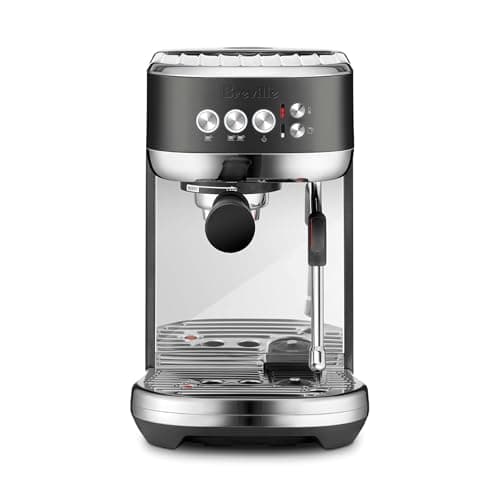
Buy neither if you would rather have the best espresso available for this money: a Bambino Plus with a real standalone grinder beats both machines in the cup, because a dedicated grinder is better than any grinder squeezed inside an espresso machine. That route costs more in total and takes two boxes of counter space, and it is what we would buy. Our best espresso setup under $1,000 page splits the budget that way on purpose.

The short answer

Quick picks

#ProductBest forScorePrice
01
Breville Breville BES870XL Barista Express
Breville BES870XL Barista Express

The better espresso machine of the two, and the one to buy if you intend to get good at this. Breville's own specification is the argument: a 54mm stainless portafilter that opens onto the deepest accessory shelf in home espresso, ThermoCoil heating with PID control delivering water at 200F, and a 15-bar pump that extracts at 9 bar after low-pressure pre-infusion. The integrated conical burr grinder has 16 settings with dose control, and the Razor trimming tool plus the analog pressure gauge together teach you to read your own shots, which is the skill that keeps paying. You tamp by hand and you steam milk by hand. That is the cost, and for anyone who wants espresso rather than an appliance it is the right cost.

Best for learning real espresso on standard parts
8.0
$684.99Amazon
02
Ninja Ninja Luxe Café Premier 3-in-1 (ES601)
Ninja Luxe Café Premier 3-in-1 (ES601)

The better appliance, and the right buy if one chassis has to cover more than espresso. It brews espresso, drip coffee and rapid cold brew, and it removes the two steps beginners fail at: a built-in scale doses the grounds by weight rather than by time, and an assisted tamper packs the puck the same way every time, with Barista Assist suggesting a grind. The Dual Froth system textures hot or cold microfoam hands-free and still steams manually if you want to learn. The costs are real and specific: a 53mm portafilter that is Ninja's own size with no third-party accessory ecosystem, no published brew temperature, and a shot ceiling below the Breville's. Buy it for breadth and guidance, not for the best espresso in the price bracket.

Best if one machine must also make drip and cold brew
7.4
$599.00Amazon
03
Breville Breville BES500 Bambino Plus
Breville BES500 Bambino Plus

The answer to the question neither machine in the title asks: what if you spent the money on espresso quality instead of on an integrated grinder? The Bambino Plus has no grinder at all, which is why it belongs here - pair it with a standalone grinder and the pair out-brews both all-in-ones, because a dedicated grinder beats any burr set squeezed into an espresso machine. It is a 54mm machine like the Express, so the same accessory shelf is open to you, and its automatic milk wand textures to a temperature and texture you choose, which is the one thing it does better than the Express. The trade is total cost and two boxes of counter space rather than one.

Best if you would rather spend the difference on a grinder
8.0
$499.95Amazon

#ad · Live prices from the Amazon Product API, as of October 28, 2026. Where we have no verified live price, we show none — a gap beats a number that has rotted.

In detail

The picks, in full

01
Breville Breville BES870XL Barista Express

Best for learning real espresso on standard parts

Breville BES870XL Barista Express

54mm stainless portafilter (takes 53.3mm baskets)Integrated conical burr grinder, 16 settings, dose controlThermoCoil + PID, water at 200F15-bar pump, 9-bar extraction after pre-infusion
8.0/10

The better espresso machine of the two, and the one to buy if you intend to get good at this. Breville's own specification is the argument: a 54mm stainless portafilter that opens onto the deepest accessory shelf in home espresso, ThermoCoil heating with PID control delivering water at 200F, and a 15-bar pump that extracts at 9 bar after low-pressure pre-infusion. The integrated conical burr grinder has 16 settings with dose control, and the Razor trimming tool plus the analog pressure gauge together teach you to read your own shots, which is the skill that keeps paying. You tamp by hand and you steam milk by hand. That is the cost, and for anyone who wants espresso rather than an appliance it is the right cost.

Espresso quality
8
Milk texturing
7
Ease for a beginner
8
Upgrade path
9
Value
8

Pros

  • 54mm portafilter means precision baskets, puck screens, bottomless portafilters and distribution tools are all available to you
  • PID temperature control with a published 200F brew temperature, which is rare at this price
  • Low-pressure pre-infusion then 9-bar extraction, rather than hammering the puck from the first second
  • The analog pressure gauge is the best teaching instrument on any machine in this bracket
  • Razor dose-trimming tool makes a repeatable puck height achievable without a scale
  • Ships genuinely complete: single and dual wall baskets, milk jug, cleaning disc and tablets, brush, water filter and holder
  • Breville's most established machine, so parts, manuals and owner knowledge are everywhere

Cons

  • 16 grind settings is fewer than the Ninja's 25, and the espresso end of the range is where you will wish for more
  • You tamp by hand and steam by hand - there is no assistance and no built-in scale
  • The manual single-hole steam wand takes real practice before milk looks like cafe milk
  • Makes espresso drinks only: no drip, no cold brew, no cold foam
  • Wider than the Ninja at 15.9 inches, and it needs clear counter space to work in
  • Breville does not publish the water tank capacity or weight on the BES870 product page
  • The built-in grinder is good for an integrated unit and still beaten by a standalone grinder at a fraction of the machine's price

Don't buy this if…

…one machine has to make the drip coffee as well. The Express makes espresso and nothing else, and no accessory changes that - a second person in the house who drinks mugs of filter coffee will quietly resent it. Buy the Ninja Luxe Cafe Premier, or buy the Express plus a standalone drip maker if counter space allows.

$684.99View on Amazon

Price as of October 28, 2026. Prices change — Amazon's at checkout is the one that counts.

#ad · we may earn a commission from this link to Breville BES870XL Barista Express

02
Ninja Ninja Luxe Café Premier 3-in-1 (ES601)

Best if one machine must also make drip and cold brew

Ninja Luxe Café Premier 3-in-1 (ES601)

3-in-1: espresso, drip coffee, rapid cold brewIntegrated conical burr grinder, 25 settingsBuilt-in scale doses by weight + assisted tamper53mm portafilter; 2.1 L tank, 250 g hopper
7.4/10

The better appliance, and the right buy if one chassis has to cover more than espresso. It brews espresso, drip coffee and rapid cold brew, and it removes the two steps beginners fail at: a built-in scale doses the grounds by weight rather than by time, and an assisted tamper packs the puck the same way every time, with Barista Assist suggesting a grind. The Dual Froth system textures hot or cold microfoam hands-free and still steams manually if you want to learn. The costs are real and specific: a 53mm portafilter that is Ninja's own size with no third-party accessory ecosystem, no published brew temperature, and a shot ceiling below the Breville's. Buy it for breadth and guidance, not for the best espresso in the price bracket.

Espresso quality
7
Milk texturing
8
Ease for a beginner
9
Upgrade path
5
Value
8

Pros

  • Weight-based dosing on a built-in scale removes the biggest source of shot-to-shot variance for a beginner
  • Assisted tamper applies consistent pressure without technique
  • 25 grind settings, more than the Breville's 16
  • Dual Froth textures hot or cold microfoam hands-free, dairy or plant milk, and will steam manually too
  • Genuinely replaces a drip coffee maker and a cold brew maker as well as an espresso machine
  • 2.1 L (70 oz) tank and a 250 g hopper suit a household rather than one drinker
  • Narrower than the Barista Express on the counter at 12.99 inches wide

Cons

  • The 53mm portafilter is Ninja's own size: no third-party precision baskets, puck screens, bottomless portafilters or distribution tools, and Ninja publishes no cross-compatibility
  • No published brew temperature or temperature-control system, where Breville specifies PID at 200F
  • The pressure specification contradicts itself - 9 bar in the spec table, a marketed 19-bar system - and nothing reconciles them
  • Largely plastic exterior where the Breville is brushed stainless
  • Tall and deep at 14.57 inches high and roughly 25.7 lb, so it is not a machine you move
  • No pressure gauge, so nothing on the machine teaches you to read your own shots
  • Shot ceiling is lower: it is excellent at a decent shot on day one and limited at a great shot in year two

Don't buy this if…

…you can picture yourself fitting a bottomless portafilter, trying a precision basket or chasing a better shot. The 53mm portafilter closes that path and no amount of guidance reopens it. Buy the Barista Express for the 54mm ecosystem, or a Bambino Plus and a standalone grinder if you want the ceiling raised properly.

$599.00View on Amazon

Price as of October 28, 2026. Prices change — Amazon's at checkout is the one that counts.

#ad · we may earn a commission from this link to Ninja Luxe Café Premier 3-in-1 (ES601)

03
Breville Breville BES500 Bambino Plus

Best if you would rather spend the difference on a grinder

Breville BES500 Bambino Plus

No built-in grinder - pair with a standalone54mm portafilter, same accessory ecosystem as the ExpressAutomatic milk texturing to a set temperature and textureSmall footprint next to both all-in-ones
8.0/10

The answer to the question neither machine in the title asks: what if you spent the money on espresso quality instead of on an integrated grinder? The Bambino Plus has no grinder at all, which is why it belongs here - pair it with a standalone grinder and the pair out-brews both all-in-ones, because a dedicated grinder beats any burr set squeezed into an espresso machine. It is a 54mm machine like the Express, so the same accessory shelf is open to you, and its automatic milk wand textures to a temperature and texture you choose, which is the one thing it does better than the Express. The trade is total cost and two boxes of counter space rather than one.

Espresso quality
8
Milk texturing
9
Ease for a beginner
9
Upgrade path
7
Value
7

Pros

  • A standalone grinder plus this machine beats either all-in-one in the cup for the same total outlay or a little more
  • 54mm portafilter, so precision baskets, puck screens and bottomless portafilters all fit
  • Automatic milk texturing to a chosen temperature and texture, with manual steaming available
  • Fast to heat and small enough to live on a crowded counter
  • Leaves you free to upgrade the grinder later without replacing the machine

Cons

  • No grinder in the box, so the real price is this machine plus a grinder
  • Two appliances means two footprints and two things to clean
  • No pressure gauge, so it teaches you less than the Express does
  • Makes espresso drinks only - no drip, no cold brew
  • Nothing weighs or tamps for you, so it is the least beginner-assisted option on this page

Don't buy this if…

…you want one box, one plug and one purchase. The Bambino Plus is half a setup by design, and buying it without budgeting for a grinder is the most common way people end up disappointed with an otherwise excellent espresso machine.

$499.95View on Amazon

Price as of October 28, 2026. Prices change — Amazon's at checkout is the one that counts.

#ad · we may earn a commission from this link to Breville BES500 Bambino Plus

The decision in four questions

Answer these honestly and the machine picks itself. They are in order of how much they matter, which is not the order the product pages put them in.

QuestionIf yesWhy it decides
Does anyone in the house drink mugs of filter coffee?NinjaThe Express cannot brew drip at all, and a second appliance costs counter space
Can you picture yourself buying a bottomless portafilter?Breville54mm has an aftermarket; Ninja's 53mm effectively does not
Do you want the machine to weigh and tamp for you?NinjaA built-in scale and assisted tamper remove the two steps beginners fail at
Do you want to learn to texture milk by hand?BrevilleA manual wand teaches; a hands-free system does it for you and teaches nothing

If you answered yes to both the first two, you are the person who should read our all-in-one espresso machines roundup before committing, because the compromise you are looking for may be a third machine entirely.

What “16 settings” and “25 settings” really buy

Grind-setting counts are the most-quoted and least-useful number on an all-in-one espresso machine. What matters is not how many positions the dial has but how wide the usable espresso band is and how much the rest of the machine forgives you landing slightly off it.

Breville's 16 settings sit behind a PID-held 200°F brew temperature and a low-pressure pre-infusion stage. Both of those widen the band: stable temperature removes a variable that otherwise moves your shot between pulls, and pre-infusion wets the puck gently before full pressure, which reduces channeling on a puck that is slightly off. Ninja's 25 settings sit behind no published temperature specification and a weight-based dose, which attacks a different variable — dose consistency — and leaves temperature unaddressed in the published spec.

Neither approach is wrong. They are solving different halves of the same problem, which is why the spec sheets do not line up in a way that lets you declare a winner. If you want the mechanism rather than the marketing, our pre-infusion guide and grind size guide are the two pages that make the rest of this make sense.

The total-cost arithmetic nobody runs

An all-in-one looks cheaper than a machine plus a grinder because it is one line on the receipt. Run it out over the life of the setup and the comparison changes shape.

With the Ninja you buy one box and you are finished — there is no upgrade path to spend on, which is either a feature or a cage depending on your temperament. With the Express you buy one box and have the option to spend a little on baskets, a screen and a tool, each of which measurably improves the cup. With a Bambino Plus you buy two boxes up front, and the grinder is the part that holds its value: a good grinder outlives several machines and improves every brew method you own, not just espresso. Our best grinders for espresso page is the shopping list, and do you need a grinder for espresso is the argument underneath it.

The one cost both all-in-ones genuinely save is counter space, and in a small kitchen that is not a small thing. Be honest about which constraint is actually binding for you.

What we did not test

We have not bench-tested either machine. The Barista Express figures — 54mm portafilter, 16 grind settings with dose control, ThermoCoil with PID at 200°F, 15-bar pump with 9-bar extraction after low-pressure pre-infusion, 15.9 x 13.1 x 12.4 inches and the in-box accessory list — are Breville's own published specifications, which do not state tank capacity or weight. The Ninja figures — 53mm portafilter, 25 grind settings, built-in scale, assisted tamper, Dual Froth, 2.1 L tank, 250 g hopper, 12.99 x 13.39 x 14.57 inches, 25.73 lb — come from the published ES601 specification sheet via Home Baristas, including the unreconciled 9-bar-versus-19-bar pressure discrepancy, which we have printed rather than resolved. We have not measured temperature stability, shot-to-shot consistency, grind particle distribution, heat-up time or noise on either machine, and the scores above are editorial judgments from documented research, not lab measurements.
How we picked

We did not lab-test this gear

Everyone in this category says they tested twenty machines. We have not pulled shots on every product here, and we say so. What we did instead: compiled the published specifications, cross-checked the manufacturer manuals, computed the running cost (wattage to energy, grams-per-shot to cost-per-cup), weighed aggregated owner reports, and scored each product against a published rubric. The scores are judgments from documented research — not measurements we took, because we do not have a test lab and we will not pretend we do. Where hands-on time would tell you more than a spec sheet, we flag it. Where a number came from someone else's work, we name them in Sources.

Questions

Frequently asked

Is the Ninja Luxe Café better than the Breville Barista Express?
It is the better appliance and the worse espresso machine. The Ninja brews espresso, drip coffee and cold brew, weighs the dose on a built-in scale and tamps for you; the Express makes espresso only, on a 54mm portafilter with PID-controlled water at 200°F, a pressure gauge and a manual wand. If one machine has to cover the whole household, buy the Ninja. If espresso is the point and you want a ceiling to grow into, buy the Express.
What size portafilter does the Ninja Luxe Café use?
53mm, which is Ninja's own size rather than an industry standard. The home-espresso aftermarket is built around Breville's 54mm and the prosumer 58mm, so third-party precision baskets, puck screens, bottomless portafilters and distribution tools are not made for it, and Ninja publishes no cross-compatibility. Our portafilter size by brand guide lists what fits what.
Does the Breville Barista Express have PID temperature control?
Yes. Breville's BES870 product page specifies a ThermoCoil heating system with PID temperature control, delivering water at 200F. That is unusual at this price and it is one of the two specifications we would actually pay for on an entry espresso machine, the other being a standard portafilter size.
Is the Ninja Luxe Café really 19 bar?
Ninja markets a “19-Bar Pressure System” while the specification table lists 9 bar, and nothing published reconciles the two. It matters less than it looks: espresso is brewed at around 9 bar, and any larger figure describes pump capability rather than pressure at the coffee. Breville states it the clearer way — a 15-bar pump extracting at 9 bar after pre-infusion. Our espresso pressure guide explains why more bar is not better.
Can the Ninja Luxe Café replace a drip coffee maker?
Yes — that is its main advantage over the Breville. It brews drip coffee through a bypass filter and makes rapid cold brew, on a 2.1-liter tank sized for a household rather than one drinker. The Barista Express cannot brew filter coffee in any configuration. If you would rather have the better filter coffee in a separate box, our drip coffee maker roundup is the other route.
Which has the better built-in grinder?
They are close, and both are beaten by a standalone grinder costing a fraction of either machine. The Ninja has 25 settings and doses by weight; the Express has 16 settings with dose control and a Razor trimming tool. Neither integrated burr set matches a dedicated grinder, which is the whole argument for buying a Bambino Plus and a real espresso grinder instead.
Which is easier for a complete beginner?
The Ninja, clearly. Weight-based dosing and an assisted tamper remove the two steps beginners get wrong, and hands-free frothing removes a third. The Express asks you to trim the puck with the Razor tool, tamp by hand and learn the steam wand, and gives you a pressure gauge to learn from in exchange. Our best espresso machines for beginners page ranks the field on exactly this.
Which one fits a small kitchen?
Neither is small, and the dimensions mislead. The Ninja is narrower at 12.99 inches but taller and deeper at 14.57 inches high, roughly 25.7 lb; the Express is wider at 15.9 inches but shorter at 12.4 inches high. If you have a cabinet above the counter, measure the height before you decide - the Ninja is the one more likely to foul it.

Keep reading

Same gear, other pages

We cover this gear elsewhere too

Receipts

Sources

We do not run a testing lab, and we do not pretend to. Where a measured number came from someone else's work, we name them and link them. Where we could not verify something, we say so on the page rather than quietly leaving it out. Read our full method.