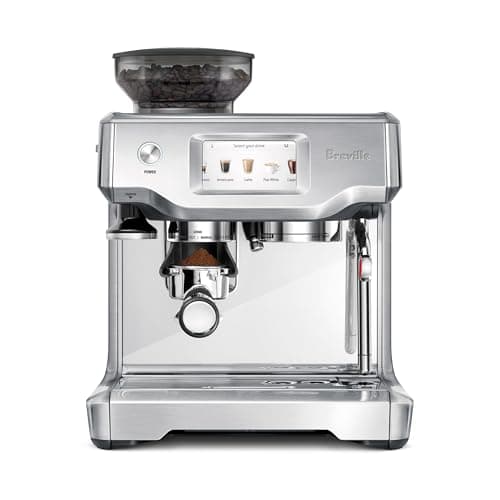
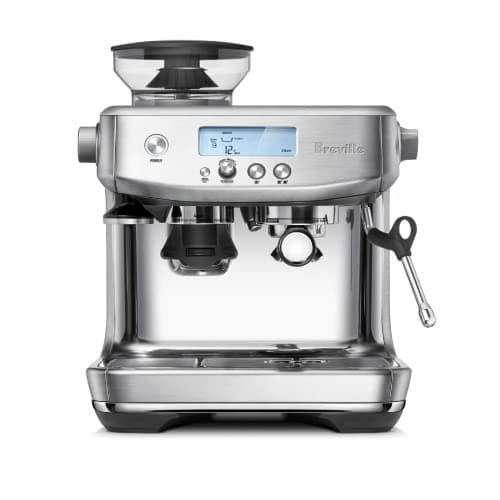
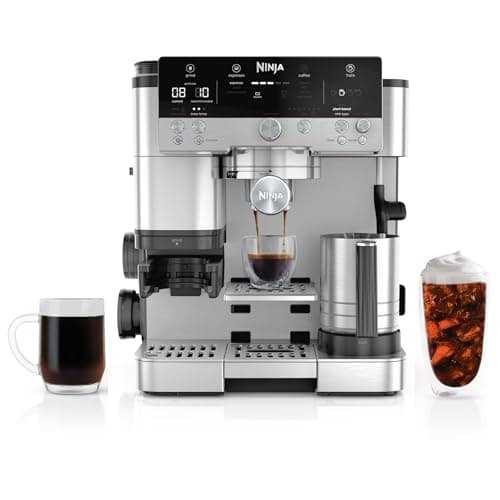
If one machine has to cover espresso and the drip coffee your household actually drinks, buy the Ninja Luxe Café Premier: it grinds, doses by weight, assists the tamp, and also brews a carafe of filter coffee and rapid cold brew, for less money than the Breville. If espresso is the point and the rest is noise, buy the Breville Barista Touch— it is the better espresso machine, with a touchscreen that walks you through drinks and milk texturing that runs hands-free to a temperature and texture you set. The honest third answer: if you want Breville espresso and do not need automatic milk, the Barista Pro costs noticeably less and gives up only the screen and the auto-wand.
These machines get compared because they sit near each other on price and both promise "cafe drinks without learning espresso". They go about it in opposite ways. Ninja built a three-drink appliance: one chassis, one grinder, and brew paths for espresso, drip and cold brew, with a weight-based dosing system and an assisted tamper that takes two of the hardest beginner steps off your hands. Breville built a guided espresso machine: the Barista Touch does nothing but espresso and milk, and spends all of its engineering on doing those two things to a standard the Ninja does not reach — digital PID temperature control, a 54mm portafilter with real baskets, and a steam wand that textures milk rather than aerating it.
The practical difference shows up in two places. First, shot quality ceiling: the Barista Touch gives you more control over dose, grind and temperature, and the shots respond to that control, which means the machine keeps getting better as you do. The Ninja is excellent at getting a decent shot out of a beginner on day one, and its ceiling is lower. Second, what else the machine does: the Ninja genuinely replaces a drip machine and a cold brew pitcher, and if that is what your counter needs, no amount of espresso refinement makes up for it.
A note on portafilter size, because it affects what you can buy later. The Breville is 54mm — the format with the deepest aftermarket of any entry size, so precision baskets, tampers, funnels and puck screens are all easy to find. The Ninja Luxe Café uses a 53mm portafilter, which is close enough to cause confusion and not always close enough to fit; our portafilter size chart by brand records both, and the 54mm accessories page explains why that one millimetre matters when you go shopping for parts.
The specs, side by side
Figures below are the manufacturers' published specifications for the exact listings linked above. We have not bench-tested these machines and do not claim to have.
| Ninja Luxe Café Premier | Breville Barista Touch | Breville Barista Pro |
|---|
| Brews | Espresso, drip, rapid cold brew | Espresso only | Espresso only |
| Grinder | Built in, conical, 25 settings | Built in, conical | Built in, 30 settings |
| Dosing | By weight, assisted tamp | Timed, manual tamp | Timed, manual tamp |
| Milk | Dual Froth: hands-free or manual | Automatic, hands-free, temp + texture set | Manual wand only |
| Portafilter | 53mm | 54mm | 54mm |
| Interface | Dial + display | Colour touchscreen | LCD |
| Heat-up | Fast (per Ninja) | Fast | About 3 seconds (ThermoJet) |
Which one fits your kitchen
Answer one question honestly: in a normal week, how many mugs of filter coffee does your household drink? If the answer is "most of our coffee", the Ninja wins before the espresso discussion starts, because the alternative is buying a Breville anda drip machine and finding counter space for both. If the answer is "almost none", buy the best espresso machine you can afford and ignore the versatility argument entirely.
The second question is who makes the milk. Hands-free texturing is the single most useful convenience feature in this class for people who drink lattes and do not want a skill; both the Touch and the Ninja offer it, and the Barista Pro does not. If you would rather learn to steam — it takes a week or two and is genuinely satisfying — how to steam milk is the guide, and the Pro becomes the value pick.
The parts question nobody checks before buying
A 54mm Breville gives you a large, well-documented aftermarket: IMS precision baskets, calibrated 53.3mm tampers, dosing funnels, puck screens and bottomless portafilters are all one search away, and our 54mm accessories page ranks them. The Ninja's 53mm format has a much thinner parts shelf, and some 53.3mm Breville-fit parts do not seat properly in it. If upgrading baskets and tampers over the next year is part of your plan, that is a real argument for the Breville; if you intend to use the machine exactly as it came, it does not matter at all.
Our call
Ninja Luxe Café Premier for households that drink mixed coffee and want one appliance, and for beginners who want guided dosing and tamping. Breville Barista Touch for espresso-first buyers who want hands-free milk and are willing to pay for the better shot. Breville Barista Profor anyone who wants Breville espresso at close to the Ninja's price and is happy to steam milk by hand. If none of those is quite it, our best super-automatic machines covers the fully-automatic alternative, and best machines under $1,000 covers the wider price band all three sit in.
How we picked
We did not lab-test this gear
Everyone in this category says they tested twenty machines. We have not pulled shots on every product here, and we say so. What we did instead: compiled the published specifications, cross-checked the manufacturer manuals, computed the running cost (wattage to energy, grams-per-shot to cost-per-cup), weighed aggregated owner reports, and scored each product against a published rubric. The scores are judgments from documented research — not measurements we took, because we do not have a test lab and we will not pretend we do. Where hands-on time would tell you more than a spec sheet, we flag it. Where a number came from someone else's work, we name them in Sources.