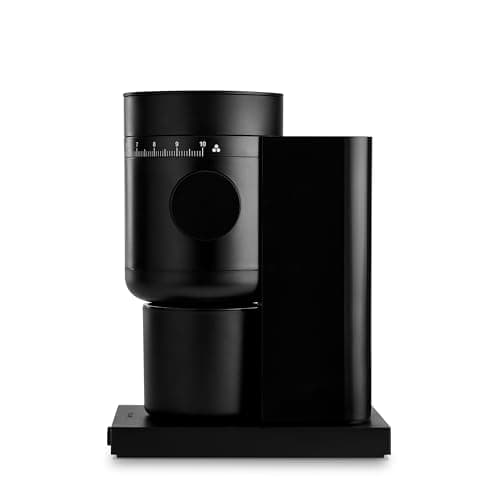
The Ode Gen 2 is a good grinder and this page starts by saying what it is: Fellow's listing specifies 64 mm flat burrs with a two-stage grinding geometry, 31 grind settingsaimed at pour over, drip, French press and cold brew, a 100 g single-dose load bin, anti-static treatment with a built-in knocker, a magnetic catch cup, automatic shut-off and a two-year warranty. It is also the one grinder in this class whose maker tells you its limit in the first bullet: "Designed specifically for brewed coffee. Not for espresso." That sentence is the reason most people search for an alternative, and the best answer to it is Fellow's other grinder — the Opus 2, which costs less than the Ode and does grind espresso.
There are only four real reasons to replace an Ode, and they point at different grinders. Work out which one is yours before you read the picks, because the wrong answer here is expensive.
Reason one: you want espresso too. This is the big one. An espresso machine needs a grind far finer than any filter method, and more importantly it needs the adjustment to move in very small increments at that end of the range, because a few microns is the difference between a nine-second gusher and a stalled shot. The Ode is not built for that and Fellow does not claim it is. Four picks below grind espresso properly: the Opus 2, the DF64 Gen 2, the DF54 and the Baratza Vario+. If espresso is now the main event rather than a side project, read best espresso grinders instead of this page, and best grinders for espresso and filter coffee if you need both done well.
Reason two: you want the same burrs for less money. This one has no answer, and pretending otherwise would be dishonest.The Ode's 64 mm flat burrs are the largest on this page. The only true 64 mm flat-burr single-doser in our registry is the DF64 Gen 2, and it costs morethan the Ode, not less — what it buys you for the difference is stepless adjustment and espresso capability. Every cheaper pick here moves to smaller burrs: 54 mm flat on the DF54 and the Vario+, 48 mm conical on the Opus 2, 40 mm conical on the Baratzas. Smaller is not automatically worse for filter coffee, but it is a different grinder, and anyone telling you a $120 grinder is "the Ode for less" is skipping that.
Reason three: you are tired of single-dosing.The Ode's 100 g load bin is a deliberate design choice — you weigh beans in, you grind them all, nothing sits in the machine. Plenty of people love that and some find it a chore every single morning, especially for a household where three people want different amounts. If that is your complaint, you want a hopper and a timer instead: the Baratza Virtuoso+ holds beans and doses by time, and the Encore does the same thing for less. That is the opposite workflow, with the honest trade that beans stored in a hopper go stale faster and the grinder retains more between doses. Best single dose grinders and single dosing explained cover both sides.
Reason four: the price. The Ode sits in the band where a grinder stops being an accessory and starts being an appliance purchase. If that is the only problem, the Encore and the OXO Brew make very good filter coffee for a fraction of it, and a hand grinder like the Timemore Chestnut C3S does it for less again if you do not mind forty seconds of cranking. You give up speed, capacity and grind uniformity at the extremes — not the ability to make good coffee. See best coffee grinders under $100 and best hand grinders.
One note for the "catch cup" searchers.One of the top autocomplete variants for this query is "fellow ode catch cup alternative", which is not a grinder question at all — those people want a different vessel under a grinder they already own and like. Any 100 g-capacity cup that clears the chute works; the magnet is a convenience, not a requirement. If that is you, keep the grinder. Nothing on this page is an upgrade over an Ode you are happy with.
The short answer
Quick picks
| # | Product | Best for | Score | Price |
|---|
| 01 | Fellow Opus 2 Conical Burr GrinderOur overall pick, because Fellow sells the answer to its own gap and charges less for it. Where the Ode's listing says "not for espresso", the Opus 2's says the opposite in its first bullet - one grinder, any brew, espresso through cold brew - and backs it with stepless adjustment that moves continuously instead of between fixed detents, which is exactly what espresso dialing needs. The listing specifies 48 mm conical burrs, near-zero retention, anti-static treatment, automatic shut-off, a 2-year warranty, and two magnetic catch cups: a 100 g bin for coarser grinds and a separate espresso cup compatible with 54 mm and 58 mm portafilters. It is the same single-dose workflow and the same design language as the Ode, for less money, with the one limitation removed. | Best overall - Fellow's own grinder, cheaper than the Ode and it grinds espresso | | $159.95·Amazon |
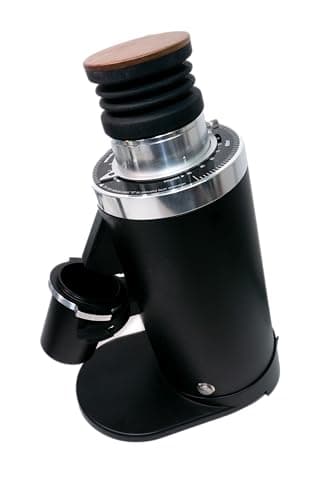
| 02 | DF64 Gen 2 Single Dose Coffee GrinderThe only genuine like-for-like swap on this page, and it costs more than the Ode rather than less - which is the honest headline. It is a 64 mm flat-burr single-doser, the same burr format and the same workflow, with stepless adjustment and a low-retention design, and it grinds from espresso through to filter rather than stopping at filter. If the thing you like about the Ode is the burrs and the thing you resent is the espresso limit, this is the machine, and you should expect to pay a premium for it. It is also a more industrial object than the Ode: it is not designed to be looked at, and the bellows-and-chute routine is a workflow, not a convenience. | Best like-for-like - the same 64mm flat-burr single-dose format, plus espresso | | $389.00·Amazon |
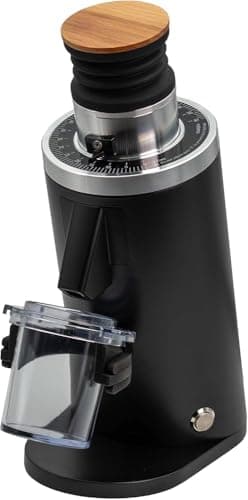
| 03 | DF54 Single Dose Coffee GrinderThe flat-burr value pick, and the cheapest way to keep flat burrs while gaining espresso. It is the DF64's smaller sibling: 54 mm stainless flat burrs, stepless micrometric adjustment, a sub-0.1 g retention claim and an ionizer for static, in a single-dose body that is noticeably smaller on a counter. It costs less than the Ode and does more. What you give up against both the Ode and the DF64 is burr diameter, which shows up mainly at coarse filter settings where the bigger flat burrs produce slightly fewer fines - a difference you will taste in a light-roast pour over and probably not in a French press. | Best flat-burr value - cheaper than the Ode, smaller burrs, and it does espresso | | $260.00·Amazon |
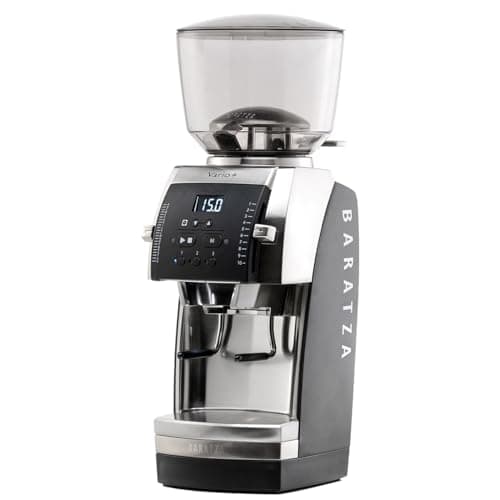
| 04 | Baratza Vario+ Flat Ceramic Burr GrinderThe pick if you want one grinder to do espresso and filter properly, with dosing rather than a load bin. Baratza's spec is 54 mm flat ceramic burrs and a two-axis adjustment - 10 macro positions by 22 micro steps, 220 in total - which is the most adjustment range on this page and the reason it genuinely covers espresso through French press rather than claiming to. It also doses by time into a portaholder, which is a different ergonomic from the Ode entirely: you set a dose and press, instead of weighing beans every time. It is the most expensive pick here and it is the one with a real hopper, with all the freshness and retention trade-offs that implies. | Best for espresso and filter together - 220 adjustment positions and timed dosing | | $423.95·Amazon |
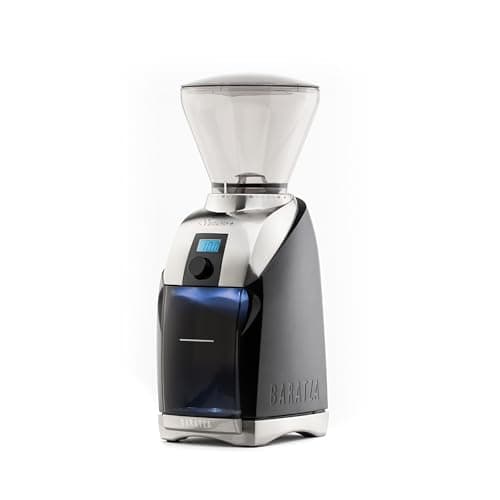
| 05 | Baratza Virtuoso+The answer if single-dosing is the thing you are tired of. It is a filter-first grinder with 40 mm M2 conical burrs, 40 stepped settings, a gear-reduced 550 RPM motor and a 40-second digital timer adjustable in tenth-of-a-second steps - so you fill the hopper once and press a button for the same dose every morning. That is the exact opposite of the Ode's weigh-and-load routine, and for a household where several people grind different amounts it is simply faster. Stepped settings are also easier to live with than a stepless dial: setting 18 is still setting 18 next week. It is not an espresso grinder and we are not going to suggest it is. | Best hopper grinder - no weighing, no load bin, a timer and a button | | $199.95·Amazon |
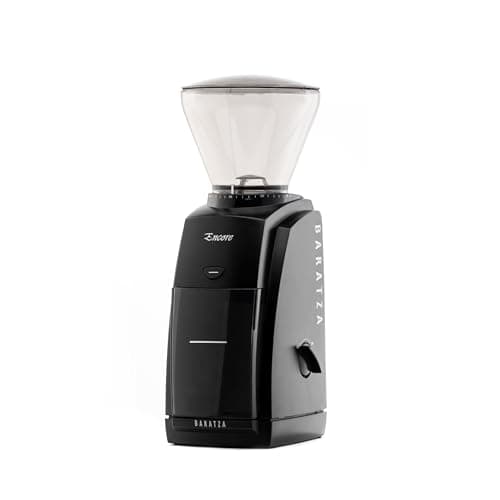
| 06 | Baratza Encore Coffee GrinderThe budget pick with a name worth having, and the grinder most people should buy if the Ode's price is the whole problem. Baratza publishes a 250-1200 micron range across 40 stepped settings on 40 mm conical burrs, with a 227 g hopper, a 142 g grounds bin, a geared DC motor with a thermal cut-off and a one-year warranty. That published range is the point: it is a filter grinder with its adjustment spent where filter coffee actually lives, which is why it has been the default recommendation for drip and French press for years. It costs a fraction of the Ode. It is also obviously the cheaper machine - plastic body, louder, and more retention. | Budget pick - the default filter grinder, at a fraction of the Ode's price | | $119.95·Amazon |
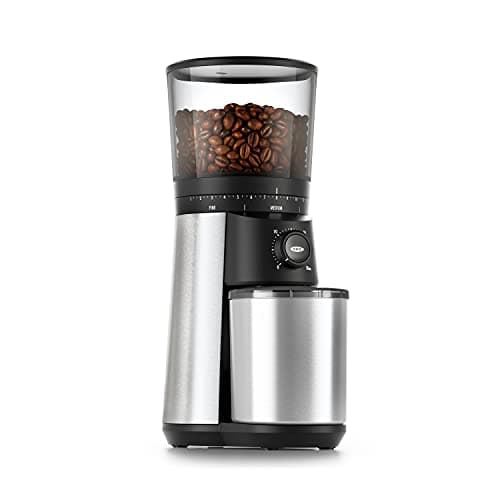
| 07 | OXO Brew Conical Burr Coffee GrinderThe cheapest electric burr grinder here, and the floor of what we would recommend at all. It has conical metal burrs, a one-touch timer that repeats your last dose and a roughly 340 g hopper, and it makes perfectly decent drip and French press coffee for a small fraction of the Ode. Be clear-eyed about the adjustment: it is advertised as 43 settings but there are 15 physical detents, and published figures for its burr diameter disagree with each other - OXO does not state one. For a French press or a drip machine that does not matter much. For a pour over where you are chasing clarity, it does. | Cheapest electric - good drip and French press coffee for very little | | $82.49·Amazon |
#ad · Live prices from the Amazon Product API, as of November 26, 2026. Where we have no verified live price, we show none — a gap beats a number that has rotted.
In detail
The picks, in full
Best overall - Fellow's own grinder, cheaper than the Ode and it grinds espresso
Fellow Opus 2 Conical Burr Grinder
48mm stainless steel conical burrsStepless adjustment (listing: 48 marked positions)100g single-dose bin + espresso cup for 54/58mm portafiltersNear-zero retention, anti-static, auto stop, 2-yr warranty
Our overall pick, because Fellow sells the answer to its own gap and charges less for it. Where the Ode's listing says "not for espresso", the Opus 2's says the opposite in its first bullet - one grinder, any brew, espresso through cold brew - and backs it with stepless adjustment that moves continuously instead of between fixed detents, which is exactly what espresso dialing needs. The listing specifies 48 mm conical burrs, near-zero retention, anti-static treatment, automatic shut-off, a 2-year warranty, and two magnetic catch cups: a 100 g bin for coarser grinds and a separate espresso cup compatible with 54 mm and 58 mm portafilters. It is the same single-dose workflow and the same design language as the Ode, for less money, with the one limitation removed.
- Range including espresso
- 9.5
- Adjustment resolution
- 9
- Retention
- 9
- Workflow
- 8
- Value
- 9
Pros
- +Grinds espresso, which is the one thing the Ode will not do
- +Stepless dial, so you can make the tiny changes espresso actually needs
- +Costs meaningfully less than the Ode
- +Keeps the Ode's single-dose, near-zero-retention workflow and catch-cup design
- +Second catch cup drops straight into a 54mm or 58mm portafilter
Cons
- −48 mm conical burrs, not 64 mm flat - this is not the same grinder with espresso added
- −A stepless dial with no detents is harder to return to a known filter setting
- −Smaller conical burrs are a step back from the Ode on filter uniformity at coarse settings
- −Still a single-doser, so it does not fix the workflow complaint
- −Does espresso well for its price, not as well as a dedicated espresso grinder
Don't buy this if…
…you only brew filter coffee and you are happy single-dosing. In that case the Ode you already have is the better filter grinder and the honest advice is to keep it - the Opus 2 is an answer to a limit you are not hitting.
We review it in full at Fellow Opus 2 review, and Fellow Opus 2 vs Baratza Encore ESP is the head-to-head against the obvious espresso-side rival at a similar price.
Best like-for-like - the same 64mm flat-burr single-dose format, plus espresso
DF64 Gen 2 Single Dose Coffee Grinder
64mm flat burrs - the same format as the OdeStepless adjustmentSingle-dose, low-retention designEspresso through filter
The only genuine like-for-like swap on this page, and it costs more than the Ode rather than less - which is the honest headline. It is a 64 mm flat-burr single-doser, the same burr format and the same workflow, with stepless adjustment and a low-retention design, and it grinds from espresso through to filter rather than stopping at filter. If the thing you like about the Ode is the burrs and the thing you resent is the espresso limit, this is the machine, and you should expect to pay a premium for it. It is also a more industrial object than the Ode: it is not designed to be looked at, and the bellows-and-chute routine is a workflow, not a convenience.
- Range including espresso
- 9.5
- Adjustment resolution
- 9.5
- Retention
- 9
- Workflow
- 8.5
- Value
- 7
Pros
- +Same 64 mm flat-burr format as the Ode, so filter performance is comparable
- +Stepless adjustment covers espresso properly
- +Single-dose and low-retention, so the Ode workflow carries over
- +A genuine upgrade path rather than a sideways move
- +Large aftermarket of burr upgrades and accessories
Cons
- −Costs more than the Ode - this is not a way to save money
- −Utilitarian build and finish next to Fellow's industrial design
- −Stepless with no detents, so repeating a filter setting takes notes
- −Needs the bellows-and-brush routine to keep retention low in practice
- −Louder than the Ode
Don't buy this if…
…price is any part of your reason for leaving the Ode. Everything else on this page is cheaper, and the Opus 2 above gets you espresso for well under what the Ode itself cost.
This exact pairing has its own page, which goes far deeper than a roundup entry can: DF64 Gen 2 vs Fellow Ode Gen 2. The full review is at DF64 Gen 2 review.
Best flat-burr value - cheaper than the Ode, smaller burrs, and it does espresso
DF54 Single Dose Coffee Grinder
54mm stainless steel flat burrsStepless micrometric adjustmentSub-0.1g retention claim, ionizer anti-staticEspresso-first, brew-capable
The flat-burr value pick, and the cheapest way to keep flat burrs while gaining espresso. It is the DF64's smaller sibling: 54 mm stainless flat burrs, stepless micrometric adjustment, a sub-0.1 g retention claim and an ionizer for static, in a single-dose body that is noticeably smaller on a counter. It costs less than the Ode and does more. What you give up against both the Ode and the DF64 is burr diameter, which shows up mainly at coarse filter settings where the bigger flat burrs produce slightly fewer fines - a difference you will taste in a light-roast pour over and probably not in a French press.
- Range including espresso
- 9
- Adjustment resolution
- 9
- Retention
- 9
- Workflow
- 8
- Value
- 8
Pros
- +Costs less than the Ode and grinds espresso properly
- +Flat burrs, so the grind character stays closer to the Ode than any conical here
- +Micrometric stepless adjustment is excellent at the espresso end
- +Very low retention and an ionizer, so single-dosing works as intended
- +Smaller footprint than the 64 mm machines
Cons
- −54 mm burrs rather than 64 mm - a real step down for coarse filter work
- −Espresso-first design, so filter is the secondary use case
- −Stepless adjustment means you keep notes to return to a filter recipe
- −Industrial build; no Fellow-grade finish
- −Bellows-and-brush maintenance to hold the retention figure
Don't buy this if…
…pour over is 90% of your brewing. The Ode's bigger flat burrs are genuinely better at that job, and swapping to this for a capability you rarely use is a downgrade where it matters to you.
Full review at DF54 review, and DF64 Gen 2 vs DF54 is the sibling comparison if you are choosing between the two burr sizes.
Best for espresso and filter together - 220 adjustment positions and timed dosing
Baratza Vario+ Flat Ceramic Burr Grinder
54mm flat ceramic burrs220 settings (10 macro x 22 micro)Timer dosing with portaholderEspresso through French press
The pick if you want one grinder to do espresso and filter properly, with dosing rather than a load bin. Baratza's spec is 54 mm flat ceramic burrs and a two-axis adjustment - 10 macro positions by 22 micro steps, 220 in total - which is the most adjustment range on this page and the reason it genuinely covers espresso through French press rather than claiming to. It also doses by time into a portaholder, which is a different ergonomic from the Ode entirely: you set a dose and press, instead of weighing beans every time. It is the most expensive pick here and it is the one with a real hopper, with all the freshness and retention trade-offs that implies.
- Range including espresso
- 9
- Adjustment resolution
- 9.5
- Retention
- 7
- Workflow
- 8.5
- Value
- 7
Pros
- +The widest genuinely usable range on this page - espresso to French press
- +Two-axis adjustment lets you return to a known setting precisely, unlike a stepless dial
- +Timed dosing straight into a portafilter or a dosing cup
- +Baratza's repairability and parts support are the best in the category
- +Ceramic burrs stay sharp a long time
Cons
- −The most expensive pick here, above the Ode by a clear margin
- −Hopper-fed, so beans live in the machine and retention is higher than any single-doser here
- −54 mm burrs, not 64 mm
- −Timed dosing is less precise than weighing, which matters most for espresso
- −Big on a counter
Don't buy this if…
…you single-dose by weight and intend to keep doing it. A Vario+ used that way is a large, costly machine doing a job a $160 single-doser does more neatly.
Best hopper grinder - no weighing, no load bin, a timer and a button
Baratza Virtuoso+
40mm M2 conical burrs40 stepped grind settings40-second digital timer in 0.1s stepsGear-reduced 550 RPM motor
The answer if single-dosing is the thing you are tired of. It is a filter-first grinder with 40 mm M2 conical burrs, 40 stepped settings, a gear-reduced 550 RPM motor and a 40-second digital timer adjustable in tenth-of-a-second steps - so you fill the hopper once and press a button for the same dose every morning. That is the exact opposite of the Ode's weigh-and-load routine, and for a household where several people grind different amounts it is simply faster. Stepped settings are also easier to live with than a stepless dial: setting 18 is still setting 18 next week. It is not an espresso grinder and we are not going to suggest it is.
- Range including espresso
- 5.5
- Adjustment resolution
- 7
- Retention
- 6
- Workflow
- 8.5
- Value
- 8
Pros
- +Hopper and timer, so there is nothing to weigh before you grind
- +Stepped settings are repeatable - you can go back to a known number
- +Gear-reduced motor runs cooler and quieter than a direct-drive at this price
- +Baratza parts and service support, which no other brand here matches
- +Costs well under the Ode
Cons
- −Not for espresso - the steps are far too coarse at the fine end
- −40 mm conical burrs are a real step down from 64 mm flat for coarse filter grinding
- −Hopper-fed, so beans sit in the machine and go stale faster
- −Retains more coffee between doses than any single-doser here
- −Timed dosing drifts as beans age and the burrs season
Don't buy this if…
…you might ever want espresso. Four picks above this one grind espresso and three of them cost less than the Ode did - buying a filter-only grinder to replace a filter-only grinder only makes sense if the workflow or the price was your complaint.
Full review at Baratza Virtuoso+ review, and Baratza Encore vs Fellow Ode is the head-to-head that covers the Baratza-versus-Fellow argument in depth.
Budget pick - the default filter grinder, at a fraction of the Ode's price
Baratza Encore Coffee Grinder
40mm conical stainless steel burrs40 stepped settings, published 250-1200 micron range227 g hopper / 142 g grounds binGeared DC motor, thermal cut-off, 1-year warranty
The budget pick with a name worth having, and the grinder most people should buy if the Ode's price is the whole problem. Baratza publishes a 250-1200 micron range across 40 stepped settings on 40 mm conical burrs, with a 227 g hopper, a 142 g grounds bin, a geared DC motor with a thermal cut-off and a one-year warranty. That published range is the point: it is a filter grinder with its adjustment spent where filter coffee actually lives, which is why it has been the default recommendation for drip and French press for years. It costs a fraction of the Ode. It is also obviously the cheaper machine - plastic body, louder, and more retention.
- Range including espresso
- 5
- Adjustment resolution
- 6.5
- Retention
- 6
- Workflow
- 8
- Value
- 9
Pros
- +A fraction of the Ode's price for genuinely good filter coffee
- +Published micron range, so you know what the 40 settings actually cover
- +Stepped and repeatable - no notes needed to find a recipe again
- +The best-supported grinder in the category: every part is replaceable and sold
- +Easy to resell, because demand for it never really drops
Cons
- −No espresso - the finest setting is still far too coarse
- −Plastic body and a noticeably cheaper feel than anything above it
- −Retains several grams between doses, which single-dosers do not
- −Static cling in dry air makes the bin messy
- −40 mm conical burrs produce more fines at coarse settings than the Ode's 64 mm flats
Don't buy this if…
…you bought the Ode for its coarse-grind uniformity in a pour over. This is a clear step down on exactly that axis, and the DF54 above is the cheapest pick here that is not.
Full review at Baratza Encore review. If espresso is on the horizon, the Encore ESP is the same body with its 40 settings concentrated in the espresso region instead — Encore vs Encore ESP explains the difference.
Cheapest electric - good drip and French press coffee for very little
OXO Brew Conical Burr Coffee Grinder
Conical metal burrs (published diameters conflict; OXO states none)15 physical detents, advertised as 43 settings~12 oz (340 g) bean hopperOne-touch timer repeats your last dose
The cheapest electric burr grinder here, and the floor of what we would recommend at all. It has conical metal burrs, a one-touch timer that repeats your last dose and a roughly 340 g hopper, and it makes perfectly decent drip and French press coffee for a small fraction of the Ode. Be clear-eyed about the adjustment: it is advertised as 43 settings but there are 15 physical detents, and published figures for its burr diameter disagree with each other - OXO does not state one. For a French press or a drip machine that does not matter much. For a pour over where you are chasing clarity, it does.
- Range including espresso
- 4.5
- Adjustment resolution
- 5
- Retention
- 5.5
- Workflow
- 7.5
- Value
- 9
Pros
- +By far the cheapest electric grinder on this page
- +One-touch timer repeats your dose without any setup
- +Stainless body and a genuinely compact footprint
- +Big enough step up from a blade grinder to change your coffee
- +Widely available and easy to replace
Cons
- −15 real detents, despite the 43-setting claim - coarse adjustment
- −No published burr diameter, and third-party figures contradict each other
- −Not for espresso in any form
- −Noticeably more fines than any flat-burr grinder here, which shows in a pour over
- −Hopper-fed with meaningful retention
Don't buy this if…
…you are replacing an Ode rather than buying your first burr grinder. This is a large step down in grind quality and the Encore above is a much smaller one for not much more money.
Full review, including the full list of contradictory published specs, at OXO Brew conical burr review.
Why "not for espresso" is a design decision, not a shortfall
It would be easy to read Fellow's own "not for espresso" line as an admission, and it is not. Espresso and filter make opposite demands on a grinder. Espresso pushes water through a compacted bed in roughly thirty seconds at around nine bars, so the grind has to be fine enough to resist that pressure, and the adjustment has to move in increments small enough to change the shot by a couple of seconds. Filter brewing runs water through a loose bed under gravity for two to four minutes, so the useful range is vastly coarser and the increments can be bigger. A grinder that spends all 31 of its steps across the filter range gives you finer control where you actually brew — which is a better filter grinder than one that spreads the same number of steps from espresso to French press. That is the trade the Ode makes on purpose, and it is why several picks on this page are worse at filter coffee than the grinder they are replacing.
Burr size and burr shape, honestly
The Ode runs 64 mm flat burrs. Flat burrs grind by funnelling beans between two parallel rings, which tends to produce a narrower particle distribution — fewer dust-sized fines and fewer boulders — and bigger burrs do it with less work per bean. Conical burrs crush between a cone and a housing, are cheaper to make at a given quality, and tend to produce a slightly wider distribution with more fines. In a French press or a drip machine almost nobody can pick the difference. In a light-roast pour over, where fines are what muddy the cup and stall the drawdown, it is audible in the brew time and visible in the clarity. So: if your Ode is mainly making pour over and you are replacing it for price, accept that you are trading grind quality for money and choose the smallest step down you can afford. Best flat burr grinders and best conical burr grinders rank the two geometries separately for exactly this reason.
Stepped versus stepless, and which one you actually want
The Ode is stepped: 31 positions, and position 7 is position 7 forever. Four picks here are stepless, moving continuously with no detents, which is what espresso dialing wants because the useful espresso range is narrower than one of a filter grinder's steps. The cost of stepless is repeatability: there is no number to write down, so coming back to a filter recipe after a week of espresso means finding it again by taste. The Vario+ is the only pick that dodges the trade, with two stacked axes — ten coarse positions and twenty-two fine ones — so you get espresso-grade resolution and a setting you can name. If you brew one method and chase a specific cup, stepless is fine. If you move between espresso, pour over and French press in the same week, stepped or two-axis will annoy you much less.
Single-dosing versus a hopper: the retention argument
Retention is how much ground coffee stays inside the grinder after a dose, and it matters for two reasons: you get less coffee out than you put in, and what stays behind comes out stale in the next dose. Single-dose grinders like the Ode, the Opus 2, the DF54 and the DF64 are built around minimizing it — short chutes, bellows, ionizers, knockers — which is what makes weighing beans into a load bin worth the ritual. Hopper grinders hold beans in the machine, retain several grams, and in exchange let you press one button at 6am without touching a scale. Neither is correct; they suit different mornings. What is worth knowing is that mixing them is the worst of both: beans stored in a hopper go stale, and a single-doser used with a hopper full of coffee gives up the retention advantage you paid for. Single dosing explained has the detail.
What to do before you replace anything
Two things are worth trying first, because both are free and both fix complaints people blame on the grinder. First, if your coffee tastes flat or muddy, check the dose and the ratio before the hardware — roughly 60 g of coffee per liter of water is the Specialty Coffee Association's starting point, and a scoop is not precise enough to hit it reliably. Coffee to water ratio has the figures. Second, clean the burrs. Coffee oils build up on burrs and in the chute and go rancid, and a grinder that has not been cleaned in six months tastes like it — how to clean a coffee grinder is a ten-minute job. And if the beans themselves are the weak link, best whole bean coffee is a cheaper upgrade than any grinder on this page.
If the real plan is espresso
Plenty of people arrive at this page because they bought a filter grinder and then bought an espresso machine. If that is the sequence, do not buy the cheapest grinder that technically reaches espresso fineness — it is the single worst-value purchase in home coffee, because an espresso grinder that cannot adjust finely enough makes every shot a guess. Read best espresso grinders under $300 for the realistic entry band, best espresso grinders for the full field, and do you need a grinder for espresso if you are still deciding how much of the budget belongs on which side of the counter. The other honest route is a hand grinder: the best hand grinders page has espresso-capable models for less than any electric here.
How we picked
We did not lab-test this gear
Everyone in this category says they tested twenty machines. We have not pulled shots on every product here, and we say so. What we did instead: compiled the published specifications, cross-checked the manufacturer manuals, computed the running cost (wattage to energy, grams-per-shot to cost-per-cup), weighed aggregated owner reports, and scored each product against a published rubric. The scores are judgments from documented research — not measurements we took, because we do not have a test lab and we will not pretend we do. Where hands-on time would tell you more than a spec sheet, we flag it. Where a number came from someone else's work, we name them in Sources.
Questions
Frequently asked
What is the best Fellow Ode alternative?+
The Fellow Opus 2, for most people. It costs less than the Ode, keeps the same single-dose workflow and near-zero-retention design, and its stepless 48 mm conical burrs grind espresso - the one thing Fellow's own listing says the Ode will not do. If you specifically want the Ode's 64 mm flat burrs, the DF64 Gen 2 is the only true like-for-like swap, and it costs more than the Ode rather than less.
Can the Fellow Ode Gen 2 grind espresso?+
No, and Fellow says so in the first bullet of its own listing: the Ode Gen 2 is "designed specifically for brewed coffee. Not for espresso." Its 31 grind settings are spread across the pour over, drip, French press and cold brew range. You can take it to its finest setting and pull something through a machine, but you cannot dial a shot with it, because the steps are far too coarse at that end. If espresso is the goal, the Opus 2, DF54, DF64 Gen 2 and Vario+ above all do it properly. Our
Fellow Ode Gen 2 review has the full picture.
Is there a cheaper grinder with the same 64mm flat burrs?+
Not in our registry, and we would rather say that than imply otherwise. The Ode's 64 mm flat burrs are the largest on this page, and the only true 64 mm flat-burr single-doser we can point you at - the DF64 Gen 2 - costs more than the Ode, not less. Every cheaper alternative here moves to smaller burrs: 54 mm flat on the DF54 and Vario+, 48 mm conical on the Opus 2, 40 mm conical on the Baratzas. Smaller burrs are not automatically worse, especially for immersion brewing, but they are a different grinder and the difference is most visible in a light-roast pour over.
Is the Fellow Opus 2 better than the Ode?+
Better at more things, not better at the Ode's own job. The Opus 2 grinds espresso, costs less and keeps the single-dose workflow, which makes it the more useful grinder for most households. The Ode's 64 mm flat burrs are the better filter grinder, particularly at coarse settings where bigger flat burrs produce fewer fines - so if you only ever brew pour over and drip, the Ode is the one to keep. See
Fellow Opus 2 review for the full assessment.
I am tired of single-dosing. What should I buy?+
A hopper grinder with a timer - the
Baratza Virtuoso+ above, or the
Encore for less. You fill the hopper once, press a button and get the same dose without touching a scale, which is materially faster for a household where several people grind different amounts. The honest trade is that beans stored in a hopper stale faster than beans in a sealed bag, and hopper grinders retain several grams between doses where a single-doser retains almost none.
Single dosing explained covers both sides properly.
What is a cheap alternative to a Fellow Ode?+
The
Baratza Encore if you want an electric grinder with support behind it, the
OXO Brew if you want the cheapest electric burr grinder worth owning, or a hand grinder like the
Timemore Chestnut C3S if forty seconds of cranking is acceptable - that is the cheapest route to genuinely good filter coffee that exists. All three are clear steps down in grind uniformity from 64 mm flat burrs, and all three still make far better coffee than any blade grinder.
Best coffee grinders under $100 is the full budget field.
Is there an alternative to the Ode's magnetic catch cup?+
Yes, and this is the one question on this topic where the answer is to buy nothing from this page. Any vessel that holds about 100 g of grounds and clears the chute will work under an Ode - a dosing cup, a small jar, a scale-friendly tin. The magnet is a convenience that stops the cup wandering, not a functional requirement, and losing it costs you nothing but tidiness. If a catch cup is the only thing wrong with your grinder, keep the grinder.
Does the Ode Gen 2 hold its value if I switch?+
We cannot quote resale figures without measuring a market, and we are not going to invent one. What is worth knowing is structural: the Ode Gen 2 is a current, supported model from a brand with an active parts and warranty operation, and Fellow's listing specifies a 2-year standard warranty with an option to extend. Grinders in that position are generally easier to move on than discontinued models or gray-market imports. Check completed listings in your own market before you commit to a swap - and factor in that you may be selling a better filter grinder than the one you are buying.
Same gear, other pages
We cover this gear elsewhere too
- Baratza Encore review: the right answer to the wrong questionThe Baratza Encore remains the default first real grinder: 40mm conical steel burrs, 40 stepped settings from 250 to 1200 microns, genuinely uniform grounds for filter brewing, and a repair program nobody else matches. It is not an espresso grinder, and this review explains exactly where the ceiling is.
- Baratza Vario+ review: the flat-burr all-rounder you keep for yearsThe Baratza Vario+ is the flat-burr all-rounder: 54mm flat ceramic burrs, dual macro/micro levers giving 220 labeled, repeatable settings from espresso to French press, timed hands-free dosing, and Baratza's best-in-class repair support - a grinder built to keep, if hopper-fed rather than single-dose.
- Baratza Virtuoso+ review: brilliant for filter, marginal for espressoThe Baratza Virtuoso+ is a superb filter and pour-over grinder: a precision M2 conical burr, 40 low-speed settings and a digital timer you can set to a tenth of a second make daily drip genuinely repeatable. But its stepped dial runs coarse at the fine end, so it is only marginally suited to espresso - for shots, the Encore ESP or a dedicated espresso grinder is the better buy.
- DF54 review: the value way into flat-burr single-dosingThe DF54 is the value entry to flat-burr single-dosing: 54mm stainless flat burrs, the DF64's stepless micrometric collar, and an ionizer that hits sub-0.1g retention without a bellows - most of the DF64 experience at a real discount, in a compact single-dose body, if you accept smaller burrs and a budget build.
- DF64 Gen 2 review: the grinder that made flat-burr single-dosing affordableThe DF64 Gen 2 is the grinder that made affordable flat-burr single-dosing mainstream: 64mm flat burrs, a genuine low-retention single-dose design, and enough range to cover espresso and filter - with honest notes on sellers, clumping and noise.
- Fellow Opus 2 review: a better espresso grinder than an all-rounderThe Fellow Opus 2 upgrades to 48mm conical burrs, a stepless dial and a 30g espresso dosing cup that fits 54mm and 58mm portafilters — a fast, tidy, genuinely good espresso grinder at its price, with filter results that reviewers rate as merely adequate and a plastic grind chamber worth knowing about.
Receipts
Sources
- Fellow — Ode Brew Grinder Gen 2 listing: 64 mm flat burrs with two-stage grinding geometry, 31 grind settings for pour over / drip / French press / cold brew, the explicit "Designed specifically for brewed coffee. Not for espresso." statement, 100 g single-dose load bin, anti-static and built-in knocker, magnetic catch cup, automatic shut-off and the 2-year standard warranty
- Fellow — Opus 2 listing: 48 mm conical burrs, stepless adjustment described as continuous rather than stepped, the espresso-through-cold-brew range, near-zero retention, anti-static, two magnetic catch cups including an espresso cup compatible with 54 mm and 58 mm portafilters, automatic shut-off and the 2-year warranty
- Baratza — Encore product specifications: 40 mm conical burrs, 40 stepped settings across a published 250-1200 micron range, 227 g hopper and 142 g grounds bin, geared DC motor with thermal cut-off and the 1-year warranty
- Baratza — Virtuoso+ product specifications: 40 mm M2 conical burrs, 40 stepped settings, the 40-second digital timer in 0.1-second increments and the gear-reduced 550 RPM motor
- Baratza — Vario+ product specifications: 54 mm flat ceramic burrs, the 10 macro x 22 micro (220 position) two-axis adjustment, timed dosing with portaholder and the stated espresso-to-French-press range
- Specialty Coffee Association — brewing standards, the source for the roughly 60 g per liter (1:16) dose starting point cited above
We do not run a testing lab, and we do not pretend to. Where a measured number came from someone else's work, we name them and link them. Where we could not verify something, we say so on the page rather than quietly leaving it out. Read our full method.