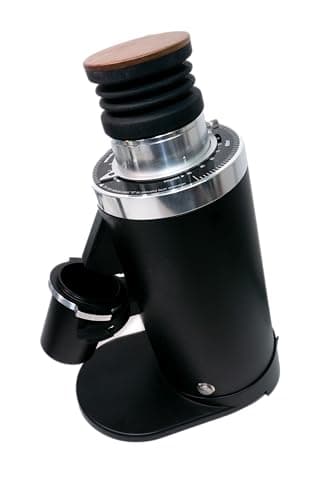
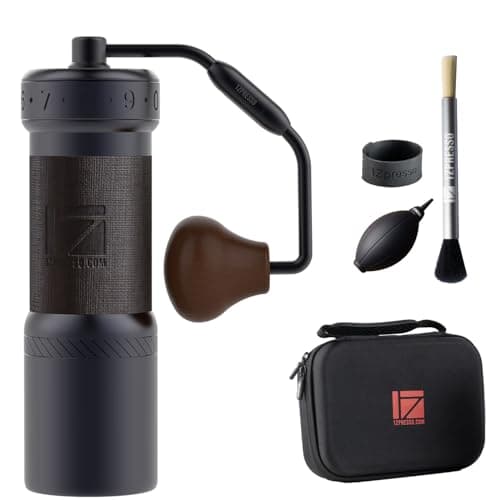
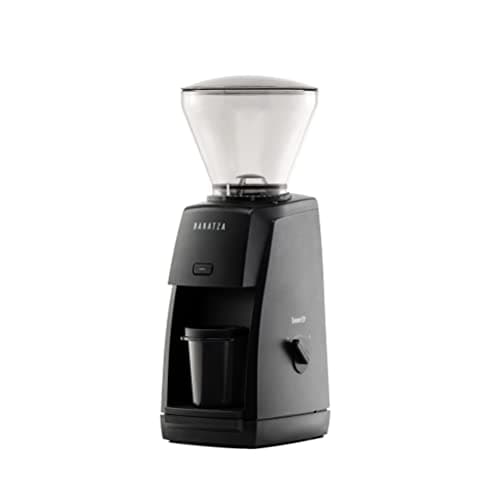
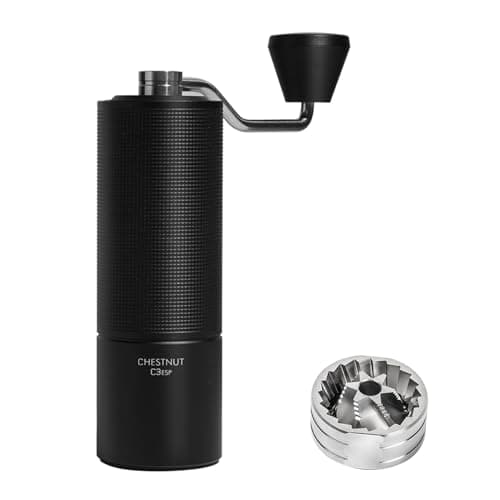
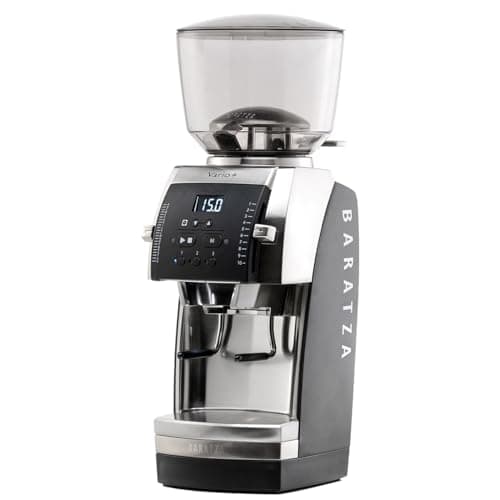
Our pick is the Baratza Vario+— the only grinder here whose adjustment is designed to be returned to a number in both directions, which is exactly what switching between espresso and filter twice a day demands. The DF64 Gen 2 is the one to buy if you would rather have 64mm flat burrs and a single-dose workflow; the 1Zpresso K-Ultra if you do not want a motor at all. The budget pick is the Timemore Chestnut C3 ESP: the cheapest grinder on this site that can genuinely reach espresso fineness and still open up for a French press.
Before the picks, the three things that actually decide whether one grinder can do two jobs.
One: can you get back to your setting?This is the whole problem. Espresso lives in a window a few microns wide; a pour over sits far coarser. If you brew both, you are not making one adjustment, you are making the same two adjustments over and over forever. A grinder with a numbered external scale or a two-stage macro/micro system lets you write down “espresso 2.3, V60 6.1” and go straight there. A stepless collar with no markings — excellent for a single-purpose espresso grinder — turns every switch into a re-dial by taste. That single distinction reorders this whole category, and it is why the Vario+ leads a page that a bigger-burr grinder would otherwise top.
Two: how much coffee does it keep? Retention matters more in a dual-purpose grinder than in a dedicated one. If the grinder holds a gram or two, the first dose after you move from espresso to filter is a blend of both grinds, and it is the worst cup of the day. Single-dose designs attack this directly: the DF64 Gen 2 clears a short path so most of what you weigh in comes straight back out, and a hand grinder you can simply tip upside down. Single dosing explained covers the workflow in full.
Three: does the range actually reach both ends? Plenty of good grinders do not. The standard Baratza Encore is a superb filter grinder that does not reach espresso; Baratza re-geared it into the Encore ESP specifically so its forty steps land in the espresso range, which is why the ESP is here and the Encore is on best grinders for drip and pour over instead. Equally, a grinder built only for espresso can be too fine-grained at the coarse end to space its settings usefully for a press.
And the honest alternative: buy two grinders.If you make four espressos a day and one pour over at the weekend, a dedicated espresso grinder plus a cheap hand grinder for filter is often better and no more expensive than one grinder that compromises on both. We would only recommend a dual-purpose machine when the split is genuinely regular — and when it is, the grinders below are the ones that make the switch painless.
Numbers beat microns when one grinder does two jobs
For a dedicated espresso grinder, stepless adjustment is close to a pure win: you can land anywhere and you rarely move far. The moment the same grinder has to serve a V60 as well, the calculus flips. You are now travelling a long way across the range and back, twice a day, and a collar with no markings means finding your espresso setting by taste every time you return to it. That is why the Vario+ leads this page over grinders with bigger burrs, and why the K-Ultra is the manual pick over grinders with better reputations: both let you write the setting down.
Burr geometry matters less here than you would expect
Flat burrs tend to produce a narrower particle distribution, which shows up most clearly in light-roast espresso as separation and clarity. Conicals are more forgiving and cheaper. Across the full espresso-to-press range, though, neither geometry is disqualifying, and both the Encore ESP (conical) and the DF64 Gen 2 (flat) earn their places. If you want the geometry argument in full, read best flat burr grinders and best conical burr grinders. For a dual-purpose grinder, repeatability and retention outrank geometry, and that is the order this page ranks in.
The purge: what switching actually costs you
On a hopper-fed grinder, moving from espresso to filter leaves coffee ground at the old setting inside the burr chamber and the chute. The usual fix is to grind and discard a few grams. That is a real daily cost in beans and time — small, but it is the thing single-dose owners are paying to avoid. If you make one espresso and one filter coffee every morning, the purge is roughly a gram or two a day; if you switch several times, the DF64 Gen 2 or a hand grinder starts to look like the cheaper machine.
When two grinders is the better answer
If your split is lopsided — three espressos a day and a weekend pour over, or the reverse — buy a dedicated grinder for the main job and a cheap second for the other. A grinder under $100 handles filter duty perfectly well next to an espresso grinder, and you will never purge again. A dual-purpose grinder earns its place when the split is close to even and the counter has room for one machine.
What else the setup needs
Both ends of this want a scale that reads to 0.1 g — best espresso scales has the picks, and the cheap ones are genuinely fine. For the espresso half, how to dial in espresso is the routine all that adjustment resolution exists for; for the filter half, coffee to water ratio matters more than any grinder setting. If you are still choosing a brewer for the filter side, best pour over coffee makers is the place to start.
How we picked
We did not lab-test this gear
Everyone in this category says they tested twenty machines. We have not pulled shots on every product here, and we say so. What we did instead: compiled the published specifications, cross-checked the manufacturer manuals, computed the running cost (wattage to energy, grams-per-shot to cost-per-cup), weighed aggregated owner reports, and scored each product against a published rubric. The scores are judgments from documented research — not measurements we took, because we do not have a test lab and we will not pretend we do. Where hands-on time would tell you more than a spec sheet, we flag it. Where a number came from someone else's work, we name them in Sources.