Skip to content
Portafilter Co

Machines · Espresso Machines

Gaggia Classic alternatives

People look for an alternative to the Gaggia Classic for four specific reasons: no PID, no grinder, the steam wand, or the price. Five machines, sorted by which of those you want solved - and what each one costs you in return.

By Stephen V.Updated How we pick
#ad

We earn a commission when you buy through our Amazon links, at no extra cost to you. It never changes a verdict, and we say so when the cheaper product is the better buy. How this works.

Our pick is the Breville Bambino— it solves the Gaggia's single most-complained-about trait, temperature surfing, with published digital temperature control and a roughly three-second heat-up, and it costs less. If what you actually want is more of what the Gaggia is, buy the Rancilio Silvia; if the missing grinder is the real problem, the Breville Barista Express. The budget pick is the De'Longhi Stilosa, which is the cheapest machine on this site that pulls a real shot — with a cap on how good that shot gets, and we say so.

First, the honest part: the Gaggia Classic is a good machine. It has a genuine 58mm commercial portafilter, a lead-free brass boiler and group, a three-way solenoid valve and a serviceable stainless body, and it is the deepest mod platform in home espresso. We rank it on best 58mm espresso machines precisely because nothing else gets you to the commercial basket standard for the money. Nobody should swap away from one without knowing what they are giving up.

Why people search for an alternative anyway.Autocomplete on this query is unusually specific, and the four complaints behind it are consistent. One: no PID as sold, so you temperature-surf — watch the heating light, time the shot off the cycle, and accept that an unattended machine drifts. Two: no grinder, so the real price is the Gaggia plus a grinder, which doubles it. Three: the two-hole commercial-style steam wand, which rewards practice and punishes impatience. Four: at current prices it is no longer the cheap option it was a decade ago. Each pick below solves exactly one of those and names its cost.

What no alternative gives you.Be clear-eyed about this before you shop. If you leave the Gaggia you will usually leave the 58mm basket standard behind too — every Breville in the Barista family is 54mm, the Dedica and Stilosa are 51mm — which means your baskets, tampers, puck screens and bottomless portafilters do not carry over. You also leave the mod community, the parts supply and the brass. The portafilter sizes guide covers what that actually costs you, and our 54mm accessories page shows that the Breville ecosystem is no longer thin — just different.

The short answer

Quick picks

#ProductBest forScorePrice
01
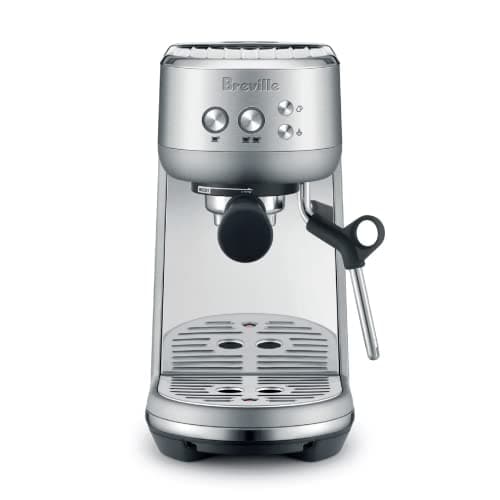
Breville Breville Bambino Espresso Machine (BES450)
Breville Bambino Espresso Machine (BES450)

The best alternative for the most common reason people leave: temperature. Breville publishes digital temperature control for the Bambino and pairs it with ThermoJet heating, so it is at brew temperature in about three seconds from cold and holds it - which deletes the entire surfing routine the Gaggia asks of you, and makes the first shot of the day land where the fourth does. It is also cheaper than the Gaggia, far smaller at about the width of a paperback, and it ships with real single-wall baskets and a proper steam wand with auto-purge. What you give up is substantial and worth stating: 54mm instead of 58mm baskets, plastic instead of brass and stainless, no three-way solenoid so pucks are wetter, and no mod path at all. It is a better appliance and a worse platform.

Best overall alternative - temperature control, no surfing
8.2
$299.95Amazon
02
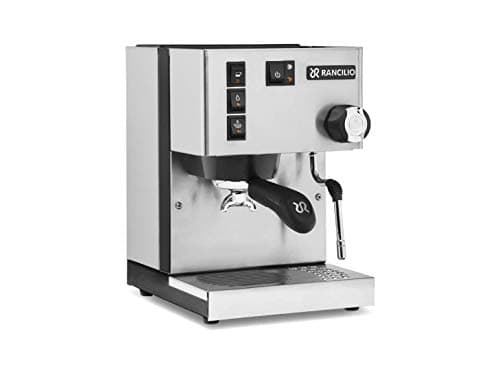
Rancilio Rancilio Silvia
Rancilio Silvia

The alternative for people whose complaint about the Gaggia is that there is not enough of it. The Silvia is the same idea executed heavier: a commercial chromed-brass group head in constant contact with an insulated brass boiler, the same 58mm commercial portafilter, a 2-litre tank and a full-motion steam wand instead of the Gaggia's two-hole one. Once warm it is a thermal rock, which makes the single boiler behave far better than its spec sheet suggests, and it is the machine the home-PID community moved to next. The honest catch: it does not fix the two complaints most people actually have. There is still no factory PID and still no grinder, and it costs roughly twice as much.

Best if you want more of what the Gaggia already is
8.5
$995.00Amazon
03
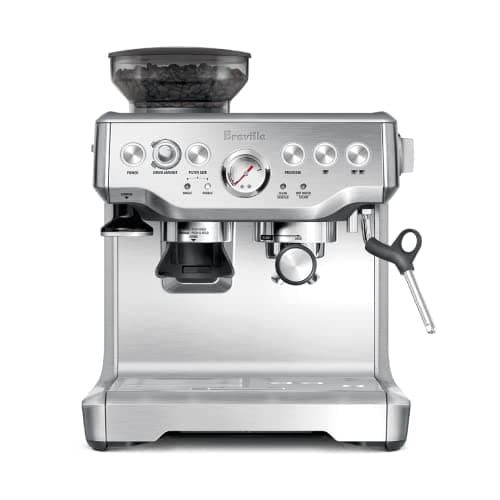
Breville Breville Barista Express (BES870XL)
Breville Barista Express (BES870XL)

The alternative for people whose real objection is that the Gaggia is half a purchase. The Barista Express puts a conical burr grinder with sixteen settings, a 54mm brew system, PID-controlled ThermoCoil heating and a manual steam wand in one body, so whole beans go in the hopper and a hand-textured milk drink comes out with nothing else on the counter. The front pressure gauge also gives you feedback the Gaggia simply does not provide. What you trade is ceiling: 54mm rather than the cafe-standard 58mm, a built-in grinder that is good rather than great and cannot be upgraded on its own, and a machine you replace rather than rebuild. For a first setup that trade is usually worth it.

Best if the missing grinder is the problem
7.9
$494.95Amazon
04
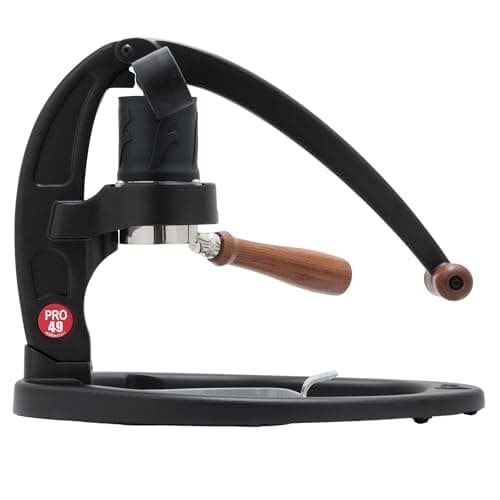
Flair Flair PRO 2
Flair PRO 2

The alternative for people who want to delete the machine rather than replace it. The Flair PRO 2 is a manual lever press: you heat water in a kettle, load a 49mm basket, and pull the shot with your arm while a built-in gauge shows the 5-9 bar espresso zone, so you see the pressure instead of trusting a pump. An all-stainless brew cylinder, valve and plunger mean no plastic touches the brew water, there is no boiler to descale and no electronics to fail - which answers the temperature complaint by removing the thermostat entirely. What it is not is fast or hands-off: no steam wand, one shot at a time, and a kettle in the loop.

Best if you want no pump, boiler or electronics at all
8.0
$359.00Amazon
05
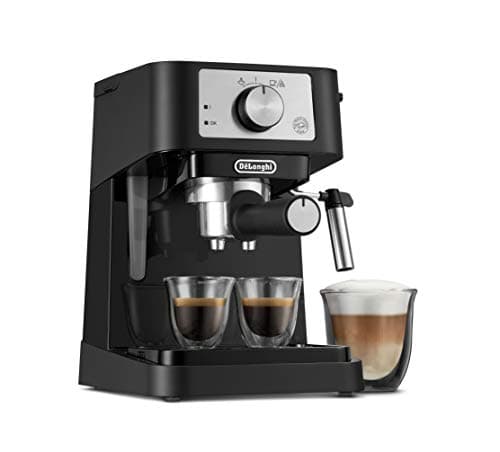
De'Longhi De'Longhi Stilosa Compact Espresso Machine (EC260)
De'Longhi Stilosa Compact Espresso Machine (EC260)

The budget pick, and the honest answer when the Gaggia's price is the whole objection. The Stilosa is a 15-bar pump machine with a panarello steam wand and a compact stainless-accented body, and together with a hand grinder it makes a complete first setup for a fraction of a Gaggia plus grinder. What caps it is the baskets: they are pressurized, which means they create back-pressure artificially rather than letting the puck do it, so the shot looks right and tastes flatter than a single-wall basket's - and that ceiling does not move no matter how good your beans or grind are. Buy it as a cheap way to find out whether you like making espresso, not as a machine to grow into.

Budget pick - the cheapest route to a real shot
7.1
$149.95Amazon

#ad · Live prices from the Amazon Product API, as of November 23, 2026. Where we have no verified live price, we show none — a gap beats a number that has rotted.

In detail

The picks, in full

01
Breville Breville Bambino Espresso Machine (BES450)

Best overall alternative - temperature control, no surfing

Breville Bambino Espresso Machine (BES450)

ThermoJet, roughly 3-second heat-upDigital temperature control (PID)54 mm portafilter, 15-bar pumpManual steam wand with auto-purge
8.2/10

The best alternative for the most common reason people leave: temperature. Breville publishes digital temperature control for the Bambino and pairs it with ThermoJet heating, so it is at brew temperature in about three seconds from cold and holds it - which deletes the entire surfing routine the Gaggia asks of you, and makes the first shot of the day land where the fourth does. It is also cheaper than the Gaggia, far smaller at about the width of a paperback, and it ships with real single-wall baskets and a proper steam wand with auto-purge. What you give up is substantial and worth stating: 54mm instead of 58mm baskets, plastic instead of brass and stainless, no three-way solenoid so pucks are wetter, and no mod path at all. It is a better appliance and a worse platform.

Fixes the complaint
9.5
What it costs you
7
Value
9
Build & longevity
7

Pros

  • Removes temperature surfing entirely - the Gaggia's biggest daily annoyance
  • Three-second heat-up instead of a warm-up wait
  • Cheaper than the Gaggia at current prices
  • Tiny footprint, about 7.7 inches wide
  • Real single-wall baskets and a capable steam wand

Cons

  • 54mm baskets - your 58mm accessories do not transfer
  • Plastic body where the Gaggia is stainless and brass
  • No three-way solenoid, so pucks come out wet
  • No grinder, exactly like the Gaggia
  • No mod community or long-term parts story

Don't buy this if…

…you bought the Gaggia for the 58mm standard and the mod path. Those are the two things this machine does not have at any price.

Our Bambino vs Gaggia Classic page is the direct head-to-head, and the full Bambino review covers the ThermoJet and the basket set.

$299.95View on Amazon

Price as of November 23, 2026. Prices change — Amazon's at checkout is the one that counts.

#ad · we may earn a commission from this link to Breville Bambino Espresso Machine (BES450)

02
Rancilio Rancilio Silvia

Best if you want more of what the Gaggia already is

Rancilio Silvia

Commercial chromed-brass group head0.3 L insulated brass boiler58mm commercial portafilter2 L reservoir, full-motion steam wand
8.5/10

The alternative for people whose complaint about the Gaggia is that there is not enough of it. The Silvia is the same idea executed heavier: a commercial chromed-brass group head in constant contact with an insulated brass boiler, the same 58mm commercial portafilter, a 2-litre tank and a full-motion steam wand instead of the Gaggia's two-hole one. Once warm it is a thermal rock, which makes the single boiler behave far better than its spec sheet suggests, and it is the machine the home-PID community moved to next. The honest catch: it does not fix the two complaints most people actually have. There is still no factory PID and still no grinder, and it costs roughly twice as much.

Fixes the complaint
7
What it costs you
9.5
Value
8
Build & longevity
9.5

Pros

  • Keeps the 58mm standard, so every accessory carries over
  • More brass and more thermal mass than the Gaggia
  • Full-motion steam wand is a real upgrade over the two-hole one
  • Serviceable with widely available parts for a decade and more
  • The most documented machine in home espresso after the Gaggia itself

Cons

  • Does not solve the PID complaint - still no factory temperature control
  • Does not solve the grinder complaint either
  • Roughly twice the Gaggia's price
  • Long warm-up before the brass is settled
  • Heavy, and the tank fills from the top

Don't buy this if…

…temperature surfing is the thing driving you away. This machine surfs too; the Bambino above does not.

Our Silvia vs Gaggia Classic page works through the two machines side by side, and Silvia vs Silvia Pro X is the question of whether to pay for the factory PID while you are here.

$995.00View on Amazon

Price as of November 23, 2026. Prices change — Amazon's at checkout is the one that counts.

#ad · we may earn a commission from this link to Rancilio Silvia

03
Breville Breville Barista Express (BES870XL)

Best if the missing grinder is the problem

Breville Barista Express (BES870XL)

Integrated conical burr grinder, 16 settingsThermoCoil heating with PID, 9-bar extraction54mm portafilter, manual steam wandAnalog pressure gauge, pre-infusion
7.9/10

The alternative for people whose real objection is that the Gaggia is half a purchase. The Barista Express puts a conical burr grinder with sixteen settings, a 54mm brew system, PID-controlled ThermoCoil heating and a manual steam wand in one body, so whole beans go in the hopper and a hand-textured milk drink comes out with nothing else on the counter. The front pressure gauge also gives you feedback the Gaggia simply does not provide. What you trade is ceiling: 54mm rather than the cafe-standard 58mm, a built-in grinder that is good rather than great and cannot be upgraded on its own, and a machine you replace rather than rebuild. For a first setup that trade is usually worth it.

Fixes the complaint
9
What it costs you
7
Value
8
Build & longevity
7

Pros

  • Grinder included, so the total spend is one number rather than two
  • PID-controlled heating ends the surfing routine
  • Pressure gauge gives real feedback while the shot runs
  • One body, one footprint - no second appliance on the counter
  • Pre-infusion built in, which the Gaggia needs a mod for

Cons

  • 54mm baskets, so 58mm accessories do not transfer
  • Built-in grinder is good rather than great and cannot be upgraded alone
  • ThermoCoil is slow to heat compared with Breville's ThermoJet machines
  • Bulky, and the hopper needs headroom
  • A machine you replace rather than rebuild

Don't buy this if…

…you already own a good grinder. You are paying for a second one you will not use, and the Bambino plus your grinder is the better setup.

Our Barista Express vs Gaggia Classic page is the direct comparison, and Barista Express alternatives is the mirror of this page if you end up unconvinced by the Breville too.

$494.95View on Amazon

$699.9529% off

Price as of November 23, 2026. Prices change — Amazon's at checkout is the one that counts.

#ad · we may earn a commission from this link to Breville Barista Express (BES870XL)

04
Flair Flair PRO 2

Best if you want no pump, boiler or electronics at all

Flair PRO 2

49mm portafilter5-9 bar pressure gaugeAll-stainless brew pathNo electricity, no boiler
8.0/10

The alternative for people who want to delete the machine rather than replace it. The Flair PRO 2 is a manual lever press: you heat water in a kettle, load a 49mm basket, and pull the shot with your arm while a built-in gauge shows the 5-9 bar espresso zone, so you see the pressure instead of trusting a pump. An all-stainless brew cylinder, valve and plunger mean no plastic touches the brew water, there is no boiler to descale and no electronics to fail - which answers the temperature complaint by removing the thermostat entirely. What it is not is fast or hands-off: no steam wand, one shot at a time, and a kettle in the loop.

Fixes the complaint
8.5
What it costs you
6
Value
8.5
Build & longevity
9

Pros

  • No thermostat to surf, no boiler to descale, nothing electronic to fail
  • Visible pressure gauge - you see what the shot is doing
  • All-stainless brew path, no plastic in contact with brew water
  • Shot quality that embarrasses pump machines several times the price
  • Packs away completely, which no machine here does

Cons

  • No steam wand at all, so milk drinks need a separate frother
  • Kettle required, and you manage water temperature yourself
  • One shot at a time, with a slow deliberate routine each time
  • 49mm baskets - a third accessory ecosystem, smaller than both others
  • Physically demanding compared with pressing a button

Don't buy this if…

…you make milk drinks or you are in a hurry in the morning. This is a ritual machine and you will resent it otherwise.

Our Flair PRO 2 review covers the lever mechanism and the gauge, and best manual espresso machines ranks the whole lever category.

$359.00View on Amazon

Price as of November 23, 2026. Prices change — Amazon's at checkout is the one that counts.

#ad · we may earn a commission from this link to Flair PRO 2

05
De'Longhi De'Longhi Stilosa Compact Espresso Machine (EC260)

Budget pick - the cheapest route to a real shot

De'Longhi Stilosa Compact Espresso Machine (EC260)

15-bar pumpManual panarello steam wandPressurized basketsCompact, stainless accents
7.1/10

The budget pick, and the honest answer when the Gaggia's price is the whole objection. The Stilosa is a 15-bar pump machine with a panarello steam wand and a compact stainless-accented body, and together with a hand grinder it makes a complete first setup for a fraction of a Gaggia plus grinder. What caps it is the baskets: they are pressurized, which means they create back-pressure artificially rather than letting the puck do it, so the shot looks right and tastes flatter than a single-wall basket's - and that ceiling does not move no matter how good your beans or grind are. Buy it as a cheap way to find out whether you like making espresso, not as a machine to grow into.

Fixes the complaint
7.5
What it costs you
5.5
Value
9
Build & longevity
6

Pros

  • By far the cheapest machine here, and cheap enough to try espresso on
  • Small footprint and simple to live with
  • Panarello wand froths milk with no technique at all
  • Pairs with an inexpensive hand grinder for a complete setup
  • No surfing routine, because there is nothing to surf

Cons

  • Pressurized baskets cap how good the coffee can get, permanently
  • 51mm baskets - a third accessory size, and a thin one
  • Plastic construction, as the price implies
  • Panarello wand makes foam rather than microfoam
  • No PID, no gauge, no feedback of any kind

Don't buy this if…

…you already know you are serious about espresso. The ceiling here is low and you will outgrow it inside a year - buy the Bambino instead.

Our Stilosa review is explicit about the pressurized-basket ceiling, and pressurized vs unpressurized baskets explains exactly what that limitation is.

$149.95View on Amazon

Price as of November 23, 2026. Prices change — Amazon's at checkout is the one that counts.

#ad · we may earn a commission from this link to De'Longhi Stilosa Compact Espresso Machine (EC260)

Which complaint are you actually solving?

This is the whole page in one question. If the answer is temperature surfing, buy the Bambino and accept 54mm. If it is the missing grinder, buy the Barista Express and accept a grinder you cannot upgrade. If it is the steam wand or the build, buy the Silvia and accept that you are still surfing. If it is the electronics, buy the Flair and accept the kettle. If it is the price, buy the Stilosa and accept the ceiling. Every one of those is a real trade rather than an upgrade, which is why this page lists what each machine costs you as prominently as what it fixes.

The 58mm question, which is bigger than it looks

The Gaggia Classic's quiet superpower is the commercial basket diameter. Every good precision basket, calibrated tamper, puck screen, dosing funnel and bottomless portafilter exists at 58mm first, in the most variety and at the best prices, because that is what cafe machines use. Leaving the Gaggia for a Breville means re-buying all of it at 54mm; leaving for a Stilosa or a Flair means a smaller ecosystem again. If you have already invested in 58mm tools, the Silvia is the only pick here that keeps them — our 58mm accessories page is the inventory of what is at stake.

Modding a Gaggia instead of replacing it

Worth saying plainly, because it is often the cheapest answer: a PID kit, an OPV spring and a steam-wand swap address three of the four complaints on this page for less than the price difference to most machines here, and the Classic is designed to be opened. If you enjoy that kind of work, the machine you already own is probably the machine you should keep. If the thought of opening it fills you with dread, factory temperature control costs less than the kit plus your weekend, and the Bambino is where we would start.

Do not spend the whole budget on the machine

Three of the five picks here ship without a grinder, and on a semi-automatic the grinder decides whether you can hit the espresso window at all. A modest machine with a good grinder beats a showpiece machine fed by a bad one, every single morning. Best espresso setup under $500 and under $1,000 split a fixed budget between the two in the proportions that actually produce good shots, and best grinders for the Gaggia Classic is the list that applies to any 58mm single boiler, not just the Gaggia.

If you want a super-automatic instead

Some people searching this query do not want a different semi-automatic at all — they want to stop making espresso by hand. That is a legitimate answer and it is a different page: best super-automatic espresso machines covers bean-to-cup machines that grind, dose, tamp and brew on one button, with the honest caveat that none of them matches a well-pulled manual shot. The Nespresso alternatives page is the version of that argument for people leaving capsules.

How we picked

We did not lab-test this gear

Everyone in this category says they tested twenty machines. We have not pulled shots on every product here, and we say so. What we did instead: compiled the published specifications, cross-checked the manufacturer manuals, computed the running cost (wattage to energy, grams-per-shot to cost-per-cup), weighed aggregated owner reports, and scored each product against a published rubric. The scores are judgments from documented research — not measurements we took, because we do not have a test lab and we will not pretend we do. Where hands-on time would tell you more than a spec sheet, we flag it. Where a number came from someone else's work, we name them in Sources.
Questions

Frequently asked

What is the best alternative to the Gaggia Classic?
The Breville Bambino, for most people. It solves the complaint that drives most Gaggia searches — temperature surfing — with published digital temperature control and a roughly three-second heat-up, and it costs less. The trade is 54mm baskets instead of 58mm and plastic instead of brass. Our Bambino vs Gaggia Classic page compares them directly.
Is the Gaggia Classic still worth buying in 2026?
Yes, if you want the 58mm commercial standard and a platform you can service and mod. It is the cheapest genuine 58mm group we rank, and we pick it on best 58mm espresso machines. It is the wrong buy if you want temperature managed for you, a grinder included or a machine that needs no routine — those are the four reasons this page exists.
Should I mod my Gaggia Classic or buy a different machine?
If you enjoy the work, mod it: a PID kit, an OPV spring and a steam-wand swap address most of what people complain about, and they cost less than switching to a comparable machine. If you do not want to open an appliance, factory temperature control is cheaper than the kit plus your time, and a Breville with a PID from new is the simpler answer. The deciding factor is honestly temperament rather than money.
Do my Gaggia accessories fit a Breville?
Mostly no. The Gaggia uses 58mm baskets and every Breville in the Barista and Bambino families uses 54mm, so baskets, tampers, puck screens, dosing funnels and bottomless portafilters all have to be re-bought. Scales, knock boxes, milk pitchers, cleaning tablets and water treatment carry over fine. Our 54mm accessories page lists the Breville-fit equivalents.
Is there a cheaper alternative to the Gaggia Classic that is actually good?
The De'Longhi Stilosa is the cheapest machine we rank that pulls a real shot, and with a hand grinder it makes a complete first setup for a fraction of a Gaggia setup. Its ceiling is lower and the reason is specific: pressurized baskets create back-pressure artificially instead of letting the puck do it, so the shot tastes flatter and no beans or grind will change that. See pressurized vs unpressurized baskets.

Keep reading

Same gear, other pages

We cover this gear elsewhere too

Receipts

Sources

We do not run a testing lab, and we do not pretend to. Where a measured number came from someone else's work, we name them and link them. Where we could not verify something, we say so on the page rather than quietly leaving it out. Read our full method.